自动驾驶商业化

Search documents
小马智行与Uber达成战略合作,以“中国方案”重塑全球智慧出行版图
Cai Jing Wang· 2025-05-06 09:40
Core Insights - A significant milestone in the global autonomous driving sector was achieved with the strategic partnership between Pony.ai and Uber, aiming to integrate Pony.ai's Robotaxi service into Uber's platform, starting in the Middle East and expanding globally within the year [1][2] Group 1: Strategic Collaboration - The partnership represents a deep integration of advanced technologies and resources, marking a strategic shift for Chinese autonomous driving companies from local focus to global outreach [1][2] - Uber, with over 130 million monthly active users, provides a robust platform for demand matching, payment systems, and user trust, facilitating Pony.ai's global commercialization [2][5] - Pony.ai's CEO emphasized the combination of their mature autonomous driving system with Uber's leading platform to set a new benchmark for the commercialization of autonomous driving [2][5] Group 2: Gradual Global Expansion - Pony.ai's strategy focuses on gradual penetration into economically developed regions with open policy environments and high technology acceptance, avoiding the pitfalls of aggressive expansion [2][3] - The company has established partnerships in various regions, including a research center in Luxembourg and collaborations in South Korea and Singapore, to promote local deployment of autonomous driving technologies [3] Group 3: Technological Leadership - Pony.ai's seventh-generation automotive-grade autonomous driving system, set to be unveiled at the 2025 Shanghai Auto Show, showcases its technological leadership, featuring L4-level capabilities and a design lifespan of 10 years or 600,000 kilometers [4] - The system utilizes automotive-grade components and has achieved 500,000 hours of fully autonomous operation, demonstrating safety levels ten times higher than human drivers [4] - The successful operation of Pony.ai's autonomous services in major Chinese cities serves as a replicable model for international markets, showcasing the company's ability to convert advanced technology into scalable commercial operations [4] Group 4: Future Outlook - The collaboration is expected to reshape the global autonomous driving landscape, with the potential to provide users with more convenient, efficient, and safe travel experiences [6] - The partnership's evolution from capital investment to comprehensive strategic collaboration reflects a natural progression based on mutual strengths [6]
丰田牵手Waymo背后,加速自动驾驶商业化落地
Zhi Tong Cai Jing· 2025-04-30 15:27
4月30日,一则重磅消息震动汽车与科技行业——丰田汽车和Alphabet旗下的Waymo表示,双方已同意 探讨合作,加快自动驾驶技术的开发和部署。两家公司在一份联合声明中表示,他们的目标是结合各自 的优势,开发一个自动驾驶汽车平台,同时还将探索如何加强下一代个人拥有的汽车(POVs)。双方表 示将讨论扩大合作范围的可能性。 在智通财经APP看来,作为全球汽车行业的龙头企业,丰田此番与美国Robotaxi领域唯一成规模的玩家 联手,绝非偶然,而是其在智能驾驶领域深思熟虑后的关键落子,背后折射出丰田对自动驾驶商业化的 深远布局与坚定决心。 丰田选择Waymo,本质上是一次优势互补的战略"联姻"。Waymo作为全球顶级的L4级自动驾驶企业, 拥有深厚的技术积淀与丰富的运营经验。其自动驾驶系统历经数千万英里的实际道路测试,具备处理各 类复杂路况的能力,在全无人驾驶技术领域处于行业领先地位。 目前,Waymo的Robotaxi服务已在美国多个城市实现常态化运营,每周为用户提供超25万次出行服务, 积累了海量的实际运营数据。而丰田作为全球汽车制造巨头,具备强大的整车制造能力、完善的供应链 体系以及庞大的全球销售网络。双方 ...

翰凯斯:RoboBus国内首个通过国家级《机动车运行安全技术条件》认证 自动驾驶商业化提速
news flash· 2025-04-30 03:17
Core Viewpoint - PIX Moving's RoboBus has become the first low-speed autonomous bus in China to pass the GB7258-2017 national standard for vehicle operation safety, marking a significant step towards commercial deployment in the autonomous driving sector [1] Group 1: Regulatory Compliance - The RoboBus meets the GB7258-2017 national standard, ensuring safety for operation on public roads [1] - The vehicle has also received ECE regulation certification from the European Union, indicating compliance with international safety standards [1] Group 2: Commercialization and Licensing - The achievement of the GB7258 standard serves as a "ticket" for large-scale commercial deployment of RoboBus [1] - RoboBus has obtained a public road testing and operation license in Italy, further enhancing its market readiness [1] - The vehicle has successfully acquired a public road license for autonomous driving in Guiyang, with plans to apply for licenses nationwide [1] Group 3: Industry Impact - The advancements in RoboBus contribute to the broader development of smart transportation solutions in China [1]

4家智驾车企2024年年报透析:谁在闷声发财,谁在艰难烧钱
Mei Ri Jing Ji Xin Wen· 2025-04-20 14:27
Core Insights - 2024 is a significant year for autonomous driving companies, with 15 firms planning to go public, indicating strong market interest and potential growth in the sector [1] - The financial performance of these companies varies, with some achieving substantial revenue growth while others remain in the investment phase [2] Group 1: Financial Performance - Horizon Robotics achieved a revenue of 2.384 billion yuan in 2024, a 53.6% increase year-on-year, with a net profit of 2.347 billion yuan [3] - Black Sesame Intelligence reported a revenue of 474 million yuan, up 51.8% year-on-year, with a net profit of 313 million yuan [3] - Both companies, despite their profitability, reported adjusted net losses of 1.681 billion yuan and 1.304 billion yuan respectively, indicating ongoing financial challenges [4] Group 2: R&D Investment - R&D investment is a significant concern in the industry, with Black Sesame's R&D spending reaching 1.435 billion yuan, a 5.3% increase from 2023, and Horizon's R&D investment at 3.156 billion yuan, a 33.4% increase [4] - Horizon's R&D expenditure accounted for 132.4% of its total revenue, highlighting the heavy financial burden of innovation in the sector [4] Group 3: Market Trends and Challenges - The L2 level assisted driving function installation rate in new energy passenger vehicles reached 67.8% in 2024, a 12.5 percentage point increase from 2023, indicating growing market adoption [3] - The L4 level autonomous driving market, represented by Robotaxi services, is experiencing slower development compared to L2, despite significant policy support and market potential [5][7] - Small Horse Intelligent and WeRide reported revenue growth of 4.35% and a 10% decline respectively, with both companies still in a loss-making position [6] Group 4: Future Outlook - The Robotaxi market is projected to reach 488.8 billion yuan in China by 2030, indicating substantial future growth potential [7] - Small Horse Intelligent aims to achieve breakeven on a per-vehicle basis by 2025, emphasizing the need for expanded operational scale to support high R&D costs [7]

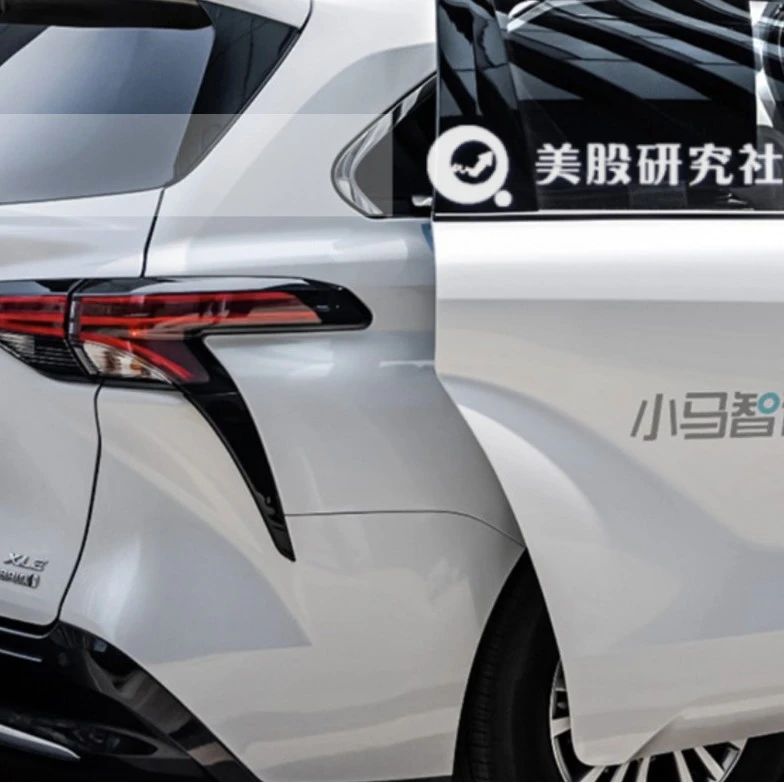
小马智行营收三连涨,Robotaxi收入却不增反降,“全球Robotaxi第一股”何去何从?
美股研究社· 2025-03-26 12:45
Core Viewpoint - The article discusses the financial performance and strategic positioning of Pony.ai, highlighting its growth in revenue despite significant losses and challenges in the autonomous driving sector [1][2][3]. Financial Performance - Pony.ai reported a total revenue of 548 million RMB in 2024, marking a year-on-year growth of 4.3%, although the growth rate has slowed compared to 8.1% in 2023 [5]. - The company has achieved a cumulative revenue of 1.53 billion RMB over the past three years, making it the highest revenue-generating L4 autonomous driving company in China [5]. - Adjusted net losses reached 1.121 billion RMB, with R&D expenses increasing by 14% to 1.006 billion RMB, indicating a struggle between technological investment and profitability [9][10]. Business Segments - Pony.ai's revenue is primarily derived from three segments: Robotaxi, Robotruck, and licensing and applications [6]. - The Robotruck segment generated 40.4 million USD in revenue, a 61.3% increase from 25 million USD in 2023, while the Robotaxi segment saw a revenue decline of 5.3% to 7.3 million USD [6][9]. - The decline in Robotaxi revenue was attributed to reduced service fees from engineering solutions, although there was an increase in passenger fare income due to expanded services in first-tier cities [6][9]. Strategic Focus - The company emphasizes a strategic focus on Robotaxi services, prioritizing operations in first-tier cities and leveraging partnerships with major platforms like Alipay and Gaode Map [7][14]. - Pony.ai has obtained full regulatory approval for autonomous driving in four first-tier cities, which is expected to enhance its service deployment and market reach [14][17]. - The company is also collaborating with automotive manufacturers to develop the next generation of Robotaxi vehicles, aiming to reduce hardware costs and improve operational efficiency [14][15]. Industry Context - The autonomous driving industry is at a critical transition from technology validation to large-scale application, with ongoing skepticism from capital markets regarding profitability pathways [2][13]. - The article highlights the importance of achieving scale in operations to gain pricing power and market influence, with Pony.ai targeting a fleet of 1,000 Robotaxis in major cities to reach breakeven [15][17]. - The future of the industry may hinge on technological advancements and deeper integration within the ecosystem to facilitate mass production and commercialization [13][14].