
基层治理

Search documents
更换破损雨水管 ,解决居民烦心事
Xin Lang Cai Jing· 2025-12-27 05:19
经过现场勘查与风险评估,社区、物业、海棠先锋、网格员"四方协同"迅速明确了分工:社区负责整体 协调并向上级街道汇报,争取必要的支持与指导;物业公司凭借专业优势,负责制定详细的维修方案、 预算及施工;熟悉楼栋情况的网格员和具有群众基础的海棠先锋,则承担起"桥梁"角色,一方面将安全 隐患的紧迫性和维修计划向涉及的全体住户进行告知解释,另一方面及时将居民的合理诉求反馈给社区 和物业。通过高效联动,从问题发现、方案制定到征询意见、筹集资金,流程得以大幅压缩。维修期 间,海棠先锋和网格员还协助维持施工现场秩序,提醒居民注意安全。 转自:扬子晚报 近日,苏州市姑苏区沧浪街道三香社区网格员在日常巡查中发现三香新村沿马路数幢楼房的雨水管因年 久失修,存在不同程度的锈蚀、松动甚至部分脱落现象,存在一定的安全隐患,问题被迅速汇总至社 区。这并非一家一户的"私事",而是关乎公共安全的"公事",且涉及多栋建筑,维修资金和协调难度较 大。社区党委立即牵头,启动"四方协同"机制,召集新沧物业负责人、相关网格员及海棠先锋代表,召 开现场协商会,共同商讨解决方案。 最终,损坏的雨水管得到了统一修复和加固,不仅排除了高空坠物的风险,也改善了楼 ...


岳阳云溪街道构建全方位法治信访格局
Xin Lang Cai Jing· 2025-12-26 19:01
(来源:法治日报) □ 本报记者帅标 □ 本报通讯员 黄静 江雨梦 近年来,面对辖区常住人口8.6万,地处城乡接合部、矛 盾隐患多等基层治理压力,湖南省岳阳市云溪区云溪街道坚持以法治为引领,用情疏导、以理劝解、依 法处置,一批信访积案得以妥善化解。 云溪街道坚持以法治建设贯穿信访工作全程,着力构建全方位 法治信访格局。细化信访受理、办理、督办全流程规范,明确协同机制;聘请法律顾问提供常态化支 持,开设"信访法治讲堂"提升工作人员依法办事能力与群众依法信访意识。创新"网格+信访"模式,推 动信访融入基层网格化管理,实现"小事不出网格、大事不出街道"。依托多元渠道结合典型案例普法, 引导群众"信访"转"信法"。 针对重复信访积案,云溪街道坚持一名党政领导包干负责、一套班子跟踪 协调、一个方案研判处理的"一案一策"方式,推动案结事了、事心双解。在李某武广高铁征收补偿、清 溪村项目用地纠纷等问题中,工作专班依法厘清事实、明确政策差异、找准症结、搭建协商平台,促成 双方和解。近5年来共处置化解信访积案11件,实现依法治理与社会效果相统一。 同时,云溪街道着力 推动信访工作重心下移、关口前移,充分发挥法院、检察、公安、司 ...
【起点漫评】破除基层之痛,让治理工具回归服务本质
Xin Lang Cai Jing· 2025-12-26 06:43
Group 1 - The article discusses the challenges faced in governance, particularly the rigidity of the "zero petition" policy that obstructs public opinion channels [2] - It highlights the negative impact of the "zero negative" approach, which leads to the suppression of genuine public sentiment and hinders the confidence and courage of grassroots initiatives [2][3] - The article emphasizes the need for grassroots officials to shift their focus from avoiding responsibility to genuinely engaging with the public to strengthen governance and address developmental issues [3]

河南西峡:新就业群体变身基层治理“合伙人”
Xin Lang Cai Jing· 2025-12-26 04:43
西峡县不断优化网格设置,将新就业群体纳入基层治理网格化管理体系,探索设立"移动探头""平安哨 兵"等岗位,鼓励他们在日常工作中及时发现安全隐患、环境卫生、突发事件等线索,通过"随手拍""随 时报"等方式,第一时间反馈至线上平台,让基层"末梢"变为治理"前哨"。截至目前,该县已有4700余 名新就业群体主动融入社会治理,累计发现并上报各类问题线索189条。 "下一步,我们将不断创新工作方法,充分发挥新就业群体参与基层治理的职业优势,持续优化服务链 条,抓深做实新就业群体关爱凝聚工作,实现治理增效与服务暖心的双向奔赴。"西峡县委社会工作部 相关负责人表示。(刘剑飞 金源) 聚焦新就业群体需求和权益保障等,该县通过整合社区党群服务中心等阵地资源,积极拓展新就业群体 友好场景,提供充电、饮水等贴心服务,切实增强新就业群体的幸福感和归属感。截至目前,该县已标 准化建设了暖"新"驿站、爱心驿站等各类友好场景单元66个,为新就业群体设置专用停车区域22个。 据悉,新就业群体在日常工作中,格外留意社区环境卫生、安全隐患、邻里纠纷等问题,一旦发现问 题,及时通过专门建立的沟通渠道向社区反馈。社区在收到反馈后,迅速安排人员进行处 ...
回访五位报道主角 听他们说说这五年(人民眼·年终特别策划)
Ren Min Ri Bao· 2025-12-26 00:04
Group 1: Marine Ecological Protection and Restoration - The city of Panjin in Liaoning has implemented a wetland restoration project, completing the withdrawal of 85,900 acres from aquaculture, which has been recognized for its ecological governance efforts [19] - The restoration has attracted over 11,000 black-headed gulls, a national first-class protected species, indicating successful ecological recovery [19] - A new round of marine ecological protection and restoration projects will commence, aiming to restore approximately 35,000 acres of coastal wetlands from 2025 to 2027, enhancing ecosystem services [20] Group 2: Cultural Heritage and Education - The restoration of overseas Chinese letters (Qiaopi) has gained attention, with over 300 public classes held to educate students about cultural heritage [21] - The Shantou government has prioritized the protection of Qiaopi, leading to the preservation of nearly 100,000 letters in a specialized climate-controlled facility [22] - The Qiaopi culture has expanded its reach internationally, with exhibitions held in places like Bangkok, Thailand, highlighting its significance in cultural memory [22] Group 3: Digital Transformation in Rural Industries - The tea industry in Guizhou has embraced digital transformation, with the introduction of an AI program to enhance visitor experiences and integrate tea tourism [24] - The annual output value of the tea factory has increased from 20 million to 26 million yuan over five years, despite a reduction in cultivated area from 2,000 acres to 800 acres, focusing on quality over quantity [24] - The company has engaged nearly 10,000 tea farmers in its development, promoting sustainable practices and ensuring high-quality raw materials [24] Group 4: Community Governance and Service Improvement - In Wuhan, community governance has improved through a reduction in bureaucratic burdens, allowing for more efficient service delivery to residents [27] - The implementation of a clear responsibilities list for community organizations has streamlined processes, enhancing service efficiency [26] - Digital tools have been introduced to simplify administrative tasks, significantly reducing the time required for residents to access services [27] Group 5: Urban Renewal and Quality of Life - The renovation of the first worker's village in Shanghai has transformed living conditions, with significant improvements in infrastructure and community spaces [28] - The project has fostered community engagement, with residents actively participating in governance and volunteer activities [29] - Future developments include the renovation of local shopping centers to enhance community interaction and quality of life [30]

破解“网闹”乱象,基层治理当不怯不纵
Xin Lang Cai Jing· 2025-12-25 18:26
转自:成都日报锦观 破解"网闹"乱象,基层治理当不怯不纵 而要打破这种循环,就不能只局限在被动处理"网闹"的思维里,更要立足标本兼治,让规则意识成为共 识。 一方面要划清合理维权与任性"网闹"的边界,以有力约束截断"闹即得利"的预期。相关部门要对此类行 为严肃追责,网络平台也要扛起主体责任,避免在谣言传播时"给流量、博关注",在辟谣回应时"不理 会、不推流"。法律法规是人们行为的准绳,任何合理诉求都理应按规则去反馈,借由歪曲事实、煽动 情绪施压的"网闹",本质上是对公共秩序的破坏,必须依法依规纠治。 当大量公共资源被拖入"谁闹谁有理"的泥潭中,这不仅是对基层精力的过度消耗,也在一定程度上冲击 着正常的社会秩序。如何让基层治理不再被无由来的"网闹"所扰、困于"怕闹"?这就需要以守好规则底 线、提升治理效能来及时切断"网闹"乱象的示范传导。 人们为什么会选择"网闹"?问题的症结,出在"闹即得利"的错误认知上。 从当事人的角度来说,部分人觉得循规蹈矩维权见效慢、收益低,要快速兑现诉求,就要懂得以舆论声 势向基层单位施压,于是便出现了不少歪曲事实、放大情绪的"网络维权"。从社交平台到围观流量,都 成了当事人的博弈工具 ...
打造超大城市开放型经济发展的“法治名片”
Xin Lang Cai Jing· 2025-12-25 12:14
Group 1 - The article emphasizes the importance of the rule of law as a crucial guarantee for economic and social development during the "14th Five-Year Plan" period, as outlined by the 20th Central Committee of the Communist Party of China [2] - The Shanghai courts are actively implementing the spirit of the 20th Central Committee by focusing on judicial practices that serve the public and support economic development [6][24] - Shanghai courts are recognized for their high standards in judicial practices, including specialized, international, and digital approaches, which contribute to the city's open economy [6][21] Group 2 - The Shanghai courts have received over 130,000 first-instance intellectual property cases from January 2023 to November 2023, with punitive damages in such cases increasing by 109.5% in number and 63.6% in amount year-on-year [11] - The courts are implementing reforms to enhance the business environment, including rapid resolution of enterprise disputes and clarifying information related to corporate litigation [11][12] - Shanghai's judicial independence and recognition have achieved top scores in global assessments, reflecting the effectiveness of its legal environment for businesses [11] Group 3 - The Shanghai Maritime Court is advancing specialized maritime judicial practices to establish itself as a preferred location for international commercial and maritime dispute resolution [12] - The establishment of the Shanghai International Commercial Court marks a new phase in the professional development of foreign-related commercial trials, with over 1,940 cases accepted and a total amount involved exceeding 27 billion yuan [13] - The courts are integrating technology into judicial processes, developing over 1,800 digital applications to enhance judicial efficiency and support regional development [21][22] Group 4 - The Shanghai courts are innovating grassroots governance by integrating judicial functions into community settings, such as using mobile courts and legal education initiatives [16][19] - The focus on resolving disputes at the grassroots level aligns with national strategies to address conflicts early and effectively [15][19] - The collaboration between the courts and educational institutions aims to cultivate legal talent and enhance practical legal education [22]

一站式化解矛盾纠纷 看四川德阳如何提升基层治理精度与温度
Xin Hua Wang· 2025-12-25 07:36
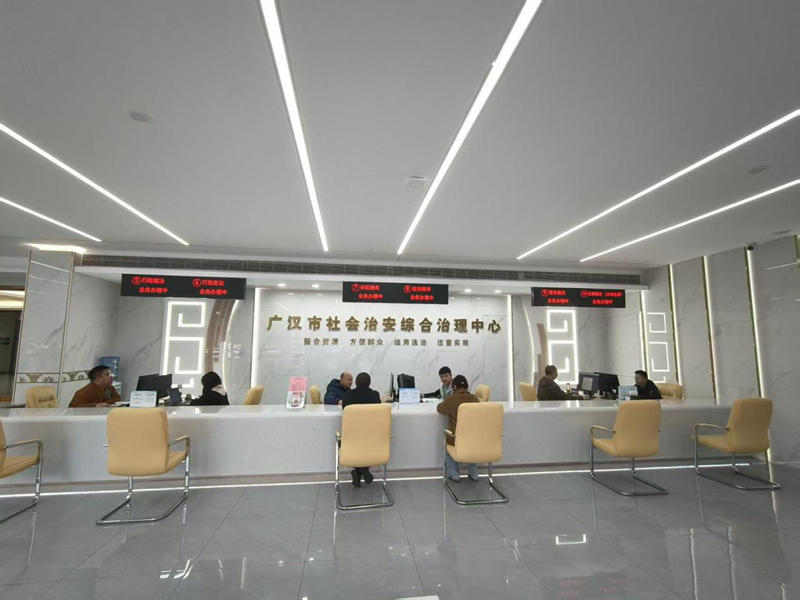
Core Viewpoint - The article highlights the successful implementation of community governance centers in Deyang, Sichuan, which have effectively resolved conflicts and improved public satisfaction through innovative mechanisms and technology integration [2][12]. Group 1: Governance Center Innovations - Deyang has focused on standardizing the construction of governance centers, integrating resources, and innovating mechanisms to enhance community well-being [2]. - The Guanghan Governance Center features a clear layout with three main functional areas: reception, conflict resolution, and command dispatch, designed to efficiently address public issues [2]. - The center employs a model of "one reception, dual diversion, and one-window overview" to handle various types of public grievances [2]. Group 2: Conflict Resolution Strategies - The "1+10+N" conflict resolution system in Guanghan includes the notable Luo Chaoming Master Studio, which has successfully mediated over 500 disputes [6]. - Luo Chaoming's approach combines legal knowledge with emotional intelligence to facilitate understanding and agreement between conflicting parties [6]. - In Mianzhu, the "Mianhua Hall" mediation room has been established, where experienced mediators like Liu Yonglin resolve neighborhood disputes through trust-building and practical solutions [9]. Group 3: Technology Empowerment - The "You Call, We Respond" digital platform in Deyang enhances efficiency by breaking down data barriers and integrating various governmental departments for comprehensive conflict management [12]. - The platform allows for real-time processing of grievances from multiple sources, ensuring a rapid and coordinated response to community issues [12]. - Mianzhu has implemented a multi-level response mechanism that ensures ordinary disputes are handled at the village level, while more complex issues are escalated appropriately, achieving an average resolution time of just six days with a 98% completion rate [12]. Group 4: Community Impact - The governance centers in Deyang have become crucial hubs for maintaining public safety and enhancing community trust through effective conflict resolution [12]. - The ongoing development of these centers signifies a commitment to modernizing grassroots governance and providing high-quality services to the community [12].
香坊 党建引领聚合力共享服务暖民心
Xin Lang Cai Jing· 2025-12-24 22:54
Group 1 - The core idea is the transformation of community services from "resource dispersion" to "system integration" and from "single service" to "diversified sharing," led by party organizations to enhance residents' sense of gain, happiness, and belonging [1] - The "Party Building + Shared Services" work system is innovatively constructed to integrate scattered resources and create diverse sharing scenarios, promoting the deep integration of sharing concepts into grassroots governance [1] - The New City Community implemented a "shared tools online ledger" to address the mismatch between idle tools and emergency needs, facilitating efficient tool sharing among residents [2] Group 2 - The Electric Machine New Village Community upgraded its community canteen to a "shared convenience station," addressing issues like dining difficulties for the elderly and social isolation for single residents [3] - A tiered discount system for seniors over 60 years old was introduced, with free meals for those over 90, alleviating the financial burden on elderly residents [3] - The community canteen also features a "shared activity area" and a free therapy room, fostering neighborly interactions and making the shared canteen a hub for community life [3]
凝心抓落实 实干显担当
Ren Min Ri Bao· 2025-12-24 22:32
Core Viewpoint - The article emphasizes the importance of reducing bureaucratic burdens on grassroots levels to enhance efficiency and service delivery, as highlighted by President Xi Jinping's focus on addressing formalism and supporting grassroots officials in their responsibilities [1][11]. Group 1: Policy Implementation and Mechanisms - The central government has prioritized the reduction of formalism as a key area for improvement, establishing a special mechanism to address this issue and ensuring compliance across various levels of government [1][3]. - Local governments are actively implementing measures to streamline processes, such as reducing unnecessary reporting and focusing on core responsibilities, which has led to improved service delivery [3][4]. Group 2: Case Studies of Effective Implementation - In Heilongjiang Province, the police department has eliminated unnecessary assessments and reporting, allowing officers to focus on community service, resulting in faster processing times for citizens [3][4]. - In Tianjin, a new assessment mechanism has reduced the paperwork required for year-end evaluations, allowing officials to concentrate on practical outcomes rather than bureaucratic formalities [3][4]. Group 3: Empowerment and Resource Allocation - The article discusses how the management of personnel transfers has been improved in Ningbo, ensuring that local officials are not overburdened by excessive borrowing of staff, thus enhancing local governance capacity [4][5]. - In Guangdong Province, the establishment of clear responsibility lists has clarified roles in community service, reducing confusion and improving efficiency in handling social security matters [5][6]. Group 4: Technological Integration - The introduction of digital platforms in Nanjing has significantly reduced the administrative burden on community workers, allowing for more efficient data management and service delivery [8][9]. - The use of technology in governance has enabled more precise and timely responses to community needs, exemplified by the proactive care for vulnerable residents through smart monitoring systems [8][9]. Group 5: Overall Impact on Governance - The article concludes that the ongoing efforts to reduce bureaucratic burdens represent a fundamental shift towards modernizing grassroots governance, enhancing both efficiency and community engagement [10][11].