
一老一小

Search documents
【好评中国】枝叶关情,让每个“小家”热气腾腾
Xin Lang Cai Jing· 2026-01-03 05:54
Core Viewpoint - The focus is on enhancing the happiness and well-being of every household in China, emphasizing the importance of addressing the needs of ordinary families and ensuring their daily lives are supported by effective policies and social safety nets [1][2]. Group 1: Social Safety Nets - The effectiveness of a country's economic development is measured not only by economic indicators but also by the people's sense of gain, happiness, and security, particularly for vulnerable groups [2]. - China's social safety net has been strengthened, with a focus on comprehensive support for low-income households, ensuring that assistance is both broad and precise [2]. - The average standard of urban and rural subsistence allowances has increased by 22.5% and 24.6% respectively since 2020, reflecting the ongoing improvement of the social assistance system [2]. Group 2: Elderly and Child Care Services - Addressing the needs of the elderly and children is a priority, with various initiatives aimed at improving services for these demographics [3]. - Since the start of the 14th Five-Year Plan, 2.24 million households have received home modifications for elderly care, and 8,600 elderly meal service points have been established [3]. - Community-based childcare services, such as "baby houses," have been developed to alleviate childcare challenges for young parents [3]. Group 3: Income Growth and Economic Development - Continuous income growth for households is essential for enhancing their happiness, with a focus on sustainable development and poverty alleviation [4]. - The financial investment in the social sector during the 14th Five-Year Plan period approached 100 trillion yuan, indicating a strong commitment to improving living standards [4]. - By 2025, budget allocations for education and social security are expected to grow by 6.1% and 5.9% respectively, highlighting the increasing focus on human investment [4].
“一老一小”欢声笑语 浙江镇域如何擦亮民生底色?
Zhong Guo Xin Wen Wang· 2025-12-21 10:12
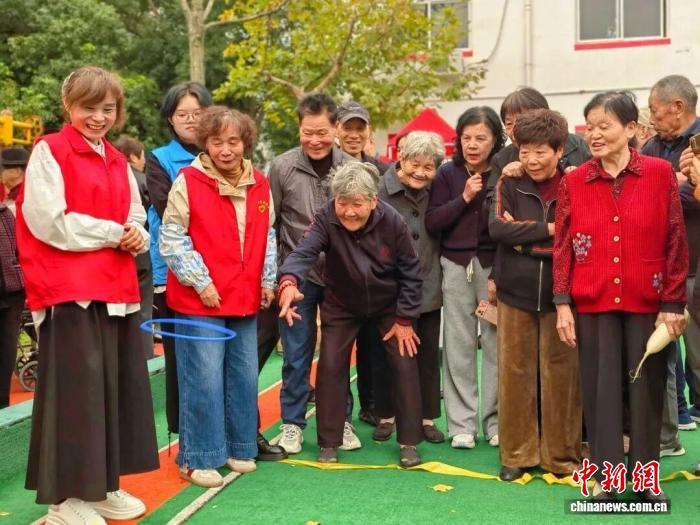
Core Viewpoint - The article highlights the efforts of Aojiang Town in Zhejiang Province to enhance the quality of life for the elderly and children through various community initiatives and services, emphasizing the importance of "one old and one young" in improving public welfare [1][5]. Group 1: Infrastructure and Services for the Elderly - Aojiang Town has made significant investments in infrastructure to support elderly care, establishing a comprehensive network of facilities from urban to rural areas [1][3]. - The Aojiang Town Elderly Service Center, recognized as a four-star facility, offers diverse services including nursing care, rehabilitation training, and creative activities, catering to the varied needs of the elderly [3][4]. - Community-level elderly care centers provide essential services such as nutritious meal delivery and recreational activities, enhancing the quality of life for senior residents [3][4]. Group 2: Services for Children - The "Spring Mud Plan" serves as a core initiative to create a comprehensive growth service network for children, incorporating activities like nature exploration and public service [4][5]. - The "Ao Xiang Future" youth activity center offers a range of facilities, including reading corners and creative workshops, providing children with enriching after-school experiences [3][4]. - Community events such as book reading sessions and practical activities enhance children's learning and social skills, fostering a sense of community [4][5]. Group 3: Resource Integration and Community Engagement - Aojiang Town actively integrates resources to enhance services for both the elderly and children, exemplified by the establishment of a public "Silver Age Class" at a local kindergarten, which offers dance classes for seniors [5]. - The "Spring Mud E-Learning" platform connects students with volunteer educators, providing quality educational activities tailored to the needs of the community [5]. - The town's initiatives reflect a commitment to improving the well-being of its residents through innovative and collaborative approaches, reinforcing its status as a "National Civilized Town" [5].

医药生物行业跨市场周报(20251214):2026年八大医保重点工作,建议关注一老一小投资机会-20251214
EBSCN· 2025-12-14 11:29
Investment Rating - The report maintains a rating of "Buy" for the pharmaceutical and biotechnology sector, with a focus on specific companies such as Innovent Biologics, Efang Biologics, and Mindray Medical [4][27]. Core Insights - The report emphasizes the investment opportunities in the "One Old, One Young" sectors, particularly in reproductive assistance, pediatric drugs and vaccines, maternal and infant health monitoring, and aging-related consumer healthcare [2][24]. - It highlights the importance of clinical value in the pharmaceutical sector, suggesting that future investments should focus on innovative drug chains and high-end medical devices [3][25]. - The report notes that the domestic pharmaceutical sector is experiencing a valuation recovery, driven by supportive policies and increasing global competitiveness [26]. Summary by Sections Market Review - The A-share pharmaceutical index fell by 1.04%, underperforming the CSI 300 index by 0.96 percentage points and the ChiNext index by 2.52 percentage points, ranking 17th among 31 sub-industries [1][15]. - The Hong Kong Hang Seng Medical Health Index decreased by 2.26%, lagging behind the Hang Seng Index by 0.97 percentage points [1][15]. R&D Progress - Recent developments include IND applications from Haisimengnuo and clinical trial advancements for various drugs from companies like Hengrui Medicine and Anke Biotechnology [29][30]. Key Companies and Valuation - The report provides a detailed earnings forecast and valuation table for key companies, indicating a positive outlook for companies like WuXi AppTec and Mindray Medical, with projected PE ratios decreasing over the next few years [4][27]. Policy and Industry Resonance - The report discusses the eight key tasks for medical insurance in 2026, focusing on improving coverage for flexible employment and enhancing maternal healthcare services, which are expected to boost the birth rate and the rehabilitation medical device industry [2][20][24]. Investment Strategy - The report suggests a three-stage investment strategy based on clinical value, recommending investments in innovative drugs and high-value medical devices, with a focus on companies that are expanding internationally [3][25][26].



呵护好“一老一小”(今日谈)
Ren Min Ri Bao· 2025-10-10 22:10
Core Viewpoint - The article emphasizes the importance of caring for the elderly and children, highlighting the government's commitment to improving their welfare and quality of life, which is seen as both a family and national issue [1] Group 1: Elderly Care - A total of 2.24 million households have completed home modifications for elderly individuals facing special difficulties [1] - Over 3 million elderly people are served daily at senior dining points [1] - The government aims to strengthen the "one old" service network during the "14th Five-Year Plan" period, reflecting a commitment to enhancing elderly care services [1] Group 2: Child Welfare - The support standards for orphans and children without guardians have increased by over 26% compared to the end of the "13th Five-Year Plan" [1] - The government is focused on improving maternal and child healthcare, children's medical services, and affordable childcare services [1] Group 3: Cultural and Social Values - The initiative reflects the cultural principle of caring for the elderly and children, embodying the pursuit of "Chinese-style modernization" with a focus on people's livelihoods [1] - The government's efforts are aimed at ensuring the happiness and well-being of the people through practical measures and safeguarding the bottom line of people's livelihoods [1]
民政部:五年累计投入中央财政资金2.25亿元 支持543家社会组织开展服务
Xin Hua Cai Jing· 2025-10-10 06:28
Core Viewpoint - Social organizations are recognized as a vital force in China's modernization process, with significant developments during the "14th Five-Year Plan" period, including the establishment of 2.7 million community social organizations and a total investment of 225 million yuan from the central government to support 543 key social organizations in various service activities [1][3]. Group 1: Strengthening Party Leadership - Emphasis on strengthening the Party's leadership within social organizations, ensuring effective implementation of Party-building responsibilities at various stages such as registration, charter approval, and annual inspections [1]. - Encouragement for social organization leaders to hold dual roles with Party organization leaders to enhance the effectiveness of Party influence [1]. Group 2: Institutional Development - Focus on advancing the institutional framework for social organizations, including the revision of the Foundation Management Regulations and the introduction of annual inspection methods and measures to eliminate illegal organizations [2]. - Continuous improvement of policies to incentivize and support social organizations, including tax benefits and service purchasing mechanisms, enhancing their operational vitality [2]. Group 3: Healthier Development Environment - Implementation of standardized construction initiatives to promote the internal development of social organizations, aiming for higher operational standards [2]. - Strengthened management of personnel, funds, and activities within social organizations, resulting in the rectification of 75,000 "zombie" organizations and the crackdown on over 8,000 illegal organizations [2]. Group 4: Effective Role of Social Organizations - During the "14th Five-Year Plan," 2.7 million community social organizations were cultivated, and 19 international social organizations were registered, with over 860,000 active social organizations across various fields [3]. - The central government invested 225 million yuan to support social organizations focusing on key areas such as elderly care, child welfare, and rural revitalization, highlighting their role in assisting the government and serving the community [3].
便民生活圈新政聚焦“一老一小”,2030年达成“百城万圈”
2 1 Shi Ji Jing Ji Bao Dao· 2025-09-19 12:28
Core Insights - The Ministry of Commerce and nine other departments issued a notification to enhance the construction of urban "15-minute convenience living circles," focusing on creating age-friendly living environments for both the elderly and children [1][2][3] Group 1: Policy Objectives - The notification outlines 20 specific tasks aimed at expanding the coverage of convenience living circles to urban main districts and eligible county communities, promoting a quality living environment [1][2] - The goal is to achieve the "100 cities, 10,000 circles" target by 2030, establishing 10,000 well-structured convenience living circles and enhancing resident satisfaction to over 90% [2][3] Group 2: Key Features of the Policy - The policy emphasizes a dual approach of "pilot + benchmark" to reduce promotion costs and address community supply issues effectively [1][2] - It includes five main tasks: expanding coverage, optimizing facility layout, upgrading business formats, enhancing services, and improving management [3][4] Group 3: Focus on Elderly and Children - The policy prioritizes services for the elderly and children, addressing the need for better healthcare, daily assistance, and educational resources [6][7] - It encourages the establishment of "Silver Street" for elderly services and "Children's Fun Parks" for children's activities, enhancing community engagement [6][7] Group 4: New Business Formats - The initiative promotes the development of new business formats such as specialty dining, modern bookstores, and pet services, as well as community-based services like shared spaces [4][5] - It aims to transition community commerce from survival-oriented to development-oriented, tapping into new consumption growth points [5][6] Group 5: Implementation and Future Directions - The Ministry of Commerce plans to collaborate with relevant departments to ensure that the needs of residents are met, transforming demand into satisfaction [9] - The focus will be on leveraging new technologies to enhance management efficiency and service experience, benefiting both residents and related industries [9]
“一老一小”都是“宝”
Liao Ning Ri Bao· 2025-05-18 00:35
Group 1: Elderly Care Services - The province has developed 776 community dining facilities, serving approximately 15,000 elderly individuals daily, addressing the meal difficulties faced by the elderly, especially those who are elderly and living alone [2] - The provincial government has initiated concentrated care services for economically disadvantaged elderly individuals, ensuring that those with moderate to severe disabilities and high-aged individuals receive necessary support [3] - The province has established 2,414 elderly care institutions, with nursing bed occupancy reaching 55.5%, and has built 12,000 family care beds for eligible elderly individuals [3] Group 2: Childcare and Education Services - The province has expanded its public preschool resources, with 8 new or renovated public kindergartens and 2,659 new slots in affordable kindergartens this year [6] - The province has achieved a coverage rate of 90.8% for quality public kindergartens in townships, ensuring that rural children have access to better educational environments [7] - Professional training for preschool teachers has been emphasized, with 900 rural kindergarten teachers trained in the first five months of the year to enhance educational quality [8]