中美科技战

Search documents
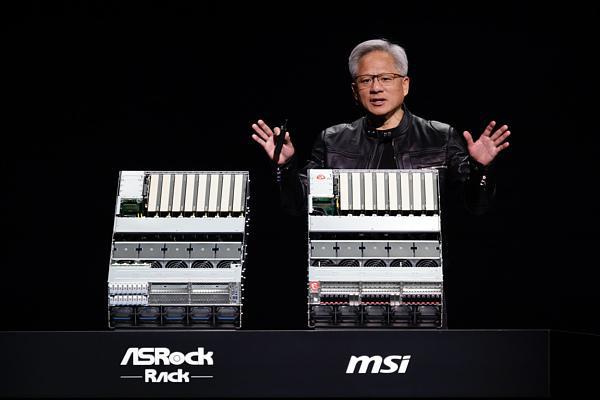
黄仁勋在华新布局,又被盯上了
Guan Cha Zhe Wang· 2025-05-30 01:25
Core Viewpoint - The article discusses the ongoing tensions between the U.S. government and NVIDIA regarding the company's plans to establish a new research facility in China, highlighting concerns over national security and technological competition [1][2][3]. Group 1: NVIDIA's Plans and U.S. Government Response - NVIDIA is reportedly planning to open a new research facility in China, which has drawn criticism from U.S. lawmakers who argue it could allow China to gain access to advanced technology [1][2]. - A bipartisan letter from Senators Jim Banks and Elizabeth Warren expresses serious concerns about the potential national security implications of NVIDIA's plans, demanding detailed information about the facility's development by June 20 [1][2]. - The senators emphasize that NVIDIA's actions could undermine U.S. leadership in technology and create a talent pipeline for China, questioning the company's commitment to American values [2][3]. Group 2: NVIDIA's Position and Market Strategy - NVIDIA's spokesperson clarified that the new facility is merely a rental space for existing employees to accommodate post-pandemic work needs, with no advanced chip designs being sent to the facility [2][3]. - CEO Jensen Huang has been vocal against U.S. export restrictions to China, arguing that such measures have failed and have caused significant losses for American companies, estimating a $15 billion loss in sales due to these restrictions [5]. - Huang has pointed out that a significant portion of AI researchers are based in China, and he believes that limiting technology sharing is fundamentally flawed, as it could lead to a global spread of Chinese technology if U.S. companies do not engage in the Chinese market [5]. Group 3: Broader Context of U.S.-China Technology Competition - The article highlights the bipartisan consensus in Washington regarding the need to curb China's technological advancements, indicating that this issue transcends party lines and is a priority for U.S. lawmakers [3]. - The Chinese government has criticized the U.S. for politicizing trade and technology issues, asserting that such actions hinder global semiconductor industry development and ultimately harm the U.S. itself [6].


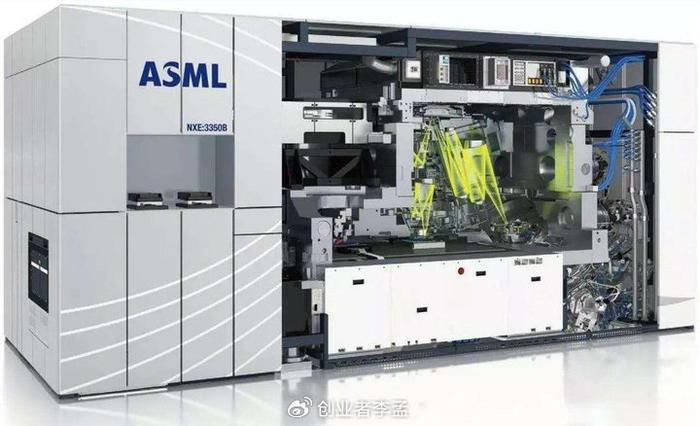
如果小米造出了光刻机,会怎样?
Xin Lang Cai Jing· 2025-04-20 20:18
Core Viewpoint - The potential development of a lithography machine by Xiaomi could spark significant online debate, reflecting national pride and technological advancement in the context of the ongoing US-China tech rivalry [1][11]. Group 1: Public Reactions - The first group of people would celebrate Xiaomi's achievement, labeling it as "the light of domestic products" and praising the company for its innovation [2]. - The second group would express skepticism, questioning the authenticity of Xiaomi's capabilities in producing a lithography machine and suggesting it might be a rebranding of existing technology [4]. - The third group would engage in discussions about the implications for the domestic chip industry, debating whether this development would alleviate challenges or lead to wasted investments [6][7]. Group 2: Industry Implications - If Xiaomi successfully produces a lithography machine, it could potentially resolve supply chain issues faced by domestic chip manufacturers like Yangtze Memory Technologies, which previously suffered from ASML's supply cuts [7]. - There are concerns about market saturation and competition, as multiple companies, including Huawei and Shanghai Micro Electronics, are also pursuing advancements in lithography technology [7]. - The success or failure of this venture could significantly alter Xiaomi's market perception, transforming it from a perceived "assembler" to a recognized "technology leader" in the industry [9]. Group 3: International Reactions - Internationally, reactions could range from alarm to skepticism, with foreign media potentially framing Xiaomi's advancements as a threat to existing market players like ASML [11]. - The US may respond with increased restrictions on technology transfers to Xiaomi, similar to past actions taken against Huawei, which could hinder Xiaomi's efforts [11].