中韩战略合作伙伴关系

Search documents
韩国总统李在明抵达北京,200多名韩企业家随行
Xin Lang Cai Jing· 2026-01-04 05:39
Core Viewpoint - South Korean President Lee Jae-myung has arrived in Beijing for his first state visit to China since taking office, marking the first visit by a South Korean president in six years [3][6] Group 1: Visit Details - The state visit will take place from April 4 to April 7, 2023, at the invitation of Chinese President Xi Jinping [3][6] - During the visit, Lee Jae-myung will reaffirm South Korea's respect for the One China principle, particularly regarding Taiwan [3][6] Group 2: Bilateral Meetings - Meetings between the leaders of China and South Korea are scheduled, following their previous discussions in November 2025 during the APEC summit [3][6] - This visit aims to further consolidate the momentum of the comprehensive restoration of the China-South Korea strategic partnership [3][6] Group 3: Economic Delegation - Over 200 South Korean entrepreneurs are accompanying President Lee as part of an economic delegation [3][6] - Discussions are expected to focus on practical cooperation in areas such as supply chain investment, digital economy, environmental issues, cultural exchanges, tourism, and combating transnational crime [3][6] Group 4: Strategic Importance - China and South Korea are important neighboring countries and partners, with expectations that this visit will positively impact the development of their strategic partnership under the leadership of both heads of state [3][6]

李在明抵达北京
财联社· 2026-01-04 05:31
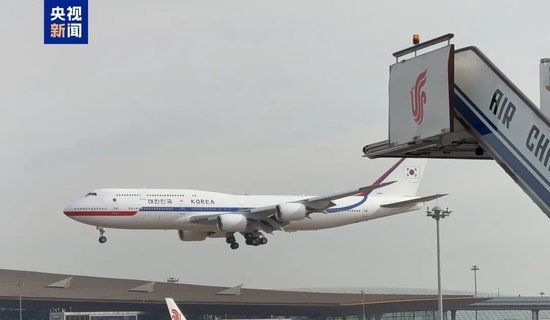
据央视新闻,今天(4日)下午,韩国总统李在明乘机抵达北京首都国际机场,开启为期4天的访华行程。 应国家主席习近平邀请,韩国总统李在明4日至7日对中国进行国事访问。此访是李在明总统就任后首次访华,也是韩国总统时隔6年再次访华。访华 前李在明总统在接受总台记者专访时再次明确表示,韩国始终尊重一个中国原则,对中国最核心的关切——台湾问题,将一如既往地秉持尊重一个 中国的立场。 李在明访华期间,中韩领导人将在北京举行会见会谈,这是两国领导人2025年11月在韩国庆州出席亚太经合组织(APEC)第三十二次领导人非正式 会议并举行会谈后,时隔两个月再次会晤,将进一步巩固中韩战略合作伙伴关系全面恢复的势头。 据韩联社援引工商界消息称,200多名韩国企业家组成经济代表团,随同李在明总统访华。中韩预计将讨论在供应链投资、数字经济、环境与气候变 化、人文交流、旅游及打击跨国犯罪等领域的务实合作。 中韩互为重要近邻和合作伙伴,各界期待在两国元首战略引领下,此访为推动中韩战略合作伙伴关系进一步向前发展发挥积极作用。 ...
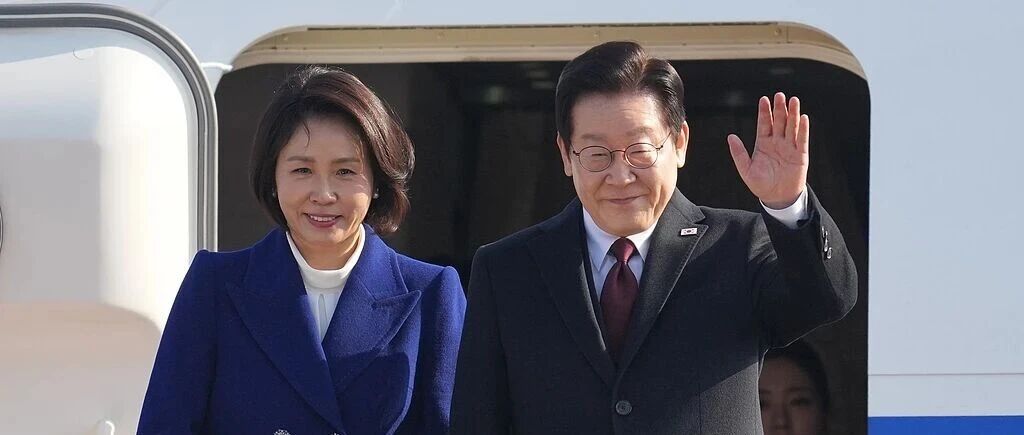
韩国总统李在明抵达北京,开启就任后首次对华国事访问
Xin Lang Cai Jing· 2026-01-04 05:30
李在明访华期间,中韩领导人将在北京举行会见会谈,这是两国领导人2025年11月在韩国庆州出席亚太 经合组织(APEC)第三十二次领导人非正式会议并举行会谈后,时隔两个月再次会晤,将进一步巩固 中韩战略合作伙伴关系全面恢复的势头。 据韩联社援引工商界消息称,200多名韩国企业家组成经济代表团,随同李在明总统访华。中韩预计将 讨论在供应链投资、数字经济、环境与气候变化、人文交流、旅游及打击跨国犯罪等领域的务实合作。 应国家主席习近平邀请,韩国总统李在明4日至7日对中国进行国事访问。此访是李在明总统就任后首次 访华,也是韩国总统时隔6年再次访华。访华前李在明总统再次明确表示,韩国始终尊重一个中国原 则,对中国最核心的关切——台湾问题,将一如既往地秉持尊重一个中国的立场。 中韩互为重要近邻和合作伙伴,各界期待在两国元首战略引领下,此访为推动中韩战略合作伙伴关系进 一步向前发展发挥积极作用。(央视新闻) 1月4日下午,韩国总统李在明乘机抵达北京首都国际机场,开启为期4天的访华行程。 ...
新华时评:推动中韩战略合作伙伴关系向更高水平迈进
Xin Hua She· 2025-11-01 23:53
Economic Cooperation - The economic cooperation between China and South Korea is highlighted as a cornerstone of their relationship, with bilateral trade expected to reach $328.08 billion in 2024, marking a 5.6% increase [1] - China has been South Korea's largest trading partner for 21 consecutive years, while South Korea ranks as China's second-largest trading partner [1] - The two countries have deepened their industrial and supply chain integration, creating a mutually beneficial community of interests [1] - Since the implementation of the China-South Korea Free Trade Agreement in 2015, the level of trade and investment liberalization has continuously improved, expanding cooperation from traditional manufacturing to emerging sectors such as high-end manufacturing, cross-border e-commerce, and the digital economy [1][2] Cultural Exchange - Cultural exchange is emphasized as a vital bond between the two nations, with leaders calling for deeper human interactions to solidify public support for friendship [2] - The geographical proximity and cultural similarities have facilitated close people-to-people exchanges, with notable examples including the popularity of Korean cosmetics and films in China, and the success of Chinese smart appliances in South Korea [2] - Recent stories of mutual assistance, such as a Chinese driver protecting South Korean tourists and a South Korean coast guard officer sacrificing his life to save a Chinese citizen, illustrate the deepening friendship between the two peoples [2][3] Future Cooperation - Both countries are encouraged to explore more complementary areas for future cooperation, particularly in clean energy, biotechnology, and artificial intelligence [2] - The importance of continuing educational cooperation and local exchanges is stressed, particularly to engage the younger generation in mutual understanding and achievements [3] - Amidst global uncertainties, both nations are committed to maintaining their foundational diplomatic principles and advancing their strategic partnership for mutual benefit [3]
习近平同韩国总统李在明会谈
证监会发布· 2025-11-01 12:05
Core Points - The meeting between Chinese President Xi Jinping and South Korean President Lee Jae-myung emphasizes the importance of the China-South Korea relationship as a significant partnership that has thrived over 33 years despite differences in social systems and ideologies [5][8] - Xi proposed four key suggestions to enhance the bilateral relationship, focusing on strategic communication, deepening mutually beneficial cooperation, promoting people-to-people exchanges, and strengthening multilateral collaboration for peace and development [6][7][8] Group 1: Strategic Communication - Strengthening strategic communication is essential to build mutual trust and respect, allowing both nations to develop together while managing differences through friendly consultations [6] Group 2: Economic Cooperation - There is a commitment to accelerate the second phase of the China-South Korea Free Trade Agreement negotiations and explore cooperation in emerging sectors such as artificial intelligence, biopharmaceuticals, green industries, and the silver economy [7] - Both countries are focused on combating online gambling and telecom fraud, indicating a collaborative approach to safeguard citizens' safety and property [7] Group 3: Cultural and People-to-People Exchanges - Enhancing public sentiment and promoting cultural exchanges are vital for fostering mutual understanding and creating a favorable atmosphere for the development of bilateral relations [7] Group 4: Multilateral Collaboration - China congratulated South Korea on successfully hosting the APEC Leaders' Informal Meeting and expressed willingness to work together to advance the APEC Free Trade Area process and regional economic integration [7][8]
习近平同韩国总统李在明会谈
财联社· 2025-11-01 10:53
Core Viewpoint - The meeting between Chinese President Xi Jinping and South Korean President Lee Jae-myung emphasizes the importance of the China-South Korea relationship, highlighting mutual cooperation and the need for strategic communication to enhance bilateral ties [5][8]. Group 1: Strategic Communication - Xi Jinping proposed four suggestions to open a new chapter in China-South Korea relations, starting with strengthening strategic communication to build mutual trust and respect each other's social systems and core interests [6]. - The importance of using dialogue channels and mechanisms to address differences and enhance cooperation was emphasized [6]. Group 2: Economic Cooperation - The two leaders discussed deepening mutually beneficial cooperation, particularly in areas such as artificial intelligence, biopharmaceuticals, green industries, and the silver economy, while accelerating the second phase of the China-South Korea Free Trade Agreement negotiations [6]. - Both countries expressed a commitment to combatting online gambling and telecom fraud, indicating a focus on safeguarding citizens' safety and property [6]. Group 3: Cultural Exchange - Enhancing national sentiment and promoting people-to-people connections were highlighted as essential for solidifying the foundation of public opinion, with an emphasis on cultural exchanges and facilitating personnel movement [6]. - The leaders agreed on the importance of guiding public opinion positively to foster a conducive atmosphere for bilateral relations [6]. Group 4: Multilateral Cooperation - Xi Jinping congratulated South Korea on successfully hosting the APEC informal leaders' meeting and expressed a desire to collaborate on advancing the APEC Free Trade Area and regional economic integration [7]. - The commitment to uphold true multilateralism and promote a fairer international governance system was reiterated [7]. Group 5: Bilateral Relations - Lee Jae-myung welcomed Xi Jinping's visit, noting its significance for Korea-China relations and the deepening of cooperation across various fields since the establishment of diplomatic ties [8]. - Both leaders expressed a desire to enhance high-level exchanges and manage differences effectively to further develop the bilateral partnership [8].

推动中韩战略合作伙伴关系向更高水平迈进
Xin Hua Wang· 2025-11-01 07:32
Group 1: Core Views - The visit of Chinese President Xi Jinping to South Korea marks a significant step in elevating the China-South Korea strategic partnership, emphasizing the importance of friendly cooperation between the two nations [1] - The bilateral trade volume between China and South Korea is projected to reach $328.08 billion in 2024, reflecting a growth of 5.6%, with China being South Korea's largest trading partner for 21 consecutive years [2] - Cultural exchanges serve as a deep bond between the two countries, with increasing people-to-people interactions and mutual understanding being essential for strengthening bilateral relations [3] Group 2: Economic Cooperation - Economic cooperation is highlighted as the cornerstone of China-South Korea relations, with both countries benefiting from a deeply intertwined industrial and supply chain [2] - The China-South Korea Free Trade Agreement, effective since 2015, has facilitated the liberalization and convenience of trade and investment, expanding cooperation into emerging sectors such as high-end manufacturing and digital economy [2] - The collaboration in various fields, including clean energy and artificial intelligence, presents opportunities for further mutual benefits and future-oriented partnerships [2] Group 3: Cultural and Human Exchanges - The leaders of both countries have called for deepening cultural exchanges to solidify the foundation of public sentiment and enhance mutual understanding [3] - Recent stories of goodwill, such as acts of bravery by individuals from both nations, exemplify the growing friendship and emotional connection between the peoples of China and South Korea [3] - Continued efforts in educational cooperation and local exchanges are encouraged to foster understanding and achievements among the youth of both countries [3] Group 4: Strategic Cooperation - In light of the evolving global landscape, both nations aim to uphold their foundational diplomatic principles and pursue mutual benefits, contributing positively to regional stability and prosperity [4] - The commitment to advancing the strategic partnership is seen as a way to better serve the interests of both nations and contribute to the broader Asia-Pacific community [4]
新华时评丨推动中韩战略合作伙伴关系向更高水平迈进
Xin Hua She· 2025-10-31 12:59
Group 1: Core Views - The visit of President Xi Jinping to South Korea marks a significant step in elevating the China-South Korea strategic partnership, emphasizing the importance of friendly cooperation between the two nations [1] - The bilateral trade volume between China and South Korea is projected to reach $328.08 billion in 2024, reflecting a growth of 5.6%, with China being South Korea's largest trading partner for 21 consecutive years [2] - Economic cooperation serves as the cornerstone of China-South Korea relations, with both countries benefiting from deep integration of their industrial and supply chains [2] Group 2: Economic Cooperation - Since the implementation of the China-South Korea Free Trade Agreement in 2015, trade and investment liberalization have improved, expanding cooperation from traditional manufacturing to emerging sectors such as high-end manufacturing, cross-border e-commerce, and the digital economy [2] - The popularity of South Korean cosmetics and films in China, alongside the success of Chinese smart home appliances in South Korea, illustrates the growing scale and diversity of economic collaboration [2] - Experts suggest that both countries can explore more complementary areas for future cooperation, particularly in clean energy, biotechnology, and artificial intelligence [2] Group 3: Cultural Exchange - Cultural exchanges are highlighted as a vital link in maintaining the relationship between China and South Korea, with calls for deepening mutual understanding and solidifying public support for friendship [3] - The close geographical and cultural ties have led to increased people-to-people interactions, such as the popularity of Chinese language learning among South Korean youth and tourism between the two countries [3] - Recent acts of heroism, such as a Chinese driver protecting South Korean tourists and a South Korean coast guard officer sacrificing his life to save a Chinese citizen, exemplify the deepening friendship between the two peoples [3] Group 4: Strategic Cooperation - In light of the evolving global landscape and increasing uncertainties, both countries express a commitment to uphold their diplomatic principles and mutual benefits, aiming to advance their strategic partnership for the betterment of their peoples [4] - The collaboration is positioned as a means to contribute positively to regional stability and prosperity, as well as to the construction of an Asia-Pacific community [4]
学习手记|中韩是搬不走的近邻
Xin Hua She· 2025-10-28 12:54
Core Viewpoint - The upcoming visit of President Xi Jinping to South Korea marks a significant moment in Sino-Korean relations, emphasizing the importance of cooperation and mutual benefit between the two nations [4][5][10]. Group 1: Historical Context - Xi Jinping's visit is the first state visit to South Korea in 11 years, highlighting the historical ties and shared experiences between China and Korea [5][9]. - The relationship has evolved since the establishment of diplomatic ties in 1992, with bilateral trade increasing over 60 times, making China South Korea's largest trading partner for 21 consecutive years [9]. Group 2: Economic Cooperation - Both countries are accelerating negotiations for the second phase of their free trade agreement, focusing on emerging sectors such as high-end manufacturing, biopharmaceuticals, and artificial intelligence [9]. - The emphasis on mutual benefit and cooperation is seen as a pathway to enhance economic ties and regional stability [10][12]. Group 3: Strategic Vision - Xi Jinping has articulated a vision for the two countries to act as partners in achieving common development, regional peace, and revitalizing Asia, while promoting global prosperity [10]. - The recent communications between Xi and South Korean President Lee Jae-myung have established a consensus on advancing the strategic partnership to a higher level [11]. Group 4: Current Relations - The current phase of Sino-Korean relations is characterized as a critical period for improvement and development, with a commitment to stable and continuous policies from China towards South Korea [12]. - The focus remains on maintaining friendly relations, seeking common ground while respecting differences, and prioritizing cooperation [11].
中韩元首将会晤 近邻伙伴锚定关系发展方向
Zhong Guo Xin Wen Wang· 2025-10-28 09:56
Core Points - The meeting between Chinese President Xi Jinping and South Korean President Yoon Suk-yeol marks a significant opportunity to enhance the strategic partnership between China and South Korea [3][5] - This visit is Xi's first state visit to South Korea in 11 years and the first meeting between the two leaders since Yoon took office [3][5] - The two countries aim to strengthen cooperation in various fields, including trade, investment, and cultural exchanges, amidst evolving international dynamics [5][6] Trade and Economic Relations - China has been South Korea's largest trading partner for 21 consecutive years, with bilateral trade reaching $328.08 billion last year [5] - The 10th anniversary of the China-South Korea Free Trade Agreement is being marked this year, with ongoing negotiations for the second phase focusing on cross-border services, investment, and financial services [5] - The visit is expected to facilitate closer bilateral cooperation and advance the second phase of the free trade agreement negotiations [5][6] Multilateral Cooperation - Both countries share a commitment to multilateralism and free trade, which will be emphasized during the APEC meeting hosted by China next year [6] - The leaders' meeting is anticipated to send a positive message regarding mutual support and consensus-building in maintaining the multilateral trading system [6] Cultural and People-to-People Exchanges - There is a growing emphasis on enhancing cultural, educational, and technological exchanges between the two nations [7] - The visit is expected to yield new agreements and initiatives aimed at fostering a favorable environment for youth talent development and furthering mutual understanding [7]