人力资本红利

Search documents
未来5年 更多投资将流向“人”
Zhong Guo Qing Nian Bao· 2025-11-25 02:12
Core Viewpoint - The emphasis on "people" in China's economic development will be more pronounced in the next five years, focusing on improving living standards and addressing demographic changes [1][2]. Group 1: Economic Development Strategy - The "15th Five-Year Plan" highlights the need for a shift from a focus on material capital to investing in human capital, reflecting a deeper understanding of economic growth driven by human development [3][4]. - The concept of "investing in people" includes enhancing capabilities across all demographics and life stages, such as education, healthcare, and skills training [2][3]. Group 2: Investment in Human Capital - The government plans to increase fiscal spending on education, with an expected investment exceeding 25 trillion yuan during the "14th Five-Year Plan," marking a 38% increase from the previous period [3]. - The number of graduates in science, technology, engineering, and mathematics exceeds 5 million annually, positioning China as a leader in producing skilled professionals [3]. Group 3: Policy Implementation - The government aims to improve the structure of public investment, increasing the proportion allocated to social welfare and public services [5]. - Specific initiatives include the "old-for-new" subsidy program, which will allocate 150 billion yuan in 2024 to stimulate consumption in sectors like automotive and home appliances [6]. Group 4: Long-term Economic Growth - The focus on human capital is seen as essential for sustainable economic growth, with a call for reforms in local government performance metrics to prioritize consumer growth and public service levels over GDP alone [7].
规划建议新看点|为人的全面发展!投资于人再加力
Xin Hua She· 2025-11-25 00:36
Core Viewpoint - The article emphasizes the importance of investing in human development alongside material investment, highlighting the need for comprehensive human resource development to enhance economic competitiveness and stimulate domestic demand [1][4]. Group 1: Investment in Human Development - The "14th Five-Year Plan" suggests a close integration of investments in material and human resources, focusing on enhancing human capital through improved physical fitness, innovation capabilities, and cultural literacy [1]. - Investment in human development is seen as a means to boost domestic demand, with the potential to increase employment and income, thereby releasing consumer spending power [1][3]. Group 2: Skills Training and Employment - A large-scale vocational skills enhancement training initiative is set to take place from 2025 to 2027, targeting over 30 million participants in high-demand industries and key employment groups [3]. - Various regions are implementing effective investments across the entire lifecycle, from early childhood education to lifelong vocational training, to support comprehensive human development [3]. Group 3: Systemic Improvements - To achieve comprehensive human development, it is necessary to break down systemic barriers through effective investment, which includes fostering a complete domestic demand system and improving talent cultivation mechanisms [4]. - There is a call for enhancing services in health, elderly care, childcare, culture, tourism, and other sectors to meet the high-quality needs of the population [4]. Group 4: Future Outlook - The article concludes with a positive outlook for China's high-quality development, which is expected to be further strengthened by a focus on comprehensive human development [5].

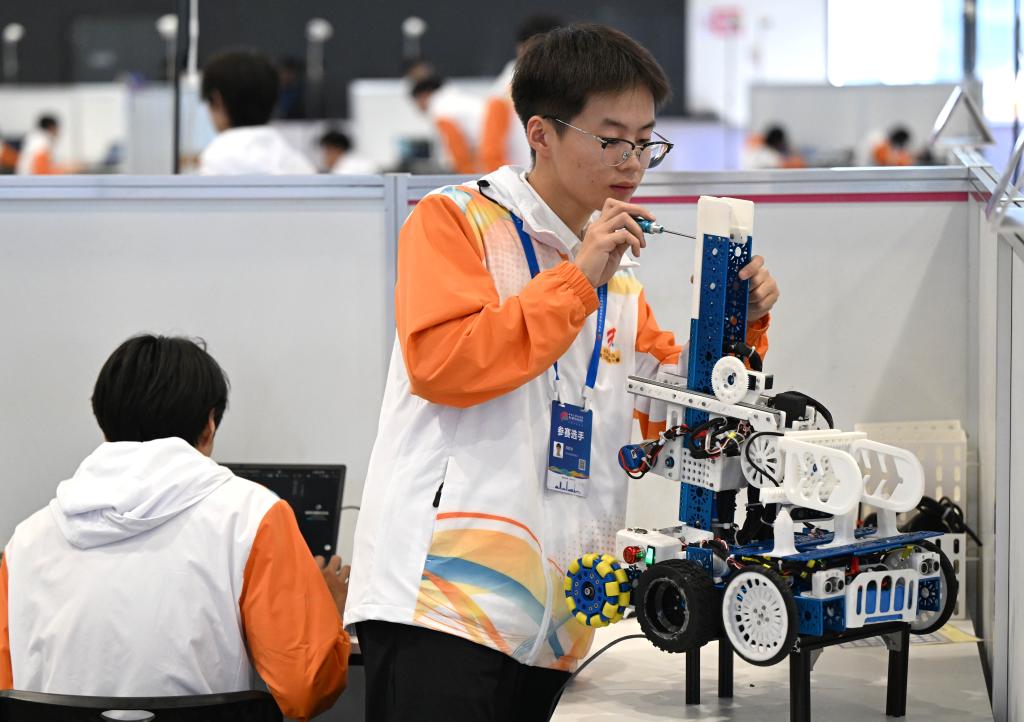
为人的全面发展!投资于人再加力
Sou Hu Cai Jing· 2025-11-24 10:57
Core Viewpoint - The article emphasizes the importance of investing in human development alongside material investment, highlighting the need for comprehensive human resource development to enhance economic competitiveness and stimulate domestic demand [1][4]. Group 1: Investment in Human Development - The "14th Five-Year Plan" suggests a close integration of investments in material and human resources, focusing on enhancing human capital through improved physical health, innovation capabilities, and cultural literacy [1]. - Investment in human development is seen as a vital driver for economic growth, enhancing productivity, promoting employment, and unlocking consumer potential [1][4]. Group 2: National Skills Training Initiatives - A large-scale vocational skills enhancement training initiative is set to take place from 2025 to 2027, targeting over 30 million participants in high-demand industries and key employment groups [3]. - Various regions are implementing effective investments across the entire lifecycle, from early education to lifelong vocational training, to support comprehensive human development [3]. Group 3: Local Government Initiatives - Local governments are actively creating supportive environments for technology talent and developing community services for the elderly, reflecting a shift from outdated investment practices to more effective human-centered investments [3]. - The article notes that breaking down systemic barriers through investment is essential for achieving comprehensive human development [3]. Group 4: Future Directions - Recommendations include expanding effective investments, cultivating a complete domestic demand system, and improving talent cultivation mechanisms to meet the diverse service needs of the population [4]. - The future of China's high-quality development is expected to be increasingly supported by comprehensive human development initiatives [4].
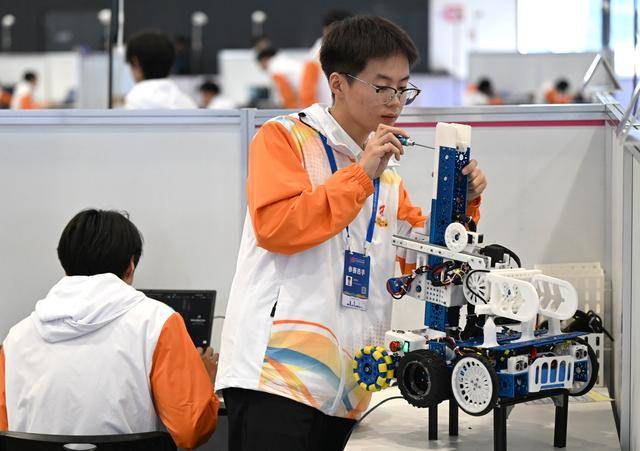
新华鲜报·规划建议新看点|为人的全面发展!投资于人再加力
Sou Hu Cai Jing· 2025-11-24 10:19
Core Viewpoint - The article emphasizes the importance of investing in human development alongside material investment, highlighting the need for comprehensive human resource development to enhance economic competitiveness and stimulate domestic demand [1][6]. Group 1: Investment in Human Development - The "14th Five-Year Plan" suggests a close integration of investments in material and human resources, focusing on enhancing human capital through improved physical fitness, innovation capabilities, and cultural literacy [1]. - Investment in human development is seen as a vital driver for economic growth, enhancing productivity, promoting employment, and unlocking consumer potential [1][6]. Group 2: National Skills Development Initiatives - A large-scale vocational skills enhancement training initiative is set to take place from 2025 to 2027, targeting over 30 million participants in high-demand industries and key employment groups [6]. - Various regions are implementing effective investments across the entire lifecycle, from early childhood education to lifelong vocational training, to support comprehensive human development [6]. Group 3: Local Government Initiatives - Local governments are actively creating supportive environments for technology talent and elderly care services, moving away from outdated investment practices that prioritize growth over human benefit [6][7]. - The focus is on improving investment efficiency to better serve human development needs, with examples from Anhui and Shandong provinces showcasing tailored community services [6]. Group 4: Future Directions - The article suggests that expanding effective investment and improving talent cultivation mechanisms are essential for meeting the high-quality service demands of the population, including health, elderly care, and cultural services [7]. - The future of China's high-quality development is expected to be increasingly supported by comprehensive human development initiatives [7].
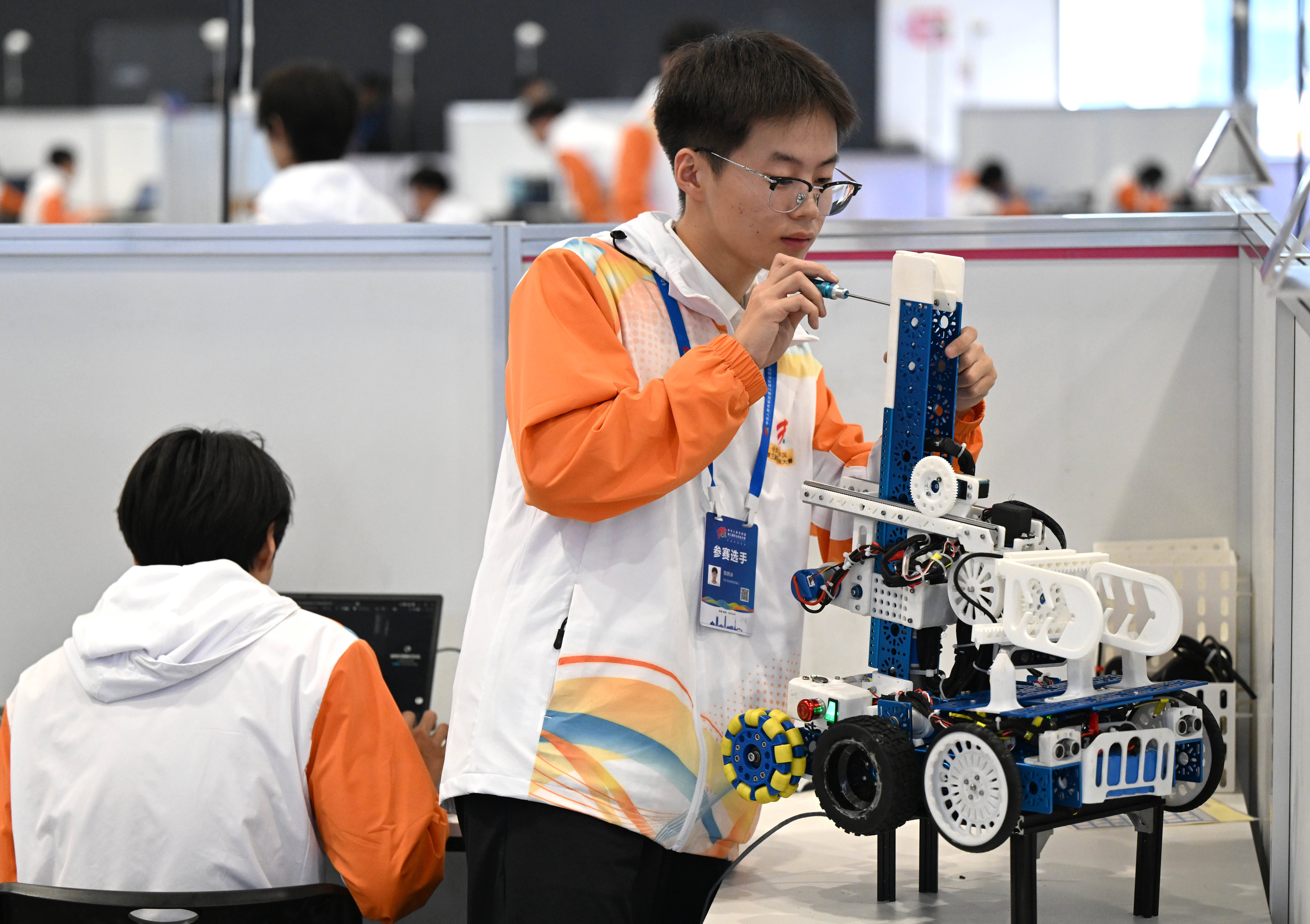
发展向前 民生向暖|织密社会保障“安全网”
Zhong Guo Jing Ji Wang· 2025-11-24 05:47
Group 1 - The core focus of the "14th Five-Year Plan" is to enhance the social security system, which is crucial for maintaining social equity and improving people's livelihoods [1][2] - The social security system serves as a safety net and stabilizer for society, playing a significant role in promoting economic and social development [1] - The national basic pension insurance participation rate has exceeded 95%, with a total scale of social insurance funds reaching 70.8 trillion yuan, indicating a robust financial foundation [1] Group 2 - Recent actions by national human resources departments aim to safeguard social security funds, addressing management issues and enhancing regulatory responsibilities [2] - Despite significant growth in social spending, challenges such as economic slowdown and fiscal pressure necessitate a balanced approach to social investment [2] - The focus on multi-tiered medical and pension insurance systems reflects ongoing reforms aimed at enhancing the welfare of citizens [2][3] Group 3 - The comprehensive function of social security should evolve from mere risk compensation to promoting individual development and well-being [3] - A well-developed social security system is essential for building a solid foundation for a modern socialist state and ensuring a stable future for citizens [3]
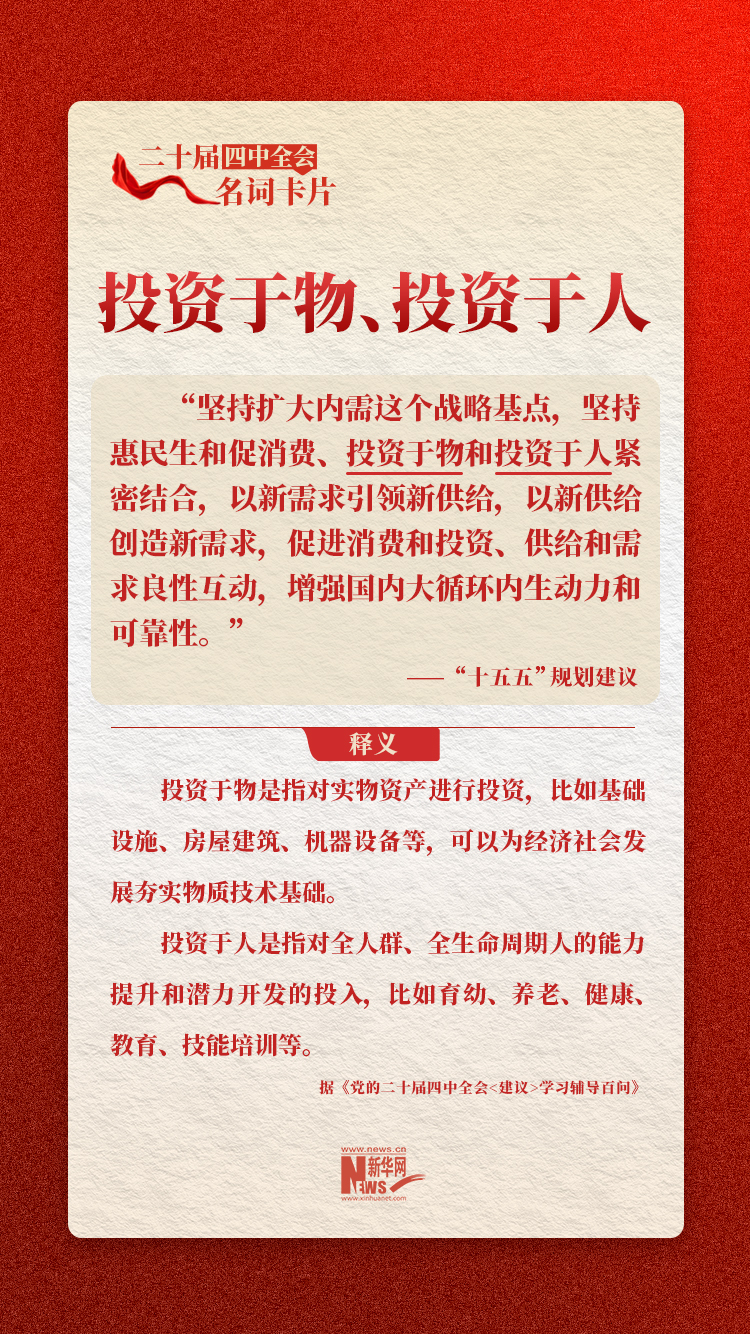
【学习贯彻党的二十届四中全会精神】】党的二十届四中全会名词卡片:投资于物、投资于人
Sou Hu Cai Jing· 2025-11-19 04:43
Group 1 - Investment in physical assets has played a crucial role in China's sustained economic growth, enhancing production capacity and social productivity, while also supporting new industrialization, information technology, urbanization, and agricultural modernization [1] - Investment in physical assets is a significant component of total demand, driving economic growth, creating jobs, and improving public services, which in turn boosts residents' wealth accumulation and consumption capacity [1] - Recent investments in food reserves, energy bases, emergency supplies, and industrial backups have strengthened China's economic resilience and risk management capabilities [1] Group 2 - There remains substantial potential for investment in physical assets in China, as per capita capital stock is relatively low compared to developed countries, and there is a need to optimize the capital structure and enhance investment quality in key industries [2] - The importance and urgency of investing in human capital have become increasingly prominent, as the return on investment in physical assets has declined, necessitating a shift towards innovation-driven and demand-driven economic growth [2] - Increasing investments in education, healthcare, and elderly care is essential for improving living standards and achieving high-quality development, as well as promoting comprehensive human development [2] Group 3 - Key directions for investment in human capital include improving income distribution systems, promoting equal access to basic public services, and increasing government investment in areas such as childcare, education, healthcare, and vocational training [3] - Strengthening human resource development and investing in various talents, especially in technology and innovation, is critical for providing foundational support for high-quality development [3] - Establishing a long-term mechanism for investing in human capital, optimizing fiscal responsibilities, and enhancing local government assessment and incentive mechanisms are necessary to stimulate investment in human capital across society [3]
二十届四中全会名词卡片:投资于物、投资于人
Xin Hua Wang· 2025-11-13 13:19
Core Viewpoint - The article emphasizes the importance of balancing investments in physical assets and human capital to drive economic growth and improve living standards in China, highlighting the need for a strategic focus on both areas to enhance domestic demand and supply dynamics [2][8]. Group 1: Investment in Physical Assets - Investment in physical assets has played a crucial role in China's rapid economic development, leading to effective accumulation of physical capital, enhanced production capacity, and improved social productivity [6]. - Such investments are a significant component of total demand, driving economic growth, creating jobs, and increasing residents' wealth and consumption capacity [6]. - Recent investments in food reserves, energy bases, emergency supplies, and industrial backups have strengthened China's economic resilience and risk management capabilities [6]. Group 2: Potential for Further Investment in Physical Assets - There remains substantial potential for further investment in physical assets in China, as per capita capital stock is still relatively low compared to developed countries [7]. - The capital stock structure requires optimization, with some key industries facing insufficient investment and quality issues, necessitating upgrades to outdated machinery, infrastructure, and urban areas [7]. Group 3: Importance of Investment in Human Capital - The urgency of investing in human capital has become increasingly apparent, as the return on investment in physical assets has declined in recent years [8]. - To transition from a capital-intensive to a talent-intensive economy, it is essential to enhance investments in human capital, fostering human capital accumulation and creating a "human capital dividend" [8]. - Increased investment in education, healthcare, and elderly care is vital for improving living standards and achieving high-quality development for the population [8]. Group 4: Key Directions for Investment in Human Capital - Improving income distribution systems and ensuring fair compensation based on contributions is essential for promoting productivity [9]. - Advancing equal access to basic public services and reducing disparities between regions and demographics is a priority [9]. - Increasing government investment in areas such as childcare, education, healthcare, vocational training, and cultural sports is necessary to cover the entire population and lifecycle [9]. - Strengthening human resource development and investing in high-skilled talent, particularly in technology and innovation, is crucial for supporting high-quality development [9]. Group 5: Establishing Long-term Mechanisms for Human Capital Investment - Establishing a long-term mechanism for human capital investment involves optimizing fiscal responsibilities and resource allocation, enhancing local government assessment and incentive systems [10]. - It is important to stimulate the active participation of various stakeholders in investing in human capital and to include such investments in statistical accounting [10].
郑栅洁详解“十五五”扩内需举措,实施一批重大标志性工程项目
2 1 Shi Ji Jing Ji Bao Dao· 2025-11-07 10:33
Group 1: Core Strategy on Domestic Demand - The article emphasizes the importance of expanding domestic demand as a strategic foundation during the 14th Five-Year Plan period, focusing on enhancing consumer spending and optimizing the consumption environment [1][4] - Key measures include removing unreasonable restrictions in the consumption sector and improving mechanisms for paid leave to address the issue of "difficulties in taking leave" [1][4] - The long-term goal is to increase residents' consumption capacity and raise the proportion of residents' income in national income distribution [1][4] Group 2: Investment Expansion - The article outlines the need to actively expand effective investment, optimizing the investment structure to stimulate private investment and enhance government investment's role [2][7] - It highlights the importance of improving investment efficiency and addressing issues of "heavy investment, light returns" in certain sectors [2][9] - The focus is on deepening investment and financing system reforms, utilizing new policy financial tools, and enhancing the role of public-private partnerships [2][9] Group 3: Investment in People and Infrastructure - The article discusses the integration of investment in physical assets and human capital, emphasizing the need for investment in education, healthcare, and skills training to enhance human capital [3][4] - It points out that while there is still significant potential for investment in physical assets, the urgency of investing in human capital is increasing due to declining returns on physical capital investments [4][6] - The article stresses the necessity of addressing the needs of a diverse population and improving the quality of life through targeted investments in services like elderly care and healthcare [4][5] Group 4: Government and Private Investment Dynamics - The article calls for a clear delineation between government and private investment roles, aiming to enhance the effectiveness of both [7][9] - It suggests that government investment should focus on public service shortfalls and strategic areas, while also stimulating private investment through improved market conditions [8][12] - The need for a supportive environment for private enterprises is highlighted, including fair competition and risk management assistance [11][12]
宏观纵览 | “投资于人”紧迫性凸显,官方详解发力点与新机遇
Sou Hu Cai Jing· 2025-11-04 08:01
Core Viewpoint - The importance and urgency of investing in people during the "14th Five-Year Plan" and beyond is increasingly highlighted, emphasizing the need to combine investments in material and human resources for sustainable economic growth [2][3]. Investment in People - The "14th Five-Year Plan" proposes that investment in people is a crucial direction, aiming to enhance development momentum, expand domestic demand, and promote comprehensive human development [2][3]. - Investment in people refers to enhancing capabilities and potential across the entire population and lifecycle, including areas such as childcare, elderly care, health, education, and skills training [2]. Economic Transition - The shift from capital-intensive to talent-intensive global industrial competition necessitates increased investment in human capital to drive innovation and demand, thereby establishing long-term competitive advantages for the economy [3][4]. - There has been insufficient investment in areas related to people's well-being and comprehensive development, making it essential to increase funding for education, healthcare, and elderly care to ensure high-quality population development [3][4]. Key Directions for Investment - Key areas for investment in people include: 1. Improving income distribution systems to ensure fair compensation based on contribution [3]. 2. Promoting equal access to basic public services and reducing disparities across regions and demographics [3]. 3. Increasing government investment in public welfare sectors such as childcare, education, healthcare, vocational training, and cultural sports [4]. 4. Enhancing human resource development, particularly for leading talents in technology and innovation [4]. 5. Establishing a long-term mechanism for investing in people, optimizing fiscal responsibilities, and encouraging various stakeholders to invest in human capital [4]. Government Investment Strategy - The National Development and Reform Commission emphasizes the need to better allocate government funds to address pressing development needs and improve people's livelihoods [4][5]. - The government aims to optimize investment structures, increase the proportion of welfare-related investments, and enhance the overall management of government investments to maximize their effectiveness [5]. Economic Outlook - The investment in people is seen as a logical mainline of the "14th Five-Year Plan," addressing systemic challenges and enhancing both social welfare and development quality [5][6]. - Future investments will focus on education, healthcare, and elderly care, as well as emerging technologies crucial for national competitiveness [6].

划重点!官方详解“投资于人”
第一财经· 2025-11-04 03:36
Core Viewpoint - The article emphasizes the importance of investing in human capital during the "14th Five-Year Plan" period, highlighting the need to combine investments in physical assets and human development to enhance economic growth and improve living standards [3][4]. Investment in Human Capital - The article discusses the shift from capital-intensive to talent-intensive global industrial competition, stressing the urgency of increasing investments in human capital to drive innovation and demand [4][5]. - It points out that historically, China has underinvested in areas related to people's well-being and comprehensive development, indicating that increased investment in education, healthcare, and elderly care is essential for improving quality of life and achieving common prosperity [4][5]. Key Directions for Investment - The article outlines several key areas for investment in human capital: 1. Improving income distribution systems to ensure fair compensation based on contribution [5]. 2. Promoting equal access to basic public services and reducing disparities across regions and demographics [5]. 3. Increasing government investment in social welfare sectors such as childcare, education, healthcare, vocational training, and cultural sports [5]. 4. Enhancing human resource development by investing in various talents, especially in technology and innovation [5][6]. 5. Establishing a long-term mechanism for human capital investment, optimizing fiscal responsibilities, and encouraging social participation [5][6]. Government Investment Strategy - The article mentions that China's fixed asset investment has reached 50 trillion yuan, but there is still a significant need for investment in social welfare and development [6]. - It highlights that the government will focus on combining investments in physical and human capital, which is expected to create new opportunities, such as the planned construction and renovation of over 700,000 kilometers of underground pipelines during the "14th Five-Year Plan," requiring an additional investment of over 500 billion yuan [6][7]. Economic Perspective - The article notes that the focus on human capital investment is not merely a welfare policy but a strategic approach to address systemic challenges and enhance development potential [6][7]. - It emphasizes that investments in human capital will be aligned with improving living standards and development quality, addressing key areas such as education, healthcare, and housing [6][7].