低买高卖

Search documents
李嘉诚还是要卖港口
首席商业评论· 2025-08-02 04:14
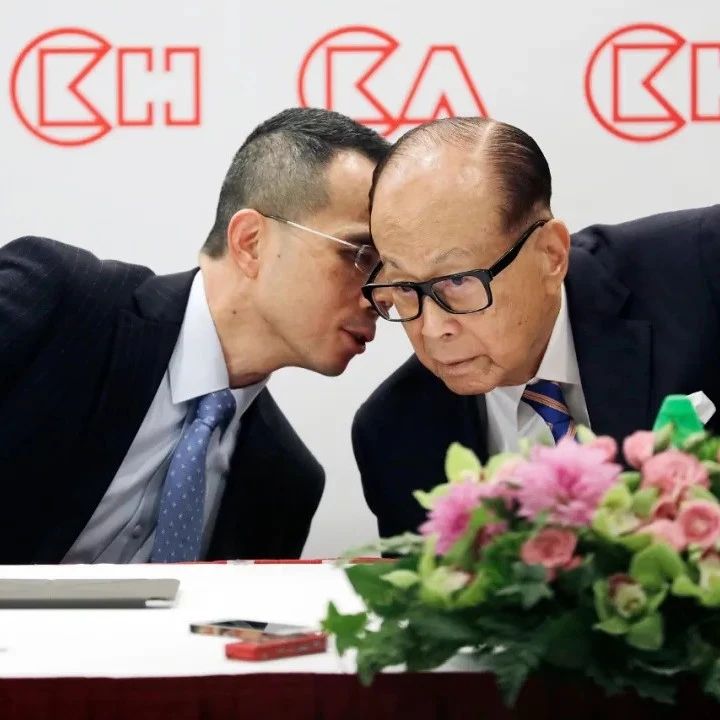
Core Viewpoint - The article discusses the strategic sale of Li Ka-shing's global port assets by Cheung Kong Holdings to a consortium led by BlackRock, with the involvement of China Ocean Shipping Group (COSCO), highlighting the implications for both parties and the broader market dynamics [4][6][8]. Group 1: Transaction Details - On July 28, Cheung Kong Holdings announced plans to invite mainland Chinese strategic investors to join the sale of its port assets, emphasizing that no transaction would occur without regulatory approvals [4]. - The deal involves the sale of 80% of Cheung Kong's port assets and 90% of its Panama port company, expected to generate $19 billion in cash for the company [6]. - The consortium led by BlackRock, which includes Italian shipping magnate Gianluigi Aponte's "Port Investment Company," is positioned to acquire significant control over key global ports [7]. Group 2: Strategic Implications - The entry of COSCO into the consortium is seen as a stabilizing factor, allowing for a mutually beneficial arrangement where both parties can achieve their strategic goals [8]. - The transaction is viewed as a potential win-win situation, with Cheung Kong receiving a cash influx comparable to its market value, while BlackRock secures valuable global port assets [8]. - The involvement of a strong mainland investor like COSCO is expected to facilitate the deal and provide a strategic asset for the state-owned enterprise [8]. Group 3: Historical Context - Li Ka-shing's history with port assets dates back to the 1970s, when he began acquiring significant holdings in the port sector, establishing a global network of operations [10][15]. - The article notes that the port business has been a core asset for Li Ka-shing, contributing to his wealth and business empire, with a global presence in 53 ports across 24 countries [15]. - The decision to sell these assets comes amid changing market dynamics and the need to optimize the company's asset portfolio, as the port business has become less aligned with Cheung Kong's overall revenue contributions [17].

李嘉诚还是要卖港口
创业家· 2025-07-31 09:52
Core Viewpoint - The article discusses Li Ka-shing's decision to sell his global port assets to a U.S. consortium, highlighting the strategic entry of Chinese state-owned enterprises as a solution to facilitate the transaction and create a win-win situation for all parties involved [3][10]. Group 1: Transaction Details - On July 28, 2023, Cheung Kong Holdings announced plans to invite major mainland Chinese strategic investors to join the sale of its port assets, emphasizing that no transactions would occur without regulatory approvals [3][10]. - The deal involves the sale of 80% of Cheung Kong's port assets and 90% of its Panama port company, expected to generate $19 billion in cash for the company [8][10]. - The consortium led by BlackRock and Italian shipping magnate Gianluigi Aponte's "Port Investment Company" is involved in the transaction, which includes 43 ports across 23 countries [8][10]. Group 2: Market Context and Implications - The entry of China Ocean Shipping Group (COSCO) into the consortium is seen as a strategic move, providing a reference price for the deal and potentially enhancing the transaction's feasibility [10][11]. - The sale is positioned against a backdrop of geopolitical tensions, with initial criticism surrounding the decision to sell port assets during a sensitive period [9][10]. - The transaction could result in Cheung Kong Holdings receiving cash equivalent to its total market value, which was approximately HKD 148 billion ($19.03 billion) at the time of the announcement [10]. Group 3: Historical Background and Business Strategy - Li Ka-shing's business acumen is highlighted through his historical investments in Hong Kong's real estate and port sectors, which have been foundational to his wealth [13][21]. - The article outlines how Li Ka-shing built his port empire, starting from the acquisition of significant stakes in Hutchison Whampoa and expanding globally through strategic purchases [16][22]. - The complexity and lower revenue contribution of port operations compared to other sectors like telecommunications and retail may have influenced the decision to divest these assets [23][24].
李嘉诚,出手!
券商中国· 2025-05-10 14:52
Core Viewpoint - Li Ka-shing's company is selling the residential project Yushuiyuan at a significant discount, with prices dropping to 70% of the original price, raising concerns and interest in the market [2][3][5]. Summary by Sections Project Overview - Yushuiyuan, developed by Cheung Kong Holdings, has been under development for over 20 years and is the first residential project by Li Ka-shing in Beijing [4]. - The project covers a total area of approximately 400,000 square meters, acquired in 2001 for 700 million yuan, resulting in a land cost of only 1,750 yuan per square meter [2][9]. Pricing and Sales Strategy - The average selling price for high-rise units has been reduced to 70,000 yuan per square meter, with total prices starting from 9.8 million yuan, a decrease of nearly 1 million yuan compared to last year's opening price [2][5]. - The current selling price represents a reduction of approximately 20,000 to 29,000 yuan per square meter from the previous record price of 90,700 to 99,700 yuan per square meter [5]. - The project is offering various unit types, including 140 square meter and 185 square meter apartments, with total prices below 10 million and 13 million yuan respectively [3]. Market Context and Implications - Analysts suggest that the price reduction is a response to current market conditions and aims to accelerate sales, given the project's long development cycle and low land costs [7]. - The project is strategically located near key commercial areas and transportation hubs, enhancing its attractiveness despite the price drop [8]. - This sale is part of Li Ka-shing's ongoing strategy of "buying low and selling high," as the current price is still nearly 40 times the original land acquisition cost [8]. Compensation for Existing Owners - To address concerns from previous buyers who purchased at higher prices, the developer is offering compensation options, including renovation subsidies or cash differences ranging from 800,000 to 1 million yuan [6].


读研报 | 别把估值简单化
中泰证券资管· 2025-04-08 10:14
Core Viewpoint - The article emphasizes that while valuation is a crucial concept in equity investment, its direct impact on stock prices is inconsistent and influenced by various factors [2][6]. Valuation and Market Conditions - Valuation's influence on stock prices is unstable, as shown in a study by Everbright Securities, which analyzed the relationship between valuation and stock price movements across different industries from January 2013 to February 2025 [2]. - Market tolerance for valuation varies under different conditions, particularly in relation to earnings growth rates [4][5]. - High-growth scenarios (earnings growth above 30%) show minimal differences in returns between high and low valuation combinations, especially when growth exceeds 100% [5]. - Conversely, in low-growth scenarios, market tolerance for high valuations decreases, leading to better performance from lower valuation combinations [5]. Market Sentiment and Valuation Preferences - Market sentiment, represented by turnover rates, affects investor preferences for valuation. During bullish sentiment, investors favor high-valuation sectors, while in bearish conditions, they lean towards low-valuation sectors [5]. - The combination of market sentiment with valuation metrics significantly enhances the effectiveness of industry grouping based on PE ratios [5]. Complexity of Valuation - Valuation is important for providing a long-term perspective on investment levels, but the "reasonable valuation" at any given moment is subject to multiple influences [6]. - Acknowledging the complexity of valuation and maintaining a respectful attitude towards market dynamics is essential for assessing investment opportunities related to valuation fluctuations [6].