市场情绪

Search documents
格林大华期货早盘提示:贵金属-20260401
Ge Lin Qi Huo· 2026-04-01 03:49
Report Summary 1. Report Industry Investment Rating - The report does not provide an industry investment rating. 2. Core View - The market is affected by geopolitical factors, and short - term uncertainty is high. Investors should control positions and prevent risks [2]. 3. Summary by Directory Market Quotes - International precious metal futures generally closed higher. COMEX gold futures rose 3.12% to $4699.60 per ounce, and COMEX silver futures rose 6.77% to $75.34 per ounce. Shanghai gold's main contract rose 1.97% to 1040.82 yuan per gram, and Shanghai silver's main contract rose 5.18% to 18954 yuan per kilogram [1]. Important Information - On March 31, the holdings of the world's largest gold ETF - SPDR Gold Trust increased by 1.143 tons to 1047.276 tons, while the holdings of the world's largest silver ETF - iShares Silver Trust decreased by 14.08 tons to 15274.28 tons [1]. - According to CME's "FedWatch", the probability of the Fed raising interest rates by 25 basis points in April is 1.6%, and the probability of keeping interest rates unchanged is 98.4%. By June, the probability of a cumulative 25 - basis - point rate cut is 3.9%, the probability of keeping interest rates unchanged is 94.6%, and the probability of a cumulative 25 - basis - point rate hike is 1.5% [1]. - Eurozone consumer prices rose 2.5% year - on - year in March, up from 1.9% in February, the highest level since January 2025 [1]. - In February, US job vacancies fell to 6.882 million, slightly lower than the market expectation of 6.89 million, and significantly lower than the revised 7.24 million in January. Recruitment and separation numbers both hit multi - year lows, indicating a cooling labor market [1]. - Trump is willing to end the war when the Strait of Hormuz is not fully open. The US "Bush" aircraft carrier is being deployed to the Middle East. Iran's president said the only way to restore regional order is to stop aggressive attacks, and Iran's foreign minister said Iran will not agree to a cease - fire but demands an end to the war in the entire region [1]. Market Logic - US job vacancies declined in February, and the recruitment speed slowed down significantly. The US and Iran both showed a willingness to end the Middle East conflict, leading to a sharp rise in US stocks. International crude oil prices fell, US bond yields declined, the 2 - year US bond yield fell about 3 basis points to 3.79%, and the US dollar ended a five - day rising trend, falling 0.62% and closing below 100 at 99.88. COMEX gold and silver both rose significantly, with silver rising more. The US president's statement about ending the Iran war in two to three weeks may be a signal of de - escalation, but its credibility depends on subsequent actions. If negotiations break down, market sentiment may reverse quickly, and volatility will remain high [1][2]. Trading Strategy - Due to geopolitical influence, market short - term uncertainty is large. Investors should pay attention to controlling positions and preventing risks [2].
国泰君安期货商品研究晨报:黑色系列-20260401
Guo Tai Jun An Qi Huo· 2026-04-01 01:57
1. Report Industry Investment Ratings - No specific industry investment ratings are provided in the report. 2. Core Views - Iron ore: Slow resumption of hot metal production, and ore prices are under pressure [2][4] - Rebar and hot-rolled coil: Weak market sentiment, with repeated fluctuations [2][8] - Ferrosilicon: Fluctuations in market trading sentiment, with the futures market showing weak oscillations [2][13] - Silicomanganese: Tightening demand expectations at the ore end, with the futures market showing weak oscillations [2][13] - Coke and coking coal: Oscillating weakly [2][16][17] - Logs: Improving demand, with prices oscillating at a high level [2][20] 3. Summary by Category Iron Ore - **Fundamental Data**: The closing price of the I2605 futures contract was 808.0 yuan/ton, down 5.0 yuan or 0.62%. The trading volume was 353,624 lots, a decrease of 17,797 lots. Among spot prices, PB (61.5%) was 777.0 yuan/ton, down 9.0 yuan [4]. - **Macro and Industry News**: Previous structural contradictions drove iron ore prices to a relatively high level. Recently, there are expectations of easing in negotiations, and the driving force is expected to weaken, leading to a decline in ore prices. The 2026 government work report focuses on stabilizing expectations, with the GDP growth rate adjusted from "around 5%" to "4.5%-5.0%", and an increase in the scale of policy-based financial instruments. The daily average hot metal output of 247 steel enterprises was 231.09 tons, a month-on-month increase of 2.94 tons [4][5]. - **Trend Intensity**: -1, indicating a bearish outlook [6]. Rebar and Hot-Rolled Coil - **Fundamental Data**: The closing price of the RB2605 futures contract was 3,294 yuan/ton, down 11 yuan or 0.33%. The trading volume was 477,403 lots, and the open interest was 901,052 lots, a decrease of 75,389 lots. Among spot prices, the Shanghai rebar price was 3,220 yuan/ton, down 10 yuan [8]. - **Macro and Industry News**: In February 2026, China exported 783.8 tons of steel, a month-on-month increase of 1.1%, with an average export price of 729.0 US dollars/ton, a month-on-month increase of 6.7%. From January to February, the cumulative steel exports were 1,559.2 tons, a year-on-year decrease of 8.1%. In March, the output of rebar decreased by 5.46 tons, and the output of hot-rolled coil increased by 5.4 tons [9][10]. - **Trend Intensity**: 0, indicating a neutral outlook [10]. Ferrosilicon and Silicomanganese - **Fundamental Data**: The closing price of the ferrosilicon 2605 futures contract was 5,874 yuan/ton, down 192 yuan. The trading volume was 166,212 lots, and the open interest was 158,901 lots. The spot price of ferrosilicon FeSi75 - B in Inner Mongolia was 5,630 yuan/ton, down 30 yuan [13]. - **Macro and Industry News**: In March, the silicon - manganese production in Ningxia and Inner Mongolia increased. However, starting from April 1, many enterprises announced production cuts. A steel mill in Jiangsu set the silicon - manganese price at 6,580 yuan/ton in late March [13][15]. - **Trend Intensity**: -1 for both ferrosilicon and silicomanganese, indicating a bearish outlook [15]. Coke and Coking Coal - **Fundamental Data**: The closing price of the JM2605 coking coal futures contract was 1,148.5 yuan/ton, down 65.5 yuan or 5.4%. The trading volume was 863,734 lots, and the open interest was 396,170 lots, a decrease of 3,810 lots. The spot price of Linfen low - sulfur primary coking coal was 1,580 yuan/ton, unchanged [17]. - **Macro and Industry News**: On March 31, the CCI metallurgical coal index showed certain trends. The online auction of coking coal had a high rejection rate, and the market sentiment was weak [17]. - **Trend Intensity**: -1 for both coke and coking coal, indicating a bearish outlook [19]. Logs - **Fundamental Data**: The closing price of the 2605 contract was 820.5 yuan, with a daily decline of 0.7%. The trading volume was 4,637 lots, a decrease of 15.2%. The open interest was 11,027 lots, a decrease of 3.2%. The spot price of 3.9 - meter 30 + radiata pine in the Shandong market was 790 yuan/m³, unchanged [20]. - **Macro and Industry News**: The 2026 government work report focuses on stabilizing expectations, with the GDP growth rate adjusted from "around 5%" to "4.5%-5.0%", and an increase in the scale of policy - based financial instruments [22]. - **Trend Intensity**: 0, indicating a neutral outlook [23].
双融日报-20260401
Huaxin Securities· 2026-04-01 01:31
Market Sentiment - The current market sentiment score is 31, indicating a "cold" market environment. Historical trends suggest that when the sentiment score is below or near 30, the market tends to find support, while scores above 80 may indicate resistance [6][9]. Sector Themes - **Banking Sector**: The banking sector is characterized by low valuations and high dividend yields, with half of the stocks yielding over 4.5%. This sector is seen as a "stable anchor" during economic slowdowns and increased market volatility, making it a key allocation for long-term funds like insurance and social security [6]. - **Electric Power Equipment**: The demand for high-power, high-stability transformers is surging due to the significant energy consumption of global AI data centers. The supply-demand imbalance is severe, with delivery times in the U.S. extending to 127 weeks. Additionally, China's State Grid is set to invest 4 trillion yuan in new power systems during the 14th Five-Year Plan, providing long-term order support for the industry [6]. - **Yangtze River High-Speed Rail**: The completion of a major construction task by the world's largest diameter high-speed rail shield machine marks a significant milestone for the Yangtze River high-speed rail project, which has a total investment exceeding 500 billion yuan. This project is expected to generate an additional value of nearly 1.5 trillion yuan across upstream and downstream industries [6]. Capital Flow Analysis - The top ten stocks with the highest net inflow include Shunhao Co. (90.56 million yuan) and Jushi Co. (71.05 million yuan), indicating strong investor interest in these companies [10]. - Conversely, the top ten stocks with the highest net outflow include Zhongji Xuchuang (-202.71 million yuan) and Yangguang Electric Power (-151.31 million yuan), reflecting a bearish sentiment towards these stocks [12][22]. Investment Strategy Recommendations - In a "cold" market, it is advisable to seek value investment opportunities while maintaining risk control. In a "relatively cold" market, cautious operations are recommended, focusing on fundamentally sound stocks and avoiding high-risk investments [21].




研究所晨会观点精萃-20260401
Dong Hai Qi Huo· 2026-04-01 01:29
Report Industry Investment Rating No relevant content provided. Core Viewpoints of the Report - Overseas, the US President has signaled a cease - fire, and there are signs that the Iranian leadership may be open to ending the war through negotiation. Crude oil prices have fallen, the US dollar index and US Treasury yields have declined, and global risk appetite has increased significantly. Domestically, China's PMI improved significantly in March, the economy exceeded expectations, exports were much better than expected, and inflation continued to recover. The overall economic and inflation situation is better than expected. The government work report set the main development targets and fiscal and monetary policies for 2026, with the overall targets and policy intensity lower than in 2025. The short - term domestic economic situation is better than expected, and the overseas market is warming up, so the domestic stock index market is expected to improve. [2][3] - Different asset classes have different trends: the stock index is expected to be volatile in the short term; government bonds will be in a short - term shock; in the commodity sector, black metals may weaken in the short term, non - ferrous metals may rebound in the short term, energy and chemical products may be strong in the short term, and precious metals may rebound in the short term. [2] Summary by Directory Macro - finance - Overseas, the US President's cease - fire signal and Iran's potential for negotiation led to a drop in crude oil prices, the US dollar index, and US Treasury yields, and a significant increase in global risk appetite. Domestically, China's economy and inflation in March were better than expected. The government work report set 2026 development targets and policies. The short - term domestic economic situation is good, and the overseas market is warming up, so the domestic stock index market is expected to improve. Pay attention to the changes in the Middle East geopolitical situation, policy implementation after the Two Sessions, and market sentiment. [2][3] - Asset operation suggestions: short - term cautious observation for stock indices and government bonds; short - term cautious observation for black metals; short - term cautious observation for non - ferrous metals; short - term cautious long for energy and chemical products; short - term cautious long for precious metals. [2] Stock Indices - Affected by sectors such as oil and gas, coal, and energy metals, the domestic stock market declined. However, the economic fundamentals in March were better than expected, and the short - term domestic economic situation is good, and the overseas market is warming up, so the domestic stock index market is expected to improve. Pay attention to the Middle East geopolitical situation, policy implementation after the Two Sessions, and market sentiment. Short - term cautious observation is recommended. [3] Precious Metals - The precious metals market rose on Tuesday night. With the hope of an end to the Middle East conflict, the US dollar index and US Treasury yields fell, and spot gold and silver rebounded. Precious metals are in a state of significant short - term shock and short - term rebound. Short - term cautious long is recommended. [3] Black Metals - **Steel**: The domestic steel spot and futures markets declined on Tuesday, and the market volume was low. The steel market follows energy prices, and the decline in coking coal prices has led to further weakness. The real - world demand has improved slightly, but the apparent consumption of the five major steel products still shows a downward trend year - on - year. The steel production of the five major varieties decreased slightly this week, but the molten iron production increased slightly. There is a risk of a phased correction in April. [4][5] - **Iron Ore**: The spot and futures prices of iron ore declined on Tuesday. The previous price increase was supported by energy prices and price negotiation news. The demand for iron ore remains resilient as molten iron production has increased, and the proportion of profitable steel mills is around 43%. The global iron ore shipping volume decreased by 6.71 million tons this week, while the arrival volume increased by 2.113 million tons. The problem of supply - demand mismatch is gradually being resolved. The room for further price increases is limited, and attention should be paid to the phased adjustment risk after the weakening of energy prices. [5] - **Silicon Manganese/Silicon Iron**: The spot prices of silicon iron and silicon manganese rebounded slightly on Tuesday, while the decline in the futures prices widened. The prices follow energy prices. The cost increase has led to some factory production cuts. The inventory of silicon iron and silicon manganese is at a low level, and the overall production cost is supported. The futures prices are recommended to be treated with an interval - shock mindset. [6] Non - ferrous Metals and New Energy - **Copper**: Downstream enterprises replenished their inventories intensively at low prices, resulting in a significant decline in social copper inventories. After the replenishment, the inventory decline rate is expected to slow down. The copper market supply is loose, and the terminal demand recovery in the peak season is not optimistic, which restricts the inventory decline. The current inventory is still at a high level. The core contradiction lies in the mining end, but the probability of extreme shortage is low. [7] - **Aluminum**: The attack on the UAE's global aluminum company may affect electrolytic aluminum production in the short term, supporting aluminum prices. The domestic aluminum ingot social inventory is at a high level and is being depleted slowly. The domestic aluminum supply remains high. [7] - **Zinc**: The domestic zinc ingot inventory is basically the same as last week, at 214,000 tons, and is still at a high level in recent years. The zinc ore processing fees in the southern region have rebounded, and the import ore TC has decreased. The domestic smelting production remains at a relatively high level, and overseas smelting production will recover in 2026. The demand is not optimistic. [8][9] - **Lead**: The decline in domestic lead ingot inventory has stopped, and the LME inventory is stable. The production of primary and secondary lead has increased seasonally. The demand peak season has passed, and the demand is in the off - season. The import volume of refined and crude lead has increased significantly. [9] - **Nickel**: Indonesia's policy is changeable. The core contradiction lies in the mining end. The RKAB quota in 2026 has decreased significantly, and there are risks in MHP supply. Nickel prices have support at the bottom, but the upside is limited by high inventories at home and abroad. [10] - **Tin**: The import of tin ore from Myanmar has increased significantly, and the import sources are more diversified. The demand in the semiconductor industry is good, but other industries are not performing well, and the overall demand is not good. The social inventory of tin ingots has decreased, and the LME inventory has decreased. [11] - **Lithium Carbonate**: The main contract of lithium carbonate fell significantly on Tuesday. The decline is mainly due to the rumored news of the opening of lithium ore exports in Zimbabwe. The fundamentals of lithium carbonate are still strong, with both supply and demand booming, and the inventory is low. It is recommended to lay out at low prices or hold long positions cautiously. [12] - **Industrial Silicon**: The main contract of industrial silicon fell on Tuesday. The supply and demand are weak, the production capacity is excessive, and the inventory is at a high level. It is priced close to the cost, and it is recommended to operate within an interval, paying attention to the cost support at the bottom. [12] - **Polysilicon**: The main contract of polysilicon fell on Tuesday. The price has returned to the cost - based pricing, and the inventory is continuously accumulating at a high level. It is recommended to hold short positions cautiously or partially take profits. [13] Energy and Chemicals - **Crude Oil**: Iran and the US have signaled a willingness to resolve the conflict, leading to a narrowing of the risk premium and a decline in oil prices. However, the market is still worried about the impact on the global energy system. The average gasoline price in the US has exceeded $4 per gallon, posing a political risk to the Trump administration. Oil prices will remain at a high - central and high - volatility level in the short term. [14] - **Asphalt**: As oil prices decline, asphalt is likely to follow. There are short - term supply problems, and seasonal demand will increase, driving inventory depletion. The short - term inventory accumulation pressure is limited, and the new contract price is expected to rise significantly after April, supporting the market bottom. The absolute price will continue to fluctuate significantly with crude oil. [14] - **PX**: The shortage of naphtha continues, and overseas PX prices remain strong. With the increase in domestic PX plant maintenance plans, the PX price is expected to remain strong, but the upside may be limited by the increase in PTA plant maintenance plans. [15] - **PTA**: In the peak season, terminal orders and开工 are lower than in previous years, and the negative feedback continues. The PTA cost is still supported, but the downstream filament production reduction has increased. The PTA basis has rebounded slightly, and the negative feedback restricts the price increase. PTA is likely to continue to fluctuate strongly. [15] - **Ethylene Glycol**: Driven by export expectations, ethylene glycol prices rose, but after the decline in oil prices, inventory pressure was reflected in the futures price. Overseas supply is expected to decrease significantly, and the price will remain high - volatile. Attention should be paid to the terminal negative feedback. [15] - **Short - fiber**: Affected by the high - volatility of crude oil prices and negative feedback in the polyester sector, short - fiber prices will continue to fluctuate strongly in the short term, following PTA and other varieties. [16][17] - **Methanol**: The domestic methanol market is strong, and the port basis is strengthening. Affected by the news of the US - Iran peace talks, the energy and chemical futures market has declined. However, due to the obstruction of Iranian exports and unstable Middle East plants, the port inventory is decreasing rapidly. The domestic demand is warming up in the peak season, and the spot is in short supply. The market is strong, but the volatility has increased significantly. [17] - **PP**: The market price has declined. The upstream supply is shrinking, and the downstream demand is increasing, providing support for the price. The market is expected to remain strong, and attention should be paid to the situation of the cease - fire talks. [18] - **LLDPE**: The polyethylene market price has adjusted. The upstream supply is shrinking, and the demand is supported by the traditional peak season. The inventory is depleting rapidly. The market is expected to continue to be strong, but there is inventory pressure in some areas. Geopolitical factors are the key variables for external supply. [18] - **Urea**: The domestic urea market is stable. Affected by external positive factors, the futures market has strengthened, boosting the spot market sentiment. However, the policy of ensuring supply and stabilizing prices is still in place, and the industrial demand is supporting the market. The export is tightening, and the price will continue to fluctuate within a narrow range in the short term. [19] Agricultural Products - **US Soybeans**: The overnight CBOT July soybean contract closed higher. The US Department of Agriculture's planting intention report shows that the estimated soybean planting area in 2026 is 84.7 million acres, lower than the market expectation. The quarterly grain inventory report shows that the soybean inventory on March 1, 2026, is 2.104803 billion bushels, higher than the analyst's estimate. [20] - **Soybean and Rapeseed Meal**: The supply and demand of imported soybeans for domestic oil mills in April are balanced, and the inventory is loose. The basis is under seasonal pressure. The far - month oil mill crushing profit supports more purchases of soybeans, and the future supply - demand situation is expected to be loose. For rapeseed meal, as the import of rapeseed increases in the far - month, the supply concern fades, and the price difference between soybean and rapeseed meal widens. It will follow the soybean meal's shock adjustment. [20] - **Oils**: The overnight BMD palm oil closed higher. Indonesia's B50 biodiesel policy has boosted market sentiment. The decline in crude oil prices due to the US - Iran cease - fire intention has put pressure on the vegetable oil premium. The domestic soybean and rapeseed oil spot basis is stable, and the demand is weak. Palm oil exports from Malaysia are strong, and the inventory is expected to decrease significantly. Palm oil will maintain a high - level shock. [21] - **Corn**: The national corn price is slightly weak. The supply and demand situation has not changed significantly, but the market atmosphere is not high. Traders are more willing to sell, and the inventory of downstream deep - processing enterprises is accumulating. The feed enterprises are using more imported and policy - auctioned grains, and the acceptance of high - price corn is decreasing. The unconfirmed news of brown rice auction in early April may limit the corn price. [21] - **Pigs**: The average weight of pigs is increasing, and small - scale farmers are reluctant to sell, while large - scale farms are increasing the supply with a slight weight reduction. The short - term breeding profit is in a loss, and the policy is guiding weight reduction and production reduction. The short - term spot price may continue to weaken, but the long - term expectation is improving. The futures market has risks in the near - month contract, while the long - term contract has stronger support. [22]
股指期货基差与套利相关研究
Bao Cheng Qi Huo· 2026-03-31 07:09
1. Report Industry Investment Rating No relevant content provided. 2. Core Viewpoints of the Report - The basis level and volatility of stock index futures show clear style stratification, with solid financial logic support for statistical laws. The volatility of the basis of small - and mid - cap stock index futures (IC, IM) is systematically higher than that of large - cap varieties (IF, IH). The basis presents a leptokurtic and thin - tailed feature, and there are differences in the distribution form. IH and IF basis distributions have significant seasonal characteristics, strengthening seasonally from May to July mainly due to the dividend effect [3][60][61]. - Investor expectations, market sentiment, and capital behavior are key forces driving short - term basis fluctuations, with significant varietal heterogeneity in the impact. When market sentiment warms up or the margin balance expands, the basis tends to narrow, and this effect is more sensitive and intense in small - and mid - cap varieties. The stock market volatility index is positively correlated with the basis. The large - scale inflow of north - bound funds usually supports the spot price and helps the basis expand, but the recent data has gaps. The significant decline in the shareholding ratio of long - term institutional funds such as insurance and social security may weaken the spot pricing anchor and increase the forward risk premium of the market, intensifying the futures discount [4][61]. - Index dividends are a definite fundamental factor causing regular seasonal fluctuations in the basis. There is a significant positive correlation between the dividend rate and the basis, and the higher the dividend concentration, the stronger the impact. During the dividend peak from May to July each year, the futures of Shanghai Stock Exchange 50 (IH) and CSI 300 (IF) stock index futures are usually in deep discount, which provides a clear layout window for calendar - effect - based arbitrage and hedging strategies [4][62]. 3. Summary according to the Directory 3.1 Chapter 1: Historical Distribution and Statistical Laws of Stock Index Futures Basis - **Core Statistical Features and Differences between Varieties**: Based on historical data from 2023 to 2026, the basis of the four major stock index futures shows significant varietal differentiation. The basis level presents a style gradient of IM > IC > IF/IH, and the basis volatility also shows a similar style differentiation. The statistical features of the IH variety are special, with a low basis mean and volatility, but extreme basis deviations may occur, indicating potential arbitrage opportunities [10][11]. - **Time - Series Features and Seasonal Laws**: The basis has obvious quarterly effects. The monthly average of the basis is significantly higher from May to July due to the dividend effect, and the futures are more likely to be in a premium state in the fourth quarter, which may be related to year - end market liquidity, institutional investors' portfolio adjustments, and expectations for the next year's corporate performance [12][14]. - **Distribution Form and Normal Distribution Test**: The basis distribution forms of different varieties vary. The basis distributions of IH, IF, and IC are more concentrated, while that of IM is flatter. All have leptokurtic and thin - tailed distribution features, which have dual implications for trading practice [23][25]. 3.2 Chapter 2: Influence Mechanism of Investor Expectations and Market Sentiment on Stock Index Futures Basis - **Linkage Mechanism between Market Sentiment and Basis and Varietal Heterogeneity**: Market sentiment is positively correlated with the basis, but the sensitivity of different style index futures varies. When the market sentiment index rises, the basis tends to narrow, and this effect is more obvious in small - and mid - cap stock index futures. The margin balance is also indirectly related to the basis, and the stock market volatility index is positively correlated with the basis [35][36][37]. - **Transmission Path and Influence of Policy Expectations on the Basis**: Monetary policy and stock index futures regulatory policies affect the basis. Monetary policy has a complex impact on the basis through changing the risk - free interest rate and liquidity environment. The stability of regulatory policies provides a institutional basis for the market - based formation of the basis [41][42]. 3.3 Chapter 3: Analysis of the Seasonal Influence of Index Dividends on Stock Index Futures Basis - **Core Facts of Dividend Season Distribution and Seasonal Performance of the Basis**: Index component stock dividends are concentrated in the second and third quarters, leading to significant seasonal characteristics of the basis. The impact of dividends on the basis of different varieties varies, with IH and IF being more significantly affected [44][45]. - **Practical Application and Strategy Considerations Based on Dividend Seasonality**: The predictable seasonal influence of dividends provides a strategy layout window. During the dividend season, there may be opportunities for reverse cash - and - carry arbitrage. Establishing a dividend monitoring system is crucial [48]. 3.4 Chapter 4: Influence Mechanism of Market Capital Behavior on Stock Index Futures Basis - **Analysis of the Influence Mechanism of Various Capital Behaviors on the Basis**: Margin trading funds affect the basis by changing the supply - demand balance in the spot market. The shrinkage of short - selling balance may lead to an increase in futures discount. North - bound funds affect the basis by influencing the spot pricing anchor, but data gaps exist. The reduction of long - term institutional funds' shareholding may lead to an increase in the basis [50][51][52]. - **Interpretation of the Current Market Structure and Future Observation**: In March 2026, the deep discount structure of the four major stock index futures may be the result of the combined action of various capital behaviors. Follow - up monitoring dimensions include the inflection point of short - selling balance, the authenticity verification and tracking of institutional holdings, and the linkage between capital cost and basis rate [53][54]. 3.5 Chapter 5: Analysis of the Current Stock Index Futures Basis Situation and Market Structure - **Current Basis Level and Term Structure Features**: As of March 25, 2026, all varieties of futures are in a discount state, and the far - month discount deepens. There are significant differences in basis rates between varieties, with IH having the lowest basis rate and IM having the highest [56]. - **Strategy Considerations and Risk Monitoring under the Current Basis Structure**: For cash - and - carry arbitrageurs, reverse arbitrage is theoretically the main direction, but practical execution is difficult. Key risk monitoring dimensions include sudden changes in capital interest rates, reversals of market sentiment, early reactions to dividend season expectations, and signs of style switching [58][59]. 3.6 Chapter 6: Summary The report systematically studies the basis performance of the four major stock index futures from January 1, 2023, to March 25, 2026, and finds relevant laws of basis changes, including style stratification of basis level and volatility, the influence of investor expectations, market sentiment, and capital behavior on short - term basis fluctuations, and the seasonal influence of index dividends on the basis [60].
双融日报-20260331
Huaxin Securities· 2026-03-31 01:31
Market Sentiment - The current market sentiment score is 63, indicating a "relatively hot" market condition, which suggests strong investor confidence [5][8][19] Hot Themes Tracking - **Banking Sector**: The banking sector is characterized by low valuations and high dividend yields (over 4.5% for half of the stocks), making it a stable investment choice amid economic slowdown and increased market volatility. Key stocks include Agricultural Bank of China (601288) and Ningbo Bank (002142) [5] - **Power Equipment Sector**: The demand for high-power and high-stability transformers is surging due to the significant energy consumption of global AI data centers. The supply-demand imbalance is severe, with delivery times in the US reaching 127 weeks. China's State Grid is set to invest 4 trillion yuan in new power systems during the 14th Five-Year Plan, providing long-term order support for the industry. Relevant stocks include China Western Power (601179) and TBEA Co., Ltd. (600089) [5] - **Yangtze River High-Speed Rail**: The successful completion of a major construction task by the world's largest diameter high-speed rail shield machine is a key milestone for the Yangtze River high-speed rail project, which has a total investment exceeding 500 billion yuan. This project is expected to boost the value added in upstream and downstream industries by nearly 1.5 trillion yuan. Key stocks include China Railway Industry (600528) and Shenzhou High-Speed Railway (000008) [5] Capital Flow Analysis - The top ten stocks with the highest net inflow include Pingtan Development (000592) with 179.72 million yuan and Guangxun Technology (002281) with 64.78 million yuan, indicating strong investor interest in these companies [9] - The top ten stocks with the highest net outflow include Sunshine Power (300274) with -167.58 million yuan and Luxshare Precision (002475) with -132.44 million yuan, reflecting a bearish sentiment towards these stocks [11] Industry Overview - The report highlights significant capital inflows into the agriculture, defense, and construction materials sectors, while the electronics and public utilities sectors are experiencing notable outflows, indicating shifting investor preferences [15][16]
价量一致性和RSI信号本周同步转空,市场情绪指标进一步回落——量化择时周报20260329
申万宏源金工· 2026-03-31 01:02
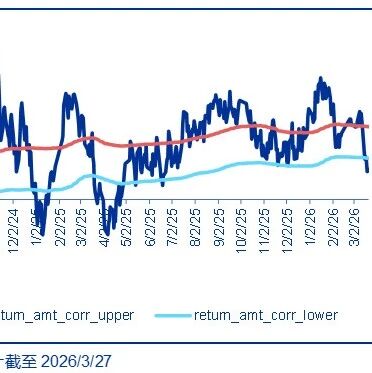
Market Sentiment - The market sentiment indicator as of March 27 is 1.2, down from 1.7 the previous week, indicating a bearish outlook as sentiment continues to decline throughout the week [1][6]. - The price-volume consistency indicator and RSI have both turned negative this week, reflecting a shift from previous oscillation to a sustained bearish view, indicating a weakening market [1][8]. Trading Volume - The total trading volume for the A-share market decreased by 0.65% week-on-week, with an average daily trading volume of 1,394.17 billion yuan, suggesting a slight decline in market activity compared to the previous week [1][10]. Industry Performance - As of March 27, the short-term score rankings for industries show that utilities, coal, power equipment, telecommunications, and oil and petrochemicals are leading, with utilities scoring 91.53, the highest among industries, and coal scoring 84.75, second [1][34]. - The industry crowding indicator shows a low correlation of 0.17 with the weekly price changes, indicating that the crowding level is not significantly impacting price movements [1][37]. Risk Appetite - The relative trading volume of the Sci-Tech 50 index remains low, indicating that market risk appetite is also low, with a slight fluctuation observed [1][13]. - The financing balance ratio has slightly increased this week, suggesting a minor rise in market sentiment and trading activity in the financing market [1][21]. Technical Indicators - The RSI indicator has penetrated the lower boundary and continues to decline rapidly, indicating a weakening short-term momentum [1][25]. - The main buying power indicator has shown a downward trend, reflecting reduced willingness from institutional investors to actively allocate capital in the market [1][28].

3月第4周立体投资策略周报:策略周报:资金面扰动仍在,市场情绪回落-20260330
Guoxin Securities· 2026-03-30 12:30
Group 1 - The core conclusion indicates that in the fourth week of March, a total net outflow of funds into the market was 35.5 billion, compared to a net outflow of 34.6 billion in the previous week [1][7] - Short-term sentiment indicators are at a mid-high level since 2005, while long-term sentiment indicators are at a mid-low level since 2005 [1][12] - From an industry perspective, the highest transaction volume share in the past week was in the power equipment (99%), communication (98%), and semiconductor (96%) sectors, while the lowest was in real estate (0%), commercial trade (1%), and liquor (1%) [2][14] Group 2 - The recent week saw a decrease in financing balance by 24 billion, an increase in public fund issuance by 21 billion, a net redemption of ETFs amounting to 5.7 billion, and an estimated net outflow of northbound funds of 10.5 billion [1][7] - The recent week’s annualized turnover rate was 488%, placing it in the 82nd percentile historically, while the financing transaction ratio was 8.95%, placing it in the 56th percentile historically [12][15] - The recent week’s A-share risk premium was 2.63%, which is in the 42nd percentile historically, and the dividend yield of the 300 index (excluding finance) compared to the ten-year government bond yield was 1.24, in the 5th percentile historically [2][14]
双融日报-20260327
Huaxin Securities· 2026-03-27 01:33
Market Sentiment - The current market sentiment score is 33, indicating a "cold" market environment. Historical trends suggest that when the sentiment score is below or near 30, the market tends to find support, while scores above 80 may indicate resistance [4][7]. Sector Themes Banking Sector - The banking sector is characterized by low valuations and high dividend yields, with half of the stocks offering yields over 4.5%. This sector is seen as a "stable anchor" during economic slowdowns and increased market volatility, making it an attractive option for long-term investors such as insurance and social security funds. Key stocks include Agricultural Bank of China (601288) and Bank of Ningbo (002142) [4]. Electric Power Equipment Sector - The demand for high-power and high-stability transformers is surging due to the significant electricity consumption of global AI data centers. The supply-demand imbalance is severe, with delivery times in the U.S. extending to 127 weeks. Additionally, China's State Grid is set to invest 4 trillion yuan in new power systems during the 14th Five-Year Plan, providing long-term order support for the industry. Relevant stocks include China Western Power (601179) and TBEA Co., Ltd. (600089) [4]. Brokerage Sector - Among the listed brokerages that have disclosed earnings forecasts, over half reported a year-on-year net profit increase exceeding 50%, indicating a comprehensive recovery in profitability. The current price-to-book ratio for the sector is 1.37, which is historically low and diverges significantly from the high growth fundamentals. The draft of the Financial Law is expected to accelerate industry differentiation, benefiting leading brokerages. Notable stocks include CITIC Securities (600030) and Guotai Junan Securities (601211) [4].
情绪杀 | 谈股论金
水皮More· 2026-03-26 10:35
Market Overview - The A-share market experienced a collective decline today, with the Shanghai Composite Index falling by 1.09% to close at 3889.08 points, the Shenzhen Component Index down 1.41% to 13606.44 points, and the ChiNext Index decreasing by 1.34% to 3272.49 points. The total trading volume in the Shanghai and Shenzhen markets was 195.71 billion, a decrease of 23.59 billion compared to the previous day [3]. Market Sentiment and Performance - The core factors influencing market trading include short-term sentiment, mid-term performance, and long-term valuation. Currently, during the annual report disclosure season, market sentiment is the key driver of investment trading. Many companies reported annual results that exceeded expectations but still performed poorly due to a lack of growth expectations. Conversely, companies with disappointing results faced significant declines. Overall, market sentiment is cautious, leading to a conservative outlook for the future, which results in a tendency for stocks to decline regardless of whether their performance is above or below expectations [4]. Insurance Sector Analysis - The insurance sector was notably impacted today, particularly due to the annual report disclosure of China Life Insurance. Despite a 44% growth in retail business performance, the stock price fell sharply due to over 10 billion yuan in investment losses in the fourth quarter. Comparatively, China Life's third-quarter performance showed a 60% year-on-year increase, leading the market to view the annual report as underwhelming, which directly contributed to the stock's decline. Similarly, China Ping An reported a 22% year-on-year increase in net profit, with a significant improvement from an 11% increase in the third quarter. However, its stock also experienced a substantial drop, making its future performance a critical indicator for market sentiment. From a valuation perspective, China Ping An's annual dividend is 2.7 yuan per share, with a current stock price of 56 yuan, indicating a high investment value in terms of dividend yield [5][6]. Long-term Valuation Perspective - From a long-term valuation standpoint, the fundamentals of the insurance sector remain positive, particularly with significant growth in premium income this year. However, short-term trends are still heavily influenced by market sentiment. The A-share market showed a retracement today, with over 4000 stocks declining and only about 900 stocks rising, indicating a broad market downturn. The sectors leading the decline included wind power, solar energy, and insurance, while the oil service sector benefited from a rebound in oil prices [6]. Market Outlook - Currently, both the A-share market and the Hang Seng Technology Index are awaiting the resolution of negative sentiment. The ongoing disclosure of annual reports from major companies may serve as a pivotal point for the market. This turning point could not only impact individual stocks but also help establish a clear direction for the overall market trend [7].