信心危机

Search documents
英媒:全球经济的最大威胁——悲观情绪
Huan Qiu Shi Bao· 2026-01-26 22:55
Core Viewpoint - Pessimism is identified as a major economic issue globally, with a lack of positive sentiment affecting economic performance and decision-making [1][2]. Group 1: Global Sentiment and Economic Impact - Pessimistic sentiment is spreading globally, with consumer confidence in the U.S. near historical lows and European economic confidence indices below long-term averages for three consecutive years [1]. - A survey of 27,000 voters and business leaders across the U.S., U.K., Canada, EU, and Japan reveals that most respondents believe the next generation will face a more challenging life, indicating a widespread belief in systemic inequality favoring the wealthy [1][2]. - In an international poll of nearly 60,000 people, the number of economic pessimists in the U.K. and Japan is approximately double that of optimists, while in Germany, the ratio is nearly 12 to 1 [2]. Group 2: Behavioral and Policy Implications - Persistent pessimism is a significant constraint on the global economy, leading to reduced investment and a shift towards zero-sum thinking, where one party's gain is perceived as another's loss [2][3]. - The concept of "uncertainty shock" arises from increased pessimism, causing households and businesses to delay high-risk decisions, which is evident in the reduced hiring rates in the U.S. despite GDP growth [3]. - A belief in economic system opacity fosters zero-sum thinking, leading to support for wealth redistribution policies rather than economic growth, with many individuals viewing AI as a threat to job opportunities [3]. Group 3: Fiscal Discipline and Political Environment - Pessimism undermines fiscal discipline, as voters with low confidence are less tolerant of short-term sacrifices, making it difficult to implement austerity measures [4]. - Historical examples show that successful fiscal tightening requires public belief in future rewards, which is lacking in the current environment, leading to resistance against necessary economic adjustments [4]. - The greatest threat to the global economy is not just the data itself but the political ecology shaped by pessimistic sentiment, necessitating government action to foster a more optimistic societal outlook to drive economic growth [4].
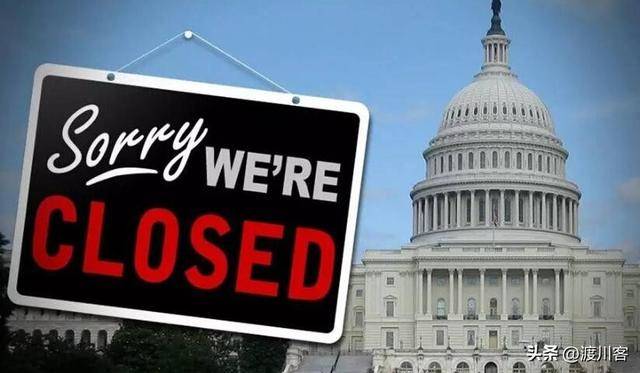
美国停摆38天,两党还在僵持,40座机场砍航班,或损失140亿
Sou Hu Cai Jing· 2025-11-07 02:24
Group 1 - The U.S. government shutdown has reached a historic record of 38 days, surpassing the previous record of 35 days from 2018-2019, primarily due to a lack of compromise between the two political parties [2][5][19] - The shutdown is a result of a "money bag struggle" between the Democratic and Republican parties, with Democrats advocating for social welfare spending and Republicans opposing it, leading to an impasse on budget negotiations [8][11][29] - The shutdown has severe implications for public services, particularly in the aviation sector, where 1.3 million air traffic controllers and 50,000 airport security personnel are working without pay, resulting in a 10% reduction in flight capacity at major airports [17][19] Group 2 - Economic losses from the shutdown are significant, with estimates indicating a loss of $7 billion after four weeks, escalating to $14 billion after eight weeks, which could have been used for public assistance [19][21] - The financial markets are experiencing instability, as the Federal Reserve is unable to make informed decisions on interest rates due to the lack of government data, leading to concerns about liquidity and market confidence [21][25] - The ongoing shutdown poses a risk of long-term economic damage, with potential layoffs and business closures if it extends beyond Thanksgiving, further exacerbating the economic situation [25][29]

dbg markets盾博:今年年底前,纳斯达克指数或将大涨
Sou Hu Cai Jing· 2025-10-16 02:25
Group 1 - Hedge fund manager Paul Tudor Jones predicts that the Nasdaq Composite Index is likely to rise by the end of the year amid widespread expectations of interest rate cuts [1][3] - The performance of large tech companies' upcoming earnings reports and the resolution of trade conflicts by the end of October are critical for a significant market rally in the last two months of the year [3] - Jones identifies the period from late October to early November as a "key turning point" for market trends, where the Nasdaq's performance will directly influence the year-end market outlook [3] Group 2 - Current market gains in the Nasdaq are heavily reliant on a few leading AI stocks, indicating a structural imbalance that could amplify market volatility [3] - The Federal Reserve's current interest rate range of 4%-4.25% is expected to drop to around 2.5% by this time next year, as governments strive to maintain low rates to manage debt and stimulate nominal economic growth [3] - The White House is actively seeking a more dovish Federal Reserve chair to ensure the continuation of low interest rate policies, reflecting a compromise to manage debt pressures [4] Group 3 - There is a potential risk of a "crisis of confidence" similar to the one experienced in the UK under Prime Minister Liz Truss, affecting both Japan and the US [5]