信心危机

Search documents
2026年2月6日凌晨全球多类资产遭抛售:加密市场超43万人爆仓 涉资20.69亿美元
Sou Hu Cai Jing· 2026-02-08 13:22
Group 1 - The core viewpoint of the articles highlights a significant sell-off across various asset classes, particularly in the cryptocurrency market, leading to over 430,000 liquidations and a total liquidation amount of $2.069 billion within 24 hours [1] - The U.S. stock market, precious metals, and oil markets also experienced price volatility, with the three major U.S. stock indices collectively declining, and the Nasdaq facing its worst three-day sell-off since April of the previous year [1] - Market sentiment has shifted towards risk aversion, driven more by balance sheet mechanisms rather than market narrative logic, as noted by industry experts [1][2] Group 2 - The Chicago Mercantile Exchange announced adjustments to margin requirements for certain futures contracts, increasing the margin ratio for gold to 9% and for silver to 18%, effective after market close on February 6 [2] - The cryptocurrency market is undergoing a "crisis of confidence," as indicated by the shift from net buyers to net sellers of Bitcoin by U.S. ETFs that had previously accumulated significant holdings [1]
全线暴跌!凌晨超43万人爆仓,美股、黄金、白银、比特币、石油集体重挫
Sou Hu Cai Jing· 2026-02-06 16:33
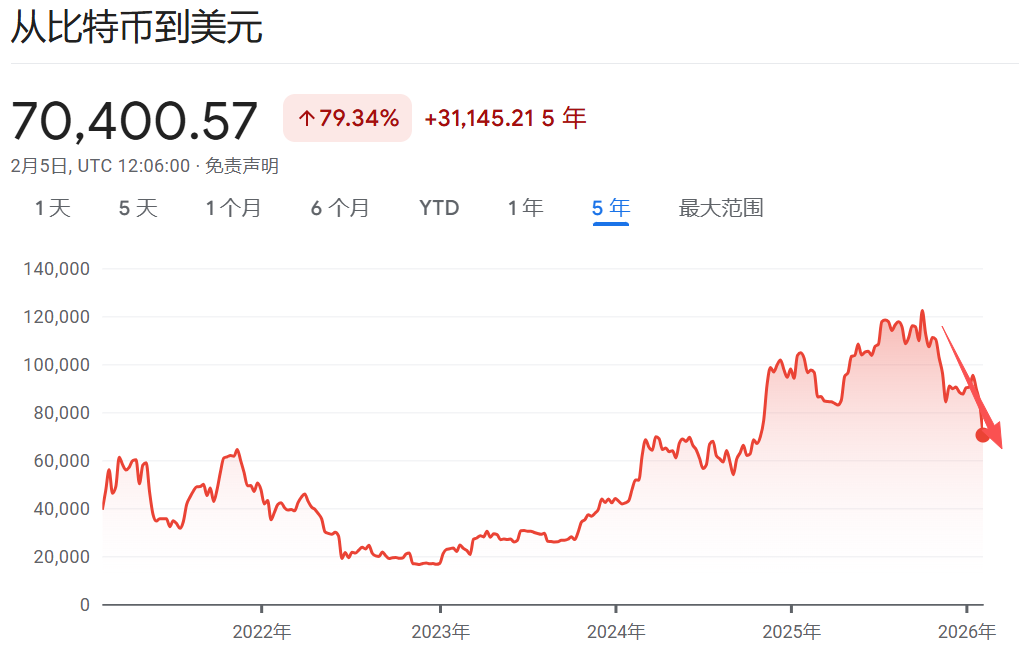
Group 1: Cryptocurrency Market Collapse - The cryptocurrency market experienced a significant crash, with Bitcoin's price plummeting from over $70,000 to $63,860.8, marking a daily drop of 12.81% and a total decline of over 48% since its peak in October 2024 [3] - The total market capitalization of Bitcoin halved from its peak of $2.48 trillion to $1.27 trillion, with over 43,000 traders facing liquidation, resulting in total losses of approximately $2.069 billion [3] - Ethereum dropped by 13.1%, XRP fell over 22%, and other cryptocurrencies like SOL and Dogecoin also saw declines exceeding 14% [3] Group 2: Traditional Financial Markets Impact - The traditional financial markets were not spared, with major U.S. stock indices falling over 1%, and the Nasdaq index experiencing a 1.59% drop, marking its worst three-day decline since April of the previous year [4][5] - Major tech stocks such as Amazon and Microsoft saw declines exceeding 4%, while Nvidia dropped over 1%, reflecting a broader sell-off in the tech sector [5] - Concerns arose from the introduction of a new AI model by Anthropic, which led investors to worry about the potential disruption to traditional software and financial services companies [5] Group 3: Economic Indicators and Employment Data - The U.S. labor market showed signs of distress, with employers announcing 108,435 layoffs in January 2026, the highest number for that month since the global financial crisis [6] - Initial jobless claims increased beyond market expectations, and job vacancies fell to their lowest level since September 2020, indicating a cooling labor market [8] - The disconnect between job losses and GDP growth, which remained around 4%, raised concerns about the long-term implications for the economy [6] Group 4: Precious Metals and Commodities - Precious metals also faced significant declines, with silver prices dropping over 19% and gold prices falling more than 3%, following a historical sell-off [8] - The Chicago Mercantile Exchange raised margin requirements for gold and silver futures to control market volatility, which could force leveraged traders to liquidate positions [8] Group 5: Investor Sentiment and Market Fear - A "crisis of confidence" spread from the cryptocurrency sector to the broader financial market, with the CNN Fear and Greed Index plummeting to 10, indicating extreme fear among investors [11] - The proportion of individual investors expecting a market downturn surged to 68%, the highest level since December 2008, reflecting widespread pessimism across both institutional and retail investors [12]


2026年2月6日:现货金银深V反弹 比特币重回65000美元上方 超59万人爆仓
Sou Hu Cai Jing· 2026-02-06 04:51
Core Viewpoint - The article highlights a significant market reaction with a deep V-shaped rebound in spot gold and silver, alongside a recovery in Bitcoin prices above $65,000, amidst a backdrop of over 590,000 liquidations in the cryptocurrency market [1] Group 1: Market Reactions - Spot gold and silver experienced a deep V-shaped rebound on February 6, 2026 [1] - Bitcoin prices rose above $65,000 during the same period [1] - Over 590,000 liquidations occurred in the cryptocurrency market, indicating heightened volatility [1] Group 2: Market Sentiment and Adjustments - The Chicago Mercantile Exchange (CME) announced adjustments to margin requirements for certain futures contracts, including gold, silver, and aluminum, effective after the market close on February 6 [1] - Wenny Cai, COO of SynFutures, noted that the market sentiment has shifted towards risk aversion, with price movements driven more by balance sheet mechanisms than narrative logic [1] - Shiliang Tang, managing partner at Monarq Asset Management, indicated that the cryptocurrency market is undergoing a "crisis of confidence," with $70,000 seen as a critical psychological level for Bitcoin [1]
比特币暴跌12%创16个月新低,7万美元心理防线失守,40万人爆仓
Sou Hu Cai Jing· 2026-02-06 00:01
Group 1 - Bitcoin experienced a significant decline, dropping to around $63,000, with a daily loss of 12%, marking a new low since October 2023. The cumulative decline since last October exceeds 48%, with total market capitalization shrinking from $248 billion to $127 billion, resulting in 400,000 investors facing liquidation and a total liquidation scale of $1.703 billion [1] - The breach of the $70,000 psychological level is seen as a potential trigger for further sell-offs, with market analysts indicating that the cryptocurrency market is caught in a "downward spiral" [1] - The $70,000 price point is considered a critical political and psychological threshold, linked to the upcoming 2024 U.S. elections and previous bullish trends following Trump's victory [1] Group 2 - Institutional fund withdrawals have intensified selling pressure, with U.S. Bitcoin ETFs experiencing a net outflow of over $800 million after a net inflow of $562 million [2] - Bitcoin's role as a safe-haven asset is being questioned, as it has declined nearly 20% this year, while global stock markets have only recently begun to sell off [2] - The market is undergoing a "crisis of confidence," with the breach of the $70,000 level potentially serving as a catalyst for a broader sell-off, as the sentiment in the cryptocurrency market has plummeted [3]
比特币遭血洗!暴跌12%至6.3万美元,超40万人爆仓!市场陷入“信心危机”
Xin Lang Cai Jing· 2026-02-05 23:24
Core Viewpoint - Bitcoin has experienced a significant decline of 12%, reaching a 16-month low, driven by a global sell-off of risk assets, indicating a "crisis of confidence" in the market [1][5]. Market Performance - Bitcoin's price has dropped over 48% since its peak in October of the previous year, currently hovering around $63,000, with its total market capitalization shrinking from $2.48 trillion to $1.27 trillion [1][5]. - The cryptocurrency market is facing a shift in sentiment, with a notable increase in risk aversion among investors, as indicated by the substantial liquidation of long positions amounting to $1.703 billion in the past 24 hours [3][9]. Key Psychological Levels - The $70,000 price point is considered a critical psychological barrier, with its breach potentially triggering further sell-offs. This level is significant as it marks the price before the U.S. elections that initiated a bullish trend in cryptocurrencies [5][11]. - Analysts suggest that if Bitcoin fails to maintain above $72,000, it could drop to $68,000 or even lower, reflecting extreme market fear [11]. Institutional Activity - There has been a notable outflow of institutional funds from Bitcoin exchange-traded funds (ETFs), with over $800 million exiting in the days following a net inflow of approximately $562 million [6][12]. - The current market dynamics indicate a reversal in institutional demand, marking the end of complacency rather than the end of institutional participation [12]. Broader Market Context - Bitcoin's role as a safe-haven asset is increasingly being questioned, as it has declined nearly 20% this year, while traditional stock markets have only recently begun to experience sell-offs [10]. - The recent appointment of a hawkish figure to the Federal Reserve has contributed to increased selling pressure on Bitcoin, with significant daily declines recorded [7][13].

比特币遭血洗!暴跌12%至6.3万美元,超40万人爆仓!市场陷入“信心危机”
美股IPO· 2026-02-05 23:11
Core Viewpoint - Bitcoin has experienced a significant decline of 12%, reaching a 16-month low, driven by a global sell-off of risk assets, which has pushed the largest cryptocurrency into a new downward channel [1][5]. Group 1: Market Dynamics - The total liquidation of long positions across various tokens reached $1.703 billion in the past 24 hours, with over 400,000 individuals facing liquidation [4][6]. - The market is currently undergoing a "crisis of confidence," with the loss of the $70,000 psychological level potentially triggering further sell-offs [2][7]. - Bitcoin has dropped over 48% since its peak in October of the previous year, currently hovering around the price levels seen in October 2024 [2][5]. Group 2: Psychological and Political Factors - The $70,000 price point is considered a critical psychological and political threshold, marking the starting point of the cryptocurrency surge following Trump's victory [7]. - Analysts suggest that if Bitcoin fails to maintain the $72,000 level, it could fall to $68,000 or even lower, potentially revisiting the lows seen after the initial rebound in early 2024 [7]. Group 3: Institutional Involvement - There has been a notable outflow of institutional funds from Bitcoin and other cryptocurrencies, contrasting with the stock market, which has only recently begun to experience declines [8]. - Following a net inflow of approximately $562 million into Bitcoin ETFs, over $800 million has flowed out in the subsequent days, indicating a reversal in institutional demand [8].

跌破7万美元大关!比特币跌至特朗普胜选以来最低水平,市场陷入“信心危机”!
Hua Er Jie Jian Wen· 2026-02-05 12:39
Core Insights - Bitcoin has fallen below the critical psychological level of $70,000 for the first time in 15 months, driven by a global sell-off of risk assets [1] - Market sentiment is described as a "crisis of confidence," with potential for larger sell-offs if the $70,000 level is breached [1][5] - The total market capitalization of cryptocurrencies has decreased by $1.7 trillion since its peak last October, with over $460 billion lost in just the past week [1] Group 1: Market Dynamics - Bitcoin dropped to a low of $69,821 during pre-market trading, marking a decline of over 44% since its peak last October [1] - The liquidation of long positions across various tokens reached $722 million in the past 24 hours, indicating a shift towards risk aversion in market sentiment [4] - The cryptocurrency market is currently driven more by balance sheet mechanisms rather than narrative logic, raising doubts about Bitcoin's role as a safe-haven asset [4] Group 2: Institutional Trends - Institutional demand for Bitcoin and other cryptocurrencies has significantly reversed, with over $800 million flowing out of Bitcoin ETFs following a net inflow of approximately $562 million earlier in the week [6] - The total liquidation of long and short positions in the cryptocurrency market has exceeded $2 billion this week, signaling a potential end to complacency among institutional investors [6] Group 3: Political and Economic Influences - The $70,000 price point holds significant political and psychological importance, being associated with the bullish trend following Trump's election victory [5] - The nomination of a hawkish figure for the Federal Reserve chair has contributed to Bitcoin's decline, with a notable drop of 5.5% in a single day following the announcement [7]
比特币跌破7.2万美元,市场遭遇“信心危机”
Xin Lang Cai Jing· 2026-02-05 10:37
Core Viewpoint - Bitcoin has fallen below the $72,000 mark, reaching a 15-month low, driven by global market risk aversion and a significant decline of over 42% from its peak in October last year [1][3]. Market Sentiment - The current market is experiencing a crisis of confidence, as stated by Shiliang Tang, managing partner at Monarq Asset Management [4]. - The decline in Bitcoin's price has been primarily driven by forced liquidations in the cryptocurrency sector, with recent pressures linked to a broader sell-off across all asset classes [4]. Market Performance - On Wednesday, global markets saw a synchronized sell-off, with the Nasdaq 100 index dropping over 2%, affecting interest-sensitive sectors such as software and chip manufacturers [4]. - Major stock indices in Asia and Europe continued to decline on Thursday [4]. Cryptocurrency Trends - Unlike the stock market, Bitcoin and other cryptocurrencies have been in a prolonged downtrend for several months [5]. - Andrew Tu, head of business development at Efficient Frontier, noted that the cryptocurrency market is currently in a state of extreme panic, with Bitcoin potentially dropping to $68,000 if it cannot hold the $72,000 level [5]. ETF Fund Flows - The fund flows for U.S.-listed Bitcoin ETFs have been highly volatile, with approximately $562 million in net inflows on Monday, followed by a net outflow of $272 million on Tuesday [6]. - There is growing skepticism regarding Bitcoin's status as a safe-haven asset, with Bitcoin down about 17% this year and the entire cryptocurrency market losing over $460 billion in market capitalization in the past week [6].
黄金直线上升重回5000美元,加密货币下挫超14万人爆仓
2 1 Shi Ji Jing Ji Bao Dao· 2026-02-04 23:48
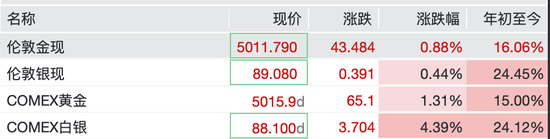
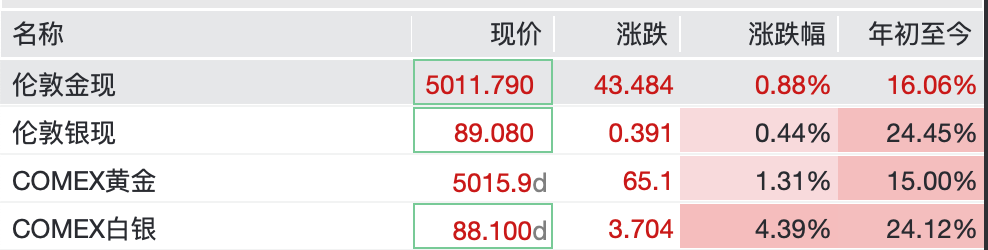
Group 1: Precious Metals Market - Gold prices surged, reaching approximately $5,011.79 per ounce, with a year-to-date increase of 16.06% [2] - Silver prices also rose, currently at $89.08 per ounce, reflecting a year-to-date increase of 24.45% [2] - COMEX gold and silver saw increases of 1.31% and 4.39% respectively, with COMEX gold priced at $5,015.90 and COMEX silver at $88.10 [2] Group 2: Cryptocurrency Market - Bitcoin experienced a significant decline, dropping nearly 4% to $72,646 per coin, marking its lowest level since early November 2024 [4] - Other major cryptocurrencies also fell, with Ethereum down 4.63% to $2,127 and Solana down 7.34% to $90.70 [3] - The total liquidation in the cryptocurrency market exceeded 140,000 traders in the last 24 hours, indicating a severe sell-off [2] Group 3: Market Sentiment and Analysis - The recent drop in Bitcoin has raised questions about its status as "digital gold," with some analysts suggesting a "crisis of confidence" in cryptocurrencies [4] - Pimco's managing director expressed that the narrative of Bitcoin as "digital gold" is weakening, indicating that the price drop suggests cryptocurrencies may not represent a monetary revolution [4] - Market participants are tempering their expectations for cryptocurrency trends in 2026 [4]
黄金直线上升重回5000美元 加密货币下挫超14万人爆仓
Xin Lang Cai Jing· 2026-02-04 23:47
Core Viewpoint - Gold and silver prices surged, with gold surpassing the $5000 mark and silver rising to $89.08 per ounce, indicating a strong market response to geopolitical developments [1][2]. Group 1: Precious Metals - As of February 5, gold was priced at $5011.79, reflecting an increase of 0.88% and a year-to-date rise of 16.06% [2][5]. - Silver was priced at $89.08, with a slight increase of 0.44% and a year-to-date rise of 24.45% [2][5]. - COMEX gold reached $5015.90, up 1.31% with a year-to-date increase of 15.00%, while COMEX silver rose by 4.39% to $88.10, with a year-to-date increase of 24.12% [2][5]. Group 2: Cryptocurrency Market - Bitcoin experienced a significant decline, dropping nearly 4% to $72646, while Ethereum (ETH) and XRP also fell over 4% [2][3]. - The total market capitalization for Bitcoin was reported at $1015.73 billion, with a 24-hour trading volume decrease of 10.85% [3][6]. - Over the past 24 hours, more than 140,000 traders faced liquidation, indicating a turbulent trading environment [2][4]. Group 3: Market Sentiment - The recent drop in Bitcoin's price has raised questions about its status as "digital gold," with some analysts suggesting a potential "crisis of confidence" in cryptocurrencies [7]. - Pimco's managing director expressed that the narrative surrounding Bitcoin as "digital gold" is weakening, suggesting that the cryptocurrency may not represent a monetary revolution [7].