全球贸易秩序

Search documents
美国最后一搏,30%关税大棒砸下,欧盟彻底失望,暂缓反制寻转机
Sou Hu Cai Jing· 2025-07-16 10:06
Core Viewpoint - The announcement of a 30% tariff on goods imported from the EU by the U.S. starting August 1 has significant implications for the international economic and political landscape [1] Trade Impact - The EU exports to the U.S. account for 20.6% of its total exports, making the U.S. tariff a severe blow to the EU economy [3] - The imposition of tariffs is expected to trigger inflation in the U.S., reducing consumer purchasing power, which is critical for U.S. economic growth [3] - Economic growth in Europe is projected to be around 0.7% to 0.8% this year, and the tariffs could push the region closer to recession [3] EU Internal Response - There is a growing divide among EU member states on how to respond, with French President Macron advocating for a strong defense of EU interests and potential countermeasures [3] - In contrast, Germany's Economic and Energy Minister seeks pragmatic negotiations to resolve the conflict [3] - The European Parliament's International Trade Committee Chair criticized the U.S. move as arrogant and called for immediate countermeasures [3] U.S. Strategic Intent - The U.S. aims to increase fiscal revenue through tariffs to address its significant budget deficit and rising debt levels [5] - Politically, the U.S. seeks to maintain its dominant position in the global economic and political landscape by undermining the EU's economic growth [5] Germany's Economic Situation - Germany, as the economic engine of the EU, is heavily reliant on exports, with nearly a quarter of its exports going to the U.S. [5] - In May, Germany's exports fell by 1.4%, with exports to the U.S. declining by 7.7%, reaching a three-year low [5] - The automotive and machinery sectors in Germany are particularly vulnerable to the U.S. tariffs, with significant cost increases reported [5] Shift in Trade Relations - In response to the trade conflict, Germany is looking to strengthen ties with China, which is seen as a vital market and partner [7] - The German Foreign Trade Association is advocating for reduced reliance on the U.S. market and the establishment of free trade agreements with ASEAN countries [7] - Enhanced cooperation between Germany and China in manufacturing, renewable energy, and technological innovation could provide mutual benefits and reduce dependency on the U.S. [7] Global Trade Order - The U.S. tariff on the EU is disrupting the global trade order, highlighting the need for multilateral cooperation [7] - The choices made by the EU and Germany will not only affect their economic development but also have far-reaching implications for the global economic and political landscape [7]

几乎不敢相信,特朗普对瓦解美国霸凌,竟有8大历史性贡献
Sou Hu Cai Jing· 2025-06-10 09:23
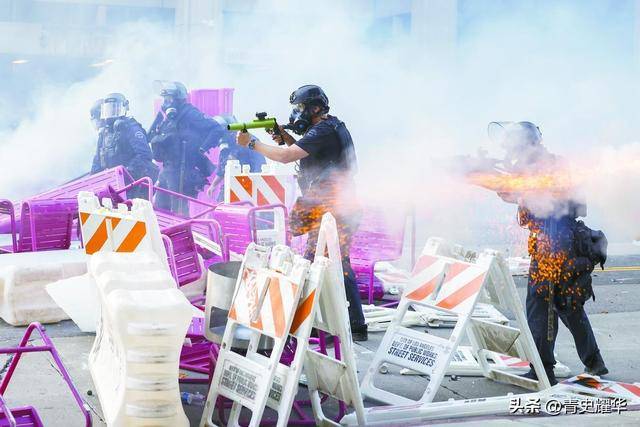
Group 1 - The article discusses the internal chaos in the U.S., particularly in Los Angeles and New York, as a result of the current administration's actions, which are turning communities into "war zones" and prompting military intervention [1][22][26] - The U.S. is facing a decline in its global dominance due to the current administration's policies, which are undermining the strength of the dollar and the military, leading to a loss of credibility and trust among allies [3][10][11] - The imposition of tariffs by the current administration has not only harmed international trade but has also negatively impacted the U.S. economy, with allies distancing themselves and the credibility of the U.S. being severely affected [5][9][10] Group 2 - The article highlights the ongoing conflict between state and federal authorities, exemplified by the protests in Los Angeles against immigration enforcement, which reflect deeper societal fractures in the U.S. [22][26][29] - The current administration's attacks on prestigious institutions like Harvard are seen as detrimental to the U.S.'s global competitiveness, as these institutions are crucial for innovation and talent acquisition [15][20] - The article suggests that the current administration's actions are leading to increased political division, particularly between the Democratic and Republican parties, exacerbating tensions within the country [28][29][31]
美国12州反制成功,特朗普被裁定越权!果然中国第二局要躺赢?
Sou Hu Cai Jing· 2025-06-04 11:14
Core Viewpoint - The announcement of Trump's "Liberation Day" tariff policy has sparked significant backlash both domestically and internationally, raising concerns about its potential to disrupt global trade and lead to economic recession [1][3]. Group 1: Domestic Reactions - Trump's tariff policy faced strong opposition from the Democratic Party, which criticized its legality and potential harm to the U.S. economy, particularly for industries reliant on international trade and small businesses [3]. - Twelve states have united to file a lawsuit against Trump, highlighting the diverse economic structures of these states and their reliance on import-export trade, indicating a significant pushback against the tariff policy [3][4]. - A federal court ruled on May 28 that Trump's tariff policy was an "overreach," affirming that only Congress has the exclusive power to regulate trade with other nations, thus providing hope to those affected by the tariffs [3][6]. Group 2: Legal and Economic Implications - The lawsuit initiated by the non-profit organization Freedom Justice Center represents a significant legal challenge to Trump's tariff policy, reflecting the struggles of small businesses facing increased costs and shrinking market shares [4][6]. - The ongoing legal battle may prolong uncertainty regarding the tariff policy, complicating the political landscape in the U.S. as Democrats view the court ruling as a victory and a means to exert further pressure on Trump [6][7]. - The internal division within the U.S. regarding the tariff policy has led to economic repercussions, particularly for Democratic states that rely on free trade, while Republican states have managed to mitigate some impacts [7]. Group 3: International Context - China has maintained a firm stance and strategic response to the tariff policy, showcasing its ability to counter U.S. provocations and emphasizing the importance of global trade order stability [9]. - The 90-day tariff buffer period between the U.S. and China presents an opportunity for further negotiations, with China positioned favorably following the court's ruling against Trump's tariffs [9].
中国点头后,特朗普对华态度再次强硬,不到几分钟,美收到噩耗
Sou Hu Cai Jing· 2025-05-12 09:20
Group 1 - The U.S. is actively seeking to adjust tariff measures and has communicated its willingness to engage in talks with China regarding tariffs [1][2] - China has agreed to meet with U.S. Treasury Secretary Mnuchin during a visit to Switzerland, indicating a potential thaw in trade relations [1][6] - China emphasizes that any negotiations must respect its core interests and will not accept coercive tactics from the U.S. [2][4] Group 2 - Economic forecasts from institutions like the IMF and World Bank predict that the U.S. will be one of the hardest-hit economies due to the trade war, with potential recession looming [4] - The upcoming talks are described as exploratory, with China cautioning against falling into a "negotiation delay trap" set by the U.S. [4][6] - The Federal Reserve's decision to not lower interest rates complicates the economic landscape, as it faces challenges from both inflation and the uncertainty of U.S. tariff policies [6]
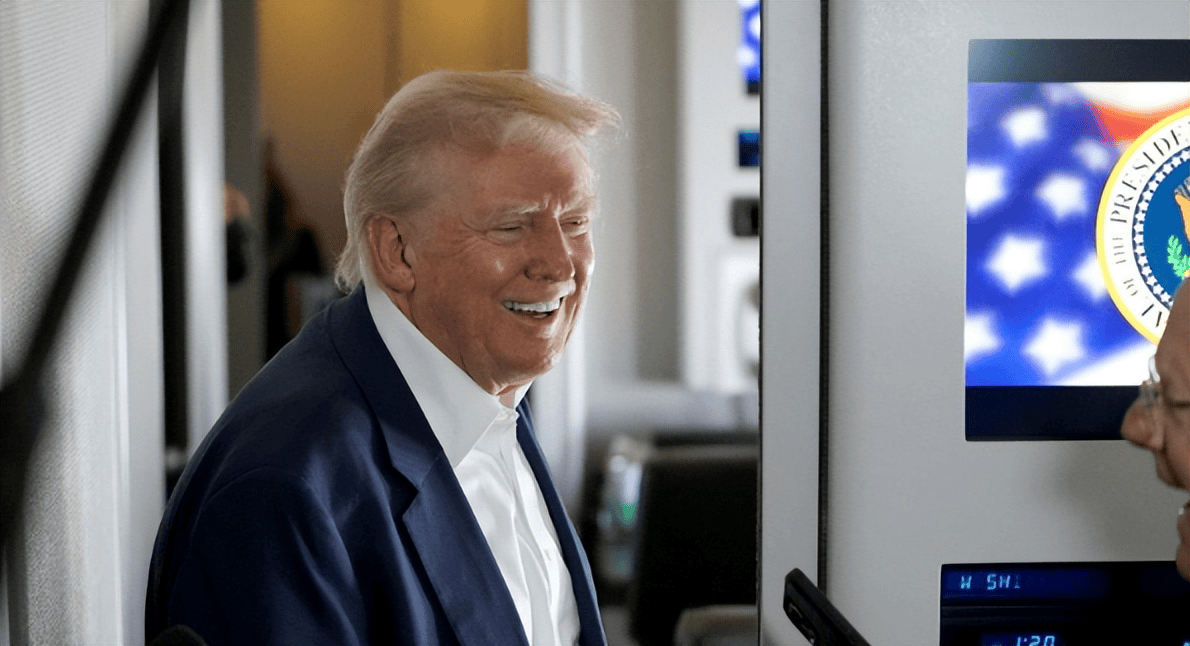
特朗普关税战引全球震动!澳股开盘暴跌,市值蒸发$350亿
Sou Hu Cai Jing· 2025-04-04 17:37
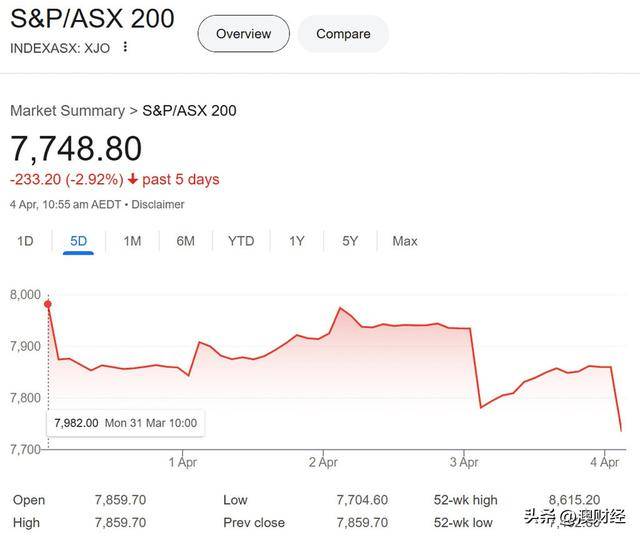
Group 1 - The Australian stock market experienced a significant drop, with a market value loss of 35 billion AUD, influenced by Trump's tariff policies [1] - The S&P/ASX 200 index fell by 1.4% to 7751.1 points, with most sectors declining sharply, particularly the energy sector, which saw a nearly 6% drop [1] - Approximately 4% of Australian export goods are sent to the United States, indicating that Trump's tariffs will not have a direct impact on Australian exports [1] Group 2 - The total tariffs imposed by the U.S. on China have increased to 54%, which is expected to negatively affect Australian exporters due to decreased demand from China, Australia's largest trading partner [3] - The U.S. financial markets were also shaken, with the S&P 500 index dropping by 3.7%, the European STOXX 600 index down by 2.7%, and the Tokyo benchmark index falling by 2.8% [3] - Global oil prices decreased by over 2 USD per barrel as a result of the market turmoil [3] Group 3 - Trump's tariff actions are anticipated to trigger a global trade war, with countries such as China, the EU, South Korea, Mexico, and India indicating plans for retaliatory measures [5] - Analysts believe that these actions will disrupt global trade order and undermine decades of efforts to reduce tariffs through trade negotiations and free trade agreements [5] - Deutsche Bank's Jim Reid described the situation as a "radical policy restructuring," noting that the current average tariffs in the U.S. range from 25% to 30%, marking the highest levels since the early 20th century [5]