公共卫生

Search documents
盖茨基金会承诺9.12亿美元捐赠 呼吁加强全球援助
2 1 Shi Ji Jing Ji Bao Dao· 2025-09-23 09:58
Core Viewpoint - Bill Gates emphasized the need for global leaders to focus on funding for child health and public health, warning that current funding cuts pose a significant challenge to achieving the goal of saving millions of children's lives by 2045 [1][3]. Funding Challenges - Global health aid funding is projected to decline by 21% from 2024 to 2025, reaching a 15-year low, due to fiscal pressures, domestic debt, and aging populations [1][4]. - The reduction in funding threatens the sustainability of basic public health programs worldwide [1]. Achievements and Future Goals - Since 2000, the annual child mortality rate has decreased from approximately 10 million to under 5 million, marking a significant achievement in international public health cooperation [1]. - Gates announced a commitment of $912 million over the next three years to the Global Fund, aimed at combating AIDS, tuberculosis, and malaria, which has already saved over 70 million lives since its inception [3][4]. Innovations in Child Health - A roadmap to 2045 suggests that continued investment in public health and the acceleration of new technologies could potentially halve global child mortality rates in the next 20 years [4]. - Innovations include new methods for malaria prevention, long-acting treatments for HIV, and vaccines for respiratory diseases affecting newborns [4]. International Cooperation and Recognition - The conference highlighted the importance of stable international cooperation and financial support for the successful implementation of health innovations [6]. - Spanish Prime Minister Pedro Sánchez was awarded the "Global Goalkeeper Award" for increasing funding to the Global Fund and supporting global vaccination initiatives [6]. Future Outlook - The next Global Goalkeeper event will take place in Abu Dhabi in December, providing a platform for leaders and scientists to discuss public health and child health issues [6]. - Gates announced a long-term commitment to donate nearly all his wealth to the foundation, with plans to invest approximately $200 billion over the next 20 years in global health and poverty reduction [7].
美国欧亚集团主席库普坎:关税政策将反噬美国并波及全球市场
Zhong Guo Qing Nian Bao· 2025-07-01 08:52
Group 1 - The U.S. tariff policy and immigration restrictions are expected to negatively impact U.S. economic growth and inflation, affecting global markets [1][3] - The average effective tariff rate for all imported goods in the U.S. is currently 15%, a level not seen since 1938, and is projected to remain between 10% and 15% in the long term, indicating a shift towards a new international trade structure [3] - The current geopolitical landscape is characterized by significant uncertainty, with major power competition, particularly between the U.S. and China, becoming a structural norm in the international system [1][4] Group 2 - The changing global political landscape has profound implications for foreign policy, with key players such as Germany, Russia, and India emerging as significant factors in international relations [3][4] - The interaction between rising tensions among major powers and the political spillover effects from the U.S. are increasing systemic risks globally [4] - There is a call for major powers to rebuild crisis management mechanisms and establish functional cooperation in areas such as artificial intelligence, public health, and critical supply chain security to restore mutual trust [4]


孤独有害健康,但影响或许没有想象中那么严重
财富FORTUNE· 2025-06-20 13:02
Core Viewpoint - Recent research challenges the previously established link between loneliness and increased risk of premature death, particularly among elderly individuals receiving home care [2][3]. Group 1: Research Findings - A new international study involving over 380,000 elderly home care recipients from Canada, Finland, and New Zealand found no association between loneliness and increased mortality risk after controlling for other health risk factors [2]. - The study indicates that elderly individuals experiencing loneliness may actually have a lower risk of death within a year compared to those who do not feel lonely [2]. Group 2: Implications for Public Health - Despite the findings, loneliness remains a significant public health concern due to its severe impact on mental health [3][4]. - The prevalence of loneliness among home care recipients is notable, with rates of 15.9% in Canada and as high as 24.4% in New Zealand [4]. - The study suggests a complex relationship between health status, care needs, and social connections, highlighting the need for further long-term research [4]. Group 3: Recommendations - Researchers advocate for policymakers and healthcare providers to address loneliness as a quality of life issue rather than solely focusing on its potential link to mortality [4][5]. - Home and community care services should play a protective role by providing social interaction support for isolated individuals [5].

研判2025!中国紫外线消毒灯行业概述、政策汇总、产业链、发展现状及发展趋势分析:公共卫生需求升级,紫外线消毒灯得到快速发展[图]
Chan Ye Xin Xi Wang· 2025-06-16 01:18
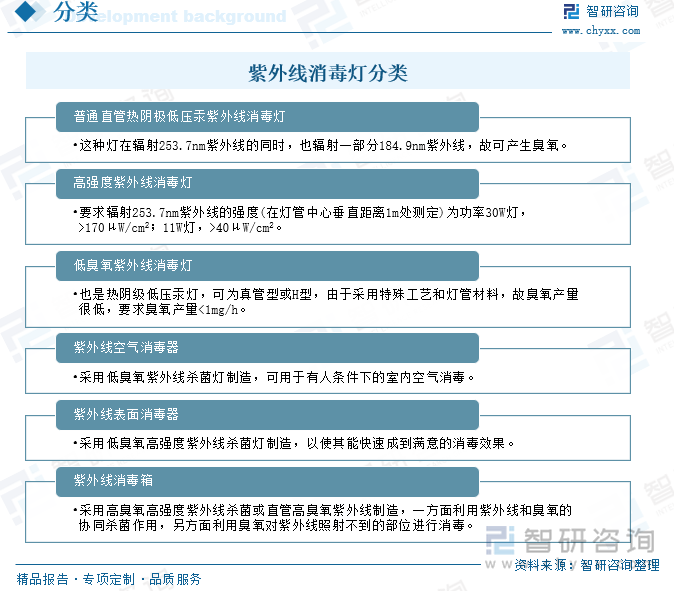
Core Viewpoint - The UV disinfection lamp industry in China is experiencing significant growth driven by increasing health awareness, government support, and rising market demand, with the market size projected to reach 3.253 billion yuan in 2024, a year-on-year increase of 12.44% [1][14]. Industry Overview - UV disinfection lamps utilize ultraviolet light to destroy microorganisms by damaging their DNA, with optimal effectiveness at wavelengths between 200-280nm, particularly at 254nm [3]. - The main components of UV disinfection lamps include UV lamp tubes, ballasts, and lamp holders, with various types available such as low-pressure mercury lamps and UV air disinfectors [3][8]. Market Dynamics - The market for UV disinfection lamps is expanding due to heightened public health concerns and increased hygiene standards in both residential and commercial spaces [1][14]. - Government policies, such as the "Healthy China Action," emphasize the need for improved environmental sanitation facilities, creating a favorable policy environment for the industry [1][5]. Competitive Landscape - The UV disinfection lamp market in China is characterized by intense competition, with both large enterprises and numerous small to medium-sized companies [16]. - Major companies include Guangdong Xingguang Development Co., Ltd., Guangmingyuan Technology Co., Ltd., and Aoxing Optoelectronics (Shenzhen) Co., Ltd., which leverage brand strength and technological capabilities [16][17]. Industry Trends - The industry is expected to see a shift towards UVC LED technology, which offers energy efficiency and longer lifespan, alongside the integration of smart control technologies for enhanced usability [21]. - There is potential for expanding applications in agriculture, particularly in pest control and air purification, as well as increased usage in household and commercial cleaning [22]. - The focus on environmental sustainability will drive demand for eco-friendly UV disinfection products, particularly those utilizing LED technology [24]. Related Companies - Key players in the UV disinfection lamp industry include *ST Xingguang (002076), Hongli Zhihui (300219), Haoyang Co., Ltd. (300833), and others, which are involved in various aspects of UV lamp production and application [1][2].
震惊愤怒!CDC专家被“一锅端”后,美国医学界要求特朗普政府撤销决定
第一财经· 2025-06-10 13:32
Core Viewpoint - The sudden dismissal of all members of the Advisory Committee on Immunization Practices (ACIP) by U.S. Health Secretary Robert Kennedy has raised significant concerns within the public health community regarding vaccine policy and public trust in health authorities [1][4][10]. Group 1: Dismissal of ACIP Members - The decision to remove all 17 members of ACIP, a key advisory body for vaccine safety and policy, has shocked the public health sector, with many experts expressing their dismay and concern over the future operations of the committee [1][4][7]. - Experts have noted that the abrupt nature of the dismissals has left some members unaware of their termination until they saw news reports [5][8]. Group 2: Reasons Behind the Dismissal - Robert Kennedy cited conflicts of interest among ACIP members as a reason for the dismissals, claiming that the committee had become a "rubber stamp" for vaccine manufacturers without providing evidence to support these claims [4][7]. - The Health Department stated that new members would be appointed to ensure that scientific activities are based on credible and unbiased evidence, although this assertion has been met with skepticism from public health experts [5][10]. Group 3: Implications for Public Trust and Vaccine Policy - The removal of ACIP members is expected to undermine public trust in the government's ability to safeguard public health and could disrupt the transparent decision-making process that has historically guided vaccine recommendations [7][10]. - Concerns have been raised that the new appointments may include individuals with strong political biases, potentially jeopardizing the integrity of vaccine policy [8][10].
日本人真的不介意公共马桶圈和酒店的澡盆吗?
Hu Xiu· 2025-05-26 03:58
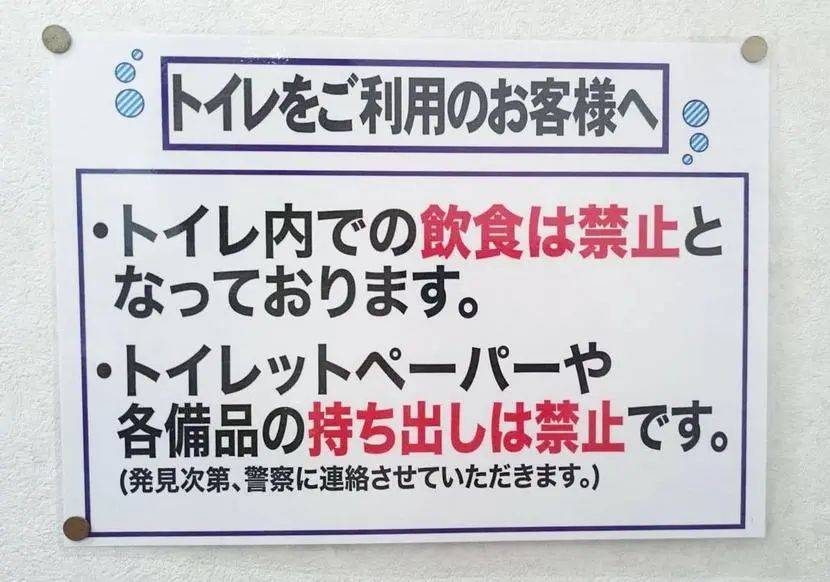
Group 1 - Japanese business hotels often have small rooms but still include bathtubs, which can be surprising given the limited space [1] - Japanese colleagues find it inconvenient that many hotels in China lack bathtubs, as bathing is a daily routine for them [2] - The cleanliness of public restrooms in Japan varies, with department store restrooms generally being the cleanest due to dedicated cleaning staff [6][9] Group 2 - There has been a trend in Japan to prohibit eating in restrooms, which may seem surprising to some [7] - Many public restrooms in Japan are equipped with heated toilet seats and cleaning features, reflecting a high standard of hygiene [17][22] - Research indicates that the risk of transmitting skin diseases through toilet seats is very low, especially in well-maintained facilities [27][30]