
再军事化

Search documents
俄外长:日本加速“再军事化”威胁亚太和平稳定
Xin Hua She· 2026-02-03 00:21
新华社莫斯科2月2日电(记者黄河)据俄罗斯外交部网站2日发布的消息,俄外交部长拉夫罗夫表示, 日本加速"再军事化"进程对亚太地区和平与稳定构成威胁。 ...
日本架空“和平宪法”谋求“再军事化”
Xin Lang Cai Jing· 2026-02-01 19:22
Core Viewpoint - The article discusses Japan's increasing militarization and the implications of Prime Minister Kishi's statements linking Taiwan's situation to Japan's national survival, indicating a potential for military action, which reflects Japan's long-term strategic ambition for re-militarization [1] Group 1: Constitutional Analysis - Article 9 of the Japanese Constitution, which renounces war and prohibits military forces, is identified as the core of Japan's "peace constitution" and a commitment to disarmament [2] - The historical context of Article 9 reveals inherent contradictions, as its language allows for interpretations that could permit military forces under certain conditions, leading to Japan's rearmament under the guise of self-defense [2] - The evolution of Japan's security policy shows a shift from a strictly defensive posture to a more proactive military stance, evidenced by the reinterpretation of constitutional provisions and the establishment of the Self-Defense Forces in 1954 [2] Group 2: Administrative Overreach - The recent comments by Prime Minister Kishi are seen as a direct result of the "interpretative constitutional amendment" approach initiated by former Prime Minister Abe, which has expanded the scope of military action through cabinet resolutions [3] - This administrative overreach undermines the constitutional framework, as the government has redefined "abandoning war" to include collective self-defense and intervention in overseas conflicts, effectively eroding the original intent of the constitution [3] - Despite opposition from legal scholars and peace advocates, the lack of effective checks and balances in Japan's political system has allowed for the unchecked expansion of executive power in security matters [3] Group 3: International Implications - Japan's re-militarization is advancing under the guise of legal reforms and strategic documents, with defense spending projected to exceed 1% of GDP by fiscal year 2025, indicating a significant shift in military capabilities [4] - The international community, particularly neighboring countries affected by Japan's militaristic past, must remain vigilant and respond to these developments, as they pose a challenge to the post-war international order [4] - There is a call for international legal and diplomatic efforts to counter Japan's military expansion, emphasizing the need for adherence to the principles of the peace constitution and the importance of maintaining regional stability [4] Group 4: Domestic Political Dynamics - Within Japan, there exists a faction that values the peace constitution and opposes military expansion, highlighting the need for these voices to be supported by the international community [5] - The article stresses that Japan faces a critical choice between continuing down the path of militarization or genuinely adhering to the principles of its peace constitution, which will determine its future relations with Asian neighbors [5] - The erosion of the ideals encapsulated in Article 9 raises concerns about the potential for a rearmed Japan, necessitating a collective response to uphold the post-war international order and prevent historical tragedies from recurring [5]
高市又耍新花样!
Xin Lang Cai Jing· 2026-01-30 23:52
自去年11月发表涉台错误言论以来,日本首相高市早苗非但不知悔改,反而频耍花招。 近日,高市早苗在接受日媒采访时,首次将台海紧急事态与日美同盟捆绑,宣称"若台湾出现危机,日 美将采取联合行动撤离公民"。此举不仅再次引起中国强烈不满与严正抗议,就连日本国内舆论都是一 片哗然,多位日本前政要纷纷出面,痛批高市的错误言论正将中日关系推向"危险境地"。从"存亡危机 事态"的无端挑衅,到"旧金山和约"的无理诡辩,再到拉美国当"挡箭牌"的无耻投机,三个月以来,高 市早苗上演了一出"挑衅—试探—再挑衅"的循环闹剧。 谬论翻新,执迷不悟。 1月26日,高市早苗在接受朝日电视台采访时,公然宣称"若台湾发生危机,美日将联合撤离公民",并 扬言"美军若遭受攻击,日本不会袖手旁观"。 总的来看,高市的这番涉台言论有三个突出特点。 仍要介入台海。面对中国强有力的反制,高市早苗此前一直在玩"模糊战术",辩称日本在台湾问题上的 基本立场"没有任何改变",但却拒绝明确表达这一立场到底是什么。而这次采访中,她又抛出了所谓 的"撤侨论"。看来看去,高市介入台海的真实意图并未改变。 编造干涉理由。相较于此前将台海局势与所谓"存亡危机事态"直接挂钩的 ...
无知与轻率将让日本陷入孤立境地
Ren Min Ri Bao· 2026-01-28 01:46
Group 1 - Japan's Prime Minister Kishi Sanae's remarks about potential military cooperation with the U.S. in the event of a Taiwan crisis have sparked protests and concerns about Japan's militarization [2][3] - Recent polls indicate a decline in Kishi's cabinet approval rating to 57%, down 10% from the previous survey, while disapproval ratings have risen to 29% [2] - The increase in Japan's defense budget is reportedly squeezing funding for education and healthcare, leading to difficulties for ordinary citizens [4] Group 2 - The decline in Chinese tourists to Japan, with a reported 45% drop in visitor numbers, is impacting retail sales, particularly in department stores and markets [4] - Concerns have been raised about the long-term negative effects of Kishi's statements on Japan-China relations, which could further impact various industries, especially retail during peak seasons [4] - The perception of China as an adversary is leading to fears of Japan becoming isolated, with significant implications for both economic and diplomatic relations [4]

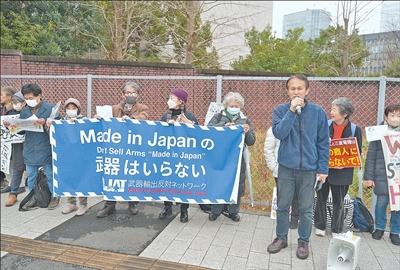
“无知与轻率将让日本陷入孤立境地”(国际视点)
Ren Min Ri Bao· 2026-01-28 01:29
Group 1 - The Japanese government, under Prime Minister Kishi, is facing significant domestic and international backlash due to its recent militarization rhetoric and comments regarding Taiwan, which are perceived as provocative and irresponsible [2][3]. - Recent polls indicate a decline in public support for Kishi's cabinet, with approval ratings dropping by 10% to 57%, while disapproval ratings increased by 7% to 29% [2]. - The increase in defense spending and militarization efforts are causing concerns among various sectors, including education and healthcare, as these budgets are being squeezed [4]. Group 2 - The tourism sector is experiencing a downturn, with a reported 45% decrease in Chinese visitors to Japan by December 2025, leading to significant impacts on retail sales, particularly in department stores and markets [4]. - The manufacturing industry is also facing challenges, with experts expressing concerns over the long-term negative effects of Kishi's statements on Japan-China relations, which could lead to economic isolation [4]. - The overall sentiment among analysts and commentators is that Japan's current approach towards China is detrimental, potentially leading to economic and diplomatic stagnation [4].
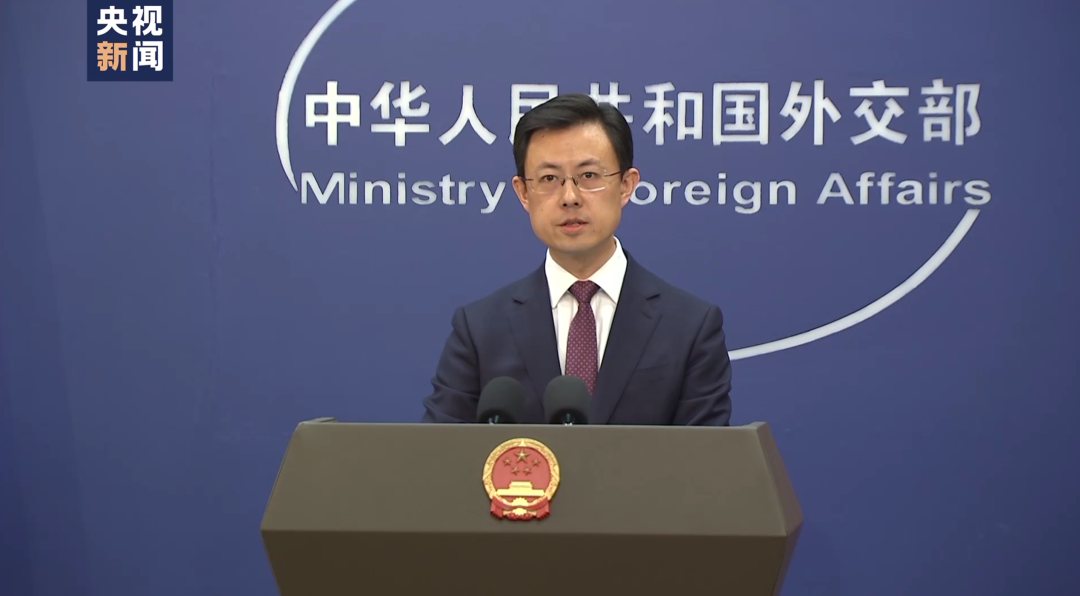
外交部回应高市早苗涉台最新言论
2 1 Shi Ji Jing Ji Bao Dao· 2026-01-27 08:17
Group 1 - The core viewpoint of the article highlights Japan's Prime Minister's statement regarding potential joint actions with the U.S. in the event of a crisis in the Taiwan Strait, emphasizing Japan's commitment to its allies [1] - The Chinese Foreign Ministry spokesperson criticized Japan for its contradictory stance of claiming to act within legal boundaries while interfering in China's internal affairs and issuing threats, which undermines regional stability [3] - The historical context is provided, noting Japan's colonial rule over Taiwan for half a century and the associated historical responsibilities towards the Chinese people, asserting that Japan has no right to comment on Taiwan [3] Group 2 - The article points out that Japan's recent rhetoric reflects the ambitions of right-wing forces to provoke tensions and advance militarization, posing a serious threat to the post-war international order [3] - There is a call for the international community to remain vigilant and resist Japan's actions, which are seen as detrimental to peace and stability in the region [3] - The Chinese side urges Japan to adhere to the spirit of the four political documents between China and Japan and to cease its manipulations regarding the Taiwan issue [3]
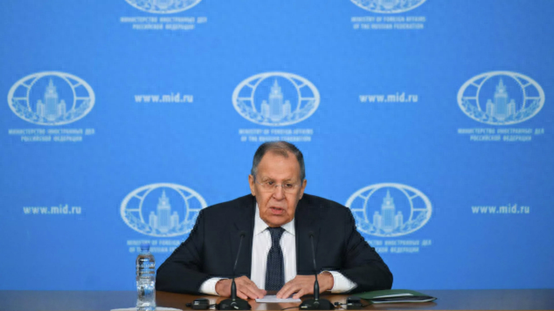
俄外长:日本领土上出现美国陆基打击系统“不可接受”
Xin Lang Cai Jing· 2026-01-21 11:18
Group 1 - The core viewpoint of the article is that Russia has expressed strong concerns regarding Japan's military cooperation with the United States, particularly the deployment of U.S. land-based strike systems on Japanese territory, which Russia deems unacceptable [1][3]. - Russian Foreign Minister Lavrov highlighted that the strategic military cooperation between Japan and the U.S. and the involvement of external entities in military activities on Japanese soil are alarming, especially given the current chaotic international situation [3]. - Lavrov reiterated that Russia has communicated its security concerns to Japan through diplomatic channels and has warned that Japan's actions negatively impact regional stability and security [3]. Group 2 - The article mentions that Japan's government approved a defense budget for the fiscal year 2026, which is set to reach a historical high, raising further concerns from Russia [3]. - Kremlin spokesperson Peskov warned that any increase in defense spending by regional actors should be approached with caution to avoid escalating tensions [3].
俄外长:俄曾通过外交渠道告诉日方,日本领土上出现美国陆基打击系统“不可接受”
Huan Qiu Wang· 2026-01-21 10:40
Group 1 - The core viewpoint of the article highlights Russia's strong opposition to the deployment of U.S. land-based strike systems on Japanese territory, which is deemed "unacceptable" by Russian Foreign Minister Lavrov [1][3] - Lavrov expressed concerns regarding Japan's military cooperation with the U.S. and the involvement of external entities in military activities on Japanese soil, particularly given the proximity to Russian borders [3] - The Russian government has previously communicated its worries about Japan's actions negatively impacting regional stability and security, urging Japan to refrain from a path of "remilitarization" [3] Group 2 - The article mentions that Japan's government approved a defense budget for the fiscal year 2026, which sets a new historical high, raising concerns from Russian officials [3] - Kremlin spokesperson Peskov warned that any increase in defense spending by regional actors should be approached with caution to avoid escalating tensions further [3]
日本人士表示高市错误言论完全不可接受
Yang Shi Wang· 2026-01-19 14:25
Group 1 - The core viewpoint is that Japanese officials, including Prime Minister Fumio Kishida, are pushing to amend the "Three Non-Nuclear Principles," which is deemed unacceptable by various stakeholders [1][2] - There is a strong call from international figures for the global community to remain vigilant against Japan's potential re-militarization, as the push to modify these principles poses a serious challenge to the post-war international order [2]
日本开年密集外交搞了哪些小动作
Xin Lang Cai Jing· 2026-01-18 18:28
Core Viewpoint - Japan's recent diplomatic activities, termed "Diplomatic Week" by local media, are seen as efforts by Prime Minister Fumio Kishida's government to promote a narrative of "Indo-Pacific" security threats, aiming to accelerate military expansion and weapon exports, which raises concerns among regional nations [1][4]. Group 1: Diplomatic Activities - Prime Minister Kishida emphasized the importance of strengthening Japan-South Korea and Japan-U.S.-South Korea cooperation during a meeting with South Korean President Lee Jae-myung, citing a "deteriorating strategic environment" [2]. - During a meeting with Italian Prime Minister Giorgia Meloni, Kishida promoted the concept of a "free and open Indo-Pacific" and proposed joint training between the Japanese Self-Defense Forces and the Italian military, as well as accelerating the development of a new generation of fighter jets in collaboration with the UK and Italy [2]. - Foreign Minister Toshimitsu Motegi's visits to the Philippines and India focused on promoting the "free and open Indo-Pacific" narrative, signing a quasi-military agreement with the Philippines and advocating for stronger Japan-U.S.-Australia-India cooperation [2]. Group 2: Military Expansion - Japan's government is using the narrative of "regional security threats" to justify military expansion, with the defense budget for fiscal year 2026 reaching a record high of 9.04 trillion yen, which includes a significant increase in funding for enhancing security capabilities [5]. - The government aims to meet a target of defense spending at 2% of GDP two years ahead of schedule and plans to revise key security documents by the end of 2026, potentially relaxing restrictions on arms exports to stimulate the domestic military industry [5]. - Critics argue that Japan's military budget reflects a shift away from its "defensive" principles, exacerbating regional tensions and raising alarms among peace-loving nations [7].