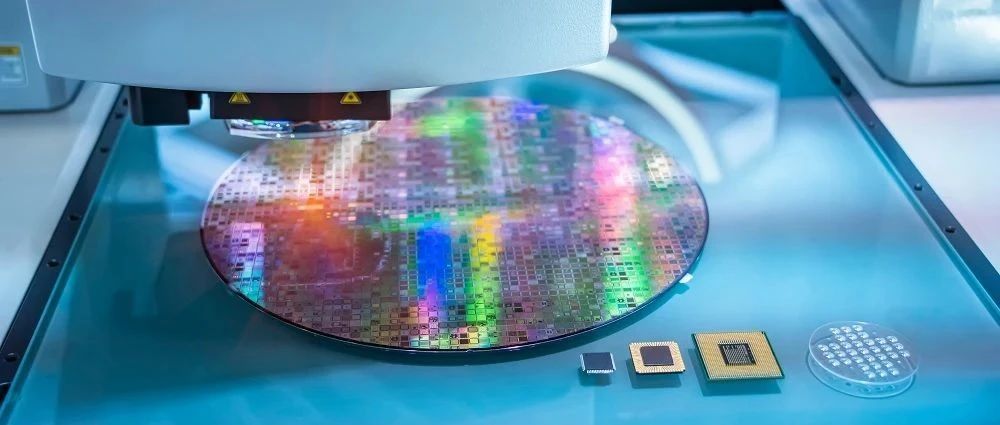
半导体生态系统

Search documents
印度半导体,危机并存
半导体行业观察· 2025-07-19 03:21
Core Viewpoint - India is making bold moves to become a major player in the global semiconductor industry, driven by the desire for economic growth, technological independence, and enhanced national security [1]. Group 1: Need for a Strong Semiconductor Industry - India currently relies on imports for over 90% of its semiconductor needs, which poses risks such as vulnerability to global supply chain disruptions and impacts on national security [2]. - The country aims to build a self-sufficient semiconductor ecosystem to mitigate these risks and meet the growing demand [2]. Group 2: Government Initiatives - The Indian government is implementing the "India Semiconductor Mission" (ISM), a $10 billion initiative aimed at creating a robust ecosystem for chip manufacturing and design [3]. - This initiative is supported by other programs like the "Production Linked Incentive" (PLI) and "Design Linked Incentive" (DLI) to encourage investment in India [3]. Group 3: Progress and Investments - Major companies are beginning to invest significantly in semiconductor manufacturing and packaging in India, such as Tata Group's collaboration with Taiwan's PSMC to build a chip factory worth ₹91,000 crore [4]. - Micron Technology is investing $2.75 billion to establish an assembly, testing, marking, and packaging (ATMP) facility [5]. - Other companies like Adani Group, HCL-Foxconn, and global tech giants are also launching similar projects in India [6]. Group 4: Opportunities - Global trends are aiding India's semiconductor ambitions, including the establishment of chip manufacturing units, enhancement of design and packaging capabilities, and the creation of technology jobs [7]. - The need for supply chain diversification due to global tensions and U.S.-China tech competition positions India as a reliable partner with a large talent pool and a rapidly growing tech market [8]. Group 5: Challenges - India faces significant challenges, including a lack of advanced chip manufacturing facilities and a complete supply chain, particularly in wafer production and lithography [9]. - Infrastructure gaps, such as the need for ultra-pure water and stable electricity, hinder progress, along with the high costs of building fabs and a shortage of skilled professionals in microelectronics and materials science [9]. - Environmental concerns related to energy consumption and waste generation in chip manufacturing also pose challenges [9].

孟加拉也要发力半导体
半导体行业观察· 2025-07-07 00:54
Core Viewpoint - Bangladesh aims to become a significant player in the global semiconductor ecosystem by developing a roadmap focusing on skill development, business environment, and policy support [3][4]. Group 1: Roadmap and Strategy - The semiconductor working group in Bangladesh has outlined a roadmap that includes training programs, virtual certification portals, and high-tech laboratories to build a skilled workforce in chip design and testing [3]. - The plan suggests financial incentives, streamlined customs processes, and dedicated zones in high-tech parks to attract investors and startups [3][6]. - The working group emphasizes the importance of international partnerships and joint ventures to leverage talent, technology, and markets [3][5]. Group 2: Opportunities and Challenges - There are significant opportunities in design services, chip testing, and packaging, which are seen as the fastest entry points into the semiconductor industry [5]. - The group anticipates that if their recommendations are implemented, Bangladesh could transition from a marginal player to a strong competitor in the global semiconductor value chain [5][9]. - However, challenges remain, including the need for substantial investment to establish semiconductor manufacturing facilities, which could require up to $12 billion [8]. Group 3: Talent Development - The goal is to train 4,000 to 5,000 engineers annually by 2030 to address the semiconductor talent gap [7]. - Short-term strategies include online learning, industry-led projects, and university collaborations to accelerate skills in chip design, validation, and testing [7]. - The working group highlights the importance of policy stability and ongoing commitment to ensure Bangladesh's position in a projected $1 trillion market by 2030 [7]. Group 4: Industry Support and Growth - Local companies are encouraged to expand operations with government support, including financial assistance like soft loans or grants [7][8]. - The CEO of a leading semiconductor design company in Bangladesh expressed readiness to grow their team from 500 to 1,000 engineers with appropriate support [8]. - The focus will be on consolidating Bangladesh's position in design services and less capital-intensive segments of the value chain [9].
印度首颗芯片,要来了
半导体行业观察· 2025-05-24 01:43
Core Viewpoint - The Indian government is focusing on the Northeast region as a significant hub for semiconductor manufacturing and renewable energy, with plans to enhance infrastructure and attract investments in these sectors [1][2]. Group 1: Semiconductor Industry - Prime Minister Narendra Modi announced that India will soon receive its first "Made in India" chip from a semiconductor plant in the Northeast region, highlighting its growing importance in the semiconductor ecosystem [1]. - Tata Group has initiated the construction of a semiconductor factory in Assam with a total investment of 270 billion rupees [1]. - The government is promoting investments in solar components, batteries, energy storage, and R&D, emphasizing the need for substantial funding in these future-oriented sectors [1]. Group 2: Infrastructure Development - Modi emphasized that robust infrastructure, including roads, power supply, and logistics networks, is essential for trade and industry growth, marking the beginning of an infrastructure revolution in the Northeast [2]. - Over the past decade, the Northeast has seen the construction of 11,000 kilometers of new highways and extensive railway development [2]. - The trade potential of the Northeast is expected to multiply in the next decade, with current trade with ASEAN nearing 1.25 billion USD, projected to exceed 200 billion USD in the coming years [2]. Group 3: Investment Opportunities - Gautam Adani announced an additional investment of 500 billion rupees in the Northeast over the next ten years, building on a previous commitment of the same amount for Assam [2]. - Mukesh Ambani stated that Reliance Industries has invested approximately 300 billion rupees in the region over the past 40 years, with plans to double this investment to 750 billion rupees in the next five years [2].
印度芯片,计划占比5%
半导体芯闻· 2025-05-19 10:04
Core Viewpoint - The Indian government is preparing for the next phase of its semiconductor initiative, "Semiconductor 2.0," aiming to achieve a 5% share of global semiconductor chip production by the end of 2030, with a commitment of $10 billion in incentives for semiconductor manufacturing and related companies [1][2]. Group 1: Industry Growth and Challenges - India's semiconductor industry is growing but faces significant challenges, including an underdeveloped supply chain, a shortage of skilled manufacturing talent, global competition, and rapid technological advancements [1][2]. - Key raw materials necessary for chip manufacturing, such as silicon wafers, high-purity gases, specialty chemicals, and ultra-pure water, are in limited supply, posing a major challenge [1][3]. Group 2: Skills Development and Competition - Despite having nearly 20% of the global semiconductor design workforce, India still lacks the specialized skills required for semiconductor manufacturing and testing [2]. - The Indian government is prioritizing the development of a complete semiconductor supply chain, including chemicals, gases, and equipment, to reduce reliance on imports [2]. Group 3: Investment and Market Demand - The Indian government is taking measures to attract investment through substantial incentives, which is crucial for initiating semiconductor manufacturing projects [2][3]. - The success of India's semiconductor industry will depend on ensuring long-term domestic and export market demand for chips [2]. Group 4: Technological Advancements - Keeping pace with rapid technological advancements is another significant challenge, as global semiconductor companies are continuously pushing the limits of chip miniaturization [3]. - Despite these challenges, India's semiconductor industry has growth potential, supported by government backing, industry collaboration, and research and development investments [3].
印度首个3nm芯片设计中心亮相
半导体芯闻· 2025-05-14 10:10
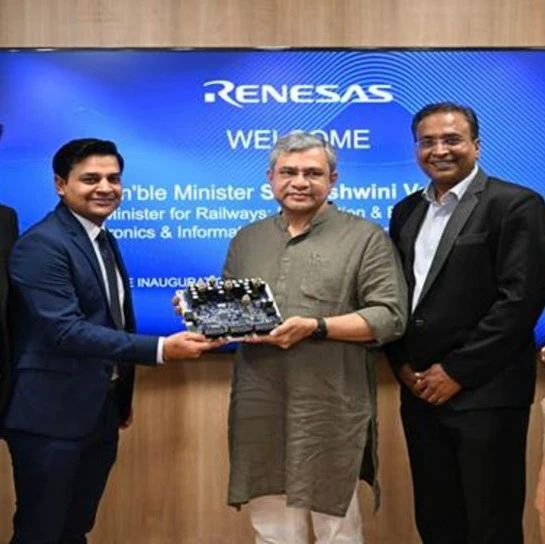
Core Viewpoint - The establishment of advanced semiconductor design centers in India, focusing on 3nm chip design, marks a significant milestone in enhancing India's semiconductor innovation capabilities and positions the country as a leader in the global semiconductor landscape [1][3]. Group 1: Semiconductor Design Centers - The new design centers in Noida and Bangalore, inaugurated by Minister Shri Ashwini Vaishnaw, are dedicated to cutting-edge 3nm chip design, representing a new frontier in semiconductor technology [1]. - The Indian government is actively promoting the development of semiconductor design centers to strengthen the semiconductor ecosystem [3]. Group 2: Education and Talent Development - A new semiconductor learning kit has been launched to enhance the hardware practical skills of engineering students, with over 270 academic institutions already receiving advanced EDA software tools [3]. - The integration of software and hardware learning is aimed at cultivating industry-ready engineers, emphasizing long-term talent development alongside infrastructure investment [3]. Group 3: Industry Growth and Demand - The semiconductor industry in India is poised for exponential growth due to increasing demand from various sectors, including smartphones, laptops, servers, medical devices, defense equipment, and automotive electronics [4]. - The CEO of Renesas Electronics highlighted India's strategic importance for the company, focusing on expanding end-to-end semiconductor capabilities and supporting over 250 academic institutions and startups through government-backed initiatives [4].
印度半导体,困难重重
半导体芯闻· 2025-03-25 10:02
Core Viewpoint - India's semiconductor industry is developing but faces significant challenges such as an underdeveloped supply chain, a shortage of skilled manufacturing talent, global competition, and rapid technological advancements [2][5]. Group 1: Industry Challenges - The semiconductor industry in India must address limited supply of critical raw materials required for chip manufacturing, including silicon wafers, high-purity gases, specialty chemicals, and ultra-pure water [2]. - Despite having a strong chemical and gas manufacturing sector, companies need to enhance their capacity to produce semiconductor-grade materials [2]. - The industry is also facing fierce competition from established semiconductor hubs like China, Singapore, Malaysia, South Korea, and Taiwan, which have spent decades building their ecosystems [5]. Group 2: Talent and Skills Development - India possesses nearly 20% of the global semiconductor design workforce, showcasing its strength in chip design, but there is a gap in specialized skills required for semiconductor manufacturing and testing [3]. - To bridge this skills gap, companies are focusing on skill development, and the government is collaborating with industry and universities to create targeted courses for semiconductor manufacturing, assembly, and testing [4]. Group 3: Government Support and Investment - The Indian government is prioritizing the development of a complete semiconductor supply chain to reduce reliance on imports and has implemented various incentives to attract investment in semiconductor manufacturing projects [5]. - The success of India's semiconductor industry will depend on ensuring long-term domestic and export market demand for chips [5]. Group 4: Technological Advancements - As India establishes its first manufacturing facilities, it faces the challenge of keeping pace with rapid technological advancements in the semiconductor sector, which may require substantial capital investment to remain competitive [5]. - The establishment of a complete semiconductor ecosystem is crucial for India to become a major player in the global chip industry [5].
这个国家,将建首个晶圆厂
半导体行业观察· 2025-03-05 01:03
Core Viewpoint - Vietnam is set to build its first semiconductor wafer fabrication plant with a budget of 12.8 trillion VND (approximately 500 million USD), aiming to enhance its semiconductor ecosystem and attract foreign investment in the industry [1][2]. Investment and Development Plans - The Vietnamese government has approved a significant investment plan for a semiconductor factory, which will include tax incentives allowing companies to retain 20% of taxable income for reinvestment in the local semiconductor ecosystem [1]. - Vietnam is actively negotiating with several U.S. semiconductor companies, including GlobalFoundries and PSMC, to establish a semiconductor manufacturing presence in the country [3][5]. - The government aims to complete the first semiconductor manufacturing plant by around 2030, with plans to support local companies like Viettel in building their own facilities [5][10]. Industry Growth and Export Statistics - By 2021, semiconductors accounted for 19% of Vietnam's technology exports, up from 11% in 2011, with a compound annual growth rate of 37.6% during that period [8]. - In 2023, Vietnam's semiconductor equipment exports reached 7.53 billion USD, with over half going to the U.S., making Vietnam the third-largest chip exporter to the U.S. after Malaysia and Taiwan [8][10]. Strategic Vision for Semiconductor Industry - Vietnam's long-term strategy includes establishing six wafer fabrication plants and achieving an annual revenue of approximately 25 billion USD by 2030, with projections of 50 billion USD by 2040 and 100 billion USD by 2050 [13][14][15]. - The strategy will be implemented in three phases, focusing on attracting foreign investment, enhancing domestic capabilities, and ultimately creating a self-sufficient semiconductor ecosystem [16][20][22]. Challenges and Competitive Landscape - The high cost of building semiconductor fabs, estimated at up to 50 billion USD, poses a significant challenge for Vietnam as it competes with countries like China, the U.S., South Korea, and the EU, which have announced substantial funding for their semiconductor industries [6][12]. - Vietnam's semiconductor industry currently relies heavily on foreign direct investment, primarily in assembly, testing, and packaging, with limited domestic production capabilities [10][12].