古树名木保护

Search documents
守护千年绿意 留存乡愁记忆
Shan Xi Ri Bao· 2025-12-02 12:33
Core Viewpoint - The article emphasizes the importance of protecting ancient trees in Fuping County, highlighting their historical, cultural, and ecological significance while detailing the measures taken for their preservation and management. Group 1: Protection Measures - Fuping County has established a comprehensive survey system to assess the status of ancient trees, conducting extensive investigations since 2015 to document their species, age, and size [2][4] - As of now, 360 ancient trees have been officially protected, including 25 of special protection and 108 of first-level protection, with major species including national locust and soap trees [2] - The implementation of the "Ancient Tree and Famous Tree Protection Regulations" in March 2023 has provided legal backing for the protection efforts, leading to the establishment of a three-tier management mechanism involving towns, villages, and individuals [6][7] Group 2: Cultural Significance - Ancient trees are viewed as living historical records, with efforts made to uncover and share the stories and legends associated with each tree, transforming them into landmarks of memory for local communities [4][5] - The creation of the illustrated book "The Charm of Fuping Ancient Trees" aims to showcase the cultural and artistic perspectives of these trees, reinforcing their role as carriers of local heritage and nostalgia [5] Group 3: Innovative Management - The county has adopted innovative management strategies to address issues such as root exposure and damage to tree trunks, employing experts for diagnosis and implementing scientific care methods to ensure the health of ancient trees [7] - Regular patrols are conducted based on the ancient tree information archives to monitor and respond to threats from human activities, natural disasters, and pests [7]

从一棵“网红树”看见福州对树的深情
Xin Hua Wang· 2025-11-20 06:03
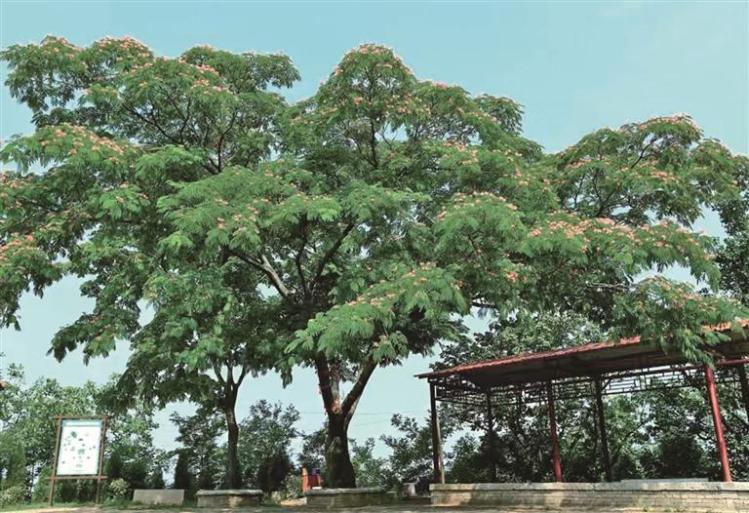
Group 1 - The "Love Tree" in Fuzhou has become a popular cultural tourism IP, attracting many visitors and inspiring local merchants to create various merchandise [1] - Fuzhou has a long history of protecting ancient trees, with legislation dating back to the 1980s and continuous improvements over the past two decades [2] - The city has implemented innovative construction methods to protect tree roots during urban development, showcasing a commitment to preserving ancient trees [2] Group 2 - The West Zen Temple in Fuzhou is known for its ancient lychee trees, which have historical significance and continue to attract visitors [3] - Local authorities actively manage and maintain the health of ancient trees, ensuring they remain vibrant and culturally significant [3] - Fuzhou's ancient trees serve as important symbols of local culture and heritage, contributing to the city's identity [3]
古树名木保护集中宣传活动举行
Zhen Jiang Ri Bao· 2025-11-12 23:24
Core Viewpoint - The event "Protect Ancient Trees and Share Green Water and Mountains" aims to raise public awareness about the protection of ancient trees and promote community involvement in conservation efforts [1] Group 1: Event Overview - The event was held on November 11 at Nanshan North Square, organized by the Zhenjiang Natural Resources and Planning Bureau [1] - It featured informational displays showcasing ancient trees such as the Ginkgo trees at Gaochong Temple and Jinshan, as well as ancient peonies at Nanshan, along with restoration measures and case studies [1] Group 2: Protection Efforts - The bureau has focused on "understanding the baseline, precise protection, and cultural inheritance" in its efforts to protect ancient trees [1] - A comprehensive survey has been conducted to establish a detailed "green family tree," implementing a dynamic management mechanism that includes "one tree, one file, tagged protection, and mapped management" [1] - Regular inspections and an expert team have been established to create tailored restoration plans for individual trees, successfully revitalizing 46 endangered and weakened ancient trees [1] Group 3: Future Initiatives - The event marks the beginning of a series of actions for ancient tree protection leading up to 2025 [1] - Future initiatives will include "ancient tree science popularization in schools" and an expansion of restoration efforts to enhance the ecological landscape of Zhenjiang [1]
石景山现存古树1545株,先后建成7处古树保护小区
Bei Jing Ri Bao Ke Hu Duan· 2025-10-31 10:55
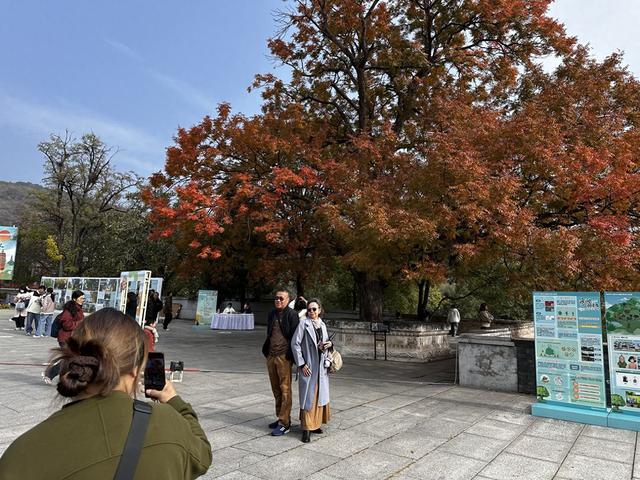
Core Points - The 2025 Beijing Ancient Tree Protection Science Popularization Week was launched in Shijingshan District, highlighting the importance of preserving ancient trees as living cultural relics [1] - Shijingshan District currently has 1,545 ancient trees, all of which have established individual protection plans, with 277 weak trees undergoing protective restoration [1][13] - The district has built seven ancient tree protection communities, enhancing the vitality of these historical trees [1][7] Group 1 - The ancient ginkgo trees near Yuyuan Hospital, approximately 700 years old, are a significant attraction during autumn, showcasing their majestic appearance [3][5] - The Shijingshan District Garden Bureau has implemented various restoration measures for the ancient ginkgo trees, including support installation and soil improvement, creating a themed park for public engagement [5][9] - An ancient ginkgo tree, known as the "King of Ginkgo Trees," over 800 years old, has been restored and transformed into a popular local landmark [7][9] Group 2 - The district has a total of 141 first-class ancient trees and 1,404 second-class ancient trees, including rare species like yellow linden and black jujube [13][15] - Since 2021, the district has been conducting health assessments and tailored restoration plans for weak ancient trees, resulting in significant improvements in their conditions [11][15] - A three-year action plan for the hard surface treatment of ancient trees has been initiated, aiming to integrate tree protection with urban renewal and landscape enhancement [15]
广西累计收集59个树种共177份古树名木种质资源
Guang Xi Ri Bao· 2025-10-20 03:04
Core Points - The article highlights the ongoing efforts in Guangxi to protect ancient trees and their genetic resources, marking a significant advancement in conservation practices [1][2] - Guangxi has established a comprehensive protection network that combines technology, public participation, and institutional support to safeguard ancient trees [1] - The region is focusing on building a genetic resource bank for ancient trees to address issues related to aging and breeding difficulties [2] Group 1 - Guangxi has collected 177 samples from 59 tree species, including endangered and long-lived ancient trees, indicating a shift from physical protection to genetic preservation [1] - There are currently 1,311 ancient tree clusters and over 156,000 ancient trees in Guangxi, which are considered "green cultural relics" [1] - The protection network includes measures such as marking responsibilities, innovative restoration techniques, and the establishment of volunteer teams to enhance conservation efforts [1] Group 2 - The genetic resource bank project focuses on the "highest, oldest, most beautiful," and endangered ancient trees, utilizing techniques like ex-situ conservation and asexual reproduction [2] - Successful germination and planting have been achieved for 99 samples of 42 species, with 183 seedlings of certain species already planted [2]
千年古树有了专属“保护套餐”
Ren Min Wang· 2025-10-17 00:55
Core Viewpoint - The article highlights the successful intervention of the Xin'an County Procuratorate in protecting ancient trees, emphasizing the importance of legal measures and community involvement in preserving cultural and ecological heritage [1][2]. Group 1: Legal and Regulatory Framework - The "Ancient Tree and Famous Tree Protection Regulations" mandate the establishment of archives, protective signage, and corresponding protective measures by the administrative departments responsible for ancient trees [2]. - The regulations also require a graded protection and inspection system based on the protection level, distribution, and growth conditions of ancient trees [2]. Group 2: Actions Taken - Following a report from volunteers about an ancient locust tree lacking protection, the Xin'an County Procuratorate initiated an investigation, leading to the identification of four ancient trees needing recognition and protection [1][2]. - The Xin'an County Forestry Bureau responded promptly to the procuratorate's recommendations, conducting a special inspection that uncovered 27 additional issues related to ancient tree protection [2]. Group 3: Community Involvement - The procuratorate has established an information-sharing mechanism with forestry departments to facilitate regular updates on the registration and protection of ancient trees [3]. - The role of the "Yixin Weigong" volunteers is emphasized, encouraging community members to report issues related to ancient tree protection [3].
山东现存古树名木24.7万余株,千年银杏见证历史变迁
Qi Lu Wan Bao· 2025-10-16 03:26
Core Points - The Shandong Provincial Government announced the existence of over 247,000 ancient trees, with 1,449 classified as first-level protected, 9,305 as second-level, and 52,624 as third-level [1][3] Group 1: Ancient Trees and Protection Levels - Ancient trees are defined as trees over 100 years old, with a grading system for protection based on age: first-level for those over 500 years, second-level for those between 300 and 500 years, and third-level for those between 100 and 300 years [3] - Shandong is rich in ancient tree resources, with a total of 24,7000 ancient trees, including 19,679 individual ancient trees and 619 groups of ancient trees [3] Group 2: Notable Ancient Trees - The "World's First Ginkgo" located in Juxian, with a height of 26.7 meters, a circumference of 1,520 cm, and an estimated age of 3,700 years, is recognized as the oldest known ginkgo tree [4] - The "Confucius Hand-Planted Cypress" in Qufu, believed to be planted by Confucius, has an estimated root age of 2,500 years and currently stands at 18 meters tall with a circumference of 239 cm [7] - The Qing Tan Ancient Tree Group in Zaozhuang consists of 36 trees, with 15 being over 1,000 years old, representing the only existing Qing Tan tree group in northern Jiangsu [7] Group 3: Conservation Efforts - Shandong has implemented the "Shandong Province Ancient Trees and Famous Trees Protection Measures," focusing on detailed management and conservation strategies for ancient trees [6] - The province has established over 1,800 records of ancient tree genetic resources and is actively working to rescue and restore 146 first-level protected ancient trees [6]

古树名木实现动态化管理
Zhong Guo Zi Ran Zi Yuan Bao· 2025-10-15 07:29
Core Points - The urban natural resources bureau of Jincheng City, Shanxi, has implemented a comprehensive digital management system for ancient trees, ensuring that each tree has a designated management unit and responsible person, achieving "one tree, one file" dynamic management [1] Group 1: Digital Management Implementation - The bureau has utilized GPS positioning, identity verification, registration, information disclosure, and standardized protection signage to achieve full coverage of digital management for ancient trees [1] - There are currently 29 ancient trees recorded in Jincheng City, including 10 national first-class protected trees, 3 second-class, and 16 third-class [1] Group 2: Protection Measures - The city has adopted a refined management model called "one tree, one policy," which involves tailored protection plans developed by professional technicians [1] - Various differentiated maintenance measures have been implemented, including decay repair, tree hole sealing, pest control, trunk support, and fencing [1] Group 3: Financial Support and Insurance - The district government has allocated special funds to ensure the implementation of protection measures [1] - All recorded ancient trees have been insured, providing a solid risk guarantee for their growth and safety [1]
上海的真如寺大殿和650岁古银杏一起入选国家级名录
Xin Lang Cai Jing· 2025-10-13 10:17
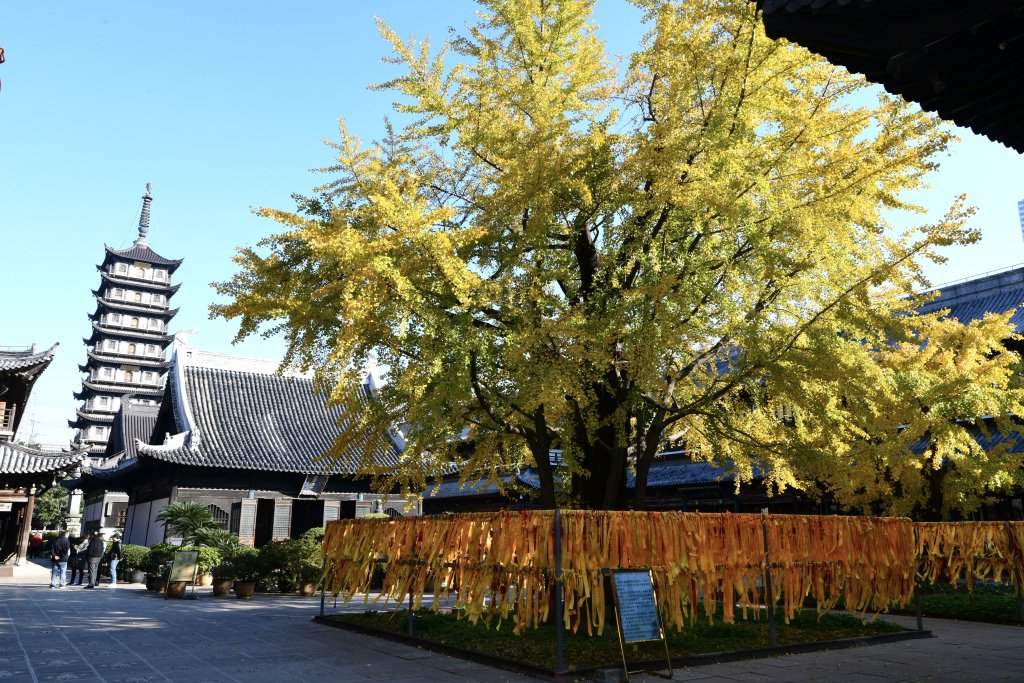
Core Viewpoint - The Shanghai Municipal Greening and City Appearance Bureau announced the inclusion of "Zhenru Temple Great Hall Ancient Ginkgo" in the first batch of "National Key Cultural Relics Protection Units · Ancient Trees and Famous Trees" collaborative protection list, highlighting the importance of preserving historical and cultural heritage in urban areas [1][2]. Group 1: Collaborative Protection - The collaborative protection list includes 28 sites from 18 provinces (municipalities) across China, emphasizing a nationwide effort to protect significant cultural and natural heritage [1]. - The "Zhenru Temple Great Hall Ancient Ginkgo" is recognized as a national key cultural relic and is approximately 650 years old, showcasing the historical significance of the site [2][6]. Group 2: Historical Significance - Zhenru Temple, originally built in the Song Dynasty, has undergone several reconstructions, with the ancient ginkgo tree planted at the temple's inception, symbolizing the temple's long history [4]. - The ginkgo tree has been classified as a first-level protected ancient tree since 1986, indicating its high value and the legal protections in place to ensure its preservation [6]. Group 3: Conservation Efforts - Local authorities have implemented various conservation measures for the ancient ginkgo, including environmental improvements, fertilization, pruning, and pest control, to ensure its healthy growth [6][7]. - The Shanghai ancient tree management department is committed to enhancing the systematic protection of ancient trees, ensuring they thrive alongside urban development and cultural growth [7].
渭南实施数字化监测,保护复壮仓颉手植柏
Ren Min Ri Bao· 2025-10-13 05:41
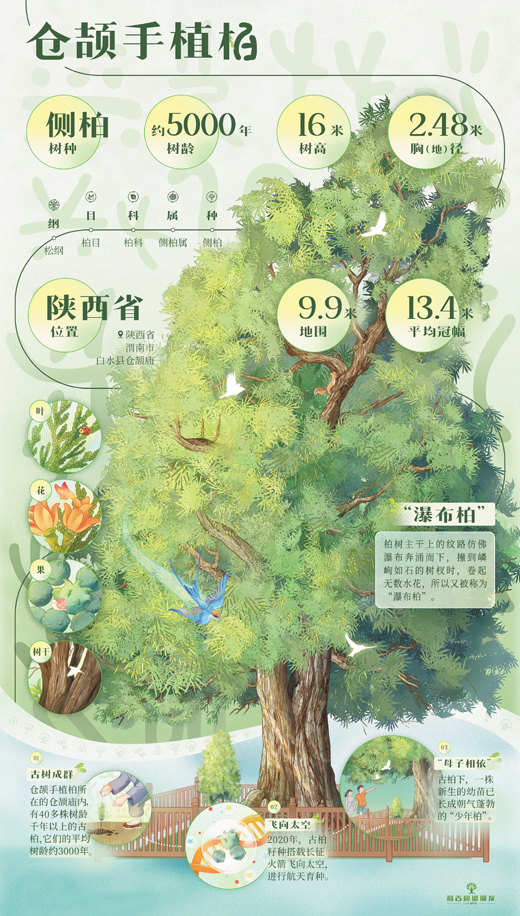
Core Points - The article emphasizes the importance of protecting ancient trees, referred to as "green national treasures" and "living cultural relics," highlighting the implementation of the "Ancient Tree and Famous Tree Protection Regulations" starting March 15 this year, marking the first time such protection is formalized in administrative law [2][6]. Group 1: Protection Initiatives - The article discusses the establishment of a comprehensive protection network for ancient trees, including the introduction of local regulations and the national "Ancient Tree and Famous Tree Protection Regulations" to enhance protection efforts [6][7]. - A digital monitoring system has been implemented to track the growth and health of ancient trees, allowing for real-time diagnostics and timely interventions by expert teams [7][8]. Group 2: Cultural Significance - The article highlights the cultural activities held at the site of the ancient trees, particularly during the Grain Rain festival, which coincides with the United Nations' Chinese Language Day, promoting traditional culture among youth [7][8]. - The ancient trees serve as a living testament to Chinese history and culture, with educational initiatives aimed at teaching visitors about the origins and development of Chinese characters [7][8]. Group 3: Scientific Advancements - The article mentions the collaboration with the Shaanxi Province Aerospace Breeding Engineering Technology Research Center to explore space breeding techniques for the ancient trees, aiming to enhance their genetic resilience and vitality [8]. - Seeds from the ancient tree were sent into space as part of this initiative, with successful germination observed in the resulting seedlings, which are now being cultivated to continue the lineage of the ancient tree [8].