可负担性危机

Search documents
特朗普说将禁止机构投资者购买更多单户住宅
Xin Lang Cai Jing· 2026-01-08 03:00
Core Viewpoint - President Trump announced measures to prohibit large institutional investors from purchasing single-family homes to address the issue of housing affordability for many Americans [1][3]. Group 1: Policy Announcement - Trump stated he will seek legislation from Congress regarding this policy [2][4]. - He emphasized that people should live in homes, not businesses, and plans to discuss housing and affordability at the upcoming Davos Forum [2][4]. Group 2: Impact on Housing Market - Following Trump's announcement, shares of residential investment firms, including Blackstone Inc., experienced a decline of approximately 10% [2][4]. - The ongoing high inflation and rising unemployment rates in the U.S. have intensified the affordability crisis, making it a focal point for voters and policymakers [2][4].

活不起了,美国人开始“逃”向中西部
Xin Lang Cai Jing· 2026-01-03 13:05
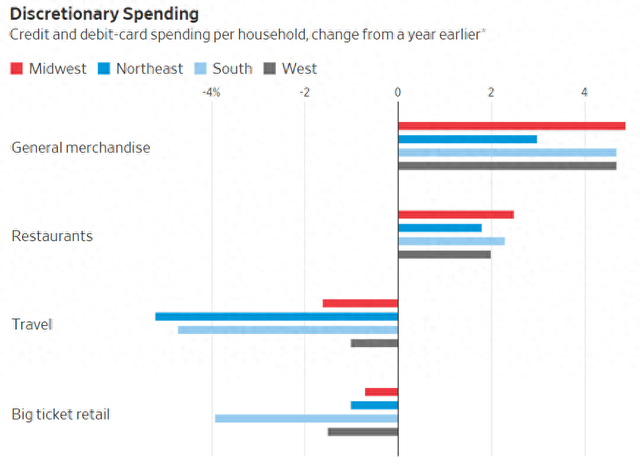
Group 1 - The term "affordability" has gained prominence in the U.S. as many Americans express dissatisfaction with rising living costs, including housing, groceries, and childcare, which are pushing them out of their communities [1][2] - The competitive election campaigns across the U.S. have made "affordability" a central issue, with notable political shifts, such as the election of a self-identified democratic socialist as mayor of New York City [1][2] - A new trend of "escaping to the Midwest" is emerging, as individuals from high-cost coastal cities seek more affordable living conditions in the Midwest [1][4] Group 2 - The Midwest, defined by Bank of America, includes states like Indiana, Iowa, and Michigan, and has the lowest median home prices in the U.S., with a median price of $319,400 compared to the national average of $409,200 [4] - The Midwest has historically had lower living costs, and recent data shows that wage growth in the region has been more stable and robust compared to other areas, leading to increased consumer spending on non-essential items [5] - For example, in Wisconsin, certain areas have seen a population growth of 3% from 2019 to 2024, which is higher than the state average of 2%, indicating a positive economic trend despite lower housing prices [5] Group 3 - Many individuals who previously lived in high-cost areas are returning to their hometowns in the Midwest, finding significantly lower housing costs and living expenses [6][7] - For instance, a couple moved from Los Angeles to Wisconsin, purchasing a larger home for $360,000, which is more than double the size of their previous home sold for a higher price [6] - However, rising competition for homes in the Midwest is driving up prices, creating concerns for local residents about affordability and economic balance [7] Group 4 - Recent comments from political figures, including former President Trump, highlight the ongoing debate about economic performance and affordability, with claims of addressing the affordability crisis and reducing prices [8] - The disconnect between political rhetoric and the lived experiences of ordinary Americans is evident, as many feel that their financial situations have not improved despite claims of economic prosperity [8]

《经济学人》封面文章:“斩杀线”的真相
美股IPO· 2026-01-01 16:08
Core Argument - The article discusses the concept of "affordability" and its implications in wealthy countries, highlighting the disconnect between public perception and economic reality regarding price increases and wage growth [4][5]. Group 1: Affordability Crisis - The term "affordability crisis" has gained traction, particularly among politicians, as a response to rising prices, but it may lead to misguided policies that do not address the real issues [5][7]. - Despite rising prices for goods like milk, wages across income levels have generally outpaced inflation, suggesting that an affordability crisis may not exist in the way it is perceived [5][6]. - The shift in consumer spending from goods to services has created a different set of affordability challenges, particularly in sectors like healthcare and housing, where supply constraints are more significant than price increases [6][7]. Group 2: Economic Misdiagnosis - The article argues that the narrative of an affordability crisis conflates real economic issues with perceived anxieties, leading to potential harmful policy responses [5][8]. - The disparity in asset price growth compared to wage increases creates a competitive environment for high-value items, which can exacerbate feelings of affordability issues among consumers [6][7]. - Policymakers face challenges in addressing these issues due to entrenched interests and regulatory barriers that complicate efforts to lower prices in sectors like housing and services [7][8]. Group 3: Political Implications - The political landscape is influenced by the affordability narrative, with politicians likely to propose populist solutions that may not effectively address the underlying economic realities [5][8]. - Historical lessons from past economic policies, such as price controls, suggest that current approaches may lead to further complications rather than solutions [7][8]. - The persistence of certain economic narratives can lead to self-reinforcing cycles that may not reflect actual economic conditions, complicating the policy response [8].
The 3 things holding up the US economy and their downside risks
Youtube· 2025-12-18 18:22
Economic Overview - The recent CPI report is described as "Swiss cheese," indicating it is incomplete and lacks comprehensive data [1] - Core commodities prices, excluding energy and food, are rising at a rate of 1.4%, which is unusual as this category typically deflates over time [2] - Services prices, excluding energy, are increasing at a slower pace of 3%, indicating a disinflationary trend, particularly driven by shelter cost disinflation [3][4] Inflation and Consumer Sentiment - The government has limited levers to reduce prices, with alleviating tariff cost pressures being a key mechanism to ease inflationary pressures on consumers [9][10] - The affordability crisis is influenced by both prices and wages; if wages rise faster than prices, consumer spending can be supported despite higher costs [8] Economic Growth Projections - The U.S. economy is expected to grow by 1.9% next year, supported by three fragile pillars: affluent consumers, AI investment, and asset price appreciation [11][14] - There is a risk of a potential AI-related bubble that could negatively impact stock market confidence and consumer spending, leading to reduced investment and hiring [12][13] Investment Trends - Investment in AI is anticipated to grow, not just among major players but also among firms integrating AI into their strategies, which will drive stronger growth in those sectors [16] - The economic outlook is characterized by increasing polarization, with affluent consumers and AI-focused businesses driving most spending and investment [17]