
可重复使用运载火箭技术

Search documents
国家航天局:可重复使用运载火箭技术加速突破
Shang Hai Zheng Quan Bao· 2026-01-20 06:49
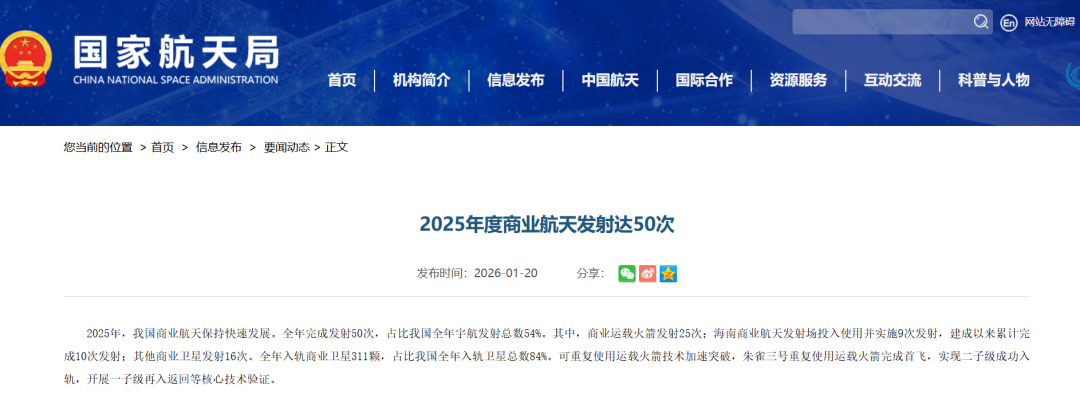
Core Insights - In 2025, China's commercial space sector is projected to achieve rapid growth with a total of 50 launches, accounting for 54% of the country's total space launches for the year [1] - The commercial launch activities will include 25 launches of commercial rockets, 9 launches from the Hainan commercial space launch site, and 16 other commercial satellite launches [1] - A total of 311 commercial satellites are expected to be placed into orbit, representing 84% of the total satellites launched by China in the year [1] - The technology for reusable launch vehicles is advancing, highlighted by the successful maiden flight of the Zhuque-3 reusable rocket, which achieved key technology validations [1] Summary by Categories Launch Activities - 50 total launches planned for 2025, making up 54% of China's annual space launch total [1] - Breakdown includes 25 commercial rocket launches, 9 from Hainan launch site, and 16 other satellite launches [1] Satellite Deployment - 311 commercial satellites to be launched, which is 84% of the total satellites launched by China [1] Technological Advancements - Significant progress in reusable rocket technology, with Zhuque-3 completing its first flight and validating core technologies [1]

国家航天局:2025年度商业航天发射达50次
Mei Ri Jing Ji Xin Wen· 2026-01-20 06:19
Core Insights - In 2025, China's commercial space industry is expected to maintain rapid growth, completing 50 launches, which accounts for 54% of the country's total space launches for the year [1] Launch Statistics - Among the 50 launches, 25 will be commercial rocket launches [1] - The Hainan commercial space launch site will be operational, conducting 9 launches, with a cumulative total of 10 launches since its establishment [1] - Additionally, 16 other commercial satellite launches are planned [1] Satellite Deployment - A total of 311 commercial satellites will be placed into orbit, representing 84% of the total satellites launched by China in the year [1] Technological Advancements - The technology for reusable launch vehicles is advancing rapidly, with the successful maiden flight of the Zhuque-3 reusable rocket, achieving successful orbit insertion of its second stage and validating core technologies for first stage re-entry and recovery [1]
中大联合完成国内首次百公里级在线轨迹优化闭环制导飞行试验
Nan Fang Du Shi Bao· 2026-01-12 14:55
Core Viewpoint - The successful flight test of the reusable launch vehicle's return guidance technology conducted by Sun Yat-sen University and China Aerospace Science and Technology Corporation marks a significant milestone in China's efforts to develop key technologies for reusable launch vehicles [1][3]. Group 1: Flight Test Details - The "Lihong" No.1 rocket successfully launched and reached a maximum altitude of approximately 120 kilometers before beginning a powered return [3]. - The return phase utilized a no-power working mode, focusing on verifying the feasibility and reliability of online trajectory optimization guidance methods under complex conditions [3][4]. - This flight test is noted as the first domestic closed-loop guidance flight test for online trajectory optimization at a height of 100 kilometers [3]. Group 2: Technology and Innovation - The "Shensi" No.2D system used in the test is composed of 100% domestically produced components and integrates an online trajectory optimization algorithm developed by the university's aerospace intelligent unmanned systems research team [4]. - The algorithm addresses engineering challenges such as strong nonlinear aerodynamic characteristics and resource constraints on the rocket, achieving real-time guidance under high dynamic flight conditions [4]. - The successful test results indicate that the algorithm can be adapted for various types of launch vehicles and experimental aircraft, supporting the development of low-cost space access technologies in China [4]. Group 3: Team and Collaboration - The project represents a collaborative effort between the university and industry, with several students appointed as model engineers, contributing to algorithm development and testing [4]. - The team has produced thousands of lines of algorithm code and completed numerous ground tests, culminating in the successful flight test [4]. - Professor Chen Hongbo emphasized the importance of this success as a key milestone in the exploration of reusable launch vehicle return guidance technology and the need for continued innovation and collaboration in the field [4].
国防军工行业2026年度策略:御风而行,乘政策技术共振之势,绘商业航天新纪元(附下载)
Xin Lang Cai Jing· 2026-01-12 01:18
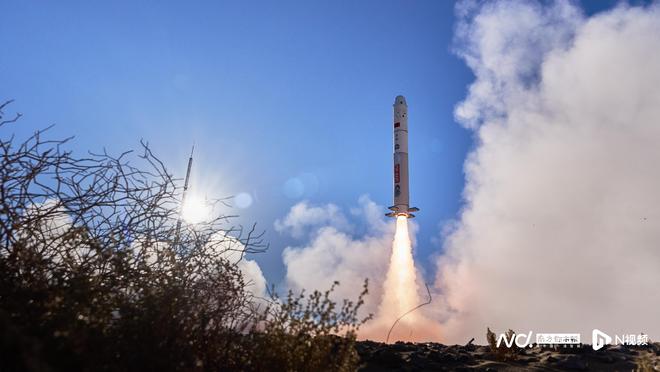
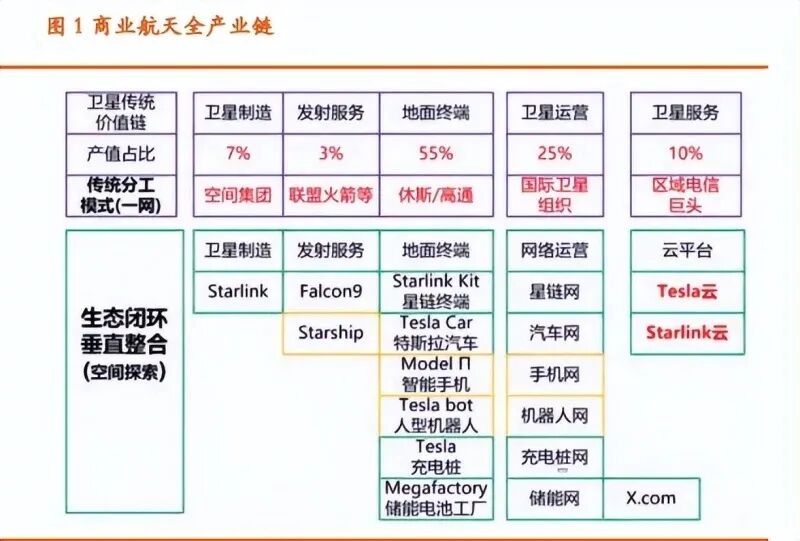
Group 1 - The commercial aerospace industry is entering a golden age, with commercial launch vehicles being a crucial component of this growth [1][2] - The industry chain of commercial aerospace includes upstream (satellite and rocket development), midstream (launch services and satellite operations), and downstream (communication and navigation applications) [1][2] - The Chinese government has prioritized the development of strategic emerging industries, including commercial aerospace, as part of its economic strategy [2][3] Group 2 - Launch vehicles are primarily composed of four systems: structural, propulsion, guidance, and payload systems [3][4] - Launch vehicles can be classified by propellant type (liquid, solid, or hybrid) and by stage structure (single-stage or multi-stage) [4][5] - Reusable rocket technology is a key focus for future development, as it significantly reduces launch costs and enhances efficiency [6][7] Group 3 - The recovery of reusable rockets involves critical technologies such as vertical landing, which requires precise control and timing [19][20] - The U.S. has achieved regular application of rocket reuse technology, exemplified by the Falcon 9 rocket, while China is making steady progress in this area [20][21] - Sea-based launch and recovery systems are emerging as a new trend in the aerospace industry, addressing limitations of traditional land-based launches [21][24] Group 4 - The global commercial rocket market is rapidly developing, with significant potential to open up a trillion-dollar market space [25]
蓝箭航天,科创板IPO获受理
Zhong Guo Zheng Quan Bao· 2026-01-01 05:03
Core Viewpoint - Blue Arrow Aerospace has received approval for its IPO application on the Shanghai Stock Exchange, aiming to raise 7.5 billion yuan, shortly after the exchange's new guidelines for commercial rocket companies were released [1][2]. Company Summary - Blue Arrow Aerospace is a leading commercial aerospace company in China, focusing on the research, production, and launch services of liquid oxygen-methane engines and rockets. The company aims to establish a full industry chain centered around medium to large reusable liquid oxygen-methane launch vehicles [2]. - The company's revenue from 2022 to 2024 was 780,000 yuan, 3.95 million yuan, and 4.28 million yuan, respectively, with net losses of 800 million yuan, 1.188 billion yuan, and 876 million yuan. In the first half of 2025, the company reported revenue of 36.43 million yuan and a net loss of 597 million yuan [2]. - The Zhuque-2 series medium liquid oxygen-methane rocket has entered mass production and commercial use, while the Zhuque-3 medium to large reusable rocket is set to make its maiden flight on December 3, 2025, marking China's first attempt at first-stage recovery [2]. Industry Summary - Since June 2025, the capital market for commercial aerospace has accelerated, with several companies, including Blue Arrow Aerospace, preparing to enter the market. The A-share commercial aerospace sector has seen a significant increase, with the index rising by 52.32% as of December 31, 2025 [4]. - The industry is experiencing a rapid capitalizing process, driven by breakthroughs in reusable rocket technology and an increase in low-orbit satellite launches, which are facilitating a more frequent and normalized launch schedule [4]. - By the end of 2025, several new commercial rocket models are expected to have their maiden flights or recovery tests, potentially leading to a transformative phase in China's rocket recovery era in 2026 [4].
中国商业航天低成本时代渐行渐近
Zheng Quan Ri Bao Zhi Sheng· 2025-12-23 16:10
Core Viewpoint - The successful launch of the Long March 12甲 rocket marks a significant step towards the development of reusable rocket technology in China, despite the failure to recover the first stage, which provides critical data for future missions [1][2]. Group 1: Rocket Development and Technology - The Long March 12甲 is a medium-sized rocket utilizing liquid oxygen and methane as propellants, designed for "first-stage reuse" [1]. - The rocket's total length is approximately 70.4 meters, with a takeoff weight of about 437 tons [1]. - The development of reusable rockets is seen as a key technology to reshape the global space competition and reduce commercial spaceflight costs [1][2]. - Multiple technical paths are being explored in China's reusable rocket development, including land vertical recovery and sea recovery methods [3][4]. Group 2: Industry Trends and Market Potential - The maturity of reusable rocket technology is viewed as a core engine for ushering in a low-cost era in commercial spaceflight, enabling cost optimization and expanding application scenarios [5]. - The commercial space industry is expected to reach a market size of trillions, with satellite manufacturing and rocket manufacturing being the first beneficiaries [7]. - The development of satellite communication services is accelerating, with major telecom operators preparing to enhance satellite communication capabilities [6][7]. - The industry is transitioning from isolated network operations to integrated "space-ground" communication systems, enhancing overall service offerings [6].
蓝箭航天朱雀三号首飞入轨 明星创投提前卡位 影响这些上市公司
Xin Jing Bao· 2025-12-05 01:12
Core Viewpoint - The successful launch of the Zhuque-3 reusable rocket marks a significant step for China's private commercial space sector, despite the failure of the first stage recovery test [1][2]. Group 1: Company Overview - Blue Arrow Aerospace, founded in 2015, is one of the earliest private rocket companies in China and has established itself as a leading player in the industry [2][3]. - The company has completed over 10 rounds of financing since its inception, with the latest round raising 900 million yuan in late 2022, aimed at developing reusable liquid oxygen-methane rockets [3][4]. Group 2: Market Impact - The launch of Zhuque-3 has generated multiple impacts on the capital market, including stock performance of listed companies and the commercial viability of technologies [1][6]. - Following the launch, the A-share commercial aerospace sector saw an overall increase of 1.33% on December 4, with 107 stocks closing higher [9]. Group 3: Technological Significance - The Zhuque-3 launch validated several key technologies, contributing valuable data for future recovery and reuse efforts, which are essential for reducing launch costs [2][3]. - Experts believe that the maturity of this technology could reshape the commercial aerospace industry ecosystem, although continuous technological iteration and validation are necessary [2]. Group 4: Collaborations and Partnerships - Blue Arrow Aerospace has partnerships with several A-share listed companies, including Parker New Materials and Srey New Materials, which have been involved in supporting the development of the Zhuque-3 rocket [7][8]. - The company’s shareholder base includes multiple A-share listed firms, indicating strong strategic interest from both state and private investors [5][4].
朱雀三号重复使用遥一运载火箭入轨圆满成功 取得5项技术突破
Feng Huang Wang· 2025-12-03 07:07
Core Insights - Blue Arrow Aerospace successfully launched the Zhuque-3 Yao-1 rocket on December 3, 2025, completing its flight mission and placing the second stage into the designated orbit [1] - The Zhuque-3 is a new generation of low-cost, high-capacity, and reusable liquid oxygen-methane launch vehicle designed for large satellite constellation networking tasks [1] - The rocket's first stage experienced an anomaly during landing, resulting in a failed recovery attempt, with debris landing at the edge of the recovery site [1] Technical Breakthroughs - The mission achieved five significant technical breakthroughs: 1. The first domestic successful orbital flight of a reusable liquid oxygen-methane launch vehicle with a new overall layout [1] 2. The first domestic integration application of a nine-engine parallel liquid oxygen-methane propulsion system [1] 3. The first domestic creation of a new high-strength stainless steel/high-performance laser-welded tank manufacturing material and process system [1] 4. The first domestic flight verification of high-precision return navigation, guidance, and control technology for reusable launch vehicles [1] 5. The first domestic design and application of a hybrid redundant distributed integrated electronic system for reusable launch vehicles [1]
捕获成功率更高、对火箭着陆指标更友好、有助简化火箭结构……“领航者”开启独具特色网系回收模式
Ke Ji Ri Bao· 2025-12-03 00:43
Core Viewpoint - The successful delivery of China's first offshore rocket recovery platform "Navigator" marks a significant advancement in the development of a stable, reliable, and precise rocket recovery system at sea [1] Group 1: Rocket Recovery Technology - The "Navigator" platform is designed to work with a network recovery system, which is a unique vertical landing recovery method that utilizes a grid-like cable system to capture rockets during descent [1][2] - Compared to traditional recovery methods, the network recovery system enhances the success rate of capturing and buffering rockets, allowing for better energy absorption during landing [2] - The system simplifies rocket structure and improves efficiency, as it can adapt to different rocket sizes without the need for custom landing gear [2] Group 2: Technical Specifications of "Navigator" - The "Navigator" measures 144 meters in length, 50 meters in width, and has a draft of 5.5 meters, with a full load displacement of 25,000 tons and DP2 dynamic positioning capability [2] - The platform faces technical challenges, including the need for precise positioning during rocket landings, which requires higher standards for stability and structural design compared to conventional vessels [3] - The design must account for concentrated loads and high center of gravity due to the network recovery system's structure, necessitating extensive load analysis and wind tunnel testing [3]

我国首艘火箭网系回收海上平台成功交付
Xin Hua She· 2025-12-01 07:38
Core Viewpoint - The successful delivery of China's first rocket recovery sea platform named "Navigator" marks a significant advancement in reusable rocket technology, facilitating the transition from technical verification to engineering application [1] Group 1: Technological Advancements - The platform is a crucial development in the upgrade of China's manned space transportation system, driven by the manned space program [1] - It aims to enhance the efficiency and effectiveness of key technologies for sea recovery of reusable rockets, ensuring China's core competitiveness in rapid launch and low-cost access to space [1] Group 2: Development Timeline - The platform will commence comprehensive verification work in September 2024, with design completion expected by December 2024 and construction starting in April 2025 [1] - The entire modification process is projected to take seven months, overcoming several critical technical challenges [1] Group 3: Certification and Collaboration - The platform has received classification and statutory certificates from the China Classification Society, making it the first certified sea rocket recovery platform in China [1] - Its successful development is a result of collaborative innovation among research institutes, leading enterprises, and higher education institutions in the aerospace and maritime fields [1]