
可重复使用运载火箭技术

Search documents
蓝箭航天计划二季度再次开展回收试验
Zhong Guo Zheng Quan Bao· 2026-02-25 04:51
Core Viewpoint - The company plans to conduct a recovery test in the second quarter of 2026, following rapid advancements in China's commercial space and medium to large reusable launch vehicle technology since 2025 [1] Group 1: Company Developments - The company announced that it will optimize the landing process and aims to attempt the first recovery of reusable flight in the fourth quarter of 2026 based on the results of the recovery test [1] - The company highlighted the significance of reusable launch systems in enhancing launch efficiency, reducing costs, and promoting sustainable development in outer space [1] Group 2: Recent Achievements - On December 3, 2025, the company's Zhuque-3 rocket successfully completed its flight mission, with the second stage entering the designated orbit [1] - During the same mission, a recovery verification for the first stage was conducted, but an abnormal combustion occurred, preventing a soft landing at the recovery site [1]
商业航天大消息
Zhong Guo Ji Jin Bao· 2026-02-25 02:45
Core Viewpoint - Blue Arrow Aerospace plans to conduct a recovery test of its Zhuque-3 rocket in the second quarter of 2026, aiming for its first reusable flight by the fourth quarter of the same year [1][2] Group 1: Zhuque-3 Rocket Overview - Zhuque-3 is China's domestically developed reusable liquid oxygen-methane launch vehicle [1] - The rocket features a reaction control system, grid fins, and landing legs for vertical return and recovery [1] - The first flight of Zhuque-3 took place on December 3, 2025, marking China's first verification of a sub-stage recovery technology for an orbital-class launch vehicle [1] Group 2: Recovery Test and Future Plans - During its first flight, Zhuque-3 achieved high-precision guidance control for landing but failed to achieve a soft landing due to an abnormal combustion incident [1] - Blue Arrow Aerospace is optimizing the landing process and plans to conduct another recovery test in the second quarter of 2026 [2] - The company aims to attempt its first reusable flight based on the results of the recovery test in the fourth quarter of 2026 [2] Group 3: Industry Context and Significance - The National Space Administration of China organized a delegation to the United Nations Committee on the Peaceful Uses of Outer Space, where Blue Arrow Aerospace presented on the rapid development of domestic commercial space and reusable rocket technology since 2025 [2] - The company emphasized the importance of reusable launch systems in enhancing launch efficiency, reducing costs, and promoting sustainable activities in outer space [2]
50.37亿元!国内商业火箭企业,最大单笔融资来了
Shang Hai Zheng Quan Bao· 2026-02-12 14:03
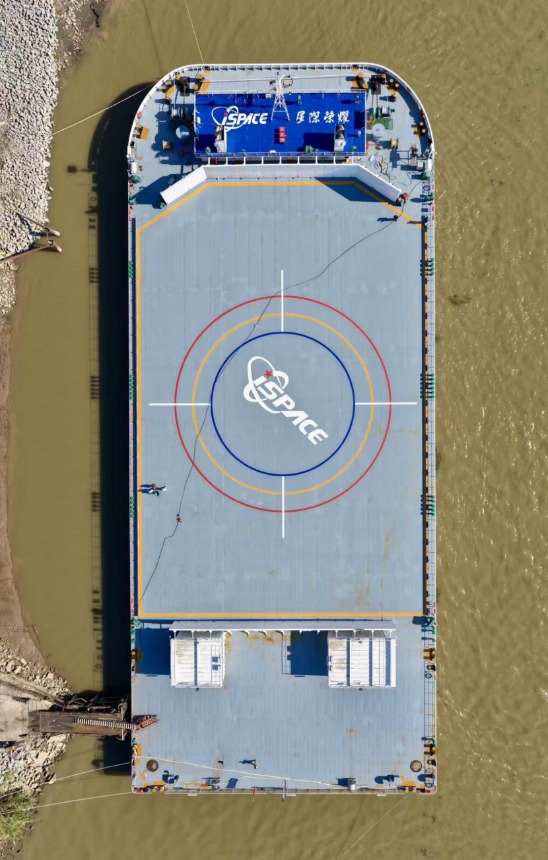
Core Insights - The article highlights that Space Honor has completed a record financing round of 5.037 billion yuan, marking the largest single financing for a domestic commercial rocket company to date [1] - The funds raised will primarily accelerate the development and commercialization of reusable liquid oxygen-methane rockets, focusing on "land launch, sea recovery" technology [1][4] - The commercial space sector in China is experiencing rapid growth, with significant investments and advancements in reusable rocket technology [5][8] Financing Details - The D++ round financing was led by Tongchuang Weiye and existing shareholder Jingming Capital, with participation from various other investors including Ganquan Capital and Chengdu Industrial Investment Group [1] - Other notable investors include Tianshi Capital, Turing Asset Management, and several new institutions, indicating strong interest in the commercial space sector [1] Technological Advancements - Space Honor is recognized as the first private commercial aerospace company in China to achieve orbital launch and the first to complete full-scale vertical landing tests of a rocket [4] - The SQX-3 reusable rocket is set to conduct its maiden flight at the Hainan commercial space launch site, targeting "orbital + sea recovery" [4][5] Market Trends - The commercial space market has seen a surge in large financing rounds since the second half of 2025, with other companies like Xinghe Power and Tianbing Technology also securing significant funding [6] - The competitive landscape is intensifying, with expectations that commercial space companies will replicate the listing patterns seen in the domestic GPU sector [5] Industry Outlook - The commercial space industry in China is projected to maintain rapid development, with 50 launches planned for 2025, accounting for 54% of the total national launches [8] - The successful flight of reusable rockets is expected to lead to a high-density launch period starting in 2026, driven by technological breakthroughs and improved infrastructure [11][12]

高密度发射 我国商业航天何以迎来突破?
Xin Lang Cai Jing· 2026-01-26 18:59
Core Insights - The recent launch of 19 low-orbit satellites by China's commercial space sector marks a significant step in the country's ambition to become a "space power" as outlined in the 14th Five-Year Plan [2][8] - The rapid advancements in technology and the increasing capabilities of private space companies are driving the commercialization of space, transitioning from supplementary forces to strategic pillars [2][7] Group 1: Launch and Technology Developments - The Long March 12 rocket, used for the recent satellite launch, is China's first 4-meter single-core rocket with a near-Earth orbit capacity of at least 12 tons, supporting various launch missions [3] - Galaxy Space successfully launched its second group of self-developed low-orbit satellites, incorporating advanced technologies such as low-cost phased array antennas and automated production processes to enhance efficiency [2][3] Group 2: Reusable Rocket Technology - The development of reusable rocket technology is seen as a key factor in reducing launch costs and increasing launch frequency, with both state-owned and private enterprises collaborating on this front [5][7] - By the end of 2025, attempts at first-stage recovery tests for the Zhuque-3 and Long March 12A rockets are planned, indicating progress in this area [5] Group 3: Market and Policy Drivers - The rapid growth of China's commercial space sector is driven by favorable policies, capital investment, and technological breakthroughs, with a focus on satellite internet and 6G technology [6][7] - China has submitted applications for an additional 203,000 satellites, with major telecom operators like China Mobile and China Telecom entering the satellite constellation market [7][8] Group 4: Industry Ecosystem - The commercial space industry in China is developing a complete ecosystem from rocket and satellite manufacturing to launch services and communication operations, creating internal momentum for growth [8] - The successful integration of key technologies and the expansion of large-scale applications position China's commercial space sector to play an increasingly important role in the global space economy [8]
中科宇航IPO辅导工作完成,今年将进行可复用飞行器百公里回收技术验证
Sou Hu Cai Jing· 2026-01-24 11:09
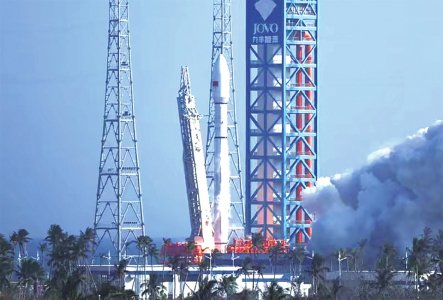
Core Viewpoint - Zhongke Aerospace Technology Co., Ltd. has completed its listing guidance process, marking a significant step towards its public offering [1][2]. Group 1: Company Overview - Zhongke Aerospace was established in December 2018 and is a high-tech enterprise incubated by the Institute of Mechanics, Chinese Academy of Sciences, focusing on the development of medium and large rockets, customized space launches, suborbital scientific experiments, and space tourism [2]. - The company is controlled by Beijing Pengyi Junlian Space Technology Center (Limited Partnership), which holds a 27.7476% stake [3]. - The founder and chairman, Yang Yiqiang, has extensive experience in rocket technology and management, having worked at the China Academy of Launch Vehicle Technology since 1987 [4]. Group 2: Financial Performance - As of 2024, Zhongke Aerospace reported a revenue of 243 million yuan and a net loss of 748 million yuan. In the first half of 2025, the company generated 36.2413 million yuan in revenue with a net loss of 311 million yuan [4]. Group 3: Product Development - The main product line includes the "Liqiang" series of launch vehicles. The Liqiang-1 successfully completed a mission on December 10, 2025, launching nine satellites, including three for international clients, and has placed a total of 84 satellites into orbit with a total payload mass exceeding 11 tons [6]. - The company is developing the Liuhong-1 return vehicle, which aims to support various scientific experiments and manufacturing in space, with plans for upgrades to enhance its capabilities [6][8]. - The Liqing-1 engine has achieved significant milestones in thrust modulation technology, demonstrating a range of thrust adjustment capabilities and marking a breakthrough in liquid oxygen and kerosene engine technology [7]. Group 4: Future Plans - Zhongke Aerospace plans to utilize the Liuhong-2 reusable vehicle, powered by three Liqing-1 engines, for a recovery technology verification mission in 2026 [8]. - The company aims to develop the Liqiang-2 and Liqiang-3 heavy launch vehicles, focusing on low-cost and high-reliability technologies to facilitate rapid deployment and sustainable operation of space infrastructure in China [8].
1.21犀牛财经晚报:ETF总规模回到6万亿元以下
Xi Niu Cai Jing· 2026-01-21 10:30
Group 1: ETF Market - The total market size of ETFs has decreased to 5.93 trillion yuan, down from 6.24 trillion yuan [1] - The scale of the CSI A500 ETF has dropped below 300 billion yuan, currently at 285.98 billion yuan, with 8 out of 40 ETFs having a scale of over 10 billion yuan [1] Group 2: Investment Outlook - Bridgewater Associates remains optimistic about the Chinese stock market, projecting a 45% return for its onshore hedge fund in 2025, marking the best performance in five years [1] - The All Weather Plus fund of Bridgewater saw a 9.1% increase in Q4, with an annual return of 44.5%, compared to an 18% rise in the benchmark CSI 300 index [1] Group 3: Energy Storage Market - GGII forecasts that global household energy storage system shipments will reach approximately 35 GWh in 2025, representing a nearly 50% year-on-year growth [2] - The market concentration for household storage systems is significant, with Germany, the US, Australia, and Japan accounting for 57% of the total global installation [2] Group 4: Film Industry - China's film industry chain is projected to reach a value of 817.26 billion yuan in 2025, with a box office multiplier of approximately 1:15.77, ranking among the top globally [3] Group 5: Commercial Aerospace - In 2025, China's commercial aerospace sector is expected to complete 50 launches, accounting for 54% of the total national space launches, with 311 commercial satellites successfully placed into orbit [3] Group 6: Strategic Partnerships - Lianlong has signed a strategic framework agreement with Runyinglian to enhance the reliability and efficiency of the lubricating oil additive supply chain in China and the Asia-Pacific region [8] Group 7: Financial Performance Forecasts - Limin Co. anticipates a net profit of 465 million to 500 million yuan for 2025, representing a year-on-year increase of 471.55% to 514.57% [11] - Guanghui Energy expects a net profit of 1.32 billion to 1.47 billion yuan for 2025, indicating a decline of 50.03% to 55.13% year-on-year [12] - Jiajiayue forecasts a net profit of 198 million to 228 million yuan for 2025, reflecting a growth of 50.06% to 72.79% year-on-year [13] - Xianghe Industrial projects a net profit of 120 million to 148 million yuan for 2025, showing an increase of 59.17% to 96.31% year-on-year [14] - Baiao Intelligent expects a net profit of 90 million to 120 million yuan for 2025, indicating a growth of 228.34% to 337.79% year-on-year [15] - Hekang New Energy anticipates a net profit of 50 million to 75 million yuan for 2025, representing a year-on-year increase of 385.62% to 628.43% [16]



2025年度商业航天发射达50次 入轨商业卫星311颗
Yang Shi Xin Wen· 2026-01-21 08:10
Group 1 - The core viewpoint of the article highlights the rapid development of China's commercial space industry in 2025, with significant achievements in satellite launches and reusable rocket technology [1] Group 2 - A total of 50 launches were completed in 2025, accounting for 54% of China's total space launches for the year [1] - Commercial launch vehicles conducted 25 launches, while the Hainan commercial space launch site was utilized for 9 launches, totaling 10 since its establishment [1] - 311 commercial satellites were successfully placed into orbit, representing 84% of the total satellites launched by China in the same year [1] - The technology for reusable launch vehicles saw accelerated breakthroughs, with the successful maiden flight of the Zhuque-3 reusable rocket, achieving key technology validations [1]
力擎一号针栓式液氧煤油发动机完成变推力摇摆试车考核
Xin Jing Bao· 2026-01-20 09:51
Group 1 - The core viewpoint of the articles highlights the successful testing and development of the "Liqing No. 1" engine by China Aerospace Science and Technology Corporation, marking significant advancements in liquid oxygen and kerosene engine technology [1][2] - The "Liqing No. 1" engine has completed a total of 330 seconds of testing, with an overall testing duration exceeding 1300 seconds, which is more than five times the flight duration of a reusable rocket's first stage [1] - The engine has achieved deep thrust modulation from 100% to 50% and possesses high precision thrust adjustment capabilities at the 1% level, indicating that the company has mastered core technologies in thrust modulation [1] Group 2 - The "Liqing No. 1" engine is a 30-ton thrust engine featuring advanced bolt-type injector structures and is manufactured using stainless steel 3D printing technology, offering high combustion efficiency and stability [1] - The successful development of the "Liqing No. 1" engine lays a solid foundation for the development of the "Lihong No. 2" reusable spacecraft, indicating a breakthrough in key technologies for reusable launch vehicles [1] - The "Lihong No. 1" spacecraft has successfully completed its first suborbital flight test, validating technologies for atmospheric re-entry and precise landing control, with plans to use three "Liqing No. 1" engines for the "Lihong No. 2" spacecraft [2]
国家航天局:可重复使用运载火箭技术加速突破
财联社· 2026-01-20 07:29
Core Viewpoint - The commercial aerospace sector in China is experiencing rapid growth, with significant advancements in launch frequency and technology [1] Group 1: Launch Statistics - In 2025, China completed a total of 50 commercial launches, accounting for 54% of the country's total space launches for the year [1] - Among these, 25 were commercial rocket launches, while 16 were other commercial satellite launches [1] - The Hainan commercial launch site was operational, conducting 9 launches, contributing to a cumulative total of 10 launches since its establishment [1] Group 2: Satellite Deployment - A total of 311 commercial satellites were successfully placed into orbit, representing 84% of all satellites launched by China in the same year [1] Group 3: Technological Advancements - The technology for reusable launch vehicles is advancing rapidly, with the successful maiden flight of the Zhuque-3 reusable rocket, which achieved successful orbit insertion of its second stage [1] - Core technology validations, including the re-entry and return of the first stage, are underway [1]

2025年度商业航天发射达50次 占比我国全年宇航发射总数54%
Zhong Guo Xin Wen Wang· 2026-01-20 06:58
Core Insights - In 2025, China's commercial space sector is projected to achieve 50 launches, accounting for 54% of the country's total space launches for the year [1] Group 1: Launch Statistics - The commercial launch sector will conduct 25 rocket launches [1] - The Hainan commercial space launch site will be operational with 9 launches conducted, totaling 10 launches since its establishment [1] - A total of 16 other commercial satellite launches are expected [1] Group 2: Satellite Deployment - The year will see 311 commercial satellites placed into orbit, representing 84% of all satellites launched by China [1] Group 3: Technological Advancements - Breakthroughs in reusable rocket technology are accelerating, with the Zhuque-3 reusable rocket successfully completing its maiden flight and achieving successful orbit insertion of its second stage [1] - Core technology validations, including the re-entry and return of the first stage, are being conducted [1]