
天鹊系列液氧甲烷发动机

Search documents
商业航天“资本赛”开跑:SpaceX瞄准年内上市,中国五箭客冲刺“第一股”
3 6 Ke· 2026-01-23 12:53
Core Viewpoint - The competition for the title of "China's first commercial space stock" has intensified, with multiple companies, including Blue Arrow Aerospace and SpaceX, making significant progress in their IPO processes and technological advancements in the space industry [1][2][3]. Group 1: IPO Progress - Blue Arrow Aerospace is currently leading the IPO race among five Chinese commercial space companies, having entered the "inquiry" stage after a rapid five-month process [2][3]. - The introduction of the "fifth set of listing standards" on the Sci-Tech Innovation Board has opened doors for unprofitable but technologically advanced companies, benefiting Blue Arrow Aerospace [2]. - Other companies like China Aerospace, Tianbing Technology, and Xinghe Power are also in various stages of their IPO processes, with China Aerospace expected to submit its prospectus soon [3]. Group 2: Valuation and Funding - All five companies have achieved valuations exceeding 10 billion yuan, with Blue Arrow Aerospace and Tianbing Technology valued over 20 billion yuan [3]. - The companies have engaged in multiple rounds of financing, with significant activities noted just before their IPOs, indicating strong investor interest [3][4]. - Blue Arrow Aerospace and China Aerospace did not engage in new financing in 2025, with their last rounds occurring in late 2024 [4]. Group 3: Technological Developments - The key competitive edge in the space industry is the development of reusable rockets, with Blue Arrow Aerospace and others focusing on liquid oxygen methane and recovery technology [7][8]. - Blue Arrow Aerospace has developed the "Tianque" series of liquid oxygen methane engines, marking a significant technological milestone in China's space capabilities [7]. - Other companies are also advancing their rocket technologies, with plans for high-frequency launches and various types of reusable rockets [8]. Group 4: Market Dynamics - The commercial space industry is expected to grow significantly, with the global space economy projected to reach approximately 2.9 trillion yuan by 2024 [10]. - The competition is shifting from merely reducing launch costs to focusing on application scenarios, as demonstrated by SpaceX's Starlink [9]. - China's commercial space sector is rapidly evolving, with a projected market size exceeding 2.5 trillion yuan and a compound annual growth rate of over 20% [11]. Group 5: Financial Challenges - Despite the rapid growth and high valuations, companies in the commercial space sector face significant profitability challenges, with Blue Arrow Aerospace reporting substantial losses [12]. - Analysts expect a shift in market valuation from broad narratives to specific financial metrics and order visibility as companies mature [12]. - The industry is anticipated to transition from capital-driven narratives to value realization as technological advancements and cost controls improve [12].
商业航天行业深度系列(一):以第一性原理推演中国商业航天降本革命
Shanghai Aijian Securities· 2026-01-21 10:19
Investment Rating - The report rates the industry as "stronger than the market" [1] Core Insights - The report concludes that 2026 will mark a turning point for China's commercial aerospace industry, with a shift from state-driven missions to market-driven profitability, driven by the deployment of low-orbit satellite constellations and advancements in reusable rocket technology [1][6] - The commercial rocket launch service market in China is projected to grow from 10.26 billion yuan in 2025 to 47.39 billion yuan by 2030, with a CAGR of approximately 35.8% [1][12] - The report emphasizes that the core components of rocket launch services are engines (54%) and structural components (24%), which together account for 78% of the value in the launch service segment [1][12] Summary by Sections Industry Overview - The commercial aerospace industry is defined as activities that provide aerospace products and services through social capital investment under national policy guidance, including the R&D, manufacturing, launch, and operation of spacecraft and rockets [6][7] - The global aerospace economy is expected to reach $612 billion by 2024, with commercial aerospace revenues accounting for approximately $480 billion, representing about 78% of the total [6][7] Market Dynamics - The demand for satellite launches is expected to surge as China enters a concentrated deployment phase for low-orbit satellite constellations, with over 200,000 satellites planned for deployment [18][19] - The report highlights that the competition for low-orbit frequency resources is intensifying, necessitating faster deployment of satellite constellations [19][21] Cost Structure and Efficiency - The report breaks down the cost structure of rockets, indicating that engines and structural components dominate the value chain [1][12] - It outlines a pathway for reducing launch costs, projecting that the unit cost of launching payloads could decrease significantly as technology advances [1][12] Investment Recommendations - The report suggests focusing on companies involved in key segments such as propulsion systems, satellite communication systems, materials and structural components, and testing and validation services [2][4] - Specific companies to watch include 应流股份 (603308), 斯瑞新材 (688102), and 上海瀚讯 (300762), among others [2][4]


大国重器背后的工业母机 ——金属3D打印设备为商业航天注入强劲动能
Zhong Jin Zai Xian· 2026-01-12 04:57
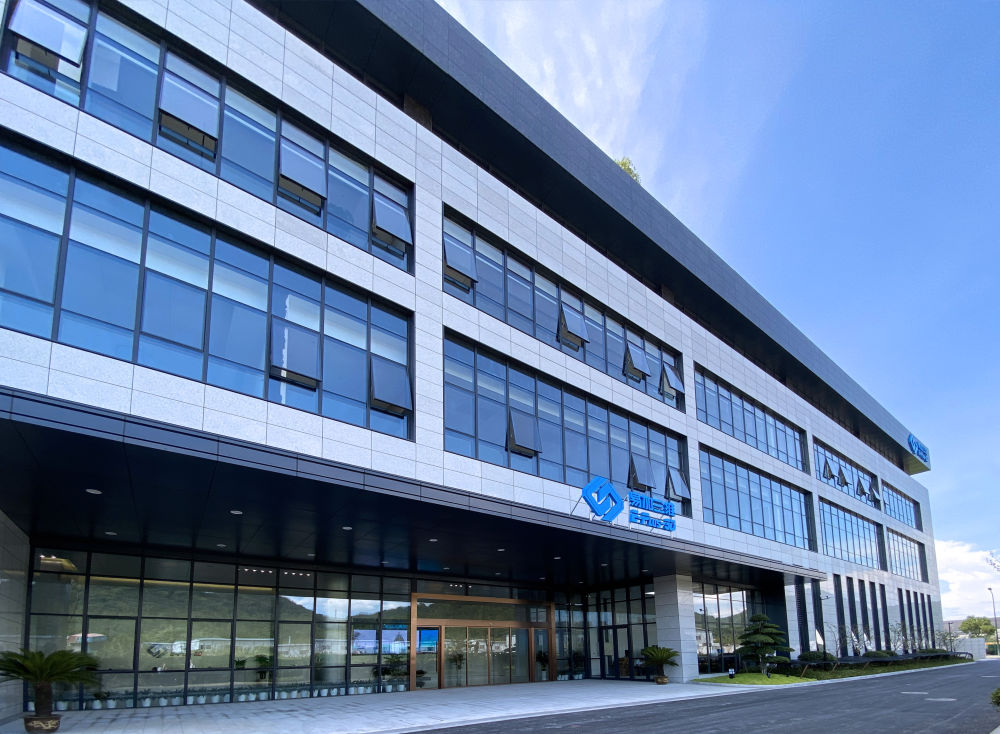
Group 1: Industry Overview - China's commercial space industry is experiencing historic development opportunities under the guidance of the strategy to build a strong space nation, with commercial rocket development and launch services being a key component [1] - Major Chinese commercial space companies, including Blue Arrow Aerospace, Tianbing Technology, and Xinghe Power, are entering a new development phase characterized by "high frequency, low cost, and reusability" [1] - The application of industrial-grade metal 3D printing technology is transforming the manufacturing process of rockets, significantly reducing costs and time while enhancing performance [2] Group 2: Technological Advancements - Industrial-grade metal 3D printing allows for the production of complex rocket engines as a single piece, reducing weight by over 50% and increasing strength by more than 200%, while shortening delivery times from months to weeks [2] - Approximately 70% of components in liquid rocket engines are now manufactured using metal 3D printing technology, with this figure approaching 90% for advanced models [2] - Hangzhou Yijia 3D Technology Co., Ltd. has developed large-scale metal 3D printing equipment that addresses previous challenges in the industry, enabling commercial applications for large rockets [3] Group 3: Key Players and Collaborations - Leading commercial space companies are utilizing Yijia's metal 3D printing equipment for critical components in rocket engines, enhancing thrust and enabling large-scale satellite networks and cargo transport to space stations [5] - Blue Arrow Aerospace and Yijia are collaborating on the development of new generation rocket components, including large nozzle structures [5] - Yijia's stable additive manufacturing equipment is becoming an essential part of China's commercial space engine supply chain, supporting rapid iteration and large-scale development [7] Group 4: Future Prospects - The commercial space industry is entering a new phase of constellation deployment and deep space exploration, with metal 3D printing enabling innovative designs that were previously constrained by traditional manufacturing methods [8] - The market for commercial space is projected to reach hundreds of billions, and companies like Yijia are poised to meet the challenges and demands of this growing sector [8]

发射7次、失败2次,三年半累亏近35亿元,蓝箭航天比SpaceX差在哪?
36氪· 2026-01-06 00:33
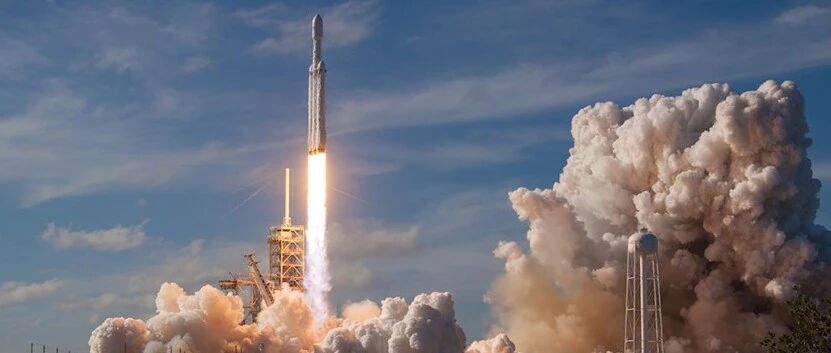
Core Viewpoint - Blue Arrow Aerospace, the first commercial aerospace company in China, has recently completed the launch of its Zhuque-3 rocket and is now seeking to raise 7.5 billion yuan through an IPO on the Sci-Tech Innovation Board, aiming for a market valuation of 75 billion yuan [5][6]. Company Overview - Blue Arrow Aerospace was established in 2015 and focuses on the research, development, and production of liquid oxygen-methane engines and launch vehicles, specifically the Zhuque series rockets [8]. - The company has conducted seven launches since the end of 2022, achieving five successful missions [6][8]. Financial Performance - Over the past three and a half years, Blue Arrow Aerospace has generated total revenue of approximately 45.44 million yuan, while incurring cumulative losses of nearly 3.5 billion yuan [12][16]. - The revenue from rocket launch services has significantly increased, contributing nearly 98% of the total revenue in the first half of 2025, primarily from the successful launch of six satellites [14]. Market Position and Competition - Blue Arrow Aerospace aims to compete with SpaceX, particularly in the reusable rocket sector, and has made significant technological advancements, including achieving a successful orbit insertion with the Zhuque-3 rocket [10][11]. - The company has been recognized as a core supplier for major satellite launch projects, indicating a strong market position [19]. Future Prospects - The company plans to use the funds raised from the IPO to enhance its reusable rocket production capacity and technology [11]. - Blue Arrow Aerospace is optimistic about future commercial opportunities, particularly in meeting the demands of large satellite constellations and cargo spacecraft launches [18][19]. Industry Context - The commercial aerospace sector in China is experiencing a wave of IPOs, supported by government policies encouraging private investment in satellite technology [21][22]. - Despite the growth potential, the industry faces challenges in terms of technology and cost competitiveness compared to established players like SpaceX, which has a significant lead in reusable rocket technology and cost efficiency [25][26].
大能源行业2025年第53周周报(20260103):蓝箭航天冲击国内民营商业火箭第一股-20260104
Hua Yuan Zheng Quan· 2026-01-04 08:20
Investment Rating - The industry investment rating is "Positive" (maintained) [1] Core Insights - Blue Arrow Aerospace's IPO represents a significant event in China's private commercial aerospace sector, focusing on the development and production of liquid oxygen-methane engines and launch services for reusable rockets [3][8] - The company aims to raise a total of 7.5 billion yuan, primarily for projects enhancing the capacity and technology of reusable rockets, which is expected to strengthen its delivery capabilities across the entire rocket lifecycle [3][8] - The commercial aerospace sector is experiencing robust growth driven by policy support, marking a critical turning point in commercialization and positioning it as a potential trillion-yuan strategic emerging industry [9][11] Summary by Sections Section 1: Blue Arrow Aerospace's Market Position - Blue Arrow Aerospace is set to become the first private commercial rocket company listed in China, focusing on reusable rocket technology and aiming to establish a comprehensive aerospace technology ecosystem [3][8] - The company has successfully developed over 140 units of its "Tianque" series liquid oxygen-methane engines and achieved significant milestones, including the successful launch of China's first reusable liquid oxygen-methane rocket, "Zhuque-3" [10] Section 2: Industry Trends and Opportunities - The demand for low-cost, high-frequency rocket launches is expected to increase significantly due to the accelerated deployment of satellite constellations, such as the "GW Constellation" and "Qianfan Constellation," which plan to deploy over 12,990 and 15,000 satellites, respectively, by 2030 [9][10] - The commercial satellite internet and remote sensing sectors are anticipated to drive demand for Blue Arrow Aerospace's services, positioning the company favorably within the expanding commercial aerospace market [11] Section 3: Investment Recommendations - Investors are advised to pay attention to companies associated with Blue Arrow Aerospace, including Jin Feng Technology and its supply chain partners such as Srei New Materials and Aerospace Power [11]
商业航天行业系列二:蓝箭航天招股书的要点及启示
GF SECURITIES· 2026-01-04 04:24
Investment Rating - The report suggests a "Buy" rating for the commercial aerospace industry, indicating an expected performance that will exceed the market by more than 10% over the next 12 months [8]. Core Insights - The report highlights that Blue Arrow Aerospace's IPO has been accepted, marking a significant milestone in the industry as it transitions from a 1 to N phase in the supply chain [4]. - The company has a concentrated ownership structure, with Zhang Changwu holding 23.47% of the shares and controlling 75.20% of the voting rights [4]. - Revenue from 2022 to 2024 shows a significant increase from 0.78 million to 39.5 million, with a projected revenue of 36.43 million in the first half of 2025, primarily from a single client [4]. - The report notes that the company has incurred net losses, with figures of -800 million, -1.19 billion, -880 million, and -600 million for the years 2022 to 2025 H1 [4]. - Major expenditures include costs related to rocket launch services and R&D, with costs rising from 34 million in 2022 to 208 million in 2024 [4]. - The company plans to raise 7.5 billion for projects aimed at enhancing reusable rocket capacity and technology, with specific investments allocated to various production sites [4]. - Blue Arrow's "Zhuque" series rockets have achieved significant milestones, including being the first liquid-fueled rocket to enter mass production in China's private aerospace sector [4]. - The global rocket launch service market is projected to grow from 16.5 billion in 2023 to over 50 billion by 2032, indicating substantial market potential [4]. - The report recommends monitoring companies related to 3D printing and suggests several firms for investment consideration, including Jiangshun Technology and Changchuan Technology [4]. Summary by Sections Company Overview - Blue Arrow Aerospace's IPO status is currently "Accepted" as of December 31, with a focus on enhancing production capabilities and technology [4]. - The company has a concentrated ownership structure, with significant control held by a single individual [4]. Financial Performance - Revenue growth from 2022 to 2024 shows a substantial increase, with a notable reliance on a single client for income [4]. - The company has reported consistent net losses over the past few years, indicating financial challenges [4]. Expenditure Analysis - Major costs are associated with rocket launch services and R&D, with a clear upward trend in expenses [4]. Market Potential - The global market for rocket launch services is expected to see significant growth, driven by increasing satellite deployment needs [4]. Investment Recommendations - The report suggests a focus on companies within the 3D printing sector and highlights specific firms for potential investment [4].
蓝箭航天科创板IPO获受理!上交所商业火箭企业上市新规后首单!
Xin Lang Cai Jing· 2026-01-03 23:34
Core Viewpoint - Blue Arrow Aerospace Technology Co., Ltd. has received acceptance for its IPO on the Sci-Tech Innovation Board, marking it as the first commercial rocket company to achieve this under the new listing rules [1][15]. Group 1: Company Overview - The company aims to build a full industrial chain centered on medium and large reusable liquid oxygen-methane launch vehicles, focusing on R&D, manufacturing, testing, and launching [1][16]. - Founded in June 2015 and transformed into a joint-stock company in March 2019, Blue Arrow Aerospace is headquartered in Beijing with a registered capital of 360 million yuan [1][16]. - The company has become a leading commercial aerospace enterprise in China, specializing in the R&D and production of liquid oxygen-methane engines and launch vehicles, and providing commercial launch services [1][16]. Group 2: Product Development - The Zhuque-2 series medium liquid oxygen-methane launch vehicle is the first liquid-fueled rocket in China's private commercial aerospace sector to enter mass production and commercial use [2][17]. - The Zhuque-3 medium-large reusable launch vehicle successfully completed its maiden flight and entered orbit, becoming China's first reusable rocket to achieve this milestone [2][17]. - The company has established intelligent manufacturing bases in Huzhou, Jiaxing, and Wuxi, and has produced over 140 units of its independently developed "Tianque" series liquid oxygen-methane engines [2][17]. Group 3: Financial Performance - The company has not yet achieved profitability, with reported revenues of 780,000 yuan, 3.95 million yuan, 4.28 million yuan, and 36.43 million yuan for the years 2022, 2023, 2024, and the first half of 2025, respectively [3][18]. - The net losses for the same periods were -80.37 million yuan, -118.75 million yuan, -87.59 million yuan, and -59.65 million yuan [3][18]. - The company has maintained high R&D expenditures, with amounts of 487.22 million yuan, 830.43 million yuan, 612.56 million yuan, and 359.59 million yuan over the same periods [3][18]. Group 4: R&D and Innovation - Cumulatively, the company has invested 2.2898 billion yuan in R&D from 2022 to the first half of 2025, with R&D personnel accounting for 32.98% of the total workforce as of December 31, 2024 [5][19]. - The company holds 267 patents related to liquid-fueled rockets that are applicable to its main business and can be industrialized [5][19]. Group 5: IPO Fund Utilization - The IPO aims to raise 7.5 billion yuan, which will be allocated to two projects: enhancing the production capacity of reusable rockets and improving reusable rocket technology [15][29].
冲刺商业航天第一股!蓝箭航天IPO获受理:拟募资75亿,需实现可复用火箭发射载荷成功入轨
Sou Hu Cai Jing· 2026-01-01 00:07
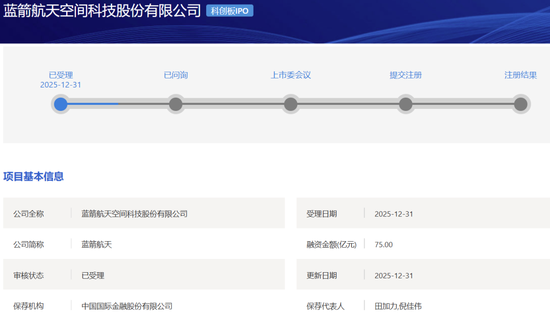
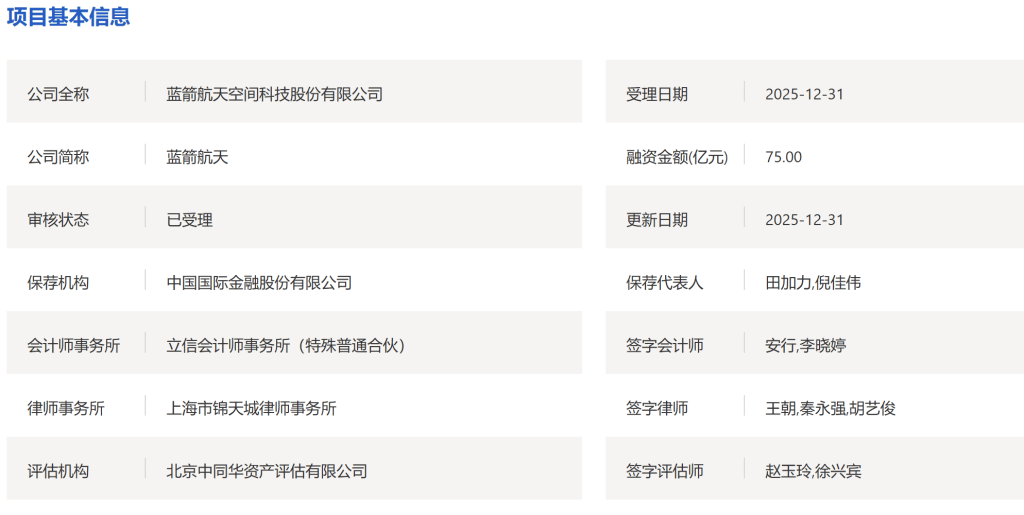
Core Viewpoint - Blue Arrow Aerospace Technology Co., Ltd. is set to launch its IPO on the Sci-Tech Innovation Board, aiming to raise 7.5 billion yuan to enhance its capabilities in reusable rocket technology and production capacity [1][2]. Company Overview - Blue Arrow Aerospace, founded in 2015 and headquartered in Beijing, focuses on the research, production, and commercial launch services of liquid oxygen-methane engines and rockets [8]. - The company aims to build a comprehensive aerospace technology ecosystem centered around medium to large reusable liquid oxygen-methane rockets [9]. IPO Details - The IPO application was accepted on December 31, 2025, with a fundraising target of 7.5 billion yuan [1][2]. - The underwriting institution for the IPO is China International Capital Corporation [2]. Financial Performance - Revenue figures from 2022 to the first half of 2025 are as follows: 780,000 yuan, 3.95 million yuan, 4.27 million yuan, and 36.43 million yuan, respectively [3]. - The net losses for the same period were 800 million yuan, 1.188 billion yuan, 876 million yuan, and 597 million yuan [3]. - The company has a high R&D investment relative to revenue, with ratios of 62231.80%, 21012.51%, 14318.09%, and 987.01% for the respective years [5]. Debt and Equity Structure - As of June 30, 2025, the company reported a consolidated and parent company undistributed profit of -4.84 billion yuan and -3.22 billion yuan, respectively [5]. - The controlling shareholder, Zhang Changwu, holds 6.7277% of the shares directly and controls a total of 75.2019% of the voting rights through various partnerships [6]. Industry Context - The commercial aerospace industry in China has reached a scale of 2.5 trillion to 2.8 trillion yuan, with an annual compound growth rate exceeding 20% [11]. - The global commercial aerospace market is valued between 624 billion to 700 billion USD, reflecting a year-on-year growth of 22% [10].
中国商业航天迈入爆发期
21世纪经济报道· 2025-12-19 06:10
Core Viewpoint - 2025 is projected to be a pivotal year for China's commercial space industry, transitioning from technological accumulation to explosive growth, with multiple private aerospace companies completing rocket launch tests and accelerating satellite internet deployment [1] Group 1: Industry Developments - The Chinese government is providing strong support for commercial space through policies, including the "14th Five-Year Plan" emphasizing the construction of a "space power" and the establishment of a dedicated Commercial Space Administration [1] - Despite a promising outlook, the industry faces significant supply chain challenges, particularly in upstream infrastructure, with a consensus that the bottleneck is not in downstream applications but in launch capacity and costs [1] - The recent successful launch of the Zhuque-3 rocket and the upcoming maiden flight of the Long March 12甲 rocket are seen as significant milestones for China's commercial space sector, potentially reshaping market dynamics [3][4] Group 2: Technological Innovations - The Zhuque-3 rocket, developed by Blue Arrow Aerospace, is a new generation of low-cost, high-capacity, reusable rocket, utilizing a self-developed liquid oxygen-methane engine [3][7] - The Long March 12甲 rocket, developed by China Aerospace Science and Technology Corporation, emphasizes a stable supply chain by using a liquid oxygen-kerosene engine, reflecting a dual risk approach in China's aerospace strategy [8] - The ultimate goal of reusable rocket technology is to significantly reduce launch costs, with the Zhuque-3 aiming to lower the cost per kilogram to below 20,000 RMB, enhancing China's competitive edge in the global market [9][10] Group 3: Market Dynamics and Future Outlook - Predictions indicate that within three years, launch prices in China could approach those of SpaceX, with the potential to undercut SpaceX's Falcon 9 prices in about five years [11] - The competitive focus in the coming years will center on cost control, reliability, fulfillment capabilities, and service responsiveness, as companies strive to meet the growing demand for satellite deployment [11] - The challenges faced by Chinese rocket companies include not only technological hurdles but also the need for systematic engineering and industrialization to catch up with established players like SpaceX [11]
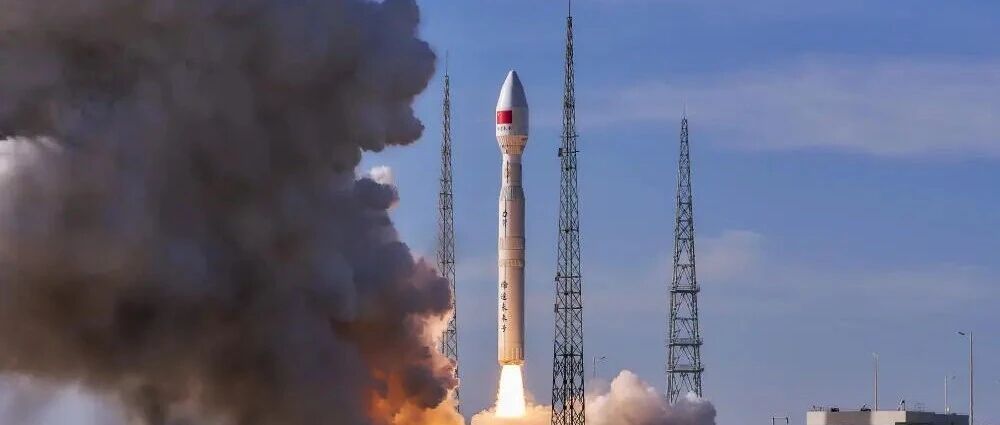
中国可回收火箭蓄力突围
2 1 Shi Ji Jing Ji Bao Dao· 2025-12-18 23:43
Core Insights - 2025 is projected to be a pivotal year for China's commercial space industry, transitioning from technological accumulation to explosive growth, with multiple private aerospace companies completing rocket launch tests and accelerating satellite internet deployment [1][11] - Policy support is intensifying, with the "14th Five-Year Plan" emphasizing the construction of a "space power," and the establishment of a dedicated Commercial Space Administration by the National Space Administration [1][11] - Despite a promising outlook, supply chain weaknesses remain evident, particularly in upstream infrastructure, which is seen as a critical bottleneck for the industry [1][11] Industry Developments - December marked significant advancements in China's reusable rocket technology, highlighted by the launch of the Zhuque-3 rocket, which, despite a recovery failure, provided valuable experience for future developments [2][12] - The Zhuque-3 rocket, developed by Blue Arrow Aerospace, is a new generation of low-cost, high-capacity, reusable liquid oxygen-methane rocket, showcasing advanced features such as a reaction control system and landing legs [2][12] - Following Zhuque-3, the Long March 12甲 rocket, developed by China Aerospace Science and Technology Corporation, is set for its maiden flight, indicating a rapid progression in China's commercial space capabilities [2][12][13] Market Dynamics - Currently, only the United States has mastered reusable rocket technology, with SpaceX leading the way, having completed over 500 launches and capturing 86% of the global orbital payload market in 2023 [3][13] - In contrast, China's commercial launch capacity remains limited, with a market share in commercial payloads only in the single digits, insufficient to support the ambitious deployment of satellite constellations [3][14] - The urgency for breakthroughs in reusable rocket technology is underscored by the need to address the significant launch capacity gap in the market [4][15] Technological Innovations - The Zhuque-3 rocket's development process emphasized a unique engineering approach, integrating market demand insights and innovative materials like stainless steel to reduce production cycles [6][16] - The Long March 12甲 rocket adopts a different strategy, focusing on stable supply chains and leveraging domestic resources to ensure reliable operations [7][17] - The Tianlong-3 rocket, set for its first flight, aims for high reliability and low-cost delivery, utilizing advanced materials and 3D printing technology [7][17] Cost Reduction Strategies - The ultimate goal of reusable rocket technology is to significantly lower launch costs, with a focus on recovering the first stage of rockets, which constitutes the highest cost component [8][19] - The Zhuque-3 is designed for 20 reuses, with operational costs expected to decrease by approximately 45% after five uses, reflecting a model of high initial investment followed by diminishing marginal costs [8][19] - The target cost for launching per kilogram is set below 20,000 RMB, which would enhance China's competitive edge in the global market [20] Competitive Landscape - The future competition in the rocket market will center on cost control, reliability, fulfillment capabilities, and service responsiveness [10][20] - Chinese companies face significant challenges in catching up with established players like SpaceX, which has spent over a decade refining its technology [10][21] - The ongoing developments in China's commercial space sector indicate a gradual resolution of previously deemed insurmountable challenges, as companies continue to innovate and validate their technologies [21]