
品牌打造

Search documents
诺 普 信(002215) - 深圳诺普信作物科学股份有限公司投资者关系活动记录表
2025-11-26 09:56
Group 1: Company Financing and Management - The company initiated a private placement to support the long-term development of the blueberry industry, with 85% of the funds allocated for the construction of blueberry bases and research centers, demonstrating a commitment to its core business [1] - The actual controller's share reduction was aimed at clearing historical stock pledge loans, allowing for a more focused management approach [2] Group 2: Operational Performance and Market Trends - The new production season started smoothly, with shipment progress meeting or slightly exceeding expectations, and overall average prices remaining stable [3] - The initial price fluctuations in November were influenced by a peak in imported blueberries and climate conditions affecting fruit taste, but these factors are diminishing, leading to improved quality and flavor [3] Group 3: Branding and Channel Development - The current production season is designated as the "Brand Year," focusing on the "Love Berry" main brand, ensuring high-quality output from production sources [4] - Collaborations with key customers like Hema have resulted in a significant year-on-year increase in supply volume [4] Group 4: Future Growth Drivers and Cost Control - Future growth will be driven by three factors: land expansion for capacity growth, efficiency improvements through aging trees and technology optimization, and continuous variety optimization [5] - Cost control measures include organizational adjustments and optimizing personnel efficiency, particularly targeting post-harvest costs and backend expenses [5] Group 5: Land Acquisition and R&D Center - The company faces increasing challenges in acquiring high-quality contiguous land in Yunnan but remains confident due to its long-standing industry practices and strong government-business relationships [5] - The "Small Berry International Research Center" will focus on breakthrough breeding research and improving production efficiency across the entire supply chain [5]

柑橘正上市 这个特色村为啥还不慌
Si Chuan Ri Bao· 2025-11-19 02:39
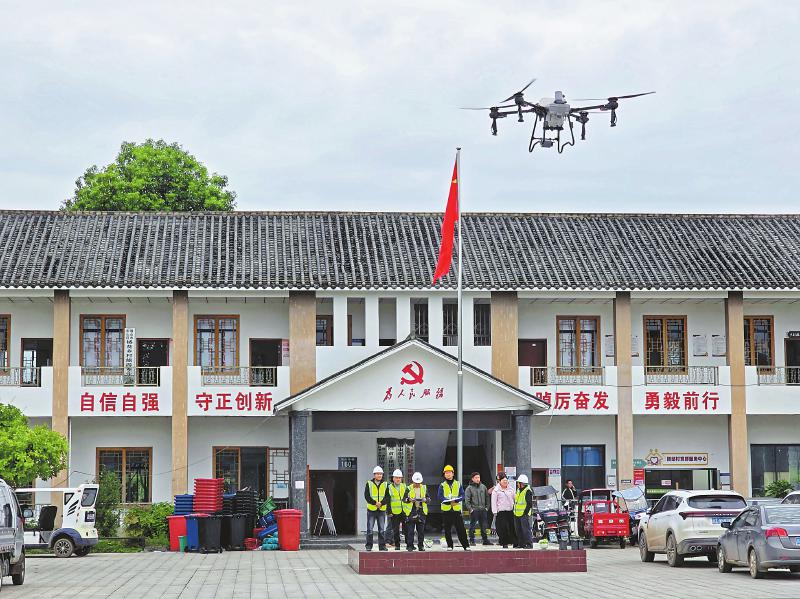
Core Viewpoint - The article highlights the modernization efforts in agriculture within Tuanjie Village, Pengshan District, Meishan City, focusing on the adoption of drone technology and infrastructure improvements to enhance citrus production and market competitiveness [3][5][6]. Group 1: Agricultural Modernization - Tuanjie Village is training over 10 farmers to obtain agricultural drone pilot licenses, which will significantly improve efficiency in citrus harvesting [3][5]. - The village has implemented a water and fertilizer integration system, costing over 13 million yuan, allowing precise irrigation for each tree, with farmers contributing an average of 600 yuan [6]. - The village's citrus production is expected to reach 60 million pounds this year, showcasing the effectiveness of modern agricultural practices [6]. Group 2: Quality Improvement and Branding - Tuanjie Village aims to transition from passive supply to active pricing by differentiating its citrus varieties, including the development of a new variety that reduced fruit splitting from 80% to 10% [7][8]. - The village plans to upgrade its citrus sorting facility, increasing daily sorting capacity from 2 million to 5 million pounds, enhancing the quality and marketability of its products [8]. - Efforts are underway to establish a brand for Meishan citrus, leveraging e-commerce to increase sales from the current 10% to 30%, thereby gaining more pricing power in the market [9].

“兴宁鸽”飞跃密码:保、育、繁、推驱动产业升维
Nan Fang Nong Cun Bao· 2025-10-28 04:03
Core Insights - The "Xingning Pigeon" has emerged as a significant regional public brand for meat pigeons in China, expanding its reach from local to global markets, driven by innovations in breeding, processing, and marketing [3][4][5] - Guangdong province is the largest producer of meat pigeons in China, accounting for approximately 65% of the national breeding stock and producing 245 million pigeons with a market value exceeding 5 billion yuan in 2024 [14][16] - The industry transformation is characterized by a comprehensive integration from breeding to the dining table, enhancing local economic development and contributing to rural revitalization [5][6] Industry Overview - China is the world's largest producer and consumer of meat pigeons, with over 80% of global output originating from the country [14] - Guangdong's meat pigeon industry is projected to reach a scale exceeding 100 billion yuan, supported by standardized breeding systems and a robust marketing framework [43][44] Breeding and Genetic Development - The "Shiqi Pigeon," a local breed with nearly a century of breeding history, has been recognized as a key genetic resource for meat pigeon breeding in Guangdong [22][25] - Efforts to enhance breeding include establishing a breeding center and developing new strains like "Jinlv No. 1" and "Tianxiang No. 2," which are now in trial phases [31][36][37] Policy and Financial Support - The Guangdong provincial government has allocated 2 million yuan annually for three years to support the breeding and genetic improvement of high-quality meat pigeon varieties [38][39] - Policies are being implemented to promote the integration of agriculture and finance, facilitating access to credit for over 2,300 farmers involved in the industry [48] Processing and Value Addition - The establishment of a modern slaughtering facility with an annual capacity of 15 million pigeons has positioned the region as a key player in meat pigeon exports [53] - Local enterprises are innovating in the pre-prepared food sector, processing an average of 60,000 fresh pigeons daily, thus enhancing the value chain [54][55] Market Trends and Consumer Preferences - The demand for larger pigeons weighing over 400 grams is increasing, alongside the popularity of pre-prepared dishes, indicating a shift in consumer preferences [80] - The industry faces challenges such as low R&D investment and a high proportion of small-scale farms, which complicates standardization and branding efforts [81][82] Future Directions - The integration of technology and policy initiatives is expected to drive the next phase of growth in the meat pigeon industry, with a focus on enhancing production efficiency and market competitiveness [84][102] - The "Media+" initiative aims to leverage media resources for brand building and market expansion, further solidifying the "Xingning Pigeon" as a cultural symbol [66][68]

你在日本喝的抹茶,很可能来自贵州这个小县城
3 6 Ke· 2025-10-09 02:15
Core Insights - Japan has become a popular destination for outbound tourism during long holidays, with many tourists eager to try matcha, a specialty that surprisingly originates from Jiangkou County in Tongren, Guizhou [1] - Jiangkou County has transformed its matcha industry in less than a decade, achieving a production volume of 1,300 tons and a value exceeding 300 million yuan in 2024 [1] Group 1: Industry Growth and Development - Jiangkou County is now a significant player in the global matcha market, with approximately one in every seven cups of matcha consumed worldwide originating from this region [2] - The county, previously known for its poverty, has built a "world matcha super factory" with an investment of 600 million yuan, boasting the largest single matcha workshop globally with an annual capacity of 4,000 tons [4][10] - The factory's size is equivalent to 31 football fields, showcasing the scale of production [5] Group 2: Unique Production Methods - The matcha production process is intricate, involving steps such as leaf cutting, steaming, rapid cooling, and secondary drying to preserve flavor and nutrients [8] - Jiangkou County employs an ecological planting model that prohibits chemical pesticides, ensuring high-quality matcha production [19][21] Group 3: Strategic Decisions and Market Positioning - The decision to focus on matcha was strategic, allowing Jiangkou to avoid competition in the saturated traditional tea market [13] - The entry of Guicha Group in 2017 marked a turning point, providing significant investment and establishing a modern supply chain for matcha production [20][26] Group 4: Future Aspirations and Branding - Jiangkou aims to elevate its matcha brand beyond being a mere supplier, seeking to create a recognizable brand identity for "Fanjing Matcha" [30] - The county is exploring product diversification, including matcha-infused items like chocolate, beer, and noodles, to expand its market presence [32][34] - Plans for a "matcha town" and cultural tourism initiatives are underway to enhance consumer engagement and brand experience [34]

小店“出圈”后
Jing Ji Ri Bao· 2025-10-04 22:10
Core Insights - The article highlights the transformation of traditional food shops in Nanchang's Dashi Yuan area into popular destinations for tourists, driven by social media exposure and increased foot traffic [1][2][5]. Group 1: Business Development - The Xiaoluzi Soup Shop has rapidly expanded, opening its eighth branch in September 2023 and launching a Tmall flagship store, showcasing the impact of social media on business growth [2][3]. - The shop's owner, Liu Yuehua, emphasizes the importance of brand development, having registered a trademark and developed new products like fresh rice noodles and chili sauce, achieving monthly sales of around 10,000 units [3]. - Other shops, such as Taoji Green Bean Cake, are also focusing on brand identity and packaging to attract customers, with a strong emphasis on heritage and storytelling [4]. Group 2: Operational Challenges - Many shop owners face the challenge of managing increased customer flow while maintaining quality and service, leading to a busy and demanding work environment [5][6]. - The owner of the White Sugar Cake shop, Hu Meiyong, expresses the difficulty of balancing traditional methods with the need for efficiency, considering automation but facing technical challenges [6][7]. - Wang Xiying, from the Xiying Water Hotel, maintains a focus on customer relationships over volume, prioritizing the atmosphere and community ties over expanding production [10]. Group 3: Personal Experiences - Young shop owners like Zhang Zhiwen highlight the physical demands of running a food business, often working long hours with little time for personal life [8][9]. - Despite the busy schedules, there is a sense of fulfillment and community among the shop owners, with many valuing the relationships built with regular customers [9][10]. - The article illustrates the balance between the pressures of business growth and the desire to maintain personal connections and quality of life [9].
新股消息 | 若羽臣递表联交所 加速打造国际化消费品牌集团
智通财经网· 2025-09-19 10:42
Core Viewpoint - Guangzhou Ruoyuchen Technology Co., Ltd. (若羽臣) has submitted an application for H-share listing on the Hong Kong Stock Exchange, marking a strategic transition towards a technology-driven brand platform with a focus on consumer-centric brand development [2][13]. Group 1: Company Growth and Strategy - Ruoyuchen has experienced rapid growth in revenue and net profit for three consecutive years, with a strategic shift from e-commerce operations to developing proprietary brands [2][3]. - The company's proprietary brand, Zhanjia, achieved revenue of 603 million yuan in the first half of 2025, a significant year-on-year increase of 242.42%, making it the core growth engine [3][4]. - The strategic transition is driven by deep insights into changing consumer demands, shifting focus from functionality to emotional and experiential aspects [3][8]. Group 2: Brand Development and Market Position - Zhanjia is projected to have a compound annual growth rate (CAGR) of 72.6% in retail sales from 2022 to 2024, becoming the fastest-growing brand in the household cleaning sector [4]. - The brand Zhanjia generated 444 million yuan in revenue in the first half of 2025, reflecting a year-on-year growth of 157.11% [4]. - The brand FineNutri quickly surpassed 500 million yuan in retail sales within 12 months, ranking first in the dietary supplement category on Douyin [4][12]. Group 3: Marketing and Sales Strategy - Ruoyuchen employs a "full-channel resonance + content-driven" approach, leveraging consumer insights across various categories to create high-potential brands [9]. - The company has established a comprehensive operational system on Douyin, integrating self-broadcasting, KOL collaborations, and short video distribution to enhance brand visibility and consumer engagement [9][10]. - In the first half of 2025, Zhanjia and FineNutri's self-operated channels accounted for over 60% and 80% of Douyin's overall GMV, respectively, showcasing the effectiveness of the full-channel strategy [12]. Group 4: Future Plans and Global Expansion - The listing in Hong Kong aims to enhance capital strength, competitiveness, and international brand image, while also improving overseas financing capabilities [2][13]. - Future strategic plans include building a multi-brand matrix centered on quality, self-care, and health, while embracing digital and content-driven communication [13][14]. - The company plans to explore overseas markets, particularly in Southeast Asia, and seek strategic acquisitions of high-potential foreign brands to enhance its global brand presence [14].

“在为未来做决策规划时,大部分研究都是无用功”
3 6 Ke· 2025-09-18 01:56
Core Insights - Barry Diller emphasizes the importance of intuition over traditional foresight in predicting industry trends and making business decisions [3][4][5] - The limitations of data in predicting audience preferences are highlighted, suggesting that most predictive research is often futile [4][5] - Diller advocates for a non-goal-oriented approach to leadership, focusing instead on the process and the importance of passionate debate in decision-making [5][7][9] Group 1: Leadership Philosophy - Diller believes that maintaining a pure intuition is crucial for innovation, warning against cynicism that can stifle creativity [3][4] - He argues that setting specific business goals can be counterproductive, preferring a more organic approach to career development and business strategy [5][10] - The value of passionate debate in decision-making is emphasized, as it can lead to better outcomes and clearer insights [7][9] Group 2: Business Strategy - Diller recounts a critical moment during the acquisition of Expedia, where a decision was made amidst uncertainty, highlighting the importance of decisive action [6][10] - He stresses the need to evaluate risks before making investments, suggesting that limiting expectations on potential returns can be detrimental [9][10] - The focus on building strong, recognizable brands is presented as a key strategy for navigating the challenges posed by AI and changing market dynamics [14] Group 3: Hiring Practices - Diller critiques traditional hiring practices that rely heavily on resumes, advocating for a focus on dynamic and capable individuals [11][12] - He suggests that the best hiring strategy involves recruiting from the ground up, allowing for mutual learning and growth within the organization [12] Group 4: Future Outlook - Diller expresses skepticism about the ability of AI to create genuine content, emphasizing the unpredictability of its impact on the industry [12][13] - He warns that the rise of AI could disrupt traditional content distribution methods, urging companies to focus on strengthening their brand identity as a defensive strategy [14]

想打造一个成功的品牌,有哪些简单的范式?
Sou Hu Cai Jing· 2025-08-04 12:32
Core Concept - Building a successful brand in a competitive market is achievable by identifying proven simple paradigms that provide clear guidance for brand growth Group 1: Brand Communication - The transmission of brand philosophy is a hallmark of brand communication, serving as a summary window that helps users answer questions related to the brand, allowing for a more comprehensive understanding of brand value and aiding in precise user attraction [3] Group 2: User Experience - User experience is a critical factor in evaluating a brand, with user feedback providing insights into product quality, design, and purchasing processes, which can inform future optimizations; unique experiences enhance perceived value [5] Group 3: Cultural Integration - Modern consumers seek recognition of their values, and a successful brand must understand how to integrate or shape specific cultural circles, leveraging mainstream or subcultural elements for rapid dissemination, which can generate organic traffic and ease user attraction [7] Group 4: Social Engagement - In the era of social media, brands need to possess strong social attributes, encouraging user interaction and participation in brand development, which not only enhances a sense of belonging but also increases the cost of silence, thereby strengthening the bond between users and the brand [9] Conclusion - There are no shortcuts to building a successful brand, but finding the right development path can yield significant results; while there is no fixed formula for success, attention to detail can lead to meaningful outcomes [10]

江苏隐形富豪,靠卖小家电,悄悄“称王”
Sou Hu Cai Jing· 2025-07-28 07:11
Core Insights - The article highlights the remarkable journey of Ni Zugen, the founder of Lek Electric, who built a nearly 10 billion yuan cleaning appliance giant from scratch with an initial loan of 30,000 USD [3][32] - Lek Electric has become an "invisible champion" in the vacuum cleaner industry, producing over 270 million small appliances, including more than 200 million vacuum cleaners by 2024 [5][32] Company Background - Ni Zugen was born in 1957 in a poor rural area of Jiangsu and started working in agriculture at a young age [5] - After serving in the military, he became an engineer at Chunhua Electric Appliance Factory, where he focused on improving motor quality [8][9] - In 1994, he founded Suzhou Jinlaike Electric Co., the predecessor of Lek Electric, with a focus on creating the best vacuum cleaners [9][20] Innovation and Growth - Lek Electric adopted an original design manufacturer model, emphasizing independent research and development rather than traditional OEM practices [9][20] - The company achieved significant milestones, including the production of the first domestic high-performance vacuum cleaner motor with a speed exceeding 30,000 RPM in 1997 [11][22] - By 2004, Lek Electric became the largest vacuum cleaner manufacturer globally, with an annual production of 8 million units [11][22] Diversification Strategy - To sustain growth amid a slowing market, Lek Electric pursued a diversification strategy, expanding into garden tools and kitchen appliances while leveraging its core motor technology [13][15][16] - The company launched its own brand "LEXY" in 2009, transitioning from an OEM to a brand-driven enterprise [19][20] - Lek Electric successfully entered the water purification market with innovative products, further broadening its business scope [22][26] International Expansion - In response to challenges such as the US-China trade war, Lek Electric began establishing overseas manufacturing facilities, starting with Vietnam [26][30] - The company faced initial setbacks during the construction of its Vietnamese factory but managed to complete it under tight deadlines, significantly increasing production capacity [30][32] - By 2024, Lek Electric's brand value exceeded 10 billion yuan, with revenues of 9.765 billion yuan and net profits of 1.23 billion yuan, exporting to over 100 countries [32][33]
强产业、助销售!茂南羊角镇驻镇帮镇扶村工作队超给“荔”
Nan Fang Nong Cun Bao· 2025-07-02 10:00
Core Viewpoint - The article highlights the successful implementation of a three-pronged strategy involving consumption assistance, technological empowerment, and brand development to modernize the lychee industry in Maonan District, particularly in Yangjiao Town, contributing to rural revitalization and economic growth [6][7][8]. Group 1: Lychee Production and Yield - In 2025, Yangjiao Town is expected to harvest 34,500 acres of lychee, with 468 ancient lychee trees yielding a significant output [3][4]. - The total lychee production in the town is approximately 13,500 tons, accounting for 51% of the lychee output in Maonan District [4]. Group 2: Technological Empowerment - The local work team has implemented smart management for 343 ancient lychee trees, utilizing pest control systems and a 5G irrigation system to enhance fruit-bearing rates [15][16]. - The team plans to continue providing standardized production training and protective development guidance for lychee farmers to improve quality and efficiency [18][19]. Group 3: Sales and Marketing Initiatives - The work team has collaborated with local government to create customized procurement plans for lychee, promoting a "purchase instead of assistance" model [24]. - Agreements have been signed with various organizations to include Yangjiao lychee in employee welfare purchasing systems, significantly expanding the consumer base [25][26]. - The sales initiatives have generated over 388,500 yuan in revenue, alleviating sales pressure on farmers and effectively increasing their income [29].