
噪声污染防治

Search documents
中国噪声污染防治报告(2025)发布,建设声功能区自动监测站点4005个
仪器信息网· 2025-11-18 09:06
Core Viewpoint - The "2025 China Noise Pollution Prevention Report" indicates that the national noise and vibration pollution prevention industry is projected to reach a value of approximately 9.7 billion yuan in 2024 [2][6]. Group 1: Industrial Noise Management - A total of 489 industrial enterprises have been included in the key pollutant discharge unit list, with over 16,000 enterprises managing industrial noise under discharge permits, and nearly 29,000 enterprises registering industrial noise [4]. - In 2024, 36 revised noise-related regulations and standards will be published, and 4,005 automatic monitoring stations for sound function areas will be completed [5]. Group 2: Social Noise Management - Local governments are enhancing management of public spaces, promoting directional sound systems and wireless headphones, and have installed over 750 sets of automatic monitoring devices and noise display screens in public areas [4]. - By the end of August 2025, a total of 2,223 quiet communities will be established nationwide [4]. Group 3: Monitoring and Data Collection - The transition from manual to automatic monitoring in urban sound environment quality assessment is ongoing, with manual monitoring points accounting for 78.8% and automatic monitoring points for 21.2% [5]. - By the end of 2024, all 338 prefecture-level and above cities (excluding Sansha City) will have completed the construction of automatic monitoring systems, achieving a 100% automation rate in sound environment quality monitoring [5]. Group 4: Industry Value Breakdown - In 2024, the noise and vibration pollution prevention industry is expected to generate approximately 9.7 billion yuan, with transportation-related output around 4.3 billion yuan, industrial output about 2.5 billion yuan, social life-related output approximately 2 billion yuan, and other outputs around 900 million yuan [6].


化解邻里噪声纠纷需升级调解机制
Bei Jing Qing Nian Bao· 2025-10-29 03:05
Core Viewpoint - The article highlights the increasing prevalence of neighbor noise disputes in residential areas, emphasizing the negative impact on residents' quality of life and the need for effective communication and legal measures to address these issues [1][2][3][4] Group 1: Causes of Noise Disputes - Neighbor noise issues are often linked to poor sound insulation in older buildings and the behavior of residents, such as late-night cleaning or loud activities [2] - The Noise Pollution Prevention Law calls for societal awareness and responsibility in reducing noise pollution, promoting a collaborative approach to maintaining a peaceful living environment [2] Group 2: Legal and Community Responses - Many residents face challenges in legally addressing noise disputes due to insufficient evidence, leading some to resort to retaliatory measures [2][3] - The Civil Code and the Noise Pollution Prevention Law provide legal frameworks for residents to protect their rights, emphasizing the importance of evidence collection and legal action when necessary [3] Group 3: Solutions and Recommendations - Effective resolution of noise disputes requires mutual understanding and proactive communication among residents to respect each other's rights [3] - Community involvement, including support from local authorities and property management, is essential in mediating disputes and enhancing noise management strategies [3][4] - There is a need for improved mediation mechanisms and practices to effectively resolve neighbor noise conflicts and enhance overall living quality [4]
让宁静成为城市的新底色——云南构建噪声污染防治新格局
Zhong Guo Huan Jing Bao· 2025-10-22 01:33
Core Viewpoint - Yunnan Province has made significant progress in noise pollution prevention, achieving a daytime compliance rate of 95.1% and a nighttime compliance rate of 91.0% in urban areas as of September 2025 [2] Group 1: Planning and Prevention - Noise pollution prevention requirements are integrated into land use planning, transportation planning, and pollution discharge management to effectively mitigate noise pollution from the source [3] - The provincial government has conducted discussions with various departments to focus on noise source prevention and control, ensuring that noise pollution prevention is included in the "14th Five-Year" ecological environment protection planning [3][4] - A technical guideline for urban noise environment functional area division has been established, with 129 counties completing assessments for noise environment functional areas by August 2025 [4] Group 2: Source Control and Management - Yunnan has strengthened environmental impact assessments for construction projects, mandating the use of low-noise equipment and noise control measures [5] - Industrial noise has been incorporated into pollution discharge management, with 4,692 industrial enterprises included in the noise discharge permit management by August 2025 [5] Group 3: Mechanism and Systematization - A systematic noise pollution prevention mechanism has been established, including planning, local regulations, and pilot projects for quiet community construction [6] - The province has developed action plans and guidelines to provide clear standards for noise pollution prevention, ensuring systematic and effective management [6] Group 4: Monitoring and Complaint Management - A noise monitoring network has been established with 18,327 monitoring points and 129 automatic monitoring stations, facilitating real-time data sharing across departments [7] - The province received 2,836 noise complaints by September 2025, with a notable decrease in industrial noise complaints compared to the same period in 2024 [7] Group 5: Community Engagement and Quality Control - Yunnan is promoting the construction of quiet communities through a collaborative model involving various stakeholders, with strict quality control measures in place [8] - By the end of 2027, the province aims to establish at least 1,935 quiet communities, enhancing residents' living experiences [8] Group 6: Smart Regulation and Enforcement - The province has implemented technology-driven noise regulation measures, enhancing monitoring capabilities and establishing a clear division of responsibilities among government departments [9][10] - A smart noise monitoring network is being developed, with pilot projects underway to create noise maps and improve proactive noise management [11] Group 7: Future Directions - Yunnan's government has prioritized noise control as part of its public health initiatives, focusing on addressing noise pollution issues that directly affect residents' lives [12] - Future efforts will include revising noise functional area plans and enhancing noise-sensitive building designations to further improve sound environment quality [12]
什么是噪声地图?能发挥什么作用?
Zhong Guo Huan Jing Bao· 2025-09-29 01:35
Core Viewpoint - Noise pollution prevention is a significant issue affecting people's livelihoods, and the development of noise mapping technology is expected to provide effective solutions for managing noise pollution [1][2]. Group 1: Current Situation of Noise Pollution - The newly revised Noise Pollution Prevention Law and the "14th Five-Year" Action Plan lay a legal foundation for noise pollution control, but challenges remain in achieving the goal of "quiet cities" [2]. - Noise pollution has become increasingly prominent, especially in densely populated urban areas, with a reported 5.706 million noise complaints in 2023, an increase of 1.203 million from the previous year [2]. - Noise complaints accounted for 61.3% of all ecological environment complaints, making it the most significant environmental issue reported [2]. Group 2: Challenges in Noise Pollution Management - Monitoring and assessment of noise pollution are difficult due to its transient and mobile nature, leading to low coverage and poor timeliness in monitoring [3]. - The sources of noise pollution are diverse, including industrial, traffic, construction, and social activities, complicating regulatory efforts [3]. - Public awareness regarding noise pollution is low, with many individuals unaware of their noise contributions and lacking motivation to report issues [3]. Group 3: Application of Noise Mapping Technology - Noise mapping utilizes geographic information systems to visualize noise levels and distributions, aiding in identifying major sources of noise pollution [4]. - In Suzhou, Jiangsu Province, noise mapping has been implemented to create a comprehensive noise monitoring network, enabling minute-level tracking of noise pollution [4]. - The establishment of a sound fingerprint database has facilitated efficient inter-departmental collaboration in noise regulation [4]. Group 4: Promoting a Collaborative Noise Management Framework - A noise map application for residents allows the public to view noise distributions and report issues, transforming them from bystanders to active participants in noise management [5]. - The "14th Five-Year" Action Plan encourages cities to leverage noise mapping and information technology for precise noise pollution control [6]. Group 5: Recommendations for Noise Mapping Implementation - The promotion of noise mapping should be tailored to local needs, focusing on areas with significant noise issues [7]. - Expanding the application of noise maps in urban planning can help preemptively assess noise impacts before approving new developments [7]. - Financial support and incentives should be provided to local governments and businesses that actively engage in noise mapping initiatives [7]. - Investment in technological innovation is essential to develop cost-effective noise monitoring solutions suitable for smaller cities [7].
文山麻栗坡县多维度提升城区声环境质量
Zhong Guo Huan Jing Bao· 2025-08-28 01:46
Core Viewpoint - The focus of the noise pollution prevention work in Malipo County is to create a "quiet and beautiful living environment" for residents through systematic noise monitoring and management strategies [1][2][3] Group 1: Noise Pollution Prevention Measures - Malipo County is implementing a comprehensive noise pollution prevention system by defining responsibilities, establishing collaborative mechanisms, and enhancing monitoring efforts [1] - The county has developed a responsibility system for noise management that clarifies roles and eliminates regulatory blind spots, leading to effective resolution of overlapping responsibilities [1] - Since 2025, Malipo County has conducted five joint enforcement actions to address significant noise complaints from residents [1] Group 2: Monitoring and Data Analysis - The county has set up noise monitoring points across different functional areas and transportation routes, conducting regular monitoring and data analysis [2] - From 2025 onwards, a total of 168 noise monitoring sessions have been conducted, with daytime compliance rates at 93.75% and nighttime compliance rates at 89.3% [2] Group 3: Community Engagement and Satisfaction - Malipo County has established a rapid response and closed-loop process for noise complaints, ensuring that all 54 reported cases since 2025 have been resolved, achieving a 100% completion rate [2] - A satisfaction survey conducted among 530 residents revealed an 85.6% satisfaction rate regarding the current noise environment, a significant increase of 31.4 percentage points compared to before the noise zone adjustments [3] - The county is promoting the creation of "Quiet Communities" with specific indicators for noise compliance, management standards, and resident satisfaction [3]
珠海市修订环境保护条例 夜间施工引发噪声污染最高可罚10万元
Nan Fang Ri Bao Wang Luo Ban· 2025-08-05 08:01
Group 1 - The Zhuhai Municipal People's Congress Standing Committee has announced the approval of amendments to the Zhuhai Environmental Protection Regulations, focusing on noise pollution control [1] - The revised regulations impose fines ranging from 5,000 to 50,000 yuan for construction units that fail to supervise noise pollution prevention measures or for construction units that do not install required noise control facilities [1] - For construction activities that generate noise pollution during prohibited hours, fines range from 10,000 to 100,000 yuan, with the possibility of halting construction for non-compliance [1] Group 2 - During prohibited renovation periods, individuals and units causing noise pollution may face fines ranging from 200 to 1,000 yuan for individuals and 2,000 to 20,000 yuan for units, along with warnings for non-compliance [2]
老百姓“家门口”的噪声该怎么治?
Zhong Guo Huan Jing Bao· 2025-08-05 03:11
Core Viewpoint - Despite improvements in urban sound environment quality, noise complaints remain high in certain areas, indicating a need for enhanced noise pollution prevention measures [1] Current Deficiencies in Noise Pollution Prevention - The responsibility of regulatory departments in noise pollution prevention needs to be reinforced, with a clear division of responsibilities among the 16 agencies involved in the "14th Five-Year" noise pollution prevention action plan [2] - The existing system for comprehensive noise pollution prevention is not well-established, focusing more on end-of-pipe treatment rather than source prevention, leading to inadequate consideration of noise issues in planning and construction [3] - The overall regulatory capacity for noise pollution control requires improvement, with a lack of specific implementation regulations and limited technological support for monitoring and enforcement [3] Social Co-Governance Potential - The reliance on government efforts to address noise issues is insufficient, as the problem is widespread and diverse; there is a need to mobilize social forces and grassroots initiatives for effective noise management [4] Recommendations for Enhancing Noise Regulation Efficiency - Strengthen the accountability of industry regulatory departments by clarifying their responsibilities through ecological environment protection work responsibility lists and increasing public awareness of noise regulation duties [5] - Continuously improve the comprehensive prevention system by integrating noise considerations into planning and construction processes, and enhancing inter-departmental collaboration to address recurring noise complaints [5] - Enhance overall regulatory capabilities by developing local regulations, promoting technological solutions for noise monitoring, and incorporating noise management into urban governance frameworks [6] Activating Social Co-Governance Potential - Increase public awareness of noise prevention laws through engaging methods, and establish community-based initiatives to create quiet agreements and volunteer monitoring systems [7]

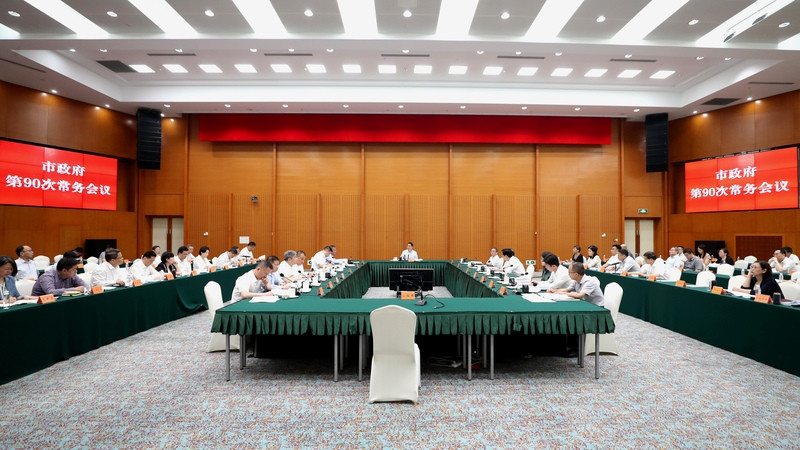
苏州市政府常务会议部署安全生产工作 压实责任加强协同 筑牢安全生产防线
Su Zhou Ri Bao· 2025-08-05 00:34
Group 1 - The government meeting emphasized the importance of maintaining a strong sense of responsibility for safety production and implementing the "three managements and three musts" requirements [1][3] - There is a focus on enhancing safety production in new industries such as renewable energy, cultural tourism, and low-altitude flight, with a call for rigorous risk management and accountability [3] - The meeting approved the draft of the "Suzhou City Middle School Student Mental Health Promotion Regulations," which aims to create a comprehensive mental health care system for students [3] Group 2 - The meeting included a collective study of the "Noise Pollution Prevention Law of the People's Republic of China," indicating a commitment to environmental regulations [3] - Other matters were also discussed and reviewed during the meeting, reflecting ongoing governance and regulatory efforts [3]
智慧工地、定向音箱让成都重归宁静
Zhong Guo Huan Jing Bao· 2025-07-11 00:06
Core Viewpoint - Chengdu has shifted its approach to noise pollution management from passive response to proactive prevention, effectively reducing noise complaints through enhanced industry regulation and community involvement [1] Group 1: Noise Pollution Management Strategies - Chengdu's ecological environment bureau has conducted a comprehensive analysis of noise pollution, identifying high-impact industries and developing management norms to promote self-regulation within these sectors [1] - The city has implemented a "100-day campaign" against noise pollution in 2025, resulting in an 11.9% year-on-year decrease in noise complaints, with specific reductions in social life noise (6.4%), construction noise (19.1%), transportation noise (28.3%), and industrial noise (43.9%) [1] Group 2: Smart Construction Sites - Construction noise, accounting for nearly 30% of total noise complaints, is being addressed through the installation of automatic noise monitoring devices at construction sites, with 2,236 units installed across 1,720 sites by the end of 2024 [2] - A "smart construction site" platform allows for real-time monitoring and quick response to noise complaints, ensuring compliance with regulations and minimizing disturbances [2][3] Group 3: School Noise Management - To address complaints about school broadcasting noise, Chengdu has installed 34 directional sound systems in 9 schools, significantly reducing noise complaints by 52.2% during the 2025 campaign [4] - The directional sound systems are designed to control sound propagation, balancing the needs of students and residents [4] Group 4: Collaborative Governance - Chengdu has enhanced its noise pollution management framework by issuing guidelines for various sectors, including education, sports, and dining, to ensure comprehensive noise control [6] - Collaborative efforts among local government departments have led to a 27.2% decrease in noise complaints from the dining sector in 2024, with a continued decline of 12.8% in 2025 [6] Group 5: Future Directions - Chengdu plans to further improve its noise management systems by adopting advanced technologies and best practices, aiming for a comprehensive noise governance framework that enhances the living environment for residents [7]
高铁降噪座椅、社区“噪声地图”……新技术助力破解噪声污染难题
news flash· 2025-06-06 05:53
Core Viewpoint - Noise pollution is increasingly becoming a significant social concern, and its prevention is essential for improving quality of life [1] Summary by Relevant Sections Environmental Quality - According to the "2024 China Ecological Environment Status Bulletin," the sound environment quality in cities at the prefecture level and above remains stable in 2024 [1] - The World Health Organization's 2024 statistics indicate that 1.5 billion people globally suffer from hearing loss, with approximately 750 million cases attributed to environmental noise pollution [1] Health Impacts - Research shows a direct correlation between long-term noise exposure and mental health issues such as anxiety and depression, with a 5-decibel increase in noise leading to a 1.5% rise in the risk of psychological disorders [1] Regulatory Framework - As per the national "14th Five-Year" ecological environment protection plan, by the end of 2025, cities at the prefecture level and above are required to fully implement automatic monitoring of sound environment quality in functional areas, with an emphasis on improving nighttime compliance rates [1]