国家能源安全

Search documents
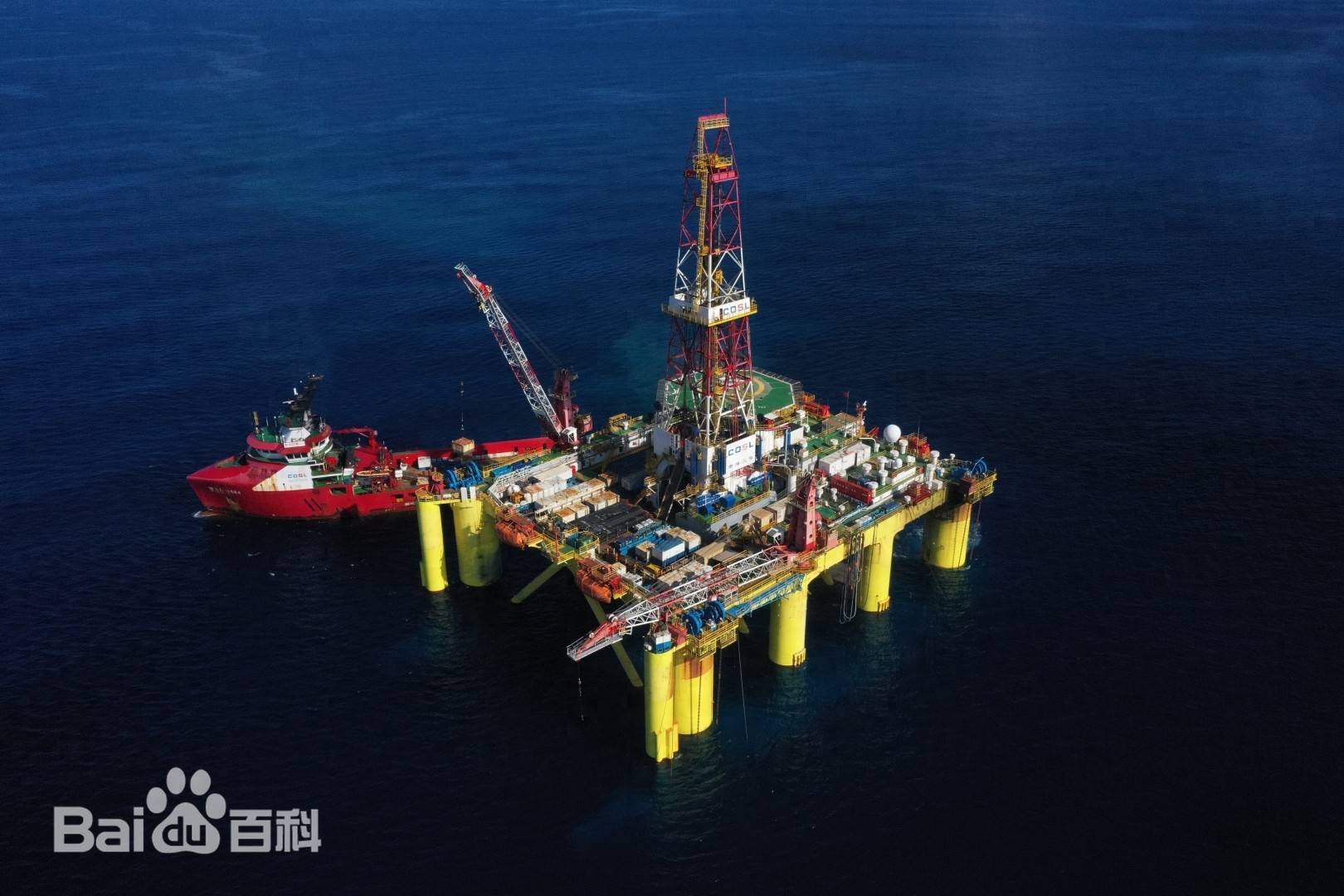
已探明石油储量超过250亿吨,中国未来石油的希望,可能在于南海
Sou Hu Cai Jing· 2025-06-28 22:54
Core Insights - The South China Sea's oil and gas exploration history reflects China's transformation from a "follower" to a "leader" in deep-sea oil and gas exploration technology, with over 25 billion tons of oil and gas resources discovered, surpassing the reserves of the entire Persian Gulf [2][4][12] Group 1: Exploration Achievements - In March 2025, CNOOC announced the discovery of the Huizhou 19-6 oil field, estimated at 1 billion tons, marking a significant milestone in China's decades-long efforts in the South China Sea [4] - The South China Sea's proven oil and gas reserves include 1.38 billion tons of crude oil and 5 trillion cubic meters of natural gas in the Pearl River Mouth Basin, and an estimated 1.3 billion tons of crude oil in the Zengmu Basin [4] Group 2: Technological Advancements - The introduction of the "Ocean Oil 981" platform revolutionized deep-sea exploration, enabling drilling at depths of up to 3,000 meters and revealing previously hidden oil and gas resources [6][10] - The "Ocean Oil 982" platform, known as the "underwater screwdriver," can autonomously drill and extract oil at depths of 3,000 meters, while the "Sea Base No. 1" platform, launched in October 2022, set records for height and weight in China's offshore oil production [10] Group 3: Engineering and Research Efforts - Chinese engineers, referred to as the "deep-sea daredevils," have overcome extreme conditions in the Huizhou 19-6 oil field, located over 5,400 meters underwater, utilizing self-developed technologies to tackle high-temperature and high-pressure drilling challenges [8][11] - The commitment to research and development in high-temperature and high-pressure drilling technology has led to significant breakthroughs, with thousands of drill bits discarded during the decade-long effort [11] Group 4: Strategic Importance - The development of oil and gas resources in the South China Sea is crucial for national energy security and plays a role in international political dynamics, with China actively safeguarding its interests against competing claims from countries like Vietnam and Malaysia [12] - China is also taking steps to establish itself as a rule-maker in international deep-sea exploration, moving away from reliance on Western-dominated regulations [12] Group 5: Environmental Considerations and Future Plans - Despite facing criticism from environmental organizations, China is implementing measures such as zero-discharge drilling fluids and 24-hour monitoring systems to ensure sustainable development [13] - By 2030, China plans to discover two to three additional billion-ton oil fields in the South China Sea, with infrastructure projects aimed at diversifying energy supply and achieving regional balance [13][15]


新疆产业链白皮书建筑篇:战略引领,产业腾飞
Shenwan Hongyuan Securities· 2025-05-21 08:42
Investment Rating - The report maintains a positive outlook on the investment potential in Xinjiang, indicating a "Look Favorably" rating for the region's industrial chain, particularly in construction [2]. Core Insights - Xinjiang's unique regional advantages and strategic position are highlighted, serving as a crucial land passage connecting China with Central Asia, South Asia, West Asia, and Europe [3][12]. - The central government has outlined a blueprint for Xinjiang's development, emphasizing the construction of "ten major industrial clusters" to enhance economic growth and resource utilization [4][15]. - Xinjiang's fiscal stability is noted, with comprehensive financial resources increasing from 582.73 billion yuan in 2021 to 687.71 billion yuan in 2023, supported by significant central government subsidies [20][22]. - The report anticipates a robust growth trajectory for fixed asset investment in Xinjiang, projecting a scale of 2.09 to 2.48 trillion yuan by 2030, with infrastructure investments estimated between 732.8 billion and 991.8 billion yuan [29][32]. Summary by Sections 1. Strategic Importance and Development Potential - Xinjiang's geographical location is pivotal for national connectivity and economic integration, with significant strategic implications for national development [12][15]. - The region is set to accelerate the formation of a modern industrial system supported by eight major industrial clusters, evolving into ten by 2024 [4][15]. 2. Fiscal Stability and Investment Growth - The financial structure of Xinjiang's government is stable, with a year-on-year increase in comprehensive financial resources and a notable rise in central government subsidies [20][22]. - Fixed asset investment in Xinjiang is projected to grow at a compound annual growth rate (CAGR) of 10.1% from 2019 to 2024, indicating a strong investment environment [20][29]. 3. Modern Industrial Clusters and Key Projects - Xinjiang is actively promoting key project investments, with total investment in major projects expected to rise from 1.68 trillion yuan in 2020 to 3.7 trillion yuan by 2024, reflecting a CAGR of 21.8% [35][39]. - The region's focus on infrastructure and industrial cluster development is expected to yield significant economic benefits, with major projects like the "Fourth Channel for Power Transmission" and the Hami Energy Integration Innovation Base set to commence [39][42].



能源金句丨习近平关于国家能源安全重要论述
国家能源局· 2025-05-15 06:17
Core Viewpoint - The Chinese new energy industry has developed significant capabilities through open competition, contributing to global supply, alleviating inflation pressures, and aiding in climate change response and green transition [1]. Group 1 - The Chinese new energy sector represents advanced production capacity [1]. - The industry has played a crucial role in enriching global supply [1]. - The contributions of the new energy sector have been significant in addressing global inflation [1]. Group 2 - The new energy industry supports global efforts in climate change and green transition [1]. - The discussions during the trilateral meeting with French President Macron and European Commission President von der Leyen highlighted the importance of energy security [1].
能源金句丨习近平关于国家能源安全重要论述
国家能源局· 2025-05-14 07:23
Group 1 - The core viewpoint emphasizes the importance of deepening international cooperation in new energy technology innovation and advancing the new energy industry chain collaboration to establish a win-win model for green and low-carbon energy transition [1] - It highlights the need for active participation in international energy governance reform to promote the establishment of a fair, just, balanced, and inclusive global energy governance system [1]
能源金句丨习近平关于国家能源安全重要论述
国家能源局· 2025-05-13 07:50
Core Viewpoint - The article emphasizes the importance of energy security for sustainable development, highlighting the role of renewable energy sources and infrastructure in achieving this goal [1]. Group 1: Energy Infrastructure - The construction of hydropower, wind power, and photovoltaic power stations is crucial for alleviating energy shortages, enabling developing countries to pursue green and low-carbon development [1]. - The development of intelligent and accessible power transmission networks is essential for enhancing energy security and supporting sustainable growth [1]. Group 2: Global Development - The initiatives discussed contribute to building an open, inclusive, interconnected, and jointly developed world, aligning with the goals of the Belt and Road Initiative [1].
能源金句丨习近平关于国家能源安全重要论述
国家能源局· 2025-05-12 06:34
Core Viewpoint - The article discusses the current trends and future outlook of the power industry in China, emphasizing the shift towards renewable energy sources and the impact of government policies on the sector [2] Group 1: Industry Trends - The power generation capacity in China has reached 2,200 GW, with renewable energy sources accounting for over 50% of the new installations in 2022 [2] - The government aims to increase the share of non-fossil energy in total energy consumption to around 25% by 2030, indicating a strong commitment to sustainable energy development [2] - The investment in renewable energy projects is expected to exceed 1 trillion yuan (approximately 150 billion USD) over the next five years, driven by both state-owned and private enterprises [2] Group 2: Company Impacts - Major state-owned enterprises are leading the transition, with companies like State Grid and China Southern Power Grid investing heavily in smart grid technologies to enhance efficiency [2] - The competition among private companies in the renewable sector is intensifying, with several startups emerging in solar and wind energy technologies [2] - The article highlights that companies focusing on energy storage solutions are likely to see significant growth, as energy storage is crucial for balancing supply and demand in renewable energy [2]
能源金句丨习近平关于国家能源安全重要论述
国家能源局· 2025-05-09 08:12
Group 1 - The article emphasizes the importance of building an international platform for basic research and leading the implementation of international large-scale scientific plans and projects [1] - It advocates for the establishment of a global scientific research fund and increasing the openness of national science and technology programs to foreign collaboration [1] - The focus areas for international cooperation include climate change, energy security, biological safety, and outer space utilization, aiming to expand and deepen joint research between China and other countries [1]
能源金句丨习近平关于国家能源安全重要论述
国家能源局· 2025-05-08 07:41
Core Viewpoint - The article emphasizes the importance of energy security for China and outlines strategies for building a new energy cooperation framework, focusing on oil and gas imports, clean energy technology collaboration, and local production of new energy equipment [1]. Group 1: Energy Import Strategies - China will continue to import a large volume of crude oil from Gulf Cooperation Council (GCC) countries and expand liquefied natural gas (LNG) imports [1]. - There will be an emphasis on strengthening upstream oil and gas development, engineering services, and storage and refining cooperation [1]. Group 2: Trade and Settlement - The Shanghai Oil and Gas Trading Center will be utilized to promote oil and gas trade with settlements in Renminbi [1]. Group 3: Clean Energy Collaboration - There will be a focus on cooperation in clean and low-carbon energy technologies, including hydrogen, energy storage, wind and solar power, and smart grids [1]. - The article highlights the importance of localizing the production of new energy equipment [1].
能源金句丨习近平关于国家能源安全重要论述
国家能源局· 2025-05-07 07:20
Core Viewpoint - The article emphasizes the importance of national energy security and the need for high-quality cooperation in various sectors, including traditional and emerging industries, to address major challenges such as food and energy security [1]. Group 1: Economic Development and Cooperation - The focus is on promoting economic development and fostering win-win cooperation [1]. - There is a call to strengthen the alignment of development strategies and enhance traditional cooperation in trade, energy, and infrastructure [1]. Group 2: New Growth Areas - The article highlights the importance of developing new growth areas such as green low-carbon initiatives, healthcare, and investment finance [1]. - It also mentions the exploration of new fields like aerospace, digital economy, and peaceful nuclear energy utilization [1]. Group 3: Addressing Major Challenges - The need to effectively respond to significant challenges related to food security and energy security is underscored [1].
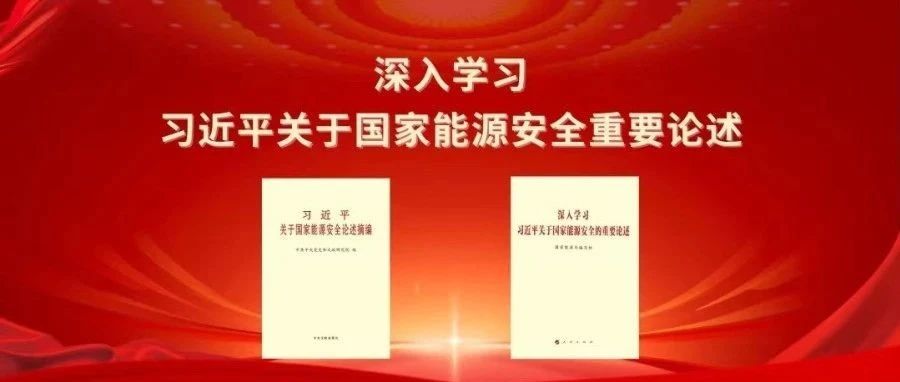
能源金句丨习近平关于国家能源安全重要论述
国家能源局· 2025-05-06 09:32
Group 1 - The article emphasizes China's significant contributions to global food and energy security over the years [1] - China, along with six partner countries including Indonesia and Serbia, has initiated the "Building Stable and Resilient Industrial Chain Supply Chain International Cooperation Initiative" [1] - The article highlights China's advocacy for establishing global clean energy cooperation partnerships and the international food security cooperation initiative proposed at the G20 [1]