
国家能源安全

Search documents
解码中信资源(01205.HK)2025:战略资产的深度重估与价值锚定
Ge Long Hui· 2026-03-30 04:22
Group 1 - The year 2025 is significant for the commodity market due to geopolitical conflicts, rising resource nationalism, and the emergence of AI data centers and new energy industries as major resource consumers, which are redefining the value of commodities [1] - Companies holding strategic resources will have their value increasingly determined by asset scarcity and their alignment with national energy security rather than just current profits [1] Group 2 - CITIC Resources reported a revenue of HKD 14.965 billion for 2025, a year-on-year increase of 57.6%, while net profit attributable to shareholders fell by 70.2% to HKD 171 million [2] - The company's asset portfolio covers key sectors including oil and gas, coal, and electrolytic aluminum, and it is implementing a "dual-driven" strategy of investment and trade to navigate the uncertain market [2][3] Group 3 - The oil and gas business remains the core strength of CITIC Resources, with its value being redefined by national energy strategies emphasizing supply capability and resource exploration [4] - The company achieved a production of 2.12 million barrels from its oil fields, supported by technological innovations in water blockage and enhanced extraction methods [4] - In 2025, CITIC Resources' oil and gas trade volume exceeded 20 million barrels, generating revenue of HKD 11.34 billion, highlighting the strategic importance of its trade operations [4] Group 4 - The non-oil business is undergoing a "value reassessment," with pressures on profits from rising alumina costs and falling coal prices, but the underlying asset quality and industry dynamics present a different picture [5][6] - The electrolytic aluminum sector is experiencing a rigid supply restructuring, with domestic production capacity reaching its limit and global supply growth forecasted at only 1.4% from 2025 to 2030, while demand continues to rise [6][7] - CITIC Resources' Portland aluminum plant achieved a sales volume of 72,000 tons in 2025, a 13.2% increase, and the Coppabella coal mine saw a 3.2% increase in sales despite falling prices [7] Group 5 - The company successfully capitalized on its investment in American aluminum shares, realizing a 46.3% increase in value and converting paper gains into cash through strategic sales [8] - The proceeds from these sales are intended for operational funding and to prepare for potential investment opportunities, indicating a proactive approach to asset management [8] Group 6 - CITIC Resources holds HKD 3.5 billion in cash with no significant liabilities, providing ample resources for future strategic investments in quality oil and gas assets and the aluminum supply chain [9] - As the global commodity market enters a new cycle, companies with scarce resources aligned with national strategies will become active definers of value rather than passive beneficiaries of market cycles [9]
中信证券:风电作为“绿油钻井”估值有望重塑
Xin Lang Cai Jing· 2026-03-13 00:10
Core Viewpoint - The green fuel industry is crucial for national energy security, transitioning from a decarbonization option to a rigid national strategy, indicating clear growth potential [1] Group 1: Industry Insights - The valuation premium logic driven by oil substitution and national energy security will fundamentally reconstruct the underlying logic of the wind power industry [1] - The wind power industry is expected to experience a systematic upward shift in valuation centers, a comprehensive switch in valuation systems, and a complete opening of long-term growth ceilings [1]

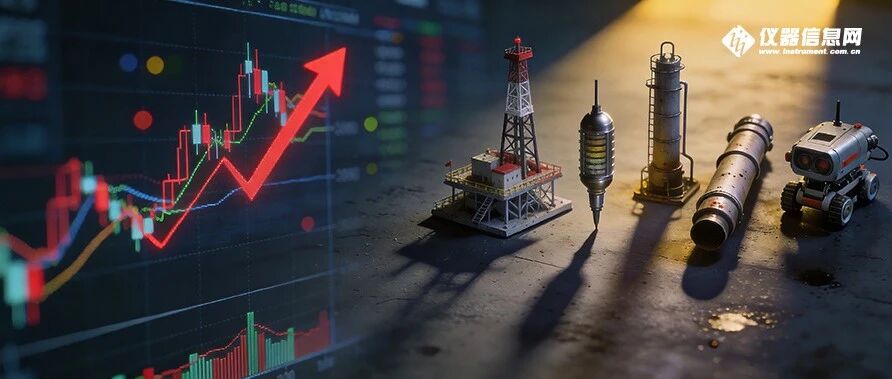
“三桶油”历史性涨停背后,石油行业仪器设备大起底!
仪器信息网· 2026-03-03 03:57
Core Viewpoint - The article highlights the historic collective surge of the "Big Three" oil companies in China, emphasizing the critical role of the oil industry in national energy security [2]. Industry Overview - Recent geopolitical tensions, particularly the attacks on Iran, have led to a spike in international oil prices, resulting in a significant rise in oil and gas equipment stocks [2]. - The collective surge of the "Big Three"—China National Petroleum Corporation (CNPC), Sinopec, and China National Offshore Oil Corporation (CNOOC)—marks a historic first, reflecting the capital market's response to the evolving energy landscape [2]. Key Instruments and Equipment in the Oil Industry Sample Preparation and Separation Equipment - Microwave Digestion Instrument - Rotary Evaporator - Solid Phase Extraction Device (SPE) - Liquid-Liquid Extraction Instrument - Nitrogen Blowing Instrument - Gas Chromatograph (GC) with configurations including FID, TCD, and MS [3]. Chromatography Analysis Equipment - High-Performance Liquid Chromatograph (HPLC) with configurations including UV-Vis detector, fluorescence detector, and LC-MS [3]. - Gel Permeation Chromatograph (GPC) - Ion Chromatograph (IC) [3]. Spectroscopy and Physical Property Testing Equipment - Fourier Transform Infrared Spectrometer (FTIR) - Ultraviolet-Visible Spectrophotometer (UV-Vis) - Atomic Absorption Spectrometer (AAS) - Inductively Coupled Plasma Mass Spectrometer (ICP-MS) - Differential Scanning Calorimeter (DSC) - Thermogravimetric Analyzer (TGA) [4]. Elemental and Industrial Analysis Equipment - Elemental Analyzer - Industrial Analyzer - Sulfur and Nitrogen Analyzer [6]. Environmental and Safety Monitoring Equipment - Total Organic Carbon Analyzer (TOC) - Gas Detector - Dust Concentration Detector - Flash Point Tester - Lubricating Oil Tester - Distillation Apparatus for Petroleum Products [7]. Laboratory General Equipment - Balance - Centrifuge - Ultrasonic Cleaner - Muffle Furnace - Purified Water Machine [7]. Data Processing and Software - Chromatography Workstation - Mass Spectrometry Analysis Software - Simulation Software [7].




中国掌握关键矿产主导权的必然
日经中文网· 2026-02-12 02:50
Core Viewpoint - The article discusses the increasing importance of previously undervalued minerals in the military sector, highlighting the competition between the U.S. and China for mineral dominance, particularly in the context of AI and electric vehicles [2][4]. Group 1: Mineral Importance and Market Dynamics - Historically overlooked minerals are now critical in military applications, prompting the U.S. to strive for a return to mineral dominance previously held by China [2]. - China's monopoly on rare earth elements and other minerals is projected to remain largely unchanged, according to the International Energy Agency [8]. Group 2: Historical Context and Strategic Moves - The shift in focus towards minerals began with Deng Xiaoping's recognition of China's rare earth potential in the 1990s, leading to China's dominance in the market due to lower environmental costs compared to other countries [4][5]. - The U.S. has taken strategic actions, such as signing mining agreements with the Democratic Republic of Congo, to secure essential minerals like cobalt, which are crucial for defense and technology [6]. Group 3: Future Demand and Supply Chain Challenges - The demand for minerals is expected to surge, with projections indicating that copper demand could increase sixfold by 2050 due to rising electricity needs [5]. - The U.S. faces significant challenges in catching up to China's production capabilities, as evidenced by the low output of U.S. companies compared to their Chinese counterparts [8]. Group 4: Japan's Strategic Response - Japan is advised to build a national reserve of minerals to ensure supply security, as current reserves are insufficient for long-term needs [9]. - The rising costs associated with deep-sea mining projects in Japan highlight the challenges the country faces in securing its mineral resources [9].
新春走基层丨海上作业二十多年:一名国家海上油气救援人的骄傲与守护
Yang Shi Wang· 2026-02-10 08:06
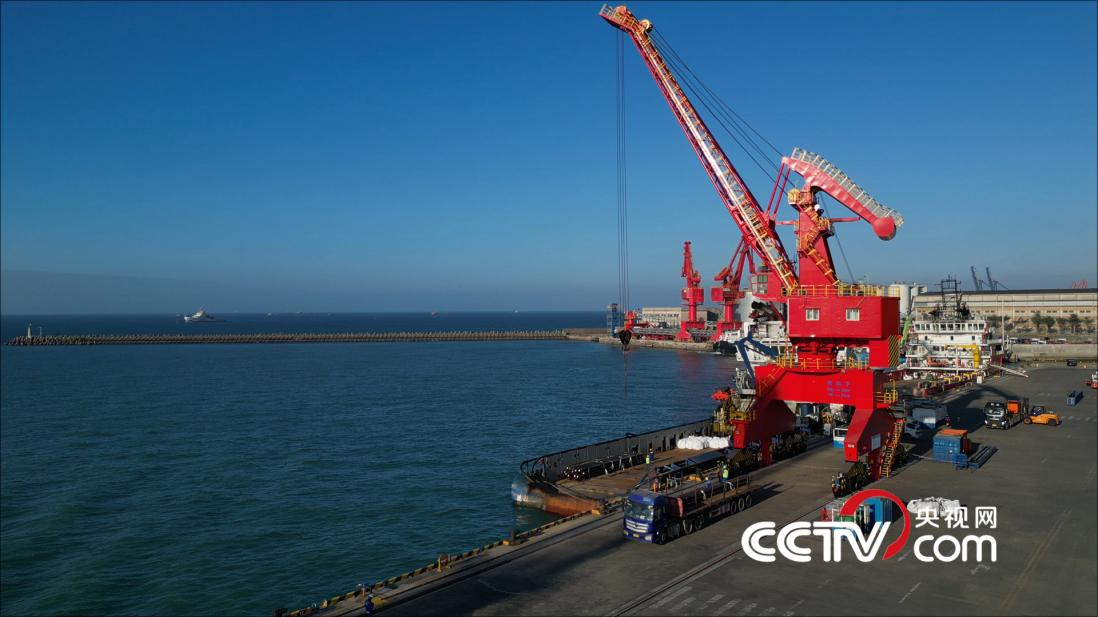
Core Viewpoint - The establishment of the Hainan Base marks China's first national-level deep-water oil and gas emergency rescue base, aimed at enhancing energy security and rapid response capabilities in the South China Sea, which is rich in oil and gas resources but poses significant operational risks [1][2]. Group 1: Importance of Hainan Base - The South China Sea has complex operational environments, with drilling depths reaching thousands of meters and facing an average of 9 to 11 typhoons annually [2]. - Historically, China has relied on foreign rescue capabilities for deep-water well control, which has been costly and time-consuming, with response times exceeding 22 days [2][3]. - The need for autonomous and rapid deep-water rescue capabilities is critical for national energy security and marine development [2]. Group 2: Challenges in Equipment Procurement - The procurement of emergency equipment has been challenging due to technology restrictions imposed by Western countries, leading to inflated prices and limited availability [3][5]. - Domestic technology development was initiated to overcome these challenges, resulting in the successful creation of equipment that can replace imported alternatives [5]. Group 3: Operational Capabilities of Hainan Base - The Hainan Base, operational since October 2025, has significantly reduced emergency response times from over a month to within 48 hours for any incident in the southern sea area [5]. - The base is strategically located to facilitate quick deployment of emergency equipment and personnel, enhancing the overall safety of offshore operations [6]. Group 4: Role of Emergency Rescue Personnel - Emergency rescue personnel play a crucial role in monitoring and ensuring the safety of drilling operations, acting as "guardians" of the platforms [6][10]. - The personnel are involved in all aspects of offshore drilling safety, focusing on preventing blowouts and ensuring operational control [10]. Group 5: Future Aspirations - The Hainan Base aims to grow and strengthen its role in ensuring safety in South China Sea oil and gas development, with a focus on using domestic equipment for national resource development [10].
烟台港西港区LNG项目主体工程完工
Da Zhong Ri Bao· 2025-12-31 06:23
Group 1 - The Yantai Port West Area LNG project has successfully completed its main engineering phase, marking a significant milestone for national energy security and regional green transformation [1] - The total investment for the first phase of the LNG project is 8.316 billion yuan, with a designed throughput of 5.9 million tons per year and a maximum gasification output capacity of 40 million cubic meters per day [1] - Key construction components include five 200,000 cubic meter full containment storage tanks, one 266,000 cubic meter unloading terminal, and one 50,000 cubic meter loading terminal, along with supporting process facilities [1] Group 2 - The project is now entering pre-commissioning preparations such as nitrogen replacement and precooling, aiming for the first LNG ship connection by 2026 [1] - The supporting terminal construction has also completed initial quality verification, with significant progress made in overcoming technical challenges [1] - The construction team has completed 382 steel pipe piles and 108 cast-in-place piles, along with 414 prefabricated components, ensuring reliable port infrastructure for LNG transport [1] Group 3 - A 3,183.2-meter long breakwater project is advancing towards the deep sea, enhancing the project's protection [2] - The contractor, China Communications Construction Company, is utilizing a "100-day attack" labor competition to innovate management and optimize construction plans [2] - As of now, 523 meters of the breakwater have been successfully extended into the deep sea, with overall project progress exceeding 60% [2]
越南总理要求加快与俄日关于合作建设宁顺核电站谈判
Shang Wu Bu Wang Zhan· 2025-10-25 03:42
Core Points - The Vietnamese Prime Minister has urged the acceleration of negotiations with Russia and Japan regarding the construction of the Ninh Thuan nuclear power plants [2] Group 1: Negotiation Timelines - The Prime Minister has set a deadline for completing negotiations with Russia on the Ninh Thuan 1 nuclear power plant by November 2025, including the establishment of a legal framework [2] - The discussions with Japan regarding the Ninh Thuan 2 nuclear power plant are also expected to be completed soon [2] Group 2: Project Management and Oversight - The Prime Minister instructed the Vietnam Electricity Group (EVN) to expedite the preliminary research and project establishment in October [2] - The Vietnam National Oil and Gas Group (Petrovietnam) is tasked with advancing the investment and construction preparations for the Ninh Thuan 2 nuclear power plant [2] - Coordination among various ministries and agencies is emphasized to resolve existing issues related to the projects [2] Group 3: Energy Security Strategy - The Prime Minister will report to the Central Political Bureau on the implementation of the political bureau's resolution No. 70, which focuses on ensuring national energy security through nuclear power development by 2030, with a vision towards 2045 [2]
“也许是个突发新闻”,特朗普称莫迪保证停止购买俄罗斯石油,印方暂未回应
Huan Qiu Wang· 2025-10-16 01:04
Group 1 - The core point of the article is that President Trump announced that Indian Prime Minister Modi assured him that India would stop purchasing oil from Russia, although no official response from India has been reported yet [1][3]. - Trump expressed dissatisfaction with India's oil purchases from Russia, stating that Modi's assurance represents a significant step forward [1][3]. - It was noted that India cannot immediately halt its oil purchases from Russia, as it is a process that will take time, but Trump indicated that this process is expected to conclude quickly [3]. Group 2 - Russia is identified as India's largest oil supplier, with exports reaching 1.62 million barrels per day in September, accounting for approximately one-third of India's oil imports [3]. - The article mentions that Modi has resisted U.S. pressure regarding oil purchases, emphasizing the importance of these imports for India's energy security [3]. - In response to India's oil imports from Russia, Trump signed an executive order imposing an additional 25% tariff on Indian goods, which, combined with previous tariffs, results in a total tariff rate of 50% on Indian exports to the U.S. [3].
中国石油集团董事长戴厚良到驻新疆部分企业和科研机构调研
Xin Lang Cai Jing· 2025-08-14 02:29
Core Viewpoint - The chairman of China National Petroleum Corporation (CNPC), Dai Houliang, emphasized the importance of implementing the directives from President Xi Jinping regarding the support for frontline employees in the Tarim Oilfield, highlighting the company's commitment to national energy security and social stability in Xinjiang [1] Group 1: Company Operations - CNPC is actively engaging with its enterprises and research institutions in Xinjiang to understand their production operations and technological innovations [1] - The company is focusing on the responsibilities of state-owned enterprises in contributing to the development and stability of Xinjiang [1] Group 2: Strategic Initiatives - The company aims to align its operations with the new era of the Party's strategy for governing Xinjiang, showcasing its role in building a better Xinjiang [1] - There is a strong emphasis on the company's role in ensuring national energy security while promoting long-term stability and peace in the region [1]
光大证券:纯碱、PVC下游需求待复苏 “反内卷”有望加速供给侧出清
Xin Lang Cai Jing· 2025-07-31 03:49
Core Viewpoint - The Yarlung Tsangpo River downstream hydropower project has officially commenced construction, representing a significant milestone in China's energy and infrastructure sectors, with a total investment of approximately 1.2 trillion yuan [1] Group 1: Project Overview - The project is located in Linzhi City, Tibet Autonomous Region, and involves the construction of five tiered power stations using a diversion and tunnel water intake method [1] - The primary focus of the generated electricity will be on external consumption, while also addressing local demand in Tibet [1] Group 2: Market Impact - The Yarlung Tsangpo River downstream hydropower project is expected to have a long-term impact on multiple industries, including infrastructure, energy, and materials [1] - The strategic value of the project encompasses national energy security, border stability, and global climate governance [1] Group 3: Investment Opportunities - Companies involved in infrastructure-related chemical products, such as soda ash, PVC, and water-reducing agents, are likely to benefit from this project [1]
