国际金融中心建设

Search documents
李家超:把握重置资产机遇 巩固国际金融中心地位
Xin Hua Cai Jing· 2025-09-17 08:06
Group 1: Hong Kong's Financial Market Developments - The Hong Kong government aims to seize opportunities from global investors reallocating assets to strengthen its position as an international financial center [1] - The Hang Seng Index has risen over 20% since the beginning of the year, with an average daily trading volume close to HKD 250 billion, nearly doubling from last year [1] - New stock fundraising has reached over HKD 130 billion by the end of August, marking a nearly sixfold year-on-year increase, making Hong Kong the top global market for new stock offerings [1] Group 2: Support for Technology and Innovation - The government plans to assist mainland technology companies in raising funds in Hong Kong through a "Tech Enterprise Line" and enhance financial support for national technological development [1] - Initiatives include optimizing the main board listing and structured product issuance mechanisms, and exploring the shortening of the stock settlement cycle to T+1 [1] Group 3: Bond and Currency Market Enhancements - The government will work to solidify Hong Kong's status as a bond center and enhance financial infrastructure, including discussions on launching offshore national bond futures [1] - The Hong Kong Monetary Authority (HKMA) will establish a new "Renminbi Business Fund Arrangement" to provide long-term RMB financing to support the real economy [2] - More RMB bonds will be issued, and the government will explore using RMB for government expenditures in suitable scenarios [2] Group 4: Gold Market Development - The government aims to develop a regional gold reserve hub, targeting over 2,000 tons of gold storage within three years [2] - Initiatives include establishing a central clearing system for gold in Hong Kong and promoting the development of gold investment tools and funds [2] Group 5: Wealth Management and Insurance Sector Growth - Hong Kong is expected to become the largest cross-border wealth management center globally, with plans to optimize tax incentives for funds and family offices [3] - The government will revise regulations to lower capital requirements for infrastructure investments and promote the development of the local self-insurance and reinsurance industry [3]
2025年三季度债市研判六人谈举行
Zheng Quan Ri Bao Wang· 2025-09-13 04:37
Group 1 - The event "Debt Market Research Six Talks" was successfully held, focusing on building a new pattern for the development of the debt market and enhancing Shanghai's status as an international financial center [1] - China Agricultural Development Bank aims to enhance the liquidity of its 10-year benchmark bonds by increasing the single bond scale, improving issuance transparency, encouraging market participation, and optimizing pricing mechanisms [1] Group 2 - Shanghai's bond market is considered a crucial foundation for constructing the city's international financial center, leveraging policy advantages, an international business environment, and financial innovation to attract international capital [2] - The competition among international financial centers is fundamentally a competition of innovation capabilities, with digital finance emerging as a key driver for the construction of these centers [2] Group 3 - Shanghai has maintained the highest issuance of green bonds globally for three consecutive years, contributing to its development as an international green finance hub [3] - Continuous innovation in the infrastructure for the bond market's openness and an improved business environment are attracting international financial institutions, enhancing Shanghai's status as a financial hub [3]
离岸金融中心:构建国际金融中心的关键拼图与战略支点
Guo Ji Jin Rong Bao· 2025-07-14 12:52
Core Viewpoint - Offshore financial centers are essential components of international financial systems, facilitating the internationalization of the Renminbi and supporting the development of a comprehensive international financial framework [1][2][22]. Group 1: Role of Offshore Financial Centers - Offshore financial centers provide broader funding sources and resource allocation platforms, promoting efficient global capital flow [4]. - They foster financial innovation and business expansion by offering a favorable regulatory environment [4]. - Offshore financial centers assist in risk management and market stability by providing diverse financial tools and services [4]. Group 2: Promotion of Renminbi Internationalization - Offshore financial centers offer platforms for Renminbi trading and investment, attracting more international investors [5]. - They enhance the international influence of the Renminbi by increasing its usage in international payments, settlements, and investments [5]. - These centers support Chinese enterprises in their global expansion efforts, facilitating resource integration and investment [5]. Group 3: Relationship Between Offshore Financial Centers and Offshore Jurisdictions - Offshore jurisdictions provide the institutional environment necessary for offshore financial activities, characterized by low tax rates and relaxed regulations [7][8]. - The synergy between offshore financial centers and their jurisdictions creates a flexible international financial network [7]. Group 4: Compliance and Regulation - Offshore financial centers operate under strict international regulatory frameworks, ensuring compliance with anti-money laundering and tax transparency standards [10][11]. - They actively share financial account information with tax authorities to prevent tax evasion and enhance financial transparency [11][13]. Group 5: Strategic Development of Offshore Financial Centers in China - China aims to develop offshore financial centers in Shanghai and Shenzhen, aligning with international standards to enhance the internationalization of the Renminbi [17][22]. - Proposed measures include creating a conducive regulatory environment, optimizing the business ecosystem, and establishing a robust risk management framework [18][20].
如何持续深化金融体制改革?《中国金融政策报告2025》提出5项建议
Sou Hu Cai Jing· 2025-05-18 15:56
Core Viewpoint - The report emphasizes the need for continuous deepening of financial system reforms and the construction of a financial system with Chinese characteristics, while analyzing the challenges and opportunities facing China's financial development [1][3]. Group 1: Challenges and Opportunities - The report identifies three main challenges and opportunities for China's financial development: 1. The current financial reform is at a critical juncture due to severe external conditions, increased global economic volatility, restructuring of international trade order, and rising geopolitical risks [3]. 2. Financial security and regulatory challenges are present, including the impact of regulatory reforms in various countries, particularly in the U.S., on global financial stability, as well as challenges posed by advancements in digital currencies [3]. 3. The ongoing technological revolution is reshaping the competitive landscape of finance, with widespread applications of AI technology leading to a period of technological updates in the global financial system [3]. Group 2: Recommendations for Financial System Reform - The report proposes five key recommendations for deepening financial system reforms: 1. Optimize the allocation of financial resources, with a focus on maintaining a stable financial environment [3]. 2. Accelerate the improvement of the central bank system to enhance the transmission mechanism of monetary policy [3]. 3. Strengthen financial stability guarantees by enhancing regulation, promoting a regulatory safety net, and ensuring all financial activities are subject to oversight [3]. 4. Adhere to the essence of finance to improve the quality and efficiency of financial services [3]. 5. Promote high-level financial openness and accelerate the construction of a strong financial nation, emphasizing the internationalization of the Renminbi and the development of international financial centers [3].

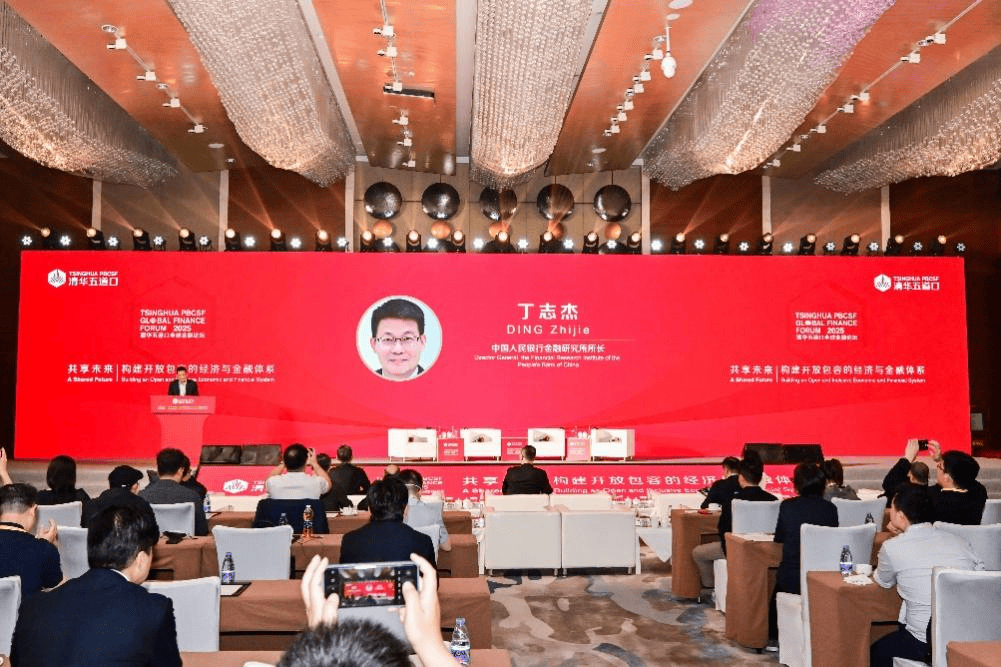
央行金融研究所所长丁志杰:人民币国际化需依托国际金融中心支持,境内金融市场开放是关键|快讯
Hua Xia Shi Bao· 2025-05-18 08:35
Group 1 - The core viewpoint of the article emphasizes the future financial system reforms in China, focusing on optimizing financial resource allocation, enhancing the central bank system, ensuring financial stability, improving financial service quality, and promoting high-level financial openness [2][3][4] Group 2 - The importance of maintaining a stable financial environment is highlighted, with a call to improve multi-level capital markets and support long-term funding for strategic emerging industries and technological innovation [2] - The need for deepening interest rate marketization reform and enhancing the effectiveness of policy interest rates is discussed, aiming to optimize the design of structural monetary policy tools [3] - Strengthening regulatory frameworks and enhancing governance capabilities of small and medium-sized banks are emphasized to ensure financial stability [3] - Financial institutions are urged to focus on serving the real economy and improving resource allocation efficiency while preventing excessive speculation [3] - The strategic significance of advancing the internationalization of the Renminbi and developing offshore Renminbi products is noted, alongside the necessity for a robust international financial center [4]