
跨境财富管理

Search documents
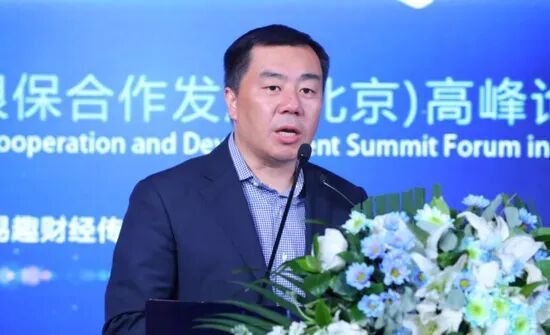
中金财富吴显鏖:财富管理机构要深度聚焦跨境客群的多样化需求
券商中国· 2026-02-16 01:13
Core Viewpoint - The wealth management industry in the Greater Bay Area is transitioning from "scale expansion" to "quality enhancement," with a focus on meeting the diverse needs of high-net-worth individuals, particularly in areas such as wealth planning and asset inheritance [1][8]. Group 1: Industry Dynamics - The Greater Bay Area, particularly Shenzhen, is a key engine for high-quality development in wealth management, with a total wealth management scale exceeding 31 trillion yuan, accounting for 20% of the national total [4]. - As of the end of 2025, the wealth management business of China International Capital Corporation (CICC) has a product scale exceeding 450 billion yuan, with nearly 10 million clients served [4][6]. Group 2: Cross-Border Wealth Management - CICC has established a global asset allocation capability and a client-centered advisory system, leveraging the advantages of the Greater Bay Area to enhance cross-border wealth management services [2][5]. - The company has seen significant growth in its cross-border wealth management business, with client asset allocation and retention increasing by nearly 260% and 90%, respectively, by the end of 2025 [2][5]. Group 3: Investment Trends - There is a shift in investment preferences among residents, with over 70% still favoring money market funds, but a growing interest in short-term bond products and equity products due to changing risk appetites [6]. - CICC aims to provide customized asset allocation solutions that align with clients' risk tolerance, emphasizing the importance of rational investment and diversified global asset allocation [7][9]. Group 4: Future Opportunities - The wealth management market in the Greater Bay Area presents numerous opportunities, particularly in developing family offices, family trusts, and cross-border asset allocation services [8][9]. - CICC plans to enhance its service capabilities by focusing on long-term investment products and lifecycle-type products to meet the growing demand for retirement planning [10].

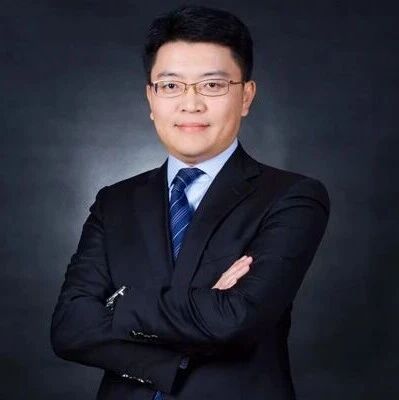
建信理财拟提任一副总
Xin Lang Cai Jing· 2026-02-13 11:37
Core Viewpoint - The recent changes in the leadership of Jianxin Wealth Management reflect a strategic shift within the company, aiming to enhance its operational capabilities and adapt to evolving market demands [1][2][4][5]. Company Leadership Changes - Jianxin Wealth Management announced the resignation of board members Li Lijie and Song Hailin, effective January 30, 2026, both of whom have been with the company since its establishment in May 2019 [1][7]. - Yang Qingxiang, the first female president, has had her qualifications approved, indicating a significant milestone for the company [2][8]. - Yang Long, the current Director of Collaborative Development, is set to be promoted to Vice President, highlighting internal talent development [2][9]. Management Structure and Talent Mobility - The management structure of Jianxin Wealth Management has shown a trend of talent mobility between the company and its parent bank, reflecting a flexible allocation of professional talent to meet business development needs [4][12]. - Key leadership members include Chairman Qi Jiankong, President Yang Qingxiang, and several Vice Presidents, indicating a diverse and experienced management team [12]. Business Performance and Strategy - As of June 2025, Jianxin Wealth Management reported a product scale of 1.41 trillion yuan, total assets of 215.04 billion yuan, and net assets of 207.52 billion yuan, with a net profit of 8.25 billion yuan for the first half of 2025 [5][13]. - The company has issued over 4,800 products and served more than 37 million clients, emphasizing its commitment to building a trustworthy wealth management future [5][12]. - The year 2025 is marked as the "year of AI applications," with the launch of 15 AI tools aimed at enhancing business development [5][12]. Industry Context - The banking wealth management market expanded to 33.29 trillion yuan in 2025, driven by the appeal of stable investments amid stock and bond fluctuations [6][13]. - However, in January 2026, the market experienced a contraction to 33.18 trillion yuan, attributed to a rebalancing of funds among deposits, wealth management, insurance, and equity assets [6][13]. - Industry experts predict a potential growth of around 3 trillion yuan in the wealth management market for the entirety of 2026, as the market undergoes structural adjustments [6][13]. Future Directions - Qi Jiankong emphasized the importance of focusing on customer needs, enhancing investment research capabilities, and promoting intelligent asset management as key development directions for Jianxin Wealth Management [6][14].
两年增逾25% 香港单一家办数量超3380间
Zhong Guo Ji Jin Bao· 2026-02-10 15:11
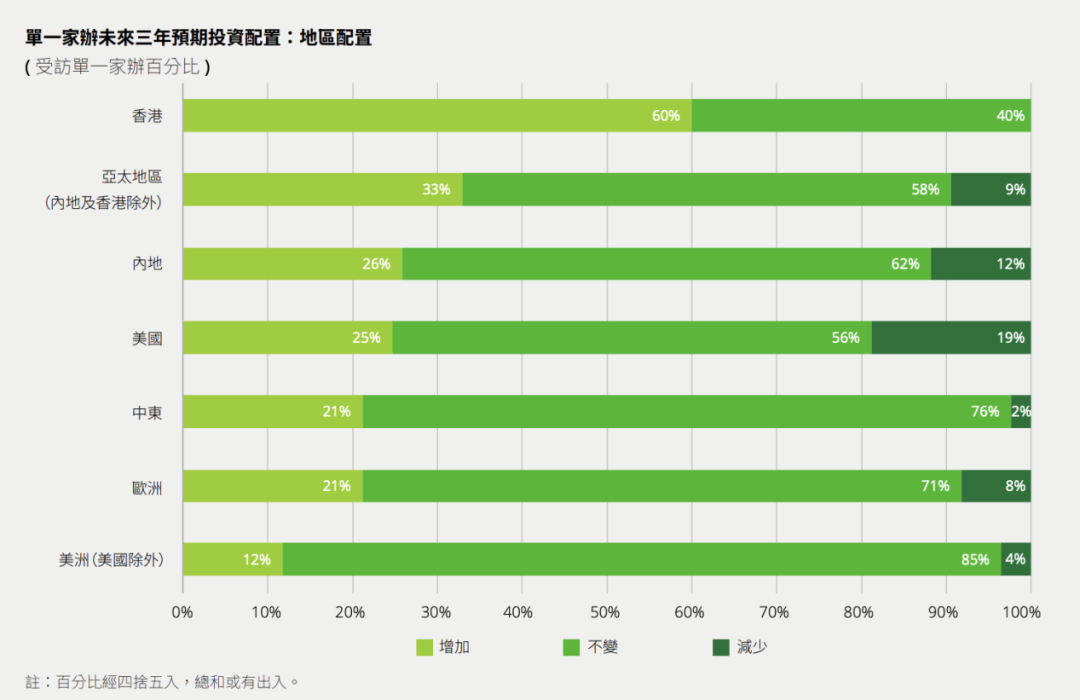
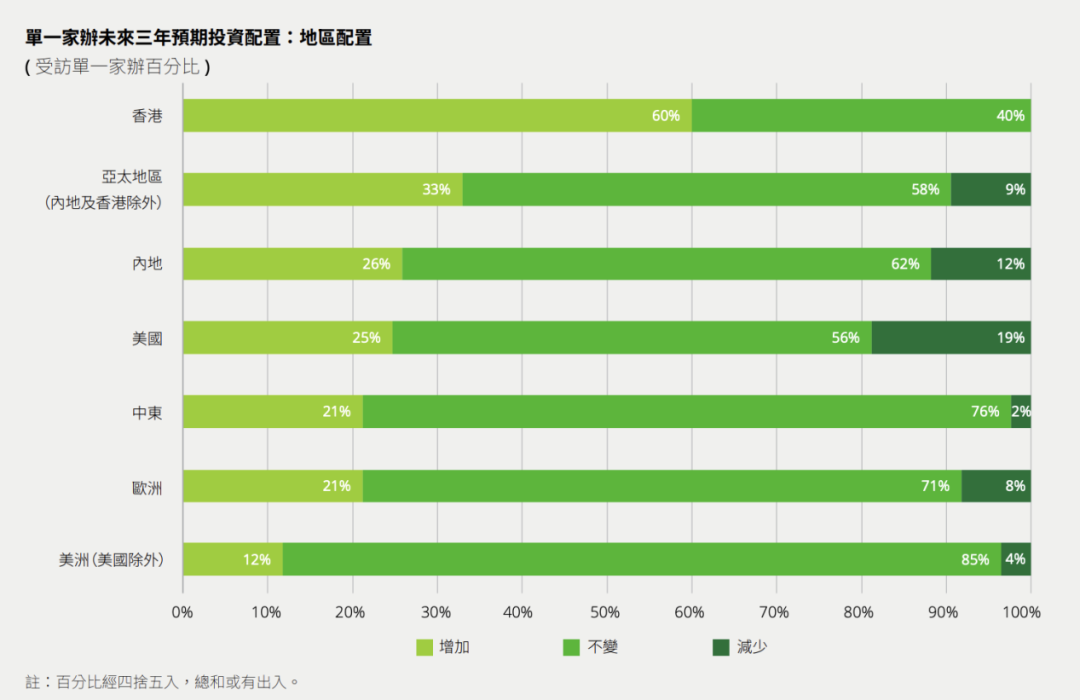
Core Insights - Hong Kong's single family office (SFO) sector is projected to exceed 3,380 offices by the end of 2025, reflecting a growth of over 25% in two years, contributing more than HKD 10 billion annually to the economy [1][2] - The asset management industry in Hong Kong is expected to reach HKD 35.1 trillion by the end of 2024, with family offices playing a crucial role in this growth [2] - The research indicates a diverse development of family offices in Hong Kong, with wealth sources spanning across regions and industries, and a notable shift towards second-generation leadership [3][6] Industry Growth and Economic Contribution - Family offices contribute approximately HKD 12.6 billion in operational expenses annually and employ over 10,000 full-time professionals, with a significant percentage planning to expand their operations [6] - The investment strategies of family offices are shifting, with a reduction in U.S. market allocations and an increased focus on Hong Kong and opportunities in mainland China and the Asia-Pacific region [6] - Family offices are increasingly engaging in charitable activities, particularly in education and poverty alleviation, enhancing Hong Kong's international student community [6] Competitive Advantages and Government Support - Hong Kong's government is actively promoting the family office sector through various measures, including tax incentives and talent training programs, aiming to strengthen its position as a global family office hub [7][8] - The research highlights that 90% of respondents recognize Hong Kong's tax efficiency, 85% acknowledge its mature capital markets, and 72% appreciate its geographical proximity to mainland China [7] - Future plans include legislative proposals to expand the tax incentive scope for family offices, covering investments in precious metals, loans, private debt, and digital assets [8]
两年增逾25%,香港单一家办数量超3380间
Zhong Guo Ji Jin Bao· 2026-02-10 13:25
Core Insights - The Hong Kong family office sector is projected to grow significantly, with the number of single family offices expected to exceed 3,380 by the end of 2025, marking an increase of approximately 680 offices, or over 25% in two years [1][2] - The asset and wealth management industry in Hong Kong demonstrates strong resilience, with total assets under management expected to reach HKD 35.1 trillion by the end of 2024, positioning Hong Kong as a leading global cross-border wealth management center by 2028-2030 [2] - Family offices are identified as a key growth driver, with an estimated HKD 2 trillion in assets under management by 2024 [2] Industry Development - The research involved interviews with 136 industry participants, including 85 single family offices and 36 multi-family offices, providing a comprehensive view of the sector's development [3] - The family office sector in Hong Kong exhibits diverse characteristics, with wealth sources spanning Mainland China, Hong Kong, and Europe, and a growing presence in technology/media and healthcare sectors [3] - Over half of single family offices are still led by the first generation, but 40% have second-generation leaders, indicating an acceleration in intergenerational wealth transfer [3] Investment Trends - Family offices are adjusting their investment strategies, with a notable reduction in allocations to the U.S. market; 60% plan to increase investments in Hong Kong, which is the only region seeing no reductions [5] - There is a growing focus on technology/media and healthcare sectors for future investments, while 22% plan to reduce allocations in real estate [5] - Traditional assets remain dominant, but alternative assets are rapidly gaining traction, with private equity being the most favored, followed by digital assets and emerging themes like artificial intelligence appealing to younger generations [5] Economic and Social Contributions - Single family offices contribute approximately HKD 12.6 billion annually in operational expenses and employ over 10,000 full-time professionals, with 74% of single family offices and 94% of multi-family offices planning to expand and hire more staff [5] - Family offices actively engage in philanthropy, focusing on education and poverty alleviation, and their family members enrich the local international student community, highlighting Hong Kong's attractiveness as a place to settle [5] Competitive Advantages - The Hong Kong government is actively promoting the family office sector through various measures, including tax incentives and a new capital investor immigration program, aiming to strengthen Hong Kong's position as a global family office hub [6][7] - 90% of respondents recognize Hong Kong's tax efficiency and favorable tax regime, while 85% acknowledge its mature capital markets and 72% appreciate its geographical proximity to Mainland China [6] - Future plans include legislative proposals to expand the range of qualifying investments for family offices, covering areas such as precious metals, loans, private debt, and digital assets [7]
湾区金融大咖会:从2.0迈向3.0,业界盼理财通再扩容
2 1 Shi Ji Jing Ji Bao Dao· 2025-11-21 09:27
Group 1 - The 2025 Bay Area Wealth Conference was held in Shenzhen, focusing on the rising demand for cross-border wealth management in the Bay Area [1] - Hong Kong is increasingly recognized as a "super connector" for global asset allocation, facilitating new outbound investment paths for mainland investors through mechanisms like the ETF Connect [2] - The current inclusion of 40% non-Hong Kong assets in the Southbound ETF Connect provides mainland investors with an effective way to allocate overseas assets without consuming QDII quotas [2] Group 2 - Future Asset, a Korean asset management firm, aims to leverage Hong Kong's hub status to serve both mainland investors looking to invest overseas and foreign investors, including those from Korea, seeking opportunities in China [3] - The essence of wealth management is viewed as achieving stable wealth growth based on investor needs, with the Bay Area presenting a strong and diverse demand for wealth management services [3] - The upgrade of the "Cross-Border Wealth Management Connect" to version 2.0 has significantly boosted the market, with the number of participating individual investors increasing by over 120% to approximately 162,000 by mid-year [4] Group 3 - The Southbound investors' holdings have doubled, exceeding 16 billion yuan, reflecting the strong market response to the upgraded Cross-Border Wealth Management Connect [4] - The core changes in version 2.0 include a substantial increase in the entry amount and a more diverse product selection, which has led to a significant rise in market activity [4] - There is an expectation for further upgrades to version 3.0 to better meet the diverse cross-border asset allocation needs of high-net-worth clients [5] Group 4 - There is a notable difference in risk perception and asset attributes between domestic and foreign markets, highlighting the need for improved investor education and risk management [6] - Collaboration among market participants is essential to enhance investor suitability management and risk control [6]
位居全球首位!香港今年以来IPO募资额超260亿美元
Mei Ri Jing Ji Xin Wen· 2025-11-04 07:13
Group 1 - The 2025 International Financial Leaders Investment Summit was held in Hong Kong, focusing on global trade and exploring strategies to mitigate risks and seize new opportunities amid market uncertainties [1] - Hong Kong's Chief Executive, John Lee, highlighted the active state of Hong Kong's financial market despite global uncertainties, with the stock market significantly rising this year [1] - In the first ten months of the year, Hong Kong's IPO fundraising exceeded $26 billion, ranking first globally in fundraising amounts [1] Group 2 - The Hong Kong government is advancing reforms to enhance trading risk management and promote the prosperity of the stock market [1] - In September, Hong Kong released a "Fixed Income and Currency Market Development Roadmap" aimed at providing more options for global investors [1] - Hong Kong is set to become the largest cross-border wealth management center in the coming years [1]
香港位列全球第二大跨境财富管理中心!德勤中国:建议开发针对高排放行业专属金融产品
Mei Ri Jing Ji Xin Wen· 2025-11-01 06:47
Group 1: Hong Kong's Asset Management Landscape - By the end of 2024, Hong Kong's asset and wealth management business is expected to manage assets exceeding 35 trillion HKD, making it the second-largest cross-border wealth management center globally, after Switzerland [1] - The asset management scale in Hong Kong is projected to reach 35 trillion HKD, which is 11 times the local GDP, with a net inflow of cross-border funds amounting to 700 billion HKD, representing an 80% year-on-year increase [1] - The Hong Kong government anticipates that the region will become the largest cross-border asset management center within two to three years [1] Group 2: Strategic Recommendations for Growth - Deloitte suggests expanding the eligible investment scope under the "New Capital Investor Entry Scheme" to include digital assets and alternative asset classes to stimulate the wealth management industry [1] - To support green and high-quality economic development, Deloitte recommends developing specialized financial products targeting high-emission industries [1] Group 3: Support for Mainland Enterprises - A survey by the Hong Kong Trade Development Council indicates that 93.9% of surveyed mainland enterprises face challenges such as insufficient market demand and geopolitical risks, an increase from 83.9% in 2023 [2] - 77.2% of surveyed mainland enterprises plan to seek services in Hong Kong to support their international business [2] - Deloitte proposes a new paradigm of "Mainland Cultivation, Hong Kong Services, Global Market" to provide comprehensive support for enterprises from technology validation to overseas implementation [2] Group 4: Financial Market Developments - Shenzhen authorities have launched an action plan to support high-quality mergers and acquisitions, facilitating eligible industry leaders to list or refinance in Hong Kong [3] - The Hong Kong Stock Exchange and the Securities and Futures Commission have introduced measures to streamline the listing process for large A-share companies, significantly reducing the time required for listings [3] - The "A+H" listing model is expected to enhance corporate governance and market value, benefiting companies listed under this model [3] Group 5: Green Transition Initiatives - Deloitte estimates that China and Asia face a low-carbon transition funding gap of approximately 9 trillion USD by 2030, particularly in hard-to-abate sectors like steel and cement [4] - Hong Kong is advancing its green transition through three key actions: developing a comprehensive policy framework for transition finance, launching an international voluntary carbon trading platform, and accelerating research on sustainable fuels [4][5] - Challenges in transition finance standards, carbon asset credibility, and high costs of green technology need to be addressed to enhance Hong Kong's role as a regional transition hub [5]
上市银行三季度财富管理大盘点,中收最高增两成达206.7亿,呈现私行、代销驱动等四大特征
Xin Lang Cai Jing· 2025-10-31 11:09
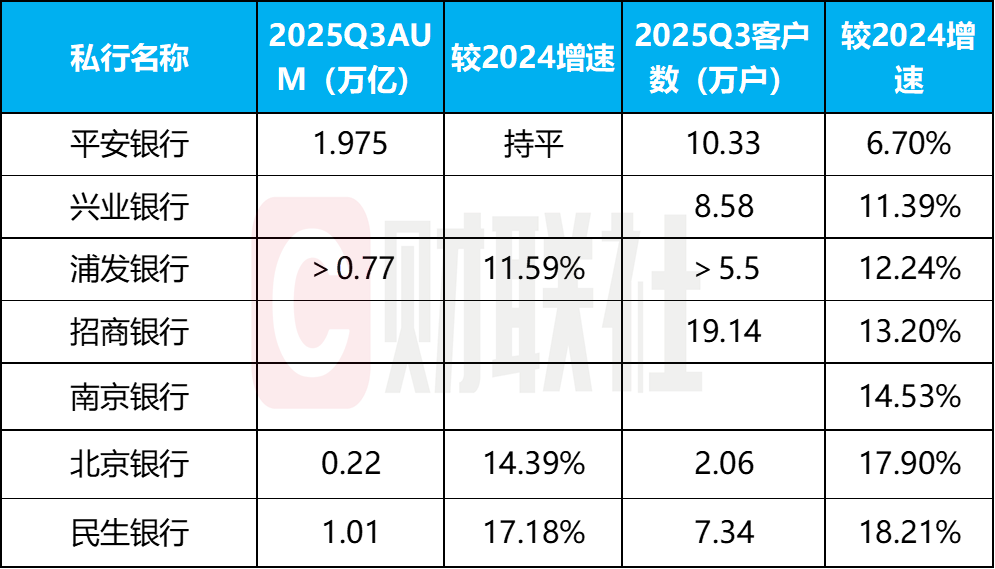
Core Insights - The wealth management business of banks has shown significant growth in Q3 2025, characterized by "private banking leadership, agency sales driving, digital empowerment, and cross-border expansion" [1][2][4] - Most banks are building retail financial service systems driven by wealth management, with rapid increases in business scale, customer numbers, and fee income [2][3] Group 1: Wealth Management Performance - Wealth management client numbers have steadily increased, with Nanjing Bank's wealth clients growing by 16.31% compared to the end of the previous year [2] - Citic Bank achieved its highest annual growth in Assets Under Management (AUM) in nearly three years [1] - China Merchants Bank's wealth management fee and commission income reached 20.67 billion yuan, a year-on-year increase of 18.76% [3] Group 2: Private Banking as a Growth Engine - Private banking clients have become a core growth engine, with most banks reporting over 10% growth in private banking client numbers since the beginning of the year [4][5] - Specific banks like Shanghai Pudong Development Bank and Beijing Bank have also seen over 10% growth in private banking AUM [5][6] Group 3: Agency Sales Driving Growth - Agency sales, including insurance, funds, and wealth management products, are the main growth drivers for banks [8] - Ping An Bank's agency insurance income grew by 48.7%, while China Merchants Bank's agency fund income increased by 38.76% [8] Group 4: Digital and Professional Services Integration - Banks are enhancing customer engagement through digital and professional services, with Shanghai Pudong Development Bank focusing on wealth management needs and launching a global wealth management platform [9] - Beijing Bank is leveraging its "Retail Crystal Ball System" to drive value creation through data-driven insights [9] Group 5: Cross-Border Wealth Management Demand - There is a growing demand for cross-border wealth management, with Standard Chartered Bank reporting a 30% increase in wealth management business due to strong market performance and cross-border demand [10][11] - The bank's affluent client base and AUM have seen significant growth, indicating a robust long-term outlook for wealth management revenue [11]
调研|港股IPO火爆!人才短缺,中外资投行变更招聘计划
券商中国· 2025-10-18 23:33
Core Viewpoint - The Hong Kong IPO market has seen a significant increase in financing, exceeding last year's figures by more than double, leading to a tight supply of investment banking talent in the region [1][5]. Group 1: Investment Banking Expansion - Major international investment banks like Goldman Sachs and JPMorgan are accelerating their recruitment plans in Hong Kong to match the growing demand for IPO projects [3][4]. - Goldman Sachs has expressed optimism about the Chinese market, increasing its target for the CSI 300 index to 4900 points, reflecting a positive outlook on liquidity and valuations [3]. - JPMorgan's Asia-Pacific corporate banking division has seen a 20% increase in personnel as of July this year, doubling its original growth target for 2025 [4]. Group 2: Talent Shortage and Integration - There is a temporary shortage of top investment banking talent in Hong Kong, with over 200 companies currently queued for IPOs, leading to competitive hiring practices [5][6]. - Chinese investment banks benefit from integrated domestic and international operations, allowing them to allocate talent more flexibly compared to their international counterparts [6]. Group 3: Wealth Management Development - Both domestic and foreign investment banks are expanding their wealth management services in response to a significant increase in cross-border asset allocation needs, with Chinese household savings rising by 55 trillion yuan in recent years [7]. - Companies like CICC have successfully expanded their wealth management teams in Hong Kong from about 30 to over 150 members in seven years, indicating a strong focus on internationalization [7].
李家超:创新科技、金融贸易、基建联通三轨并进 共建世界级一流湾区
智通财经网· 2025-10-16 07:33
Group 1: Innovation and Technology Development - The "Shenzhen-Hong Kong-Guangzhou" innovation cluster ranked first globally in the recent Global Innovation Index, highlighting the Bay Area's leading position in the global innovation landscape [1] - The Hong Kong Science Park in the Lok Ma Chau Loop is a significant cooperation platform under the national 14th Five-Year Plan, with the first three buildings completed and operational by the end of this year [1] - The Hong Kong government has established a cross-departmental approval team to expedite the development of the Lok Ma Chau Loop, with plans for the second phase of development to be completed within this year [1] Group 2: Financial Connectivity - Hong Kong ranks third in the Global Financial Centre Index, with the gap to New York and London narrowing to 2 and 1 points respectively [2] - The total value of Hong Kong's asset and wealth management business surpassed HKD 35 trillion, a year-on-year increase of 13%, equivalent to 11 times the local GDP [2] - Hong Kong aims to become the largest cross-border wealth management center globally in the coming years, facilitating the introduction of more foreign capital into the mainland private equity market [2] Group 3: Infrastructure and Logistics - The "Cross-Border Payment System" launched in June provides secure and efficient instant payment services for residents and institutions, enhancing trade and personnel exchanges between Hong Kong and the mainland [3] - The "Hong Kong Cars Northbound" initiative has been well-received, with over 100,000 private cars participating, and the "Guangdong Cars Southbound" plan is set to be implemented soon [3] - Hong Kong is establishing various multimodal transport models with Bay Area cities, including a comprehensive transport system integrating rail, sea, land, and river routes to facilitate goods transit [3] Group 4: Aviation and Air Cargo - Hong Kong International Airport is the most developed aviation hub in the Bay Area, with a partnership signed with Zhuhai Airport to enhance connectivity and optimize land transport [4] - The "Sea-Air Cargo Transport" initiative with Dongguan allows for local customs inspections and direct waterway delivery to Hong Kong, significantly reducing time and costs [4] - The first phase of the Dongguan Airport Center at Hong Kong International Airport will be completed by the end of this year, with further studies for the second phase commencing this year [4]