
国风国潮

Search documents
毕业作品展何以“破圈”(艺坛走笔)
Ren Min Ri Bao· 2025-06-14 22:12
Core Viewpoint - The graduation exhibitions from various art academies in China are gaining significant public attention, showcasing the integration of art with social issues and the impact of social media on their visibility [1][2][3] Group 1: Exhibition Highlights - The Central Academy of Fine Arts' exhibition "Walking Towards Light" and the China Academy of Art's "Seventy-Two Changes" are examples of how these events are breaking traditional boundaries and engaging with the public [1] - The work "Prayer" by a graduate from Sichuan Fine Arts Institute critiques consumerism and has garnered over 400,000 likes on social media, illustrating the dialogue between art and the audience [1][2] - The sculpture "Dripping Instrument" from the China Academy of Art merges natural water patterns with ancient Chinese compasses, showcasing the fusion of science and art [2] Group 2: Social Engagement and Interaction - Recent shifts in art academies' perspectives emphasize public interaction, transforming exhibitions into city-wide art festivals that include guided tours and lectures to make art more accessible [3] - The exhibitions span multiple locations, including various campuses and public venues, promoting a shared experience between educational achievements and community engagement [3] - The evolution of art from static works to dynamic events reflects a broader dialogue with society, allowing students to better understand social needs and define their career paths [3]
国风国潮持续升温
Jing Ji Ri Bao· 2025-06-12 22:06
Core Insights - The rise of "Guofeng" (national style) and "Guochao" (national trend) among the younger generation, particularly the "post-00s," reflects their desire for cultural identity and personal expression [1][2] - The sales of Guofeng products have shown remarkable growth across various categories, including clothing, home decor, and cultural education items, indicating a strong market trend [1][2] Clothing Sector - The sales volume of Tang suits has increased by 291% year-on-year, making it the fastest-growing item [1] - Men's vests and middle-aged women's clothing have also seen growth exceeding 200%, highlighting the diverse offerings in Guochao apparel [1] - The rural market contributed 56.2% of the total sales volume, indicating the penetration of Guochao clothing into lower-tier markets [1] Home Decor Sector - Sales of home decor items featuring Guofeng elements, such as paper-cut lamps, vases, and hangings, have increased by over 10 times year-on-year [1] - Guochao home decor has become a popular choice for young people, serving as a medium for personal expression [1] - The highest consumption of Guochao home decor is observed in Guangdong, Beijing, and Sichuan provinces [1] Cultural Education Products - The sales volume of cultural education items like badges, gel pens, and ink pads has also surged by over 10 times year-on-year, symbolizing the cultural confidence of the "post-00s" [1] - Practical and culturally resonant products such as pencil cases, diaries, and DIY paper-cutting kits are particularly favored by young consumers [1][2] Market Outlook - The preference for practical and culturally significant products among rural users suggests continued growth in the Guofeng and Guochao market, especially with the expansion of e-commerce and logistics networks [2] - The consumption of Guofeng and Guochao products is expected to evolve from traditional clothing to encompass a wider range of consumer goods, becoming an integral part of daily life for young people [2]
古老中国丝绸扮靓现代生活
Xin Hua Wang· 2025-05-28 05:31
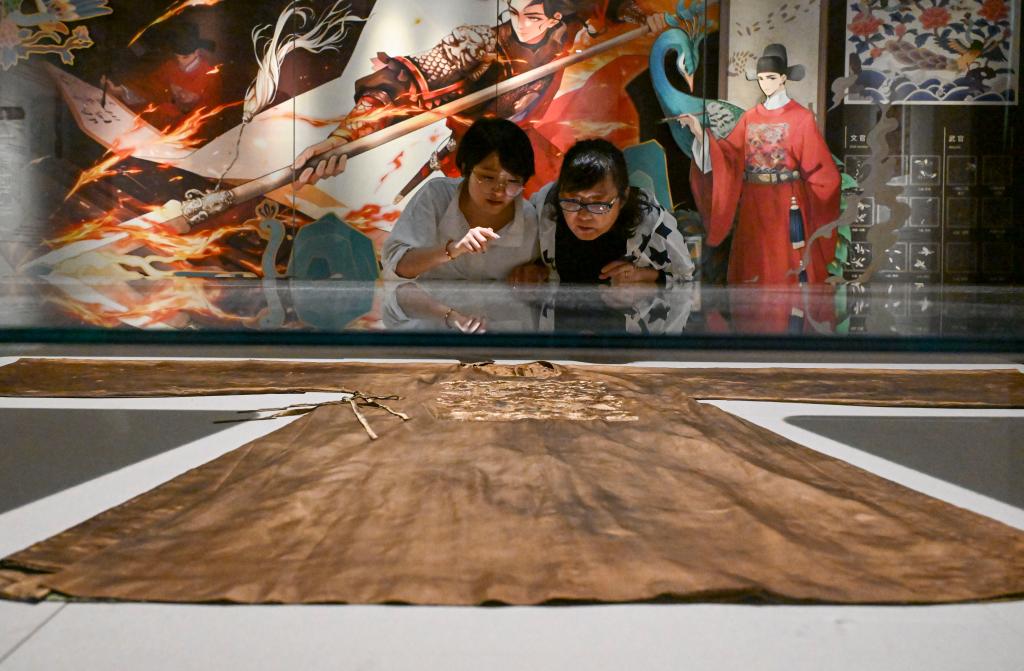
Core Insights - The Suzhou Silk Museum has seen a significant increase in visitor numbers, with 522,000 visitors in 2022, more than doubling from the previous year, and nearly 200,000 visitors recorded by April 2023 [2][4] - The rise in interest in traditional silk products is attributed to economic development and the resurgence of traditional Chinese culture, particularly among younger generations [2][5] - China dominates the global silk market, producing over 80% of the world's silk cocoons and raw silk, with exports reaching various international markets including the EU, the US, Japan, and countries involved in the Belt and Road Initiative [2][6] Industry Overview - Jiangnan region is recognized as the most important silk manufacturing area in China, with Suzhou historically serving as a center for silk production since the Ming and Qing dynasties [4][5] - Archaeological evidence indicates that silk weaving dates back 4,800 years, establishing China as the birthplace of silk products [4] - The museum showcases historical silk garments, including a Ming dynasty official robe and a Song dynasty empress dress, highlighting the intricate designs and craftsmanship of silk products [4][5] Modern Applications - The Suzhou Silk Museum is actively promoting the integration of silk into modern life, showcasing contemporary uses of silk in various products such as fashion, accessories, and even space suits for China's lunar exploration program [5][6] - Collaborations with institutions like Beijing University of Posts and Telecommunications aim to digitize ancient silk patterns for modern applications, generating significant revenue from licensing [6] - The museum's international outreach includes sending traditional Hanfu props to Venice for cultural exhibitions, emphasizing silk's role in fostering global cultural exchange [6]

牵住优化消费环境的“牛鼻子”(市场漫步)
Ren Min Ri Bao· 2025-05-06 21:52
Core Viewpoint - The article emphasizes the importance of optimizing the consumer environment as a key driver for economic growth, highlighting the implementation of a three-year action plan (2025-2027) to address consumer pain points and enhance consumer rights protection [1][2]. Group 1: Action Plan and Objectives - The action plan aims to improve quality standards, credit constraints, comprehensive governance, and consumer rights protection to resolve prominent consumer issues [1]. - In 2024, final consumption expenditure is projected to contribute 44.5% to economic growth, driving GDP growth by 2.2 percentage points [1]. Group 2: Challenges and Solutions - Current challenges include low quality of consumer supply, lack of market order, and insufficient protection of consumer rights, which negatively impact consumer experience and confidence [1][2]. - The action plan outlines five major initiatives: improving consumer supply quality, optimizing consumer order, enhancing consumer rights protection, promoting collaborative governance, and leading consumer environment initiatives [2]. Group 3: Collaborative Efforts - Protecting consumer rights is a collective responsibility involving government departments, judicial bodies, businesses, social organizations, media, and consumers [2]. - Effective collaboration among all stakeholders is essential for the successful implementation of consumer rights protection measures [2]. Group 4: Long-term Commitment - Optimizing the consumer environment is a long-term endeavor that requires a systematic approach, starting from local standards and gradually expanding to broader areas [3]. - Continuous improvement of the consumer environment is necessary to boost consumer confidence and stimulate economic vitality [3].