
外汇

Search documents
Ecofi股票基金经理Karen Georges表示:外汇方面可能会出现意外的负面消息。分析师们的估算中未必完全计入了汇率冲击。
news flash· 2025-07-02 17:17
Core Viewpoint - There may be unexpected negative news regarding foreign exchange, which analysts might not fully account for in their estimates [1] Group 1 - Ecofi stock fund manager Karen Georges highlights potential unforeseen negative developments in the foreign exchange market [1] - Analysts' estimates may not completely incorporate the impact of currency fluctuations [1]
韩国官员:有关外汇和国防开支的问题将分别讨论。
news flash· 2025-06-30 07:05
Group 1 - South Korean officials will discuss issues related to foreign exchange and defense spending separately [1]
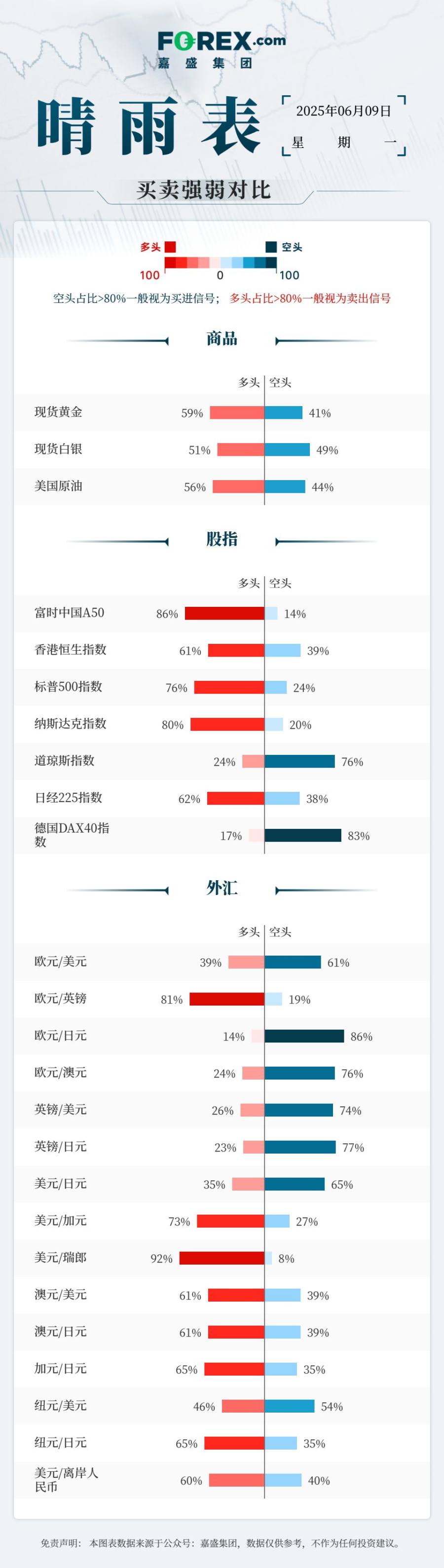
金十图示:恒生指数收复24000点关口,创3月21日以来新高。嘉盛市场情绪指数显示,恒生指数多头占比达61%。后市市场情绪如何?欢迎前往“数据库-嘉盛市场晴雨表”查看并订阅(数据每10分钟更新1次)
news flash· 2025-06-09 02:50
Group 1 - The Hang Seng Index has recovered the 24,000-point mark, reaching a new high since March 21 [1] - The market sentiment index from GAIN Capital indicates that 61% of participants are bullish on the Hang Seng Index [1] Group 2 - The sentiment data shows that 39% of participants are bullish on the S&P 500 Index, while 76% are bearish [3] - For the Nasdaq Index, 80% of participants are bullish, and 20% are bearish [3] - The Dow Jones Index has 24% bullish and 76% bearish sentiment [3] - The Nikkei 225 Index shows 38% bullish and 62% bearish sentiment [3] - The DAX 40 Index has a significant 17% bullish sentiment compared to 83% bearish [3] Group 3 - In the forex market, the Euro/USD pair has 39% bullish and 61% bearish sentiment [3] - The Euro/GBP pair shows a strong bullish sentiment at 81% [3] - The Euro/JPY pair has 14% bullish and 86% bearish sentiment [4] - The GBP/USD pair has 74% bullish sentiment [4] - The USD/JPY pair shows 35% bullish and 65% bearish sentiment [4]

日本巨变
虎嗅APP· 2025-06-01 14:06
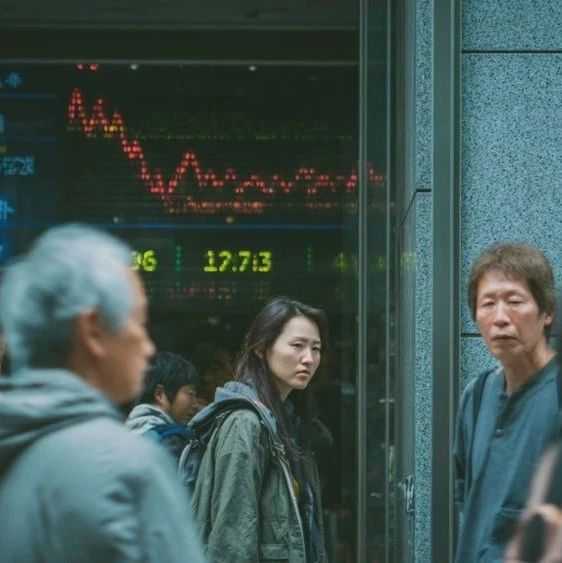
Core Viewpoint - Japan is facing a severe trust crisis regarding its national debt, with long-term bond rates reaching historical highs and a significant drop in its status as the world's largest creditor nation [4][5][6]. Group 1: Japan's Debt Crisis - Japan's 30-year and 40-year bond rates have surged to 2.999% and 3.336%, respectively, marking a historical high and indicating a lack of bidders [3]. - The country has lost its position as the world's largest creditor for the first time since 1991, with its net external assets reaching 533.05 trillion yen, a 12.9% year-on-year increase, but still surpassed by Germany's $3.95 trillion [5][6]. - Japan's finance minister stated that the growth in net external assets should not be seen as a significant change in Japan's international status [9]. Group 2: Historical Context of Japan's Creditor Status - Japan maintained its status as the world's largest creditor for 33 years due to its strong manufacturing and export economy, which generated substantial foreign exchange [16]. - The post-Korean War era saw Japan become a supply base for the U.S. military, leading to a surge in industrial demand and foreign exchange [20][21]. - Japan's automotive industry rapidly expanded from virtually zero in 1955 to becoming the world's largest by 1980, significantly contributing to its foreign investment capabilities [24]. Group 3: Currency and Economic Dynamics - Japan has maintained ultra-low interest rates and minimal inflation over the past two decades, contrasting with global trends of rising prices [34][36]. - The lack of inflation suggests that the money supply in Japan has not significantly increased, leading to speculation that much of the printed yen has been used for foreign investments [42]. - The Japanese foreign exchange market accounts for 35%-40% of global retail forex trading, with many investors borrowing yen to invest abroad [46]. Group 4: Future Implications of Debt and Currency Policy - Japan's public debt is projected to reach 234.9% of GDP in 2024, with a significant portion of debt held domestically [65]. - The country has been caught in a cycle of borrowing to pay off existing debt, with over 60% of new debt issued since 2012 being used to refinance old debt [68]. - The potential for rising interest rates could lead to a significant depreciation of the yen, impacting both domestic and international investment strategies [90][94]. Group 5: Economic Measures and Public Response - The Japanese government has initiated measures to counteract the effects of yen depreciation, including energy subsidies and calls for wage increases [109]. - Average wage increases are projected to reach 5.08% in 2024, reflecting a concerted effort to mitigate the impact of inflation on citizens [110][111]. - These strategies aim to balance the need for economic growth and debt management while addressing the potential negative effects on the populace [113].
美元兑韩元USD/KRW短线下挫,日内跌0.4%,报1379.37。此前,韩国央行行长李昌镛确认美亚就外汇进行了磋商。
news flash· 2025-05-29 02:55
Core Points - The USD/KRW exchange rate has experienced a short-term decline, dropping by 0.4% to 1379.37 [1] - The decline follows confirmation from the Bank of Korea Governor Lee Chang-yong regarding discussions with the U.S. on foreign exchange matters [1] Summary by Category Currency Market - The USD/KRW exchange rate fell by 0.4%, indicating a weakening of the U.S. dollar against the South Korean won [1] - The current exchange rate stands at 1379.37, reflecting market reactions to recent developments [1] Central Bank Actions - Bank of Korea Governor Lee Chang-yong confirmed that discussions have taken place with the U.S. regarding foreign exchange [1] - This confirmation may influence market perceptions and future currency movements [1]
韩国央行行长李昌镛:并不太担心外汇对通胀的影响。
news flash· 2025-05-29 02:51
Core Viewpoint - The Governor of the Bank of Korea, Lee Chang-yong, expressed that there are no significant concerns regarding the impact of foreign exchange on inflation [1] Group 1 - The Bank of Korea is monitoring the foreign exchange market but does not see it as a major inflationary risk [1] - Lee emphasized that the current inflation levels are manageable and not primarily driven by foreign exchange fluctuations [1] - The central bank's focus remains on domestic economic conditions rather than external currency pressures [1]
日本最高外汇事务官员三村淳:外汇应由市场决定。
news flash· 2025-05-22 03:51
Core Viewpoint - The Japanese top foreign exchange official, Jun Mimura, stated that foreign exchange rates should be determined by the market [1] Group 1 - The statement emphasizes the importance of market forces in setting foreign exchange rates, indicating a preference for a free-floating currency system [1]
日本财务大臣:正安排与美财长会晤,预计讨论外汇等议题
news flash· 2025-05-20 02:09
据报道,日本财务大臣加藤胜信表示,在安排与美国财长贝森特举行会晤,预计将讨论包括外汇在内的 议题,外汇相关的会谈将遵循现有立场。 ...
5月20日电,日本财务大臣加藤胜信表示,正在安排与贝森特的会谈,将讨论外汇等话题。
news flash· 2025-05-20 01:55
智通财经5月20日电,日本财务大臣加藤胜信表示,正在安排与贝森特的会谈,将讨论外汇等话题。 ...
日本财务大臣加藤胜信:将出席在加拿大举行的G7会议,计划讨论乌克兰和全球经济。目标是在G7会议期间举行一些双边会谈,将交换对关税等问题的看法。正在安排与美国财长贝森特举行会谈,讨论包括外汇在内的主题。不对穆迪下调美国评级置评,将保持对美国政治、经济等的密切关注,将关注美国评级下调带来的冲击。
news flash· 2025-05-20 01:10
Group 1 - Japan's Finance Minister, Kato Katsunobu, will attend the G7 meeting in Canada to discuss Ukraine and the global economy [1] - The goal is to hold bilateral talks during the G7 meeting to exchange views on issues such as tariffs [1] Group 2 - Arrangements are being made for a meeting with U.S. Treasury Secretary Yellen to discuss topics including foreign exchange [2] - There is no comment on Moody's downgrade of the U.S. rating, but there will be close attention to the political and economic situation in the U.S. [2] - The impact of the U.S. rating downgrade will be monitored closely [2]