大客户依赖

Search documents
康瑞新材IPO:巨头客户光环下的多重“暗礁”
Sou Hu Cai Jing· 2025-10-28 03:18
Core Viewpoint - The company Jiangsu Kangrui New Materials Technology Co., Ltd. (Kangrui New Materials) is facing challenges as it prepares for its IPO, with significant reliance on a single major customer and various internal control issues that raise concerns about its financial health and governance structure [3][4][9][10]. Financial Performance - Kangrui New Materials has seen a dramatic increase in net profit, rising 7.64 times over three years, with net profit reaching 411 million yuan in 2024 from 47.56 million yuan in 2022 [3]. - Revenue from a single major customer (Company X) accounted for 88.41% of total operating income in 2024, indicating a high dependency on this client [3][4]. - The company plans to raise 1.105 billion yuan through its IPO, with 814 million yuan allocated for expanding titanium alloy and composite material production capacity [4]. Revenue and Client Dependency - The revenue from Company X is projected to decline in 2025, posing a risk to the company's operations if it fails to pass the supplier qualification review [4]. - The top five customers accounted for 84.77% of sales in 2024, with BYD alone contributing 28.42% of revenue [4]. Inventory and Receivables - The company faces pressure from accounts receivable and inventory, with inventory values increasing from 146 million yuan in 2022 to 399 million yuan in 2024, and a significant rise in inventory impairment provisions [5]. - Accounts receivable also increased significantly, reaching 645 million yuan in 2024, which constituted 44.35% of current assets [5]. Internal Control Issues - Kangrui New Materials has reported significant internal control issues, including 777 million yuan in related-party loans from 2020 to 2023, with 519 million yuan in 2023 alone [9]. - The company has faced administrative penalties for tax and environmental violations, indicating a lack of compliance awareness [9][10]. Governance Structure - The company's governance is heavily influenced by its controlling shareholders, who hold 72.52% of the equity, raising concerns about transparency and potential conflicts of interest [10]. - The controlling shareholders have cashed out over 65 million yuan in dividends, and there are allegations of questionable transactions with major clients [10]. Research and Development - Kangrui New Materials has a low R&D expenditure relative to its revenue, with R&D expenses as a percentage of revenue decreasing from 3.48% in 2022 to 2.71% in 2024 [11][13]. - The company has only 109 patents, with a mere 4 being authorized invention patents, indicating a potential lack of core technological capabilities [12]. Market Position and Future Outlook - The company is heavily reliant on titanium alloy products, which accounted for over 60% of its revenue in 2024, but faces risks from emerging materials and technologies in the consumer electronics sector [12]. - Kangrui New Materials plans to invest in a new R&D center, but the declining number of R&D personnel raises concerns about its ability to innovate and compete effectively [13].

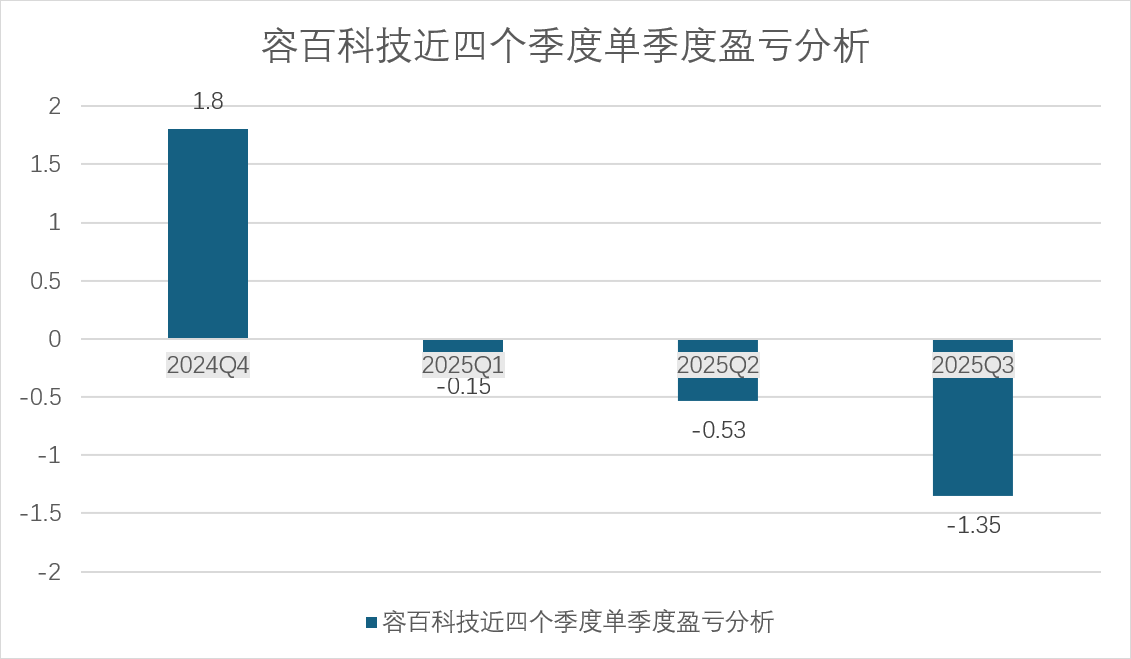
财说丨前三季度净亏超2亿,容百科技面临等多重困境
Xin Lang Cai Jing· 2025-10-24 00:07
Core Viewpoint - The downturn in the new energy cathode materials industry is significantly impacting Rongbai Technology (688005.SH), leading to a substantial decline in revenue and profitability in the first three quarters of the year [1][3]. Financial Performance - In the first three quarters, Rongbai Technology reported total revenue of 8.986 billion yuan, a year-on-year decrease of 20.64% [1]. - The net profit attributable to shareholders turned from a profit of 116 million yuan in the same period last year to a loss of 204 million yuan, marking the worst performance since its listing [1]. - The gross profit margin has plummeted from 14.49% in the first three quarters of 2021 to 7.28% currently, reaching the lowest level since the company went public [5]. Market Challenges - The decline in revenue is attributed to geopolitical impacts causing market uncertainty, leading to a drop in sales volume [3]. - Increased competition in the domestic market and changes in the international political and economic landscape have exacerbated the deterioration of profitability [3]. - The market share of ternary materials is shrinking due to the rising dominance of lithium iron phosphate batteries, which are expected to reach a market share of 77.9% by 2025 [7]. Customer Dependency - Rongbai Technology's heavy reliance on major customers is a critical issue, with sales to a core customer accounting for 54.54% of total revenue, and the top five customers contributing 79% [9]. - This dependency has resulted in a loss of bargaining power, leading to compressed processing fees and extended payment terms [9]. Accounts Receivable and Cash Flow - As of the end of September, the accounts receivable balance reached 3.072 billion yuan, accounting for 38% of the company's net assets, with a turnover period of 115 days, the highest since its listing [10]. - The significant accounts receivable, equivalent to 34% of the revenue for the first three quarters, places additional strain on the company's cash flow [10]. Asset Impairment - The company has faced ongoing pressure from inventory depreciation, with asset impairment losses increasing to 66.25 million yuan in the first three quarters [11]. - The decline in industry demand and excess capacity have led to product price pressures, further contributing to the risk of depreciation [11]. Financial Health - As of September, the company's debt ratio reached 65.67%, the second highest since its listing, indicating increasing financial strain [11]. - The total interest-bearing debt stood at 7.892 billion yuan, nearing the company's net assets, with short-term borrowings of 864 million yuan and long-term borrowings of 4.795 billion yuan [13].

爱舍伦IPO:第一大客户收入占比超70% 重大依赖何解?
Xin Lang Zheng Quan· 2025-10-21 07:23
Core Viewpoint - The company Aisheren is facing significant challenges in its IPO application due to high customer concentration, insufficient R&D investment, doubts about revenue authenticity, and contradictions in fundraising project disclosures [1][2][3]. Group 1: Financial Performance - Aisheren's net profit increased from 62.80 million yuan in 2022 to 80.61 million yuan in 2024, with a 44.81% year-on-year revenue growth in the first half of 2025 [1]. - The company's sales heavily rely on a single major client, Medline Group, with sales proportions of 71.51%, 73.08%, 71.00%, and 77.73% from 2022 to the first half of 2025 [1]. Group 2: Customer Dependency - Over 90% of Aisheren's revenue comes from overseas markets, with foreign sales accounting for 90.99%, 94.25%, 94.71%, and 96.54% of total revenue during the reporting periods [2]. - The high dependency on a limited number of clients poses a risk to the company's operational stability and bargaining power [2]. Group 3: R&D Investment - Aisheren's R&D expenses were 3.66 million yuan, 4.91 million yuan, and 7.86 million yuan from 2022 to 2024, representing only 0.64%, 0.85%, and 1.14% of revenue, significantly lower than the industry average of over 3% [3]. - The company has only 11 R&D personnel, making up just 0.57% of the total workforce, which is substantially lower than competitors like ZhenDe Medical and Aomei Medical [3][4].
威邦运动重启上市辅导!身患大客户“依赖症”,大额分红曾遭监管问询
Sou Hu Cai Jing· 2025-09-21 12:11
Group 1 - The core point of the article is that Weibang Sports Technology Group has initiated listing guidance with Guotai Junan Securities after previously withdrawing its IPO application from the Shanghai Stock Exchange due to strategic considerations [2] - Weibang Sports, established in 1995, focuses on the research, design, production, and sales of core components for above-ground swimming pools, outdoor sports products, and inflatable sports products [2] - The company's revenue and net profit have shown a declining trend from 2021 to 2023, with revenues of approximately 31.88 billion, 23 billion, and 14.38 billion respectively, and net profits of 4.33 billion, 3.73 billion, and 2.33 billion respectively [2] - In the first half of 2024, Weibang Sports reported revenues and net profits of 9.12 billion and 1.58 billion respectively [2] Group 2 - The company has a high customer concentration risk, with the top five customers accounting for 97.58%, 98.19%, 97.40%, and 97.58% of its main business revenue from 2021 to the first half of 2024 [2] - The largest customer, Rongwei International, contributed to 77.94%, 79.04%, 69.12%, and 74.88% of Weibang Sports' main business revenue during the same period [2] - The ownership structure shows that Chen Xiaobo controls 91.5% of Weibang Sports, with family members also being shareholders [3] - In 2021, Weibang Sports distributed a significant cash dividend of 800 million, exceeding the net profit for that year, raising questions from the Shanghai Stock Exchange regarding the decision-making process and compliance of the dividend distribution [3]
元创科技IPO上会在即:如何化解低研发投入、大客户依赖与价格战三大挑战
Hua Xia Shi Bao· 2025-09-19 00:58
Group 1 - The core viewpoint of the article is that Yuan Chuang Technology Co., Ltd. is facing multiple challenges regarding its IPO, including low R&D investment, high customer concentration, and fluctuating gross margins, which may impact its market competitiveness and sustainability [2][3][6][8] Group 2 - Yuan Chuang Technology claims to be a leading player in the rubber track manufacturing industry, with a significant market position and involvement in drafting national standards [3] - The company's R&D investment as a percentage of revenue is low, at 0.57%, 0.80%, and 0.72% for the years 2022, 2023, and 2024 respectively, which is below the 3% threshold for high-tech enterprises [3][4] - The company has 36 patents but questions remain about whether its R&D intensity aligns with its self-proclaimed technological leadership [3][4] - Yuan Chuang Technology's R&D focuses on improving production processes and product performance to meet emerging market demands [4][5] Group 3 - The company has a high customer concentration, with sales to its top five customers accounting for 50.10%, 46.56%, and 49.94% of total revenue during the reporting period [6][7] - The largest customer, Wode Agricultural Machinery, contributes a significant portion of revenue, raising concerns about dependency risks [6][7] - To mitigate risks associated with customer concentration, the company is pursuing a dual strategy of deepening existing customer relationships and expanding its customer base [7] Group 4 - The rubber track industry is experiencing increased competition, with a low market concentration and high price sensitivity in the aftermarket [8] - Yuan Chuang Technology's gross margins have fluctuated, reported at 21.58%, 28.28%, and 22.75% over the reporting period, influenced by raw material prices and market conditions [8][9] - The company has mechanisms in place to adjust product prices in response to raw material cost fluctuations, demonstrating its ability to pass costs to downstream customers [9]
过半营收依赖“石化基因”,胜软科技凸显现金流“隐忧”
阿尔法工场研究院· 2025-08-14 00:06
Core Viewpoint - Shengruan Technology, despite its independence from Sinopec, still relies heavily on Sinopec for over half of its revenue, facing scrutiny over financial compliance as it pursues an IPO [2][3][7]. Group 1: Customer Dependency - Shengruan Technology ranks high in the smart energy solutions market, but from 2022 to 2024, Sinopec contributed over 50% of its revenue each year, with the top five customers accounting for over 70% of total revenue [3][19]. - The revenue contribution from Sinopec for the years 2022, 2023, and 2024 was 64.9%, 51.4%, and 51.6% respectively, indicating a persistent reliance on a single major client [20]. Group 2: Financial Governance Concerns - The company has faced multiple accounting errors and audit changes from 2021 to 2023, leading to regulatory warnings, and the Beijing Stock Exchange has raised concerns about the compliance of gross margin and revenue recognition [4][11]. - Shengruan Technology has changed its accounting firm multiple times, which has raised questions about its financial management practices [11]. Group 3: Cash Flow and Debt Pressure - Accounts receivable have risen to several hundred million yuan, with a cash flow crunch evident as the average collection period for receivables reached 1,663 days [5][20]. - By early 2025, the company is projected to have only about 67 million yuan in cash, insufficient to cover short-term liabilities of 233 million yuan [6]. Group 4: Market Position and Financial Performance - Shengruan Technology is the second-largest independent player in China's smart energy solutions market, with a market share of 2.3% in 2024, and is the only independent service provider among the top five in the smart oilfield solutions market, holding a 1.9% market share [14][15]. - The company's revenue for 2022, 2023, and 2024 was 391 million yuan, 502 million yuan, and 525 million yuan respectively, showing a significant slowdown in growth from 28.4% in 2023 to approximately 4.7% [16][17]. Group 5: Structural Issues - The company’s total assets and liabilities have shown fluctuations, with total assets at 685 million yuan and total liabilities at 353 million yuan in 2024, resulting in a debt-to-asset ratio of 51.6% [18]. - The high concentration of revenue from a few clients and the slow expansion of new business lines pose significant risks to the company's financial stability [21].

上会在即!八成收入来自美的、格力!南特科技信息披露质量成谜
IPO日报· 2025-08-07 13:19
Core Viewpoint - Nantong Technology is preparing for an IPO on the Beijing Stock Exchange, aiming to raise 28.6 million yuan for expansion and R&D projects, despite concerns over customer concentration and low R&D investment compared to peers [1][3][4]. Financial Performance - The company has shown consistent revenue growth from 833.68 million yuan in 2022 to an expected 1.03086 billion yuan in 2024, with net profits increasing from 43.96 million yuan to 94.69 million yuan during the same period [5]. - Gross profit margins have been affected by material costs and energy prices, with the company's margins at 19.51%, 22.28%, and 22.65% over the past three years, slightly below the industry average of 21.94%, 23.21%, and 21.62% [5][6]. Customer Dependency - The company heavily relies on its top five customers, with their sales accounting for 89.20%, 86.35%, and 87.78% of total revenue during the reporting period, indicating a significant customer concentration risk [7]. - Approximately 50% of revenue comes from Midea Group, while about one-third is from Gree Electric, with combined sales from these two clients making up over 80% of total revenue [8]. R&D Investment - Nantong Technology's R&D expenditure is notably low compared to its peers, with R&D expenses of 19.56 million yuan, 21.43 million yuan, and 23.90 million yuan over the past three years, representing only 2.35%, 2.28%, and 2.32% of revenue [11]. - Competitors like Lianhe Precision, Baida Precision, and Huaxiang Co. have R&D expense ratios averaging 3.69%, indicating a significant gap in innovation investment [12]. Management and Disclosure Issues - There are discrepancies in the resumes of company executives, raising concerns about the accuracy of information disclosed in the IPO prospectus [10][13][14]. - The inconsistencies in the employment history of executives suggest potential issues with corporate governance and transparency [15][16].



南特科技IPO:4年借款13亿元仍“失血” 短债偿还压力逐年攀升
Xi Niu Cai Jing· 2025-07-15 11:58
Group 1 - The core point of the news is that Zhuhai Nante Metal Technology Co., Ltd. has received a second round of inquiry from the Beijing Stock Exchange, focusing on the accuracy of purchased castings and revenue recognition, the sufficiency of supplier verification, the rationality of fundraising projects, and the risk of capacity digestion [2] - Nante Metal, established in 2009, specializes in the research, production, and sales of precision castings and machining, with products mainly used in air conditioning compressor components and automotive parts [3] - The company aims to raise 420 million yuan through its IPO, which will be allocated to the second phase of a high-end precision parts production base, expansion of Zhuhai Nante's machining capacity, and working capital supplementation [3] Group 2 - Approximately 80% of Nante Metal's revenue comes from Gree Electric Appliances and Midea Group, making its IPO journey a focal point in the market [4] - The company faces challenges such as high accounts receivable, insufficient short-term debt repayment capacity, and questions regarding the rationality of its fundraising purposes [4] - From 2021 to 2024, Nante Metal's revenue increased from 735 million yuan to 1.031 billion yuan, while net profit rose from 61 million yuan to 98 million yuan, with revenue growth slowing from 13.38% in 2022 to 9.86% in 2024 [5] - The company's accounts receivable remained high, with values of 322 million yuan, 404 million yuan, 394 million yuan, and 413 million yuan from 2021 to 2024, representing 59.19%, 57.99%, 55.49%, and 64.84% of current assets respectively [5] - Nante Metal has faced cash flow issues, with a cumulative cash inflow from borrowings of 1.34 billion yuan from 2021 to 2024, leading to a net cash outflow for two consecutive years [5] - As of the end of 2024, the company's cash balance was 29 million yuan, a decrease of 45.28% year-on-year, compared to 186 million yuan in short-term interest-bearing borrowings, indicating significant repayment pressure [5]
富瀚微累募12亿仅分红1.8亿 实控人方套现17亿拟继续减持
Chang Jiang Shang Bao· 2025-07-10 23:32
Core Viewpoint - Recent shareholder reductions in holdings at Fuhang Microelectronics (富瀚微) indicate a trend of significant divestment, raising concerns about the company's financial health and future performance [1][2][3] Shareholder Actions - Fuhang Microelectronics' major shareholder, Jiezhi Holdings, plans to reduce its stake from 4.93% to a maximum of 3%, indicating a potential exit strategy [1][4] - Jiezhi Holdings previously held 22.42% of the company, making it the largest shareholder, and has since cashed out approximately 1.7 billion yuan through various transactions [2][12] - Another shareholder, Shanghai Langhan Enterprise Management, recently completed a reduction, cashing out approximately 177 million yuan [3][13] Financial Performance - Fuhang Microelectronics has faced declining financial performance, with net profit dropping from 398 million yuan in 2022 to around 250 million yuan in 2023 and 2024, and a significant decline to 14.64 million yuan in Q1 2025 [3][17] - The company's revenue has also decreased, with 2023 and 2024 revenues reported at 1.82 billion yuan and 1.79 billion yuan, respectively, marking a decline of 13.65% and 1.76% [17] - Since its IPO in 2017, the company has raised approximately 1.2 billion yuan while distributing only about 180 million yuan in dividends, reflecting a low average dividend payout ratio of around 10.31% [17] Business Dependency - Fuhang Microelectronics heavily relies on Hikvision, which accounts for over 60% of its revenue, raising concerns about customer concentration risk [16][17] - In 2024, sales to Hikvision were projected to be 620 million yuan, representing 66.69% of total revenue [16]
强一股份IPO:对神秘B公司业绩实际依赖超80%,关联交易迷雾重重
Sou Hu Cai Jing· 2025-07-08 07:36
Core Viewpoint - The article discusses the ongoing listing process of Qiangyi Semiconductor (Suzhou) Co., Ltd., highlighting issues such as heavy reliance on major clients and related party transactions that have delayed responses to inquiries from the Shanghai Stock Exchange [1][3]. Group 1: Client Dependency - Qiangyi Semiconductor is heavily dependent on a few major clients, with sales to its top five clients increasing significantly from 62.28% in 2022 to 81.31% in 2024 [3][5]. - The company's revenue from a mysterious client referred to as Company B has been substantial, with sales amounting to 22,403.09 million yuan in 2024, accounting for 34.93% of total sales [4][5]. - The reliance on Company B is even more pronounced when considering that the actual revenue from Company B-related services reached 52,487.55 million yuan in 2024, representing 81.84% of total revenue [6]. Group 2: Related Party Transactions - The controlling shareholder of Qiangyi Semiconductor, Zhou Ming, has connections to multiple companies, including a major supplier, which raises concerns about related party transactions [7][9]. - The company has been procuring products from a related party, Nanton Yuan Zhuyuan, which became its largest supplier shortly after its establishment in 2021, leading to questions about the transparency of these transactions [9][11]. Group 3: Expansion Challenges - Qiangyi Semiconductor plans to raise 1.5 billion yuan, with 1.2 billion yuan allocated for expanding its probe card production capacity, including advanced equipment [12]. - Despite the expansion plans, the company has faced challenges in sales, with a production and sales rate of around 80% for its main product, raising doubts about the necessity of such expansion [13]. - The company has a relatively high inventory level, with inventory turnover rates below industry averages, indicating potential issues with excess stock and cash flow [14][15].