
大气污染治理

Search documents
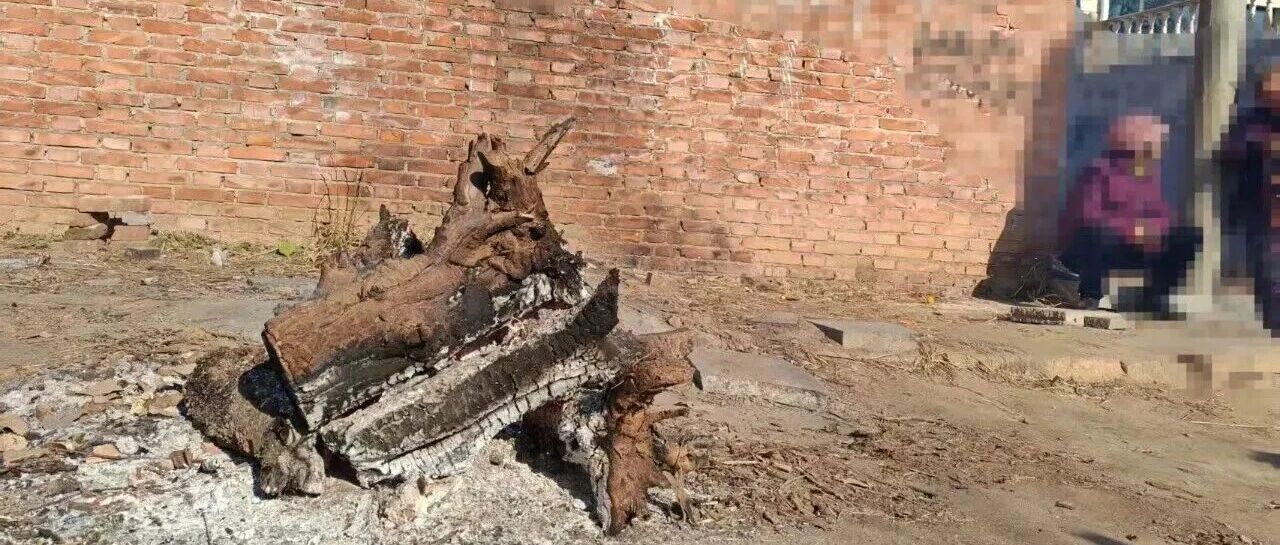
“不能采取鸵鸟政策视而不见”:专家呼吁给河北农民取暖留一线余地
凤凰网财经· 2026-01-09 06:42
Core Viewpoint - The article highlights the heating difficulties faced by farmers in Hebei due to the transition from coal to gas for winter heating, emphasizing the need for a sustainable solution that balances air quality improvement and farmers' heating needs [1][3][4]. Group 1: Heating Challenges - Many farmers in rural Hebei are reluctant to use natural gas for heating due to high costs, leading to a situation where they are unable to heat their homes adequately [1][3]. - The transition from coal to gas has not been accompanied by sufficient infrastructure improvements, leaving farmers without reliable heating options [22][23]. Group 2: Policy Recommendations - Experts suggest that transitional measures should be implemented, allowing the use of cleaner coal alternatives and biomass fuels to ease the burden on farmers [7][8][12]. - There is a call for the government to provide ongoing subsidies and support for energy-efficient home renovations to reduce heating costs for farmers [20][22]. Group 3: Economic and Technical Support - The article stresses the importance of reallocating atmospheric governance funds to support winter heating for farmers, indicating that current funding is not effectively utilized [16][17]. - A regional economic and technical support mechanism is recommended to ensure that rural areas receive the necessary resources for clean heating solutions [16][17]. Group 4: Infrastructure and Supply Issues - The article points out that local governments have not adequately addressed the infrastructure needed for reliable gas supply, leading to potential shortages during peak demand [23][25]. - The dominance of local natural gas companies over electricity providers has influenced the heating choices made by farmers, often to their detriment [24].

北京PM2.5年均浓度首次“破30”,北京大气治理成果带来哪些启示?
Zhong Guo Huan Jing Bao· 2026-01-09 03:28
Group 1 - Beijing achieved a significant milestone in air pollution control, with PM2.5 annual average concentration reaching 27.0 micrograms per cubic meter by 2025, marking a breakthrough as it is the first time it falls below 30 [1] - The number of days with good PM2.5 levels reached 348, an increase of 144 days compared to 2013, with the good air quality ratio rising from 55.9% to 95.3% [1] - The city has implemented a comprehensive strategy since 2013, focusing on reducing coal pollution, with a cumulative reduction of 13 million tons of coal by 2017 [1] Group 2 - Beijing utilized a data-driven approach to tackle pollution, identifying four major sources: vehicles, coal, industry, and dust, and continuously refining strategies based on data analysis [2] - A three-dimensional monitoring network was established, leveraging artificial intelligence for intelligent regulation, which includes automatic identification of violations in construction sites [2] - Collaborative pollution control mechanisms were developed with surrounding provinces, promoting a unified approach to air quality management [2] Group 3 - The achievement of 348 good air quality days reflects over a decade of persistent efforts in air pollution control, showcasing the commitment of various stakeholders including government, businesses, and citizens [3] - Continuous improvements in pollution control measures have been noted, with a focus on maintaining long-term efforts to ensure sustainable air quality [3]
佳喆环保设备科研、设计、制造于一体生产商,为铸造厂提供一站式服务
Xin Lang Cai Jing· 2026-01-08 11:43
Company Overview - Hebei Jiazhe Environmental Protection Equipment Co., Ltd. is a comprehensive technology enterprise integrating research, design, production, sales, and operation and maintenance, introducing a complete set of technologies from Europe and the United States in industrial dust removal and household purification fields [1][15]. Product Offerings - The company focuses on the research and production of various environmental protection equipment, including catalytic combustion, zeolite rotary wheels, mobile spray booths, RCO, VOCs catalytic combustion, molecular sieve rotary wheels, pulse bag dust collectors, secondary activated carbon adsorption boxes, spray towers, cyclone towers, electric tar catchers, filter bag dust collectors, woodworking dust collectors, cyclone dust collectors, mobile spray paint booths, oil mist purifiers, industrial vacuum cleaners, workshop smoke dust treatment systems, workshop ventilation systems, and household purifiers [3][18]. Team and Customization - The company emphasizes team building, possessing its own design, production, construction, sales, and after-sales operation teams. It can design environmental protection equipment suitable for different customer site conditions based on the differences in customer working conditions, meeting various personalized needs [3][18]. Target Industries - The main service industries include foundry, spray booths, rubber factories, lost foam, casting lines, electric furnaces, core shooting machines, machinery, processing plants, packaging and gift box factories, shoe factories, material factories, mining, textile factories, automotive parts factories, printing factories, chemical, railway locomotives, automotive manufacturing, workshop dust and odor treatment equipment, and engineering machinery, addressing various organic waste gas treatment needs [3][18]. Business Philosophy - The company adheres to the business philosophy of "customer first, working together," and aims to contribute to air pollution control in China, eliminate environmental smog pollution, and improve the air quality of people's lives through innovation and quality [8][23].

“北京蓝”成“常态蓝”
Xin Lang Cai Jing· 2026-01-04 23:11
Core Viewpoint - Beijing's air quality has significantly improved, with PM2.5 annual average concentration projected to reach 27.0 micrograms per cubic meter by 2025, marking a historic low and a milestone in air pollution control efforts [1][3][8] Air Quality Improvement - PM2.5 annual average concentration is expected to decrease by 11.5% compared to the previous year, achieving a level below 30 micrograms for the first time [1][3] - Other major pollutants, including PM10, NO2, and O3, have also seen reductions of 11.1%, 8.3%, and 7.0% respectively, with all six monitored pollutants meeting national standards [2][3] - The number of days with good air quality is projected to reach 348, accounting for 95.3% of the year, the highest since monitoring began [1][2][4] Historical Context - Since 2013, PM2.5 levels have dropped from 89.5 micrograms per cubic meter to 27.0 micrograms per cubic meter, a reduction of 69.8% [3] - Heavy pollution days have decreased dramatically from 58 days in 2013 to just 1 day in 2025, a reduction of 98.3% [3] New Energy Vehicles - By 2025, the number of new energy vehicles in Beijing is expected to exceed 1.28 million, tripling from the end of the 13th Five-Year Plan [5] - New energy vehicles are projected to account for over 60% of new cars, with a focus on enhancing the structure of motor vehicles to achieve the best standards in the country [5] Green Initiatives - The city has implemented various green initiatives, including the creation of 1,803 "green" enterprises, representing 39.7% of total enterprises [6] - Measures to reduce volatile organic compounds (VOCs) and promote green upgrades in key industries are ongoing, contributing to a continuous decline in environmental VOCs [6][7] Future Plans - Over the next five years, Beijing aims to integrate air pollution control into broader economic and social development, focusing on a green transition and collaborative efforts to reduce emissions [7] - The "0.1 microgram" action plan will be a key strategy to maintain and enhance air quality [7]
精抓细抠到0.1微克 北京“抠”出常态蓝
Xin Lang Cai Jing· 2026-01-04 19:01
Core Viewpoint - Beijing has achieved significant improvements in air quality by 2025, with PM2.5 annual average concentration dropping to 27 micrograms per cubic meter, marking a milestone in air pollution control efforts [3][4][6]. Group 1: Air Quality Improvements - The annual average concentration of PM2.5 in Beijing decreased by 11.5% compared to the previous year, achieving a level below 30 micrograms for the first time [3][4]. - The number of days with good air quality reached 311, an increase of 21 days year-on-year, resulting in a good air quality rate of 85.2% [3][4]. - The number of heavy pollution days was reduced to 1, the lowest since monitoring began, down from 58 days in 2013, representing a reduction of 98.3% [4][6]. Group 2: Pollution Reduction Metrics - Major pollutants saw significant reductions: PM2.5 down 69.8%, PM10 down 55.6%, NO2 down 60.7%, and SO2 down 84.9% from 2013 levels [4][6]. - PM2.5 good air quality days increased from 55.9% in 2013 to 95.3% in 2025, with a notable stretch of 227 consecutive days of good PM2.5 levels from March to October 2025 [4][6]. Group 3: Strategies and Technologies - Beijing's air quality improvement is attributed to precise pollution control measures, including the "1 microgram" and "0.1 microgram" action plans, focusing on meticulous pollution source management [6][7]. - The city has implemented a comprehensive air quality monitoring network, integrating data from various sources to enhance pollution tracking and response capabilities [7][10]. - Local emission reductions contributed over 50% to air quality improvements, with regional cooperation accounting for 30%-40% of the progress [8][9]. Group 4: Future Challenges and Goals - Future air quality management will face challenges due to weather variability, necessitating continued efforts in emission reductions and technological advancements [10][12]. - The revised air quality standards set for 2026-2030 will require PM2.5 annual and daily limits of 30 and 60 micrograms per cubic meter, respectively, pushing for further improvements [11][12]. - The goal is to transition from "luxury blue skies" to "everyday blue skies," aiming for air quality to become a standard aspect of daily life [11][12].
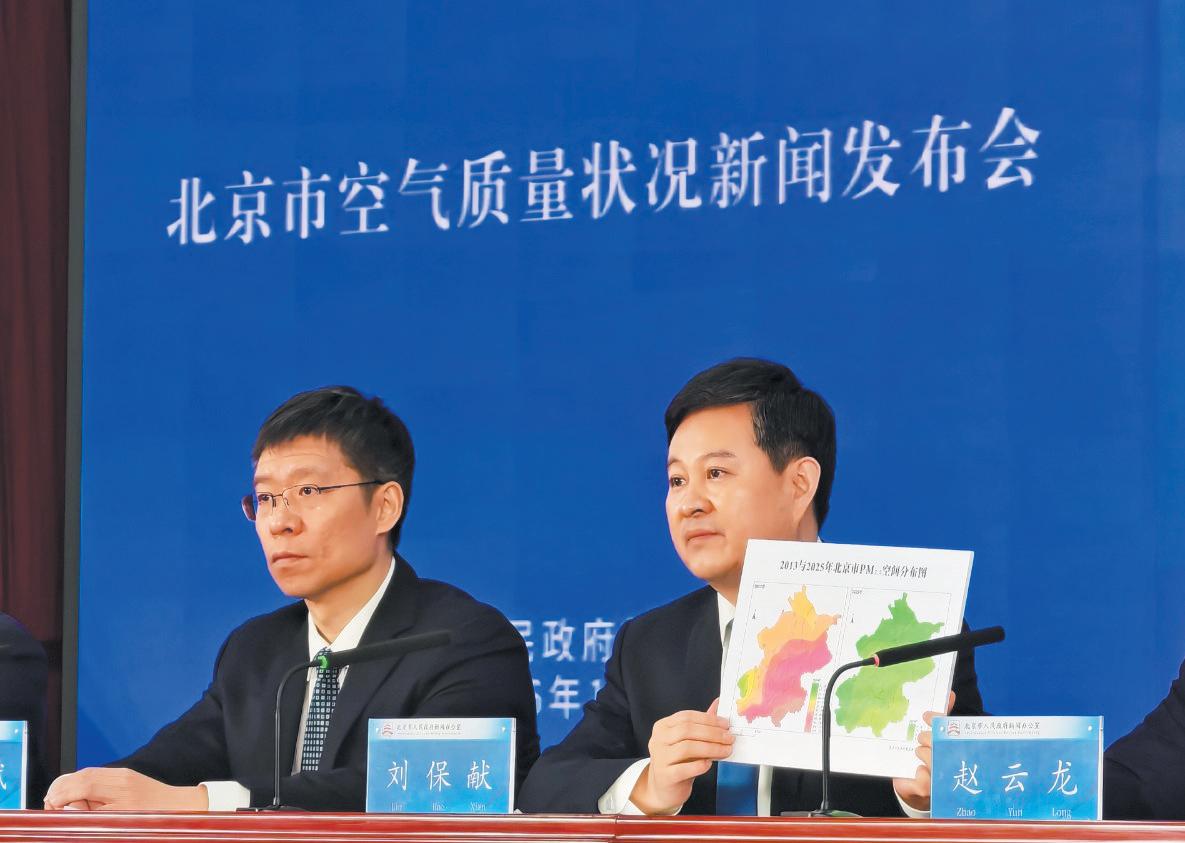
27.0微克/立方米!2025年北京市PM2.5年均浓度首次“破30”
Xin Lang Cai Jing· 2026-01-04 05:31
Core Insights - Beijing has achieved significant improvements in air quality, with PM2.5 annual average concentration dropping below 30 micrograms per cubic meter for the first time, reaching 27.0 micrograms per cubic meter, marking an 11.5% year-on-year decrease [2][3] - The proportion of days with good air quality has exceeded 80% for the first time, reaching 85.2%, with 311 days classified as good air quality in 2025, an increase of 21 days from the previous year [5] - All six major pollutants have met national standards, indicating a comprehensive achievement in air quality compliance [3][6] Group 1 - The annual average PM2.5 concentration in Beijing has decreased from 89.5 micrograms per cubic meter in 2013 to 27.0 micrograms per cubic meter in 2025, representing a reduction of 69.8% [5] - During the 14th Five-Year Plan period, the PM2.5 annual average concentration has consistently met national standards and reached new lows, with a further 30% reduction from 2020 to 2025 [5][6] - The number of heavy pollution days in 2025 was only 1, which is the lowest recorded since monitoring began, showing a decrease of 1 day compared to the previous year [5]
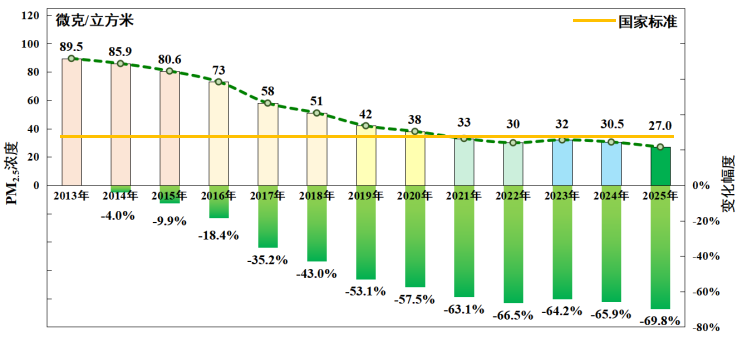
27微克/立方米!2025年北京市PM2.5年均浓度首次降至30以下
Xin Lang Cai Jing· 2026-01-04 04:34
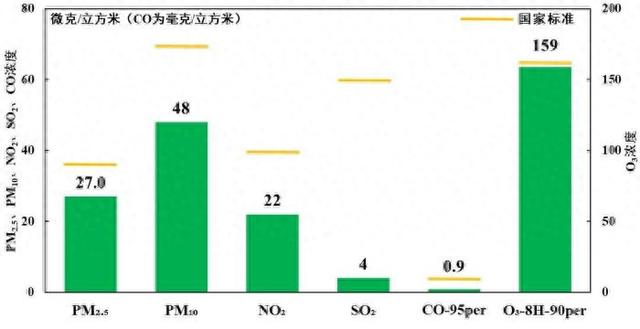
Core Insights - Beijing has achieved a significant milestone in air quality improvement, with the annual average concentration of PM2.5 dropping below 30 micrograms per cubic meter for the first time, recorded at 27.0 micrograms per cubic meter in 2025 [2][3] - The proportion of days with good air quality has exceeded 80% for the first time, reaching 85.2%, with a total of 311 days classified as good air quality in 2025 [3] - The reduction in PM2.5 concentration represents a 69.8% decrease from 2013 levels, showcasing a substantial improvement in air quality management [3] Air Quality Improvement Metrics - The annual average PM2.5 concentration decreased from 89.5 micrograms per cubic meter in 2013 to 27.0 micrograms per cubic meter in 2025, marking an 11.5% year-on-year decline [3] - Other major pollutants also saw improvements: PM10 at 48 micrograms per cubic meter (down 11.1%), NO2 at 22 micrograms per cubic meter (down 8.3%), and O3 at 159 micrograms per cubic meter (down 7.0%) [3] - Sulfur dioxide (SO2) and carbon monoxide (CO) concentrations remained at low levels of 4 micrograms per cubic meter and 0.9 milligrams per cubic meter, respectively [3] Future Goals and Strategies - The Beijing Municipal Ecological Environment Bureau emphasizes the importance of collaborative efforts and regional cooperation in achieving sustained air quality improvements [4] - The city plans to integrate air pollution prevention into broader economic and social development strategies, focusing on green transformation and coordinated efforts to reduce pollution and carbon emissions [4] - Future initiatives will include the "0.1 microgram" action plan aimed at consolidating the achievements in air quality and promoting a "beautiful blue" vision for Beijing [4]

2025年北京PM2.5年均浓度首次“破30” 蓝天成常态
Xin Lang Cai Jing· 2026-01-04 03:30
Core Insights - Beijing's PM2.5 annual average concentration reached 27.0 micrograms per cubic meter in 2025, marking a significant milestone as it is the first time it has fallen below 30 micrograms, representing an 11.5% year-on-year decrease [2][4] - The air quality in Beijing achieved comprehensive compliance with national standards, with all six major pollutants meeting the required levels [2][4] Group 1: Air Quality Improvement - The annual average concentrations of other major pollutants also improved, with PM10 at 48 micrograms, NO2 at 22 micrograms, and O3 at 159 micrograms, showing year-on-year decreases of 11.1%, 8.3%, and 7.0% respectively [2] - Sulfur dioxide (SO2) and carbon monoxide (CO) concentrations remained extremely low at 4 micrograms per cubic meter and 0.9 milligrams per cubic meter [2] Group 2: Days of Good Air Quality - The number of days with good air quality reached 311 in 2025, an increase of 21 days compared to the previous year, resulting in a good air quality rate of 85.2%, the highest since monitoring began [4] - The number of heavy pollution days decreased to just 1 day in 2025, down from 58 days in 2013, reflecting a 98.3% reduction [8] Group 3: Long-term Trends - Since 2013, PM2.5 levels have shown a long-term improvement, decreasing from 89.5 micrograms per cubic meter to 27.0 micrograms per cubic meter, a reduction of 69.8% [6][8] - During the "14th Five-Year Plan" period, PM2.5 levels have consistently met national standards for five consecutive years, with a further 30% reduction from 2020 to 2025 [6]
27微克/立方米,去年北京PM2.5年均浓度首次“破30”
Xin Jing Bao· 2026-01-04 02:21
Core Viewpoint - In 2025, Beijing achieved significant improvements in air quality, with PM2.5 annual average concentration dropping below 30 micrograms per cubic meter for the first time, marking a milestone in air pollution control efforts [1] Group 1: Air Quality Improvements - The annual average concentration of PM2.5 in Beijing reached 27 micrograms per cubic meter, a year-on-year decrease of 11.5% [1] - The proportion of days with good air quality exceeded 80%, reaching 85.2% [1] - Other major pollutants also showed improvement, with PM10, NO2, and O3 concentrations at 48 micrograms per cubic meter, 22 micrograms per cubic meter, and 159 micrograms per cubic meter, respectively, reflecting year-on-year declines of 11%, 8.3%, and 7.0% [1] Group 2: Compliance with Standards - All six monitored pollutants met national standards, indicating comprehensive compliance with air quality regulations [1] - SO2 and CO concentrations remained at very low levels of 4 micrograms per cubic meter and 0.9 milligrams per cubic meter, respectively [1]
市委召开月度工作点评会,尹力现场点评市民政局、市人力社保局、市住房城乡建设委、市卫生健康委、市市场监管局工作
Xin Lang Cai Jing· 2025-12-30 10:51
Group 1 - The meeting highlighted the importance of various city departments in improving public welfare and meeting citizens' needs, focusing on employment, elderly care, healthcare, and housing [3] - The Civil Affairs Bureau is enhancing the elderly care service network, with over 90% of urban and rural communities covered by meal assistance points, while also addressing the needs of vulnerable children [2] - The Human Resources and Social Security Bureau is implementing employment policies and has received recognition for its pension insurance work, but there are still shortcomings in social security fund oversight and protecting new employment groups [2] - The Housing and Urban-Rural Development Committee is promoting stable real estate market development and has exceeded annual targets for affordable housing, but faces challenges in urban renewal and regulatory responsibilities [2] - The Health Commission is optimizing health services for children and the elderly, achieving nationwide leadership in primary healthcare indicators, but needs to improve service quality and support for the health industry [2] - The Market Supervision Administration is enhancing food safety regulations and consumer rights protection, but still has gaps in regulating new business models and preventing corruption in key positions [2] Group 2 - The meeting addressed the need for a robust regulatory framework for rural collective economies and prepaid consumption in the service industry, emphasizing the importance of enterprise responsibility and inter-departmental collaboration [4] - The city is committed to environmental goals, including stringent pollution reduction measures and waste classification improvements, with a focus on community engagement and departmental accountability [4] - Preparations for the New Year and Spring Festival include ensuring essential services and public safety, enhancing cultural activities, and addressing community concerns about corruption and environmental issues [5]