
对外贸易

Search documents
受权发布 | 中华人民共和国对外贸易法
Xin Hua She· 2025-12-27 13:39
Core Points - The law aims to promote high-level opening-up and high-quality development of foreign trade, maintain trade order, protect the legitimate rights and interests of trade operators, and safeguard national sovereignty, security, and development interests [1]. Group 1: General Principles - The law applies to foreign trade and related intellectual property protection [2]. - Foreign trade is defined as the import and export of goods, technology, and international service trade [3]. - Foreign trade work should serve national economic and social development and promote the construction of a strong trading nation [4]. - The State Council is responsible for overseeing national foreign trade work [5]. Group 2: Trade Operators - Foreign trade operators are defined as individuals or organizations that engage in foreign trade activities in accordance with the law [9]. - Operators must obtain qualifications for foreign labor cooperation and comply with relevant regulations for foreign contracting projects [10]. Group 3: Import and Export Regulations - The state allows the free import and export of goods and technology, except as otherwise provided by law [16]. - The State Council may implement automatic licensing for certain goods based on monitoring needs [17]. - The state can prohibit or restrict the import and export of goods and technology for reasons such as national security and public interest [14][15]. Group 4: International Service Trade - The state encourages various modes of international service trade, including cross-border delivery and overseas consumption [27]. - The State Council manages international service trade in accordance with the law [28]. Group 5: Intellectual Property Protection - The state strengthens intellectual property protection related to foreign trade and can take measures against the import of goods that infringe on intellectual property rights [32][33]. Group 6: Trade Order - In foreign trade activities, operators must not engage in monopolistic or unfair competition practices [36]. - The law outlines specific prohibited behaviors, including forgery of origin marks and smuggling [37]. Group 7: Trade Investigation and Relief - The State Council can conduct investigations into foreign trade activities to maintain order and may take appropriate relief measures based on investigation results [41][44]. Group 8: Trade Promotion - The state formulates strategies to promote balanced development in foreign trade and supports the establishment of financial institutions for trade services [56][57]. - The state encourages the development of digital trade and green trade systems [61][62]. Group 9: Legal Responsibilities - Violations of the law can result in fines and restrictions on future trade activities [71][72]. Group 10: Miscellaneous Provisions - The law will take effect on March 1, 2026 [49].
受权发布丨中华人民共和国对外贸易法
Xin Hua Wang· 2025-12-27 12:55
Core Points - The law aims to promote high-level opening up of foreign trade, ensure high-quality development, maintain trade order, protect the legitimate rights of trade operators, and safeguard national sovereignty, security, and development interests [2][7]. Group 1: General Principles - The law applies to foreign trade and related intellectual property protection [3]. - Foreign trade is defined as the import and export of goods, technology, and international service trade [4]. - The work of foreign trade should serve the national economic and social development and promote the construction of a strong trading nation [5]. - The State Council is responsible for overseeing national foreign trade work according to this law [6]. Group 2: Trade Operators - Foreign trade operators are defined as individuals or organizations that engage in foreign trade activities in accordance with the law [10]. - Operators must obtain qualifications for foreign labor cooperation and comply with relevant regulations for foreign contracting projects [10]. Group 3: Import and Export of Goods and Technology - The state allows the free import and export of goods and technology, except as otherwise provided by law [13]. - The State Council may implement automatic licensing for certain goods based on monitoring import and export conditions [17]. - The state can prohibit or restrict the import and export of certain goods and technologies for reasons including national security [19][20]. Group 4: International Service Trade - The state encourages various modes of international service trade, including cross-border delivery and overseas consumption [27]. - The State Council manages international service trade in accordance with this law and other relevant regulations [28]. Group 5: Intellectual Property Protection - The state strengthens the protection of intellectual property related to foreign trade and may take measures against the import of goods that infringe on intellectual property rights [32][33]. Group 6: Trade Order - In foreign trade activities, operators must not engage in monopolistic or unfair competition practices [24]. - The law outlines specific prohibited actions, including forgery of origin marks and evasion of taxes [25]. Group 7: Trade Investigation - The State Council may conduct investigations into foreign trade activities to maintain order and assess impacts on domestic industries [27][30]. Group 8: Trade Remedies - The state can take appropriate trade remedy measures based on investigation results, including anti-dumping and countervailing measures [44][45]. Group 9: Trade Promotion - The state formulates strategies to promote balanced development in foreign trade and supports the establishment of financial institutions for trade services [56][57]. - The law encourages the development of digital trade and green trade systems [60][61]. Group 10: Legal Responsibilities - Violations of the law can result in fines and restrictions on future trade activities [71][72]. - The law specifies penalties for unauthorized import and export activities [41][43]. Group 11: Miscellaneous Provisions - The law will come into effect on March 1, 2026 [46].
对外贸易法全文发布,2026年3月1日起施行
Xin Lang Cai Jing· 2025-12-27 11:29
Group 1 - The law aims to promote high-level opening-up and high-quality development of foreign trade, maintain trade order, protect the legitimate rights and interests of foreign trade operators, and promote the healthy development of the socialist market economy [1] - The law applies to foreign trade and related intellectual property protection [2] - Foreign trade is defined as the import and export of goods, technology, and international service trade [3] Group 2 - The foreign trade work should serve the national economic and social development and promote the construction of a strong trading nation [4] - The State Council is responsible for overseeing national foreign trade work according to this law [5] - The country implements a unified foreign trade system, encourages the development of foreign trade, and maintains a fair and free trade order [6] Group 3 - The country establishes a compliance mechanism for trade policies that align with international rules [7] - China promotes and develops trade relations with other countries and regions based on the principle of equality and mutual benefit [7] - The country can take corresponding measures against any country or region that adopts discriminatory measures against China in trade [7] Group 4 - Foreign trade operators are defined as individuals or organizations that engage in foreign trade activities in accordance with the law [8] - Those engaged in foreign labor cooperation must obtain the necessary qualifications [9] - The state may implement state-run trade management for certain goods, allowing only authorized enterprises to conduct import and export business [9] Group 5 - The state permits the free import and export of goods and technology, except as otherwise provided by law [11] - The State Council may implement automatic licensing for certain goods based on monitoring import and export situations [11] - The state can prohibit or restrict the import and export of certain goods and technologies for reasons such as national security and public interest [13][14] Group 6 - The state encourages various models of international service trade, including cross-border delivery and overseas consumption [27] - The State Council manages international service trade in accordance with this law and other relevant regulations [28] - The state can prohibit or restrict international service trade for reasons such as national security and public health [29] Group 7 - The state strengthens intellectual property protection related to foreign trade and promotes international cooperation in this area [20] - Measures can be taken against the import of goods that infringe on intellectual property rights and harm trade order [21] - The state can take necessary measures against countries that do not provide adequate intellectual property protection for Chinese entities [21] Group 8 - The law prohibits monopolistic or unfair competition practices in foreign trade activities [22] - Specific behaviors that violate trade order, such as smuggling and tax evasion, are strictly prohibited [23] - The State Council can announce and take necessary measures against violations that harm foreign trade order [39] Group 9 - The state can take appropriate trade remedy measures based on the results of foreign trade investigations [44] - Anti-dumping measures can be implemented against products entering the market at below normal value that harm domestic industries [45] - Safeguard measures can be taken in response to a significant increase in imports that threaten domestic industries [48] Group 10 - The state supports the development of foreign trade by establishing financial institutions and improving insurance measures [56] - The state encourages the innovation of foreign trade models, including cross-border e-commerce [59] - The state promotes the digital development of foreign trade and supports the use of digital tools in trade activities [60]
武汉“十五五”规划建议:推动光电子、汽车等优势产品和工程设计等优势产业“走出去”
Jin Rong Jie· 2025-12-22 06:09
Core Viewpoint - The Wuhan Municipal Committee emphasizes the development of a strong foreign trade city through various initiatives aimed at enhancing international trade and supporting local enterprises in expanding their global reach [1] Group 1: Foreign Trade Development - The plan includes nurturing and expanding foreign trade entities, encouraging leading enterprises to develop new products for overseas markets [1] - Key industries such as optoelectronics and automotive are identified as advantageous sectors for international expansion [1] - The implementation of the "Thousand Enterprises, Hundred Exhibitions" market expansion plan aims to strengthen comprehensive foreign trade service platforms [1] Group 2: Support for Small and Medium Enterprises - The strategy promotes collaboration among small and medium enterprises (SMEs) to facilitate their entry into international markets [1] - There is a focus on innovating foreign trade formats, particularly in the development of cross-border e-commerce and market procurement trade [1] Group 3: Infrastructure and Service Expansion - The plan includes enhancing the layout of overseas warehouses to support international trade [1] - It aims to deepen the opening-up of the service sector and create national demonstration zones for service trade innovation and digital trade [1] Group 4: Trade Quality and Integration - The initiative seeks to improve the quality and increase the volume of goods trade [1] - Establishing a national import trade promotion innovation demonstration zone is part of the strategy [1] - The plan emphasizes the integration of domestic and foreign trade, fostering local trade platforms such as the "Han Trade Fair" [1]
【环球财经】今年前11个月吉尔吉斯斯坦经济增长10.2%
Xin Hua Cai Jing· 2025-12-15 15:12
Economic Growth - The GDP of Kyrgyzstan for the period from January to November is estimated at 1.6286 trillion som (approximately 18.6 billion USD), reflecting a year-on-year growth of 10.2% [1] - The economic growth is primarily driven by the production of goods, services, and net tax revenues [1] Sector Performance - The production of goods increased by 12% year-on-year [1] - The service sector experienced a growth of 8.9% [1] - Net tax revenues from products grew by 10.5% [1] - Industrial product output rose by 10% [1] - The construction industry saw a significant increase of 29% [1] - Agriculture, forestry, and fishing sectors grew by 2% [1] Trade Performance - The total foreign trade volume of Kyrgyzstan from January to October was 12.8035 billion USD, showing a year-on-year decline of 10.6% [1] - Exports decreased by 38.2% [1] - Imports saw a slight decline of 0.3% [1]
德国10月出口额环比增长0.1%
Zhong Guo Xin Wen Wang· 2025-12-10 01:00
Group 1 - In October 2025, Germany's export value increased by 0.1% month-on-month, reaching €131.3 billion, outperforming the expected decline of 0.5% [1] - The primary driver for the slight increase in exports was a recovery in trade within the European Union, with exports to EU countries rising by 2.7% to €76.3 billion [1] - In contrast, exports to non-EU countries decreased by 3.3% to €55.1 billion, and imports from non-EU countries fell by 5.4% to €53.4 billion [1] Group 2 - Germany's imports decreased by 1.2% month-on-month in October, totaling approximately €114.5 billion [1] - The export outlook for November showed a decline in the export expectations index from +2.2 points in October to -3.4 points, indicating a lack of sustainable recovery in the export sector [2] - The strong euro is viewed as a significant burden, making German goods more expensive in international markets [1]
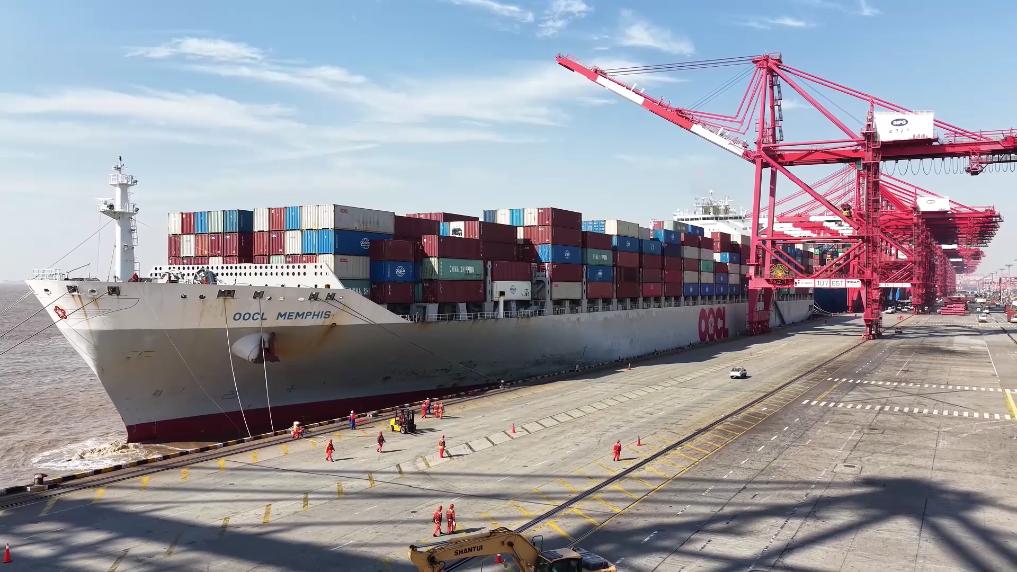
对外贸易“双向奔赴” “钱凯-上海”海运航线进出口货值突破50亿元
Xin Hua She· 2025-12-09 02:08
Core Insights - The "QianKai-Shanghai" shipping route has achieved a significant milestone, with import and export value surpassing 5 billion RMB, reaching 5.35 billion RMB as of December 4, and facilitating 197,000 tons of goods [1][3] - The shipping route has notably reduced the maritime transport time between China and Peru from 35-40 days to 23 days, resulting in over 20% savings in logistics costs [1] - In the first ten months of this year, the import and export value between Shanghai and Peru increased by 47.1% compared to the same period last year, establishing the route as a vital economic corridor between China and Latin American countries [1] Group 1 - The "QianKai-Shanghai" shipping route is set to celebrate its first anniversary, marking a year of successful operations [1] - The route has facilitated the direct shipment of over 5,948 domestic vehicles from Shanghai to QianKai Port in Peru since its inception [1][3] - A "green channel" for customs clearance has been established to ensure efficient processing of high-demand Peruvian products such as avocados and blueberries [3] Group 2 - The official opening of QianKai Port occurred on November 14, 2024, with the first container ship arriving at Shanghai Yangshan Port on December 18 of the same year [3]

克里姆林宫:印度将在对自身有利的情况下继续购买俄罗斯石油
Xin Lang Cai Jing· 2025-12-08 23:35
Core Viewpoint - India will continue to purchase Russian oil when it is beneficial for its economic interests, as stated by the Kremlin [1] Group 1: Economic Implications - The Kremlin emphasized that India, as a sovereign nation, will engage in foreign trade and energy procurement that serves its own interests [1] - The U.S. President Trump increased tariffs on Indian goods to 50% in August as a penalty for India's purchase of Russian oil [1] Group 2: Energy Supply - Russian President Putin assured uninterrupted fuel supply to India during his recent visit to New Delhi [1]
海关总署:前11个月与东盟贸易总值6.82万亿元 增长8.5%
Zheng Quan Shi Bao Wang· 2025-12-08 03:10
人民财讯12月8日电,海关总署12月8日发布的数据显示,前11个月,东盟为我第一大贸易伙伴,我与东 盟贸易总值6.82万亿元,增长8.5%,占我外贸总值的16.6%。欧盟为我第二大贸易伙伴,我与欧盟贸易 总值5.37万亿元,增长5.4%,占我外贸总值的13%。美国为我第三大贸易伙伴,我与美国贸易总值3.69 万亿元,下降16.9%,占我外贸总值的8.9%。 ...
海关总署:前11个月我与美国贸易总值3.69万亿元 下降16.9%
Di Yi Cai Jing· 2025-12-08 03:10
Group 1 - ASEAN has become the largest trading partner, with a total trade value of 6.82 trillion yuan, an increase of 8.5%, accounting for 16.6% of total foreign trade [1] - The EU is the second largest trading partner, with a total trade value of 5.37 trillion yuan, an increase of 5.4%, accounting for 13% of total foreign trade [1] - The US is the third largest trading partner, with a total trade value of 3.69 trillion yuan, a decrease of 16.9%, accounting for 8.9% of total foreign trade [1]