
经济走廊

Search documents
中国首条金砖城市跨境电商空运专线三年出口包裹超4700万件
Zhong Guo Xin Wen Wang· 2026-02-10 12:56
Core Insights - The "BRICS Special Line" for cross-border e-commerce air transport commenced on February 10, 2023, connecting Xiamen, China, and São Paulo, Brazil, facilitating significant trade growth [1] - Over three years, the special line has seen 708 round trips, handling 46,500 tons of goods and over 47 million cross-border e-commerce packages [1] - The line primarily exports clothing, daily necessities, and imports fresh produce such as grapes, cherries, and salmon from South America [1] Group 1 - The special line operates three flights weekly, managed by Ethiopian Airlines, enhancing trade ties between China and South America [1] - Customs has implemented advanced technologies like the "Air Logistics Public Information Platform" and intelligent CT scanning to improve regulatory efficiency and reduce handling costs [1] - Measures such as "on-site supervision" and "cargo area circulation" have been introduced to ensure zero delays in customs clearance [1] Group 2 - The customs authority has established a "green channel" for fresh goods, prioritizing declaration, review, inspection, and release to ensure timely market availability [2] - A total of 14,000 tons of fresh products have been imported through the BRICS Special Line over the past three years [3] - The customs aims to enhance regulatory services for the special line, leveraging the advantages of the largest cross-border e-commerce regulatory center in Fujian [3]
越南老街-河内-海防铁路项目部分工程开工建设
Xin Lang Cai Jing· 2025-12-20 05:45
Group 1 - The opening ceremony for the first phase of the Lao Cai-Hanoi-Haiphong railway project took place on the 19th in Lao Cai province, Vietnam, with four sub-venues along the railway line [1] - The project aims to deepen the comprehensive strategic partnership between Vietnam and China, establishing a significant economic corridor that will inject new growth momentum into the regions along the route [1] - The main line of the railway project exceeds 390 kilometers in length, connecting northern provinces of Vietnam with the southwestern region of China, with design speeds of 160 km/h for the Lao Cai to Haiphong segment, 120 km/h for the Hanoi hub section, and 80 km/h for other sections [1] Group 2 - The implementation of the railway project is expected to break geographical barriers, significantly enhance cross-border transportation capacity, reduce logistics costs, and facilitate economic circulation, thereby providing strong support for the economic development of both countries [1] - The first phase of the project primarily involves the construction of infrastructure for stations and station squares along the route [1]
对外贸易“双向奔赴” “钱凯-上海”海运航线进出口货值突破50亿元
Xin Hua She· 2025-12-09 02:08
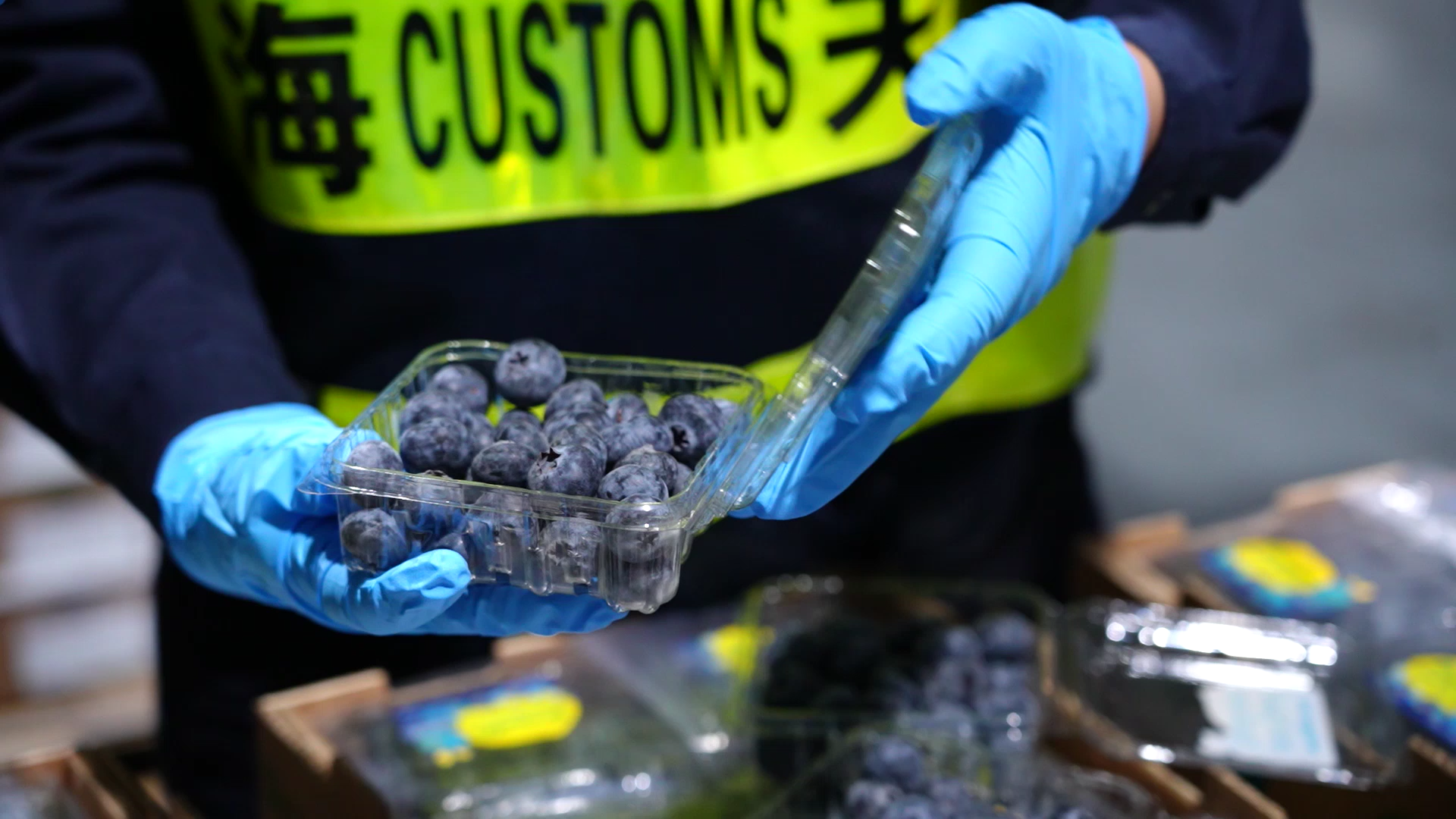
Core Insights - The "QianKai-Shanghai" shipping route has achieved a significant milestone, with import and export value surpassing 5 billion RMB, reaching 5.35 billion RMB as of December 4, and facilitating 197,000 tons of goods [1][3] - The shipping route has notably reduced the maritime transport time between China and Peru from 35-40 days to 23 days, resulting in over 20% savings in logistics costs [1] - In the first ten months of this year, the import and export value between Shanghai and Peru increased by 47.1% compared to the same period last year, establishing the route as a vital economic corridor between China and Latin American countries [1] Group 1 - The "QianKai-Shanghai" shipping route is set to celebrate its first anniversary, marking a year of successful operations [1] - The route has facilitated the direct shipment of over 5,948 domestic vehicles from Shanghai to QianKai Port in Peru since its inception [1][3] - A "green channel" for customs clearance has been established to ensure efficient processing of high-demand Peruvian products such as avocados and blueberries [3] Group 2 - The official opening of QianKai Port occurred on November 14, 2024, with the first container ship arriving at Shanghai Yangshan Port on December 18 of the same year [3]

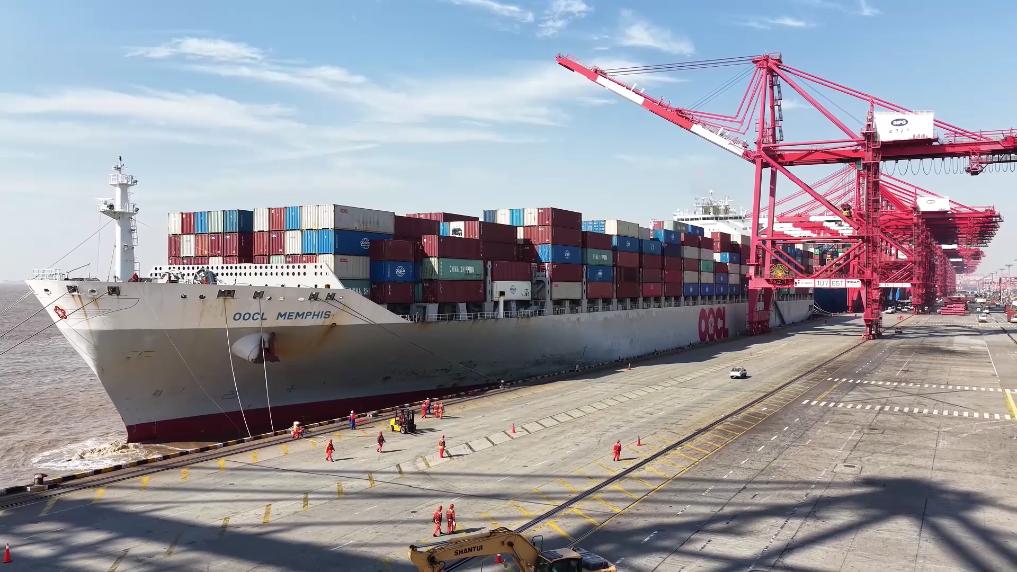
“中秘”海运航线进出口货值破50亿元,物流成本直降20%
Bei Ke Cai Jing· 2025-12-05 11:54
Core Insights - The "Qian Kai - Shanghai" shipping route has achieved an import and export value exceeding 5.3 billion yuan, with a total of 197,000 tons of goods traded, significantly boosting Shanghai's foreign trade with Peru by 47.1% in the first ten months of the year [1][2]. Group 1: Shipping Route Impact - The opening of the "Qian Kai - Shanghai" direct shipping route has reduced the shipping time between the two countries from 35-40 days to 23 days, resulting in over 20% savings in logistics costs for businesses [2][3]. - This route serves as an economic corridor between China and Latin American countries, enhancing trade relations [2]. Group 2: Trade Statistics - Peru's foreign trade has shown significant vitality, with export values increasing by 17.3% from January to September 2025, with China being the largest export destination [2]. - Approximately 42% of Peru's exports consist of agricultural products, including avocados and blueberries [2]. Group 3: Customs and Logistics - Shanghai Customs has implemented a "green channel" for high-time-sensitive goods like imported fruits, ensuring efficient customs clearance through a full-process supervision service model [3]. - The customs authority has introduced measures such as advance declaration and consolidated taxation to expedite document review and facilitate rapid inspection of goods [3]. Group 4: Automotive Exports - Since July, over 5,948 vehicles have been exported from Shanghai's South Port to Qian Kai Port in Peru, indicating a strong growth trend in automotive exports [6].
海湾国家如何用关键一招破解中东局势?
Hu Xiu· 2025-10-03 07:59
Core Insights - The article highlights the geopolitical implications of economic corridors in the Gulf region, emphasizing their role in trade, regional development, and geopolitical influence amidst shifting global dynamics [1][3][4]. Group 1: Economic Corridors Overview - The three major economic corridors discussed are the India-Middle East-Europe Corridor (IMEC), the Iraq Development Road Corridor (IDRC), and the Belt and Road Initiative (BRI) [1][7][10]. - IMEC aims to connect Indian manufacturing, Middle Eastern energy, and European markets, but faces challenges due to political resistance from Gulf and Arab nations regarding Israel's inclusion [1][7]. - IDRC seeks to establish a land bridge from Iraq's Basra to the Turkey-Iraq border, but its success is contingent on funding and regional stability, particularly concerning Iranian influence and Kurdish participation [10][11]. Group 2: Gulf States' Strategic Positioning - Gulf countries are leveraging their geographical advantages and capital reserves to position themselves as key players in a multipolar world, adopting a strategy of "active neutrality" [3][4]. - Significant infrastructure investments are being made, such as Saudi Arabia's $1.7 billion investment in Jeddah Port and the UAE's 900 km railway network, aimed at enhancing regional connectivity [4][5]. - Sovereign wealth funds in the Gulf, exceeding $1 trillion, are pivotal in diversifying economies and investing in emerging sectors like AI and cryptocurrency [5][6]. Group 3: Geopolitical Dynamics - The Gulf states are cautious in their participation in various economic corridors to avoid being drawn into the US-China rivalry, maintaining communication channels with multiple global powers [3][14]. - The article discusses the potential for economic corridors to create new trade routes and opportunities, particularly for previously isolated regions like Central Asia [15][16]. - However, the corridors face challenges such as geopolitical risks, funding issues, and the need for effective governance and transparency [16][19]. Group 4: Future Prospects and Digital Integration - The integration of digital technologies into economic corridors is transforming trade efficiency and infrastructure management, with Gulf states adopting AI and smart logistics [22][23]. - The shift towards digital payments is simplifying cross-border transactions and reducing reliance on traditional banking systems, positioning Gulf economies as innovative trade centers [23][24]. - Despite advancements, challenges remain in ensuring interoperability with global standards and addressing regulatory barriers that may hinder technological integration [23][24].
沙特加大力度加速经济走廊建设
Shang Wu Bu Wang Zhan· 2025-08-07 16:53
Core Insights - Saudi Arabia is set to play a crucial role in a major economic corridor project connecting India, the Middle East, and Europe, which is expected to reshape international trade dynamics and align with the "Vision 2030" framework [1] - The project was announced by Saudi Crown Prince Mohammed bin Salman during the 2023 G20 summit in New Delhi and involves a memorandum of understanding signed by Saudi Arabia, the US, India, UAE, France, Germany, Italy, and the EU [1] - The economic corridor aims to save time and costs by utilizing advanced infrastructure such as railways, seaports, energy pipelines, and data cables to connect three continents [1] Project Development - Saudi Energy Minister Prince Abdulaziz bin Salman emphasized the importance of the corridor project, stating that it should have been completed long ago and that Saudi Arabia is the primary drafter of the project [1] - Efforts since the signing of the memorandum in September 2023 have contributed to establishing a legal framework and infrastructure necessary for advancing the project's implementation [1]
中国社科院李向阳:“一带一路”形成真正的经济走廊分四个阶段
Xin Lang Cai Jing· 2025-07-31 12:55
Core Viewpoint - The development of the "Belt and Road" initiative is a dynamic process that can be divided into four distinct stages, as articulated by Li Xiangyang during a forum hosted by Renmin University of China [1] Group 1: Stages of Economic Corridor Development - The first stage focuses on the transportation corridor, characterized by infrastructure investments primarily in transportation, forming a narrow economic corridor [1] - The second stage involves urbanization, upgrading urban and rural infrastructure, promoting industrial development, improving the investment environment for small and medium enterprises, and increasing investments in tourism infrastructure to broaden the economic corridor [1] - The third stage centers on trade facilitation, enhancing the flow of cross-border goods, services, and personnel, thereby solidifying the economic corridor [1] - The fourth stage aims to coordinate the development plans and policies of different countries, resulting in a broader cross-border economic corridor [1]