平急两用

Search documents
金海湖将建国家级休闲旅游度假区
Xin Lang Cai Jing· 2026-01-11 21:21
Core Viewpoint - The approval of the "Beijing Pinggu District Jinhai Lake Town Land Spatial Planning (2020-2035)" aims to develop Jinhai Lake Town into a national-level leisure tourism resort, enhancing its economic growth through various initiatives [1][2]. Group 1: Development Plans - Jinhai Lake Town will focus on becoming a conference and exhibition town, a shopping and consumption town, and a distinctive tourism town, aiming to create a high-quality leisure tourism resort [1]. - The town is strategically located at the intersection of Beijing, Tianjin, and Hebei, covering an area of approximately 133 square kilometers and comprising 28 administrative villages [1]. - The planning includes strengthening industrial collaboration with Tianjin's Jizhou District and Hebei's Xinglong County, establishing a "Pingji Sanxing Conference Hall" to create a new cultural tourism landmark [1]. Group 2: Infrastructure and Cultural Development - The planning will enhance the leisure tourism industry by developing waterfront trails, scenic routes around the lake, and mountain greenways, aiming to create high-quality tourism and outdoor sports destinations [1]. - Jinhai Lake Town will leverage local cultural resources, focusing on the protection and utilization of historical sites like the Shangzhai Ruins, and promote the revitalization of the Ming Great Wall cultural heritage [2]. - The town will establish a "dual-use" rural revitalization area, which will serve as a leisure tourism hub during normal times and transform into an emergency service area during crises [2].
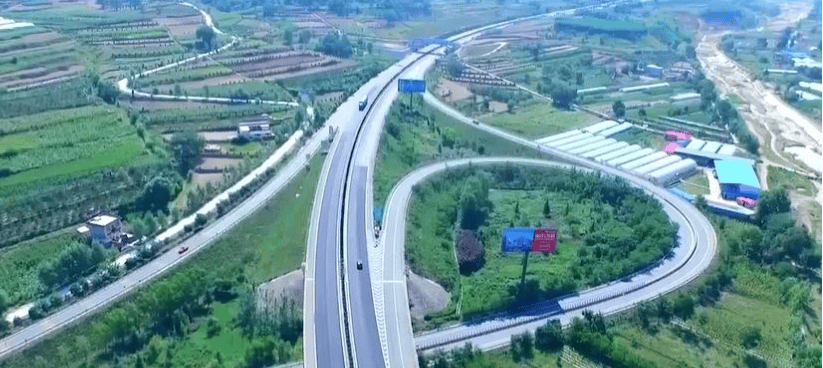
承平高速元旦零点通车,金海湖建成京津冀最大高速服务区
Xin Jing Bao· 2025-12-31 11:41
Core Viewpoint - The opening of the Chengping Expressway on January 1, 2026, will significantly shorten travel times between Beijing's Pinggu District, Tianjin's Jizhou District, and Hebei's Sanhe City and Xinglong County, enhancing regional connectivity and tourism opportunities [1][4]. Group 1: Infrastructure Development - The Chengping Expressway is a crucial axis for the integration of transportation in the Beijing-Tianjin-Hebei region, allowing for a driving time of just one hour from Sanhe and Pinggu to Chengde [3]. - The Jin Hai Lake Service Area, the largest in the Beijing and surrounding regions, is designed to serve both regular traffic and emergency needs, embodying the "dual-use" concept [2]. Group 2: Tourism Promotion - A joint initiative by the four regions has launched themed tourism routes, "Charming Pingji Sanxing for the New Year," integrating local cultural and tourism resources [3]. - The expressway will facilitate access to various attractions, including summer activities at Jin Hai Lake and winter sports at Yuyang International Ski Resort, promoting a "three-hour tourism circle" [4]. Group 3: Healthcare Collaboration - The four regions will collaboratively establish the "Jingdong Medical Center," enhancing cross-regional medical services and addressing critical healthcare challenges [5]. - The initiative includes the integration of 5G mobile healthcare and internet diagnosis technologies to create a comprehensive health service system [5].
向地下要空间 以融合促发展
Xin Lang Cai Jing· 2025-12-21 22:47
Core Viewpoint - The opening of the Zunyi Xingyue Mall represents a significant response to national policies aimed at enhancing urban development through the effective use of underground space, aligning with the strategic shift from "incremental expansion" to "quality enhancement" in urban planning [2][3][4]. Policy Guidance - The project aligns with the national directive of "dual-use" public infrastructure, addressing the challenges of limited above-ground space in Zunyi while enhancing urban safety and functionality [2][3]. - The development serves as a practical example of integrating emergency preparedness with commercial operations, adhering to national standards for civil air defense [3][4]. Urban Breakthrough - Zunyi Xingyue Mall utilizes underground space to alleviate the development constraints of the old city, achieving a multi-dimensional upgrade in space, function, and safety [5][6]. - The project spans 1.7 kilometers with a total area of 50,000 square meters, effectively connecting major urban roads and creating a commercial loop without increasing surface area [5][6]. Functionality Enhancement - The mall incorporates a "vertical city" concept, improving urban infrastructure while introducing diverse commercial offerings, including 305 brands, with over 130 new to Zunyi [6][7]. - It addresses urban infrastructure issues by upgrading underground utilities and enhancing public spaces, thus improving the overall urban environment [6]. Employment and Livelihood Support - The project has created approximately 1,500 job opportunities and supports over 100 entrepreneurs, fostering a model of "commercial empowerment for livelihoods" [7]. Ecological Construction - The "vertical city" model integrates various functions, promoting sustainable urban development through the combination of commercial, cultural, and civil defense elements [8][9]. - The project emphasizes green and efficient development, reducing ecological costs and supporting rural revitalization through direct supply models [9][10]. Demonstrative Significance - Zunyi Xingyue Mall serves as a model for urban renewal, demonstrating that effective underground space utilization can unlock significant potential without the need for large-scale demolition [10].

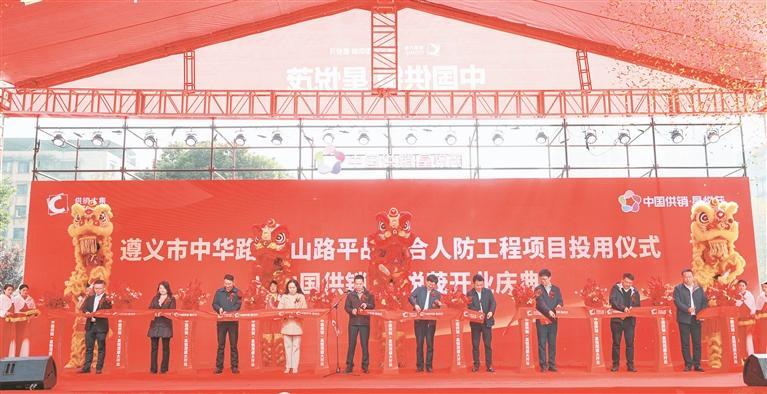
供销大集:公司构建“平时经营、急时保供”的现代化流通体系
Zheng Quan Ri Bao Wang· 2025-12-17 14:12
Core Viewpoint - The company is actively engaging in the construction of emergency material support and "dual-use" facilities, aligning with national strategies to enhance its service capabilities in both regular and emergency situations [1] Group 1: Business Strategy - The company is focusing on the development of a modern circulation system that supports material allocation during emergencies while maintaining regular operations [1] - The company is participating in the construction of a nationwide agricultural material circulation service network through the supply and marketing system [1] Group 2: Future Plans - The company plans to continue leveraging opportunities in the construction of "dual-use" public infrastructure to deepen business collaboration [1] - The company aims to enhance urban and rural service capabilities and emergency support capabilities [1]

北京将新增一座超百万平方米湿地公园
Xin Jing Bao· 2025-12-16 08:41
新京报讯 据"北京发布"微信公众号消息,在北京城市副中心东南部的台湖镇,将新增一座超百公顷的 湿地公园。 台湖04街区位于台湖高端总部基地附近,毗邻京津高铁亦庄火车站,也就是地铁17号线终点站——嘉会 湖站附近区域。日前,随着该区域最后一户滞留户完成拆除,"站前区蓄涝区工程项目"准备工作基本完 成,为全面启动工程建设奠定了坚实基础。 这片区域原本是台湖镇东南部的自然低洼地,核心承担雨水调蓄、滞涝防冲的功能——降雨集中时,周 边雨水会自然汇流至此临时储存,减少地表径流、缓解下游排水压力,避免"两站一街"(由地铁亦庄线 末端的亦庄火车站和次渠站,以及沿线商业街构成)及沿线区域内涝。 该工程以"防洪排涝+生态修复+平急两用"为核心定位,主要建设湖渠、退水节制闸、再生水补水管 道、生态植被、配套运营管理用房及配套管线等,总占地面积103.19公顷,其中蓄涝区水域面积约57.9 公顷,陆地面积约45.29公顷,建成后水体蓄涝容量将达116万立方米。 该工程建成后将实现多重实效:可有效解决台湖镇东南部"两站一街"项目等区域的雨水排除问题,完善 区域防涝体系,筑牢城市防洪安全防线;可恢复生态植被、改善区域生态环境,让昔日的 ...
永定河打造“平急两用”滨水空间
Bei Jing Qing Nian Bao· 2025-12-07 18:55
Core Viewpoint - The completion of the main project of the Yongding River Lusan section comprehensive improvement project significantly enhances flood control capabilities and creates a new leisure landmark for citizens [1][2]. Group 1: Project Overview - The Yongding River Lusan section project is part of the Haihe "23·7" flood recovery and reconstruction initiative, featuring innovative underground reinforced concrete anti-scouring walls [1]. - The project includes a 9.1-kilometer waterfront slow-moving system, expected to open to the public in April next year [1][2]. Group 2: Engineering Details - The comprehensive improvement project spans 17.4 kilometers from Lugou Bridge to Sanjiadian, addressing flood safety hazards such as insufficient height and severe erosion [2]. - The last reinforcement of the levee occurred in 1983, and the new design includes a 23-meter deep, double-wall π structure flood wall, capable of withstanding flood impacts of 16,000 cubic meters per second [2]. Group 3: Community Impact - The project adopts a "dual-use" concept, allowing for both flood control and public recreational use, with the levee top serving as a pathway for citizens [2]. - The Yongding River Ji, located within the project area, has become a popular leisure space, attracting over ten thousand visitors on weekends since its opening [3].
永定河左堤套上“护盾铠甲”
Bei Jing Ri Bao Ke Hu Duan· 2025-12-05 22:52
Group 1 - The core viewpoint of the news is the completion of the main structure of the Yongding River Lusan section comprehensive improvement project, which significantly enhances flood control capabilities and creates a new leisure landmark for citizens [2][3]. - The Yongding River serves as an important flood protection barrier for the western part of the capital, with the Lusan section being a critical area that has not been reinforced since 1983, thus necessitating this comprehensive improvement project [3]. - The project includes the construction of an underground reinforced concrete anti-erosion wall, which can withstand floods of up to 16,000 cubic meters per second, greatly improving the flood safety level of the left bank of the Yongding River [3]. Group 2 - The design incorporates a "dual-use" concept, allowing the top of the embankment to be utilized for both flood emergency vehicles during flood seasons and as a walking path for visitors during normal times, connecting various parks and scenic spots [4]. - The overall progress of the Yongding River Lusan section comprehensive improvement project has reached 80%, with plans for completion by April 2026, including the installation of greenery and auxiliary facilities [4]. - The renovated Yongding River left bank has become a popular destination for young people, featuring 11 creatively designed brand spaces that integrate culture, creativity, dining, and outdoor activities, attracting up to 10,000 visitors daily [5]. Group 3 - The ancient irrigation project of the Yongding River is set to initiate multiple protection and utilization projects, aiming to revitalize water heritage and enhance cultural value [6][7]. - The core ancient irrigation channel, Fuzhengtai, will be developed into a narrative axis that combines technical education, spiritual heritage, and ecological experiences, with plans for various interactive installations [7]. - The establishment of a work station for the Yongding River ancient irrigation world heritage project will focus on research and development, aiming to produce actionable and translatable research outcomes [7].
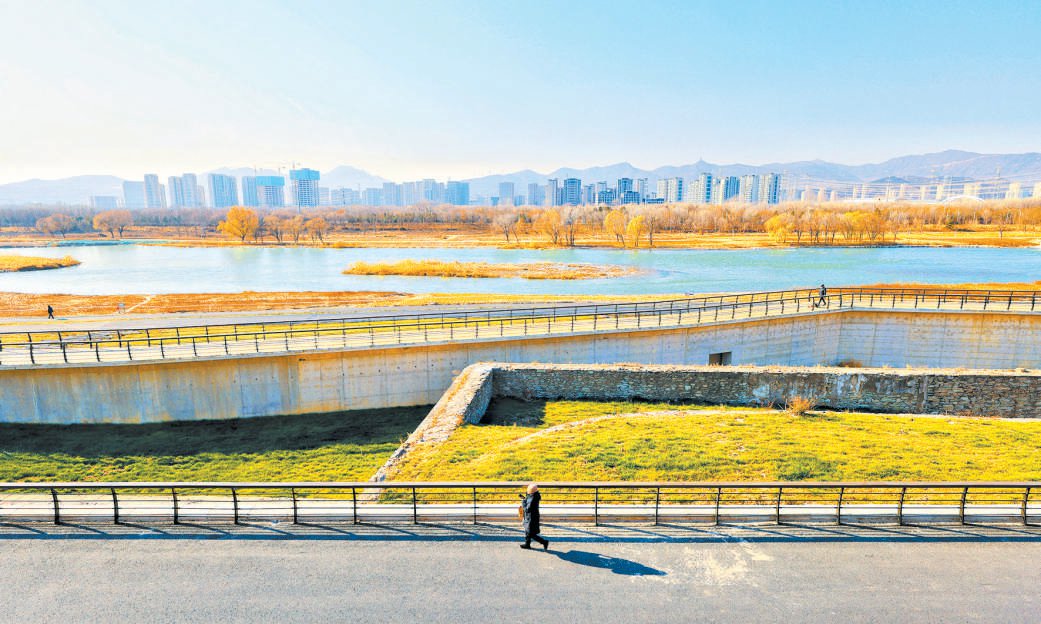
打造“平急两用”滨水空间,永定河卢三段综合提升工程主体完工
Bei Jing Ri Bao Ke Hu Duan· 2025-12-05 09:56
Core Viewpoint - The Yongding River Lusan Section Comprehensive Improvement Project has recently completed its main structure, significantly enhancing flood control capabilities and creating a new leisure landmark for citizens [1][3]. Group 1: Project Overview - The project is part of the Haihe "23·7" flood disaster recovery and reconstruction efforts, featuring the construction of underground reinforced concrete anti-erosion walls to improve flood protection on the left bank of the Yongding River [1][3]. - The Yongding River Lusan Section, which stretches 17.4 kilometers from Sanjiadian to Lugou Bridge, has not been reinforced since 1983, indicating a significant need for upgrades due to aging infrastructure [3][9]. - The improvements will enable the levee to withstand floods of up to 16,000 cubic meters per second, greatly enhancing flood safety levels on the left bank [3][9]. Group 2: Innovative Features - The project includes the innovative development of a vertical protective structure for the anti-erosion wall, which is 0.8 meters thick and designed to shield the levee from high-velocity water flow [5]. - The design incorporates a "dual-use" concept, allowing the levee top to serve both as a flood response route and a recreational space for the public [5]. Group 3: Community Impact - The area has transformed into a popular leisure destination, with the Shougang Park section attracting up to 10,000 visitors daily since its opening [6][8]. - Future plans include expanding the recreational space to 60,000 square meters for winter activities and enhancing family-friendly features [8]. - The project emphasizes historical preservation, integrating elements like the historical irrigation canal into the design [8]. Group 4: Future Developments - A 9-kilometer pedestrian path along the Yongding River is planned to connect various parks and scenic spots, enhancing public access to the river [9]. - The overall progress of the Yongding River Lusan Section Comprehensive Improvement Project has reached 80%, with full completion expected by April 2026 [9].
甘肃(天水)国际陆港:省市重点项目建设超进度,保税与物流项目助力经济腾飞
Sou Hu Cai Jing· 2025-12-04 14:11
Core Viewpoint - Gansu (Tianshui) International Land Port is emerging as a significant engine for regional economic development, with construction progress exceeding expectations since its initiation in September 2022 [1][4]. Investment and Construction Progress - The cumulative fixed asset investment has significantly surpassed planned targets, with 51.79 billion yuan completed, accounting for 55.2% of total investment [6][9]. - Actual funds received for investment have achieved over 90% of planned targets, indicating strong interest from enterprises [1][4]. Multi-Modal Transport Hub - The multi-modal transport hub functionality is beginning to show, enhancing the efficiency of goods transportation through seamless integration of rail, road, and water transport [3][4]. - The construction of the bonded logistics center (Type B) is progressing well, with key facilities like the main office building and warehouses nearing completion, set to operate by January 2026 [3][4]. Infrastructure Development - Key transportation infrastructure, such as the Huangcheng Tunnel and Sanlu Two Bridges, has been completed, significantly reducing travel time and logistics costs, thus enhancing connectivity with surrounding regions [7][8]. - The road network's formation supports coordinated development among various functional areas within the land port, facilitating smoother movement of people and goods [8][9]. Economic and Social Impact - Improved transportation infrastructure is attracting more enterprises and investments, with strategic partnerships established with major logistics companies like JD.com [9]. - The development of the land port is enhancing local residents' quality of life by providing better access to education, healthcare, and cultural resources, while also fostering a vibrant commercial atmosphere [9].
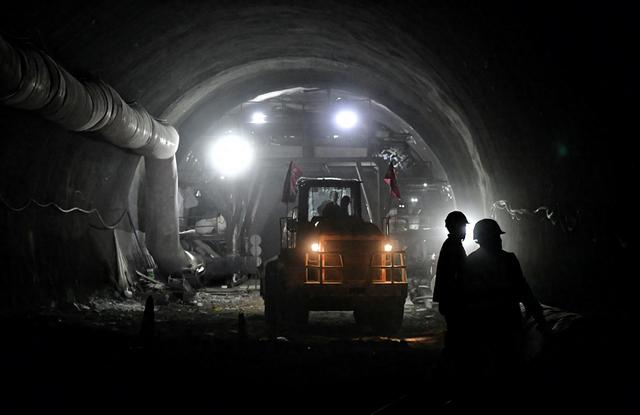
“平急两用”!京西“生命通道”最难标段三座隧道掘进过半
Bei Jing Ri Bao Ke Hu Duan· 2025-12-03 10:40
Core Points - The construction of the 108 New Line Expressway is progressing well, with a significant milestone achieved as 2,500 meters of tunnel excavation has been completed, marking over half of the total excavation [1][3] - The project is crucial for emergency response in the western mountainous areas of Beijing, especially after severe damage from extreme rainfall [7] Group 1: Project Overview - The 6th section of the 108 New Line Expressway spans 5.21 kilometers, starting from the west side of the Yanhe Road interchange and passing through several towns before reaching the Beijing-Hebei border [3] - This section is recognized as the most challenging due to its complex geology and strict ecological protection requirements [3] Group 2: Construction Progress - Three tunnels are being excavated simultaneously, with the Danmugang Tunnel's left and right openings completed, and the North Port Ditch Tunnel excavation reaching 646 meters [3][5] - The construction team has adopted strategies to manage challenges such as loose rock and water ingress, including advanced forecasting and drainage techniques [5] Group 3: Importance of the Project - The 108 New Line Expressway is part of a broader network aimed at enhancing disaster resilience in the region, forming a vital transportation link for emergency situations [7] - The project is expected to improve the overall transportation system in the mountainous areas, providing both regular and emergency access [7]