数字资产化

Search documents
联易融2025年中期业绩:资产服务规模达2036亿元,启动全球贸易金融数字资产化战略
Ge Long Hui· 2025-08-26 10:59
Core Insights - 联易融科技集团 reported a supply chain asset service scale of 203.6 billion RMB and total revenue of 370 million RMB for the first half of 2025, with a 22% increase in core enterprise and financial institution clients to 1,352 [1][4] - The company launched a global trade finance digital asset strategy, introducing Digital Trade Token (DTT) and Asset Backed Token (ABT) as part of its "StableCoin+" initiative [1][12] - The company plans to repurchase at least 80 million USD worth of shares in the next 12 months, reflecting confidence in its growth strategies [1][15] Business Performance - The supply chain financial technology solutions processed a total of 203.6 billion RMB in assets, with the multi-level circulation cloud business growing by 54% year-on-year to 133.2 billion RMB [3] - The company added 244 new clients in the first half of 2025, achieving a client retention rate of 99% [4] Strategic Initiatives - The company is focusing on AI and digital assets as core strategies, enhancing its AI capabilities through partnerships with major domestic models and launching new applications [6][15] - Strategic acquisitions, such as the acquisition of Bait Technology, are aimed at broadening the product matrix and optimizing operational efficiency [6][7] International Expansion - The international business saw double-digit growth, with a focus on cross-border trade and e-commerce, helping over 1,100 small and medium-sized enterprises access digital financing services [9] - The company is establishing regional operation centers in the UK and the US to enhance its global trade corridor service network [9] ESG and Sustainable Finance - The company has assisted over 380,000 small and micro enterprises in accessing digital inclusive financial services, with an average financing cost of 2.86% [10] - The sustainable supply chain asset scale reached 29 billion RMB, a 97% increase year-on-year, reflecting the company's commitment to ESG principles [10]
贝瑞基因携手京北方、国富量子,开启医疗大健康资产代币化新纪元
新财富· 2025-08-26 08:05
Core Viewpoint - The collaboration between Chengdu Berry Genomics Co., Ltd. and its partners aims to drive innovation in medical technology and industry upgrades through digital assetization, exploring RWA applications to reshape the global gene diagnostic asset value chain and maximize asset value [1][2]. Group 1: Company Overview - Berry Genomics focuses on technological innovation to advance precision medicine, utilizing high-throughput sequencing technology to create solutions across various fields, including reproductive health and genetic disease testing [2]. - The company has pioneered the clinical transformation of third-generation HiFi sequencing technology and has successfully launched multiple products, establishing a strong technological moat [2]. Group 2: Collaboration Details - The partners plan to use the stable revenue from Berry Genomics' third-generation HiFi sequencing production line and the technical service income from the GENOisi™ intelligent system as underlying assets for digital rights exploration and RWA tokenization [4]. - The project aims to quantify the value of the GENOisi™ intelligent system as a new type of digital asset, accelerating the integration of technology and capital, thereby injecting new momentum into the sustainable development of precision medicine [4]. Group 3: Future Directions - This collaboration represents a critical step in the digitalization of healthcare assets, standardizing data rights in the medical health sector and enhancing the quantification and circulation of new digital assets like AI intelligent systems [5]. - The company intends to deepen technical and resource collaboration with partners, actively exploring more digital paths for medical assets, contributing to the popularization of precision medicine, data value extraction, and the upgrade of the global healthcare ecosystem [5].



渣打香港上半年收入增26%,高管:香港经济较半年前更乐观
Nan Fang Du Shi Bao· 2025-08-01 04:47
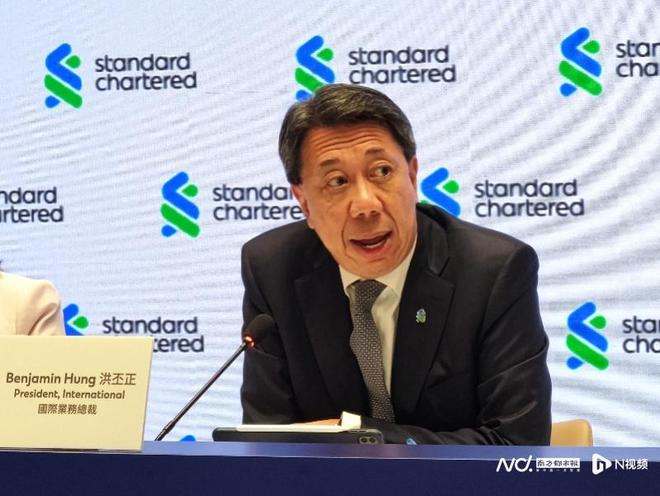
Group 1: Financial Performance - Standard Chartered Group reported record high revenue and profit in Hong Kong for the first half of 2025, with revenue increasing by 26% year-on-year to approximately $2.8 billion [1] - Operating profit before impairment and tax rose by 41% year-on-year, reaching about $1.6 billion, while credit impairment charges increased by 79% [1] - The bank's pre-tax basic profit increased by nearly 40% year-on-year to approximately $1.4 billion, with both major business segments achieving record high revenue and profit [1] Group 2: Business Segments - The "Wealth Management and Retail Banking" segment saw a 20% year-on-year revenue increase, driven by growth across various wealth management products and an increase in deposits [1] - The "Corporate and Investment Banking" segment's revenue increased by 27% year-on-year, primarily due to strong trading demand [1] Group 3: Future Outlook - The President of International Business at Standard Chartered emphasized a continued focus on cross-border business and wealth management, with digital assetization being essential to meet diverse client growth needs [3] - The Hong Kong government's estimated GDP growth rate for Q2 this year is 3.1%, with a more optimistic outlook for the economy compared to six months ago, particularly in the active financial market [3]
关税重压撕裂利润幻象,Lululemon股价暴跌逾两成
Sou Hu Cai Jing· 2025-06-07 03:10
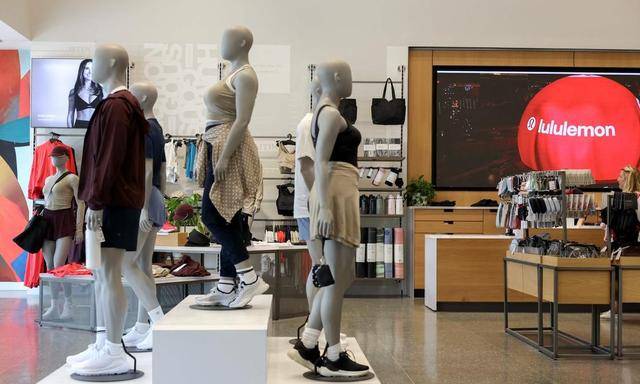
Core Viewpoint - Lululemon's stock experienced a significant drop of 23% following disappointing financial results, reflecting broader challenges in the American fashion supply chain due to rising operational costs and weak sales [1][3] Financial Performance - Lululemon's recent financial report showed both sales and profits falling short of expectations, particularly in the Americas market where comparable sales declined [3] - The company's high valuation bubble is being rapidly deflated as consumer spending tightens and price sensitivity increases, undermining its pricing power [3] Impact of Tariffs - The U.S. government's imposition of tariffs up to 30% on Chinese goods and additional tariffs on other Asian products has significantly increased costs for brands reliant on Asian supply chains, with Lululemon's CFO indicating a "major impact" on profit margins [3][5] - The broadening of tariff policies disrupts the entire supply chain, forcing brands to reassess their global production strategies amidst rising manufacturing costs [5] Structural Issues - Lululemon's stock decline highlights the vulnerability of high-valuation consumer brands in a changing macroeconomic environment, where even its core customers are cutting back on spending [5][6] - The brand's reliance on emotional value and perceived quality is being challenged by declining consumer confidence and rising credit defaults [5][6] Industry Context - Lululemon's struggles are indicative of a larger trend affecting the non-essential consumer goods sector, with major brands like Nike and Adidas also facing performance challenges [6] - The shift towards digital assets and the pressures from generative AI and the metaverse are creating strategic anxieties for traditional brands that depend on physical retail [6] Future Outlook - The current situation signals a shift in the fashion industry, where brands must navigate political risks and adapt to a new order prioritizing national security over globalization [8] - The recent tariff measures represent a systemic reconfiguration that could serve as a warning for brands dependent on global supply chains, emphasizing the need for resilience in the face of geopolitical tensions [8]