
文化多样性

Search documents
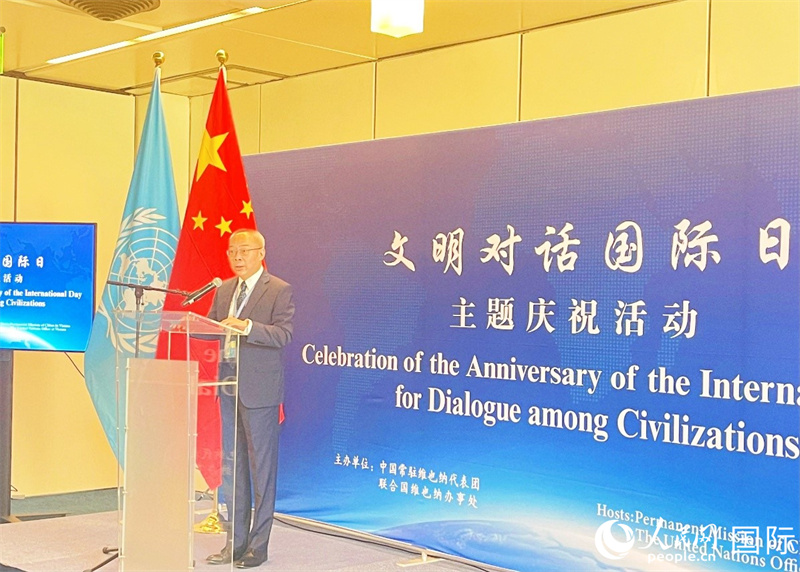
维也纳联合国举办“文明对话国际日”主题活动
人民网-国际频道 原创稿· 2025-06-12 05:41
Core Points - The event "International Day of Civilizational Dialogue" was co-hosted by the Chinese Permanent Mission to Vienna and the United Nations Office at Vienna, attended by over 300 guests including international organization leaders and representatives from various countries [1][5] - The Director-General of the UN Office at Vienna, Vali, praised China's leadership role in promoting civilizational dialogue and emphasized the importance of dialogue in the current complex international situation [1][3] - Chinese Ambassador Li Song highlighted China's initiative to promote global civilizational exchange and cooperation through multilateral platforms in Vienna, advocating for mutual respect and win-win cooperation [3] - The Pakistani representative, Malik, expressed appreciation for China's global civilizational initiative, aligning it with Pakistan's advocacy for cross-cultural dialogue and multilateral cooperation [3] - Austrian sinologist Li Xiaodong emphasized the significance of cross-cultural communication in fostering understanding and cooperation within the international community [3] - The event featured an exhibition titled "Civilization Declaration - A Beautiful Picture of a Community with a Shared Future for Mankind," showcasing the diversity and inclusivity of world civilizations [4] - Performances by artists from the Central Nationalities Orchestra, featuring traditional Chinese instruments, enriched the cultural atmosphere of the event [4]

非物质文化遗产保护论坛聚焦多样性呈现 完善分类 濒危项目优先保护
Jie Fang Ri Bao· 2025-06-06 01:41
Group 1 - The forum on intangible cultural heritage protection was held in Shanghai, emphasizing the collective responsibility of society and humanity in preserving these cultural resources [1] - The theme of the forum was "Diversity in the Presentation of Intangible Cultural Heritage Protection," focusing on various forms of intangible heritage and social participation mechanisms [1] - Experts from multiple countries shared their practices and explorations in areas such as inheritance mechanisms, digital innovation, public participation, and international cooperation [1] Group 2 - China has established a comprehensive four-level directory system for intangible cultural heritage, with over 100,000 projects listed at various administrative levels [2] - Current challenges in intangible heritage protection include imbalances in protection efforts, conflicts between commercialization and authenticity, and the need for improvements in the inheritance system [2] - The average age of national-level intangible cultural heritage representatives is over 65, indicating a lack of successors and insufficient support for the transmission of these cultural practices [2]
“用云南的非遗,来讲云南的大象”
Ren Min Ri Bao· 2025-05-12 22:21
Core Viewpoint - The establishment of a cultural heritage exhibition hall by the Yunnan Forest Fire Brigade aims to promote biodiversity conservation through the lens of local intangible cultural heritage, particularly focusing on the story of wild Asian elephants in Yunnan [1][2]. Group 1: Cultural Heritage and Biodiversity - The exhibition hall features over 50 pieces of intangible cultural heritage works, showcasing the diversity of Yunnan's culture while telling the story of elephant conservation [1]. - The largest piece in the exhibition is a 6.85-meter long and 1.85-meter wide embroidery titled "Northward Journey," created by 10 embroiderers over three months [1]. Group 2: Community Engagement and Visitor Experience - Since its opening, the exhibition has attracted a steady stream of visitors, many of whom initially came to learn about elephants but left with a newfound appreciation for Yunnan's intangible cultural heritage [2]. - More than 10 representatives of intangible cultural heritage have contributed their works to the exhibition, indicating strong community engagement and support for the initiative [2].
2025国际舞蹈日:中国古典舞登上联合国教科文组织官方账号封面
人民网-国际频道 原创稿· 2025-05-06 07:02
Core Viewpoint - The International Dance Day, celebrated on April 29, highlights the universal value of dance as a form of cultural expression and communication, promoting cultural diversity and dialogue among nations [2][3]. Group 1: International Dance Day Celebrations - The UNESCO International Dance Committee organized a series of celebrations in Paris, featuring dance artists and cultural representatives from around the world [1]. - Chinese classical dance, specifically the Han Tang dance, was selected as the cover image for the International Dance Day promotional materials, showcasing the beauty and influence of Chinese dance on the global stage [1]. Group 2: Significance of Dance - Dance serves as a dual language of body and soul, playing a crucial role in the transmission of intangible cultural heritage and fostering cultural diversity [2]. - The International Dance Day aims to enhance public awareness of dance as an art form, cultural expression, and educational tool, contributing to global sustainable development [3]. Group 3: Events and Discussions - An international dance seminar themed "Inheritance" was held, featuring over 50 experts from various regions discussing the experiences and wisdom of Chinese dance [2]. - A special exhibition titled "Dance, the Story of Inheritance" was launched, tracing the development of modern dance through historical documents and media [3]. Group 4: Role of the International Dance Committee - The International Dance Committee, established in 1973, serves as UNESCO's official advisory body in the field of dance, supporting global dance development [4]. - The committee is authorized under UNESCO's conventions to protect intangible cultural heritage and promote cultural diversity [4].
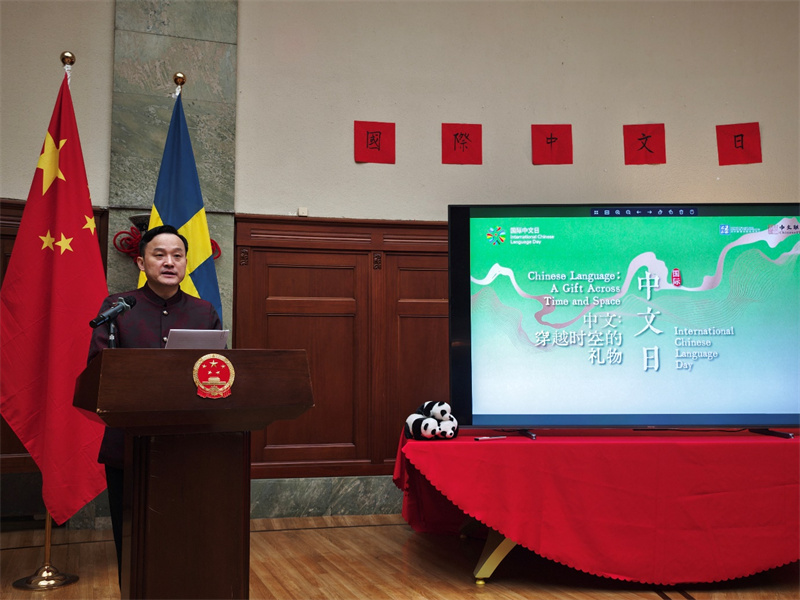
中国驻哥德堡总领馆举办国际中文日暨兰亭雅集主题开放日活动
人民网-国际频道 原创稿· 2025-04-27 07:52
Core Points - The event marked the first International Chinese Language Day and Lanting Gathering in Sweden, supported by the Chinese Consulate in Gothenburg and held at the Chinese Cultural Center in Stockholm [1] - The event aimed to promote cultural diversity and understanding through the Chinese language, emphasizing the importance of cultural exchange between China and Sweden [2] Group 1: Event Overview - The event attracted nearly a hundred participants, including language scholars, students from various Swedish universities, and members of the local Chinese community [1] - Activities included performances of traditional Chinese arts such as guzheng, chess, calligraphy, and various dance forms, showcasing the richness of Chinese culture [4][5][6] Group 2: Cultural Significance - The Consul General of Gothenburg, Yang Peidong, highlighted the significance of the Chinese language in fostering cultural understanding and bridging gaps between different cultures [2] - The event featured a lecture on the history of Chinese characters, detailing their evolution and cultural impact over thousands of years [2] Group 3: Participant Engagement - Attendees engaged in hands-on cultural experiences, such as playing chess, practicing calligraphy, and creating traditional crafts like lanterns and paper-cutting [9] - Participants expressed a desire for the Consulate to hold similar events annually to enhance local understanding of Chinese culture [13]
九年级下册道德与法治全册知识点
Sou Hu Cai Jing· 2025-04-26 13:15
Group 1 - The world today is characterized by openness, development, and close connections among nations [2][3][4] - Economic globalization is marked by global production and trade, enhancing product quality and reducing costs [5][6] - Positive impacts of economic globalization include better resource allocation and deeper economic interdependence among countries [6][7] Group 2 - The current world is experiencing a shift towards multipolarity, with significant changes in international power dynamics [14][15] - Multipolarity fosters international cooperation and democratic relations, promoting global peace and development [16][18] - Countries are increasingly engaged in both cooperation and competition, necessitating adherence to international rules [19][20] Group 3 - Maintaining world peace is crucial due to the historical costs of war and the value of peaceful development [25][26] - Countries should resolve disputes through peaceful negotiations and uphold mechanisms for peacekeeping [27][28] - The current global peace situation is stable overall, but localized conflicts and various threats persist [28][29] Group 4 - The concept of a community with a shared future for humanity emphasizes mutual responsibility and collective action to address global challenges [34][36] - Global issues include economic instability, poverty, terrorism, and climate change, requiring collaborative solutions [37][38] - China actively promotes a new type of international relations based on respect, fairness, and win-win cooperation [38][39] Group 5 - China's development is increasingly intertwined with global prosperity, highlighting its role as a responsible major power [46][47] - China contributes to global governance and development, particularly in areas like regional stability and environmental protection [47][48] - The nation emphasizes cooperation and mutual benefit in its international engagements, particularly through initiatives like the Belt and Road [73][74] Group 6 - Youth play a crucial role in exploring and engaging with the world, fostering understanding and collaboration across cultures [77][78] - The development of personal qualities and skills is essential for youth to contribute positively to society and the global community [86][87] - Emphasizing lifelong learning and adaptability is vital for youth to navigate the complexities of the modern world [108][109]