文明对话

Search documents
青春跃动处 文明满杭城
Hang Zhou Ri Bao· 2026-02-22 01:58
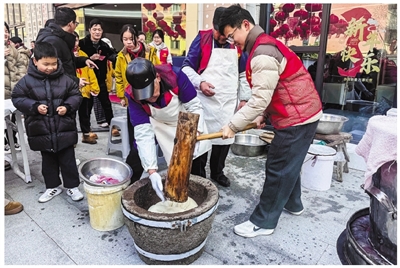
Group 1 - The core idea of the articles revolves around the engagement of university students in cultural and community activities during the Chinese New Year, showcasing a blend of traditional and modern practices [9][10][12][19] - University students are actively participating in various community events, such as organizing New Year fairs and cultural workshops, which enhance local cultural confidence and community spirit [10][11][17] - The activities include teaching traditional Chinese customs to international students, promoting cultural exchange, and fostering a sense of belonging among young people [15][16][18] Group 2 - The events highlight the integration of technology and tradition, such as the use of AI in cultural practices, which appeals to both younger and older generations [11][12] - Community engagement is emphasized through hands-on activities like making dumplings, writing Spring Festival couplets, and crafting traditional decorations, which strengthen neighborhood ties [14][17] - The initiatives reflect a broader trend of youth involvement in cultural preservation and innovation, indicating a shift in how traditional customs are celebrated in contemporary society [10][19]

首届新疆国际春晚,有这样一群外籍演员
Xin Lang Cai Jing· 2026-02-21 08:58
Core Viewpoint - The 2026 Xinjiang International Spring Festival Gala, themed "Harmony in Xinjiang, Spring Along the Silk Road," showcased a blend of domestic and international performers, highlighting cultural exchange and dialogue [1] Group 1: Event Overview - The gala took place on February 15 and featured outstanding domestic artists alongside foreign performers from Poland, Zimbabwe, Cameroon, and Portugal [1] - The event aimed to promote cultural exchange and understanding among different ethnic groups, reflecting a harmonious atmosphere in Xinjiang [1] Group 2: Participant Insights - Foreign performers expressed their admiration for Xinjiang's cuisine, culture, and scenic beauty, indicating a positive reception of the region [1] - Zimbabwean doctoral student Tungamirai Eric Mupona emphasized the significance of such events in fostering dialogue and cultural exchange, particularly in the context of the 2026 China-Africa Cultural Exchange Year [1]
“主动了解彼此的文化、价值观和生活方式”
Ren Min Ri Bao· 2026-02-19 01:52
Core Viewpoint - The cultural and tourism cooperation between Brazil and China is entering a more mature phase, driven by the strategic leadership of both countries' heads of state, with significant cultural exchanges enhancing bilateral relations [2]. Group 1: Cultural Exchange - Cultural exchanges between Brazil and China have been flourishing, creating a strong atmosphere of genuine interaction at the grassroots level [2]. - The upcoming "Brazil-China Cultural Year" in 2026 is expected to solidify this positive trend, serving as a milestone for deepening bilateral relations [2]. - The celebration of the Chinese New Year in Brazil has gained popularity, reflecting the increasing cultural exchange between the two nations [3]. Group 2: Tourism Cooperation - Cultural integration is driving the tourism cooperation between Brazil and China, facilitating mutual visits and enhancing the quality of exchanges [3]. - Brazil is projected to receive over 100,000 Chinese tourists in 2025, marking a historical record and highlighting China's potential as a key market for Brazil's tourism industry [3]. - The willingness of Brazilian tourists to visit China is also on the rise, indicating a prosperous trend in bilateral tourism exchanges [3]. Group 3: Future Prospects - The year 2026 is identified as a significant point for strengthening cultural exchanges between Brazil and China, promoting a more open and inclusive global cooperation concept [4].

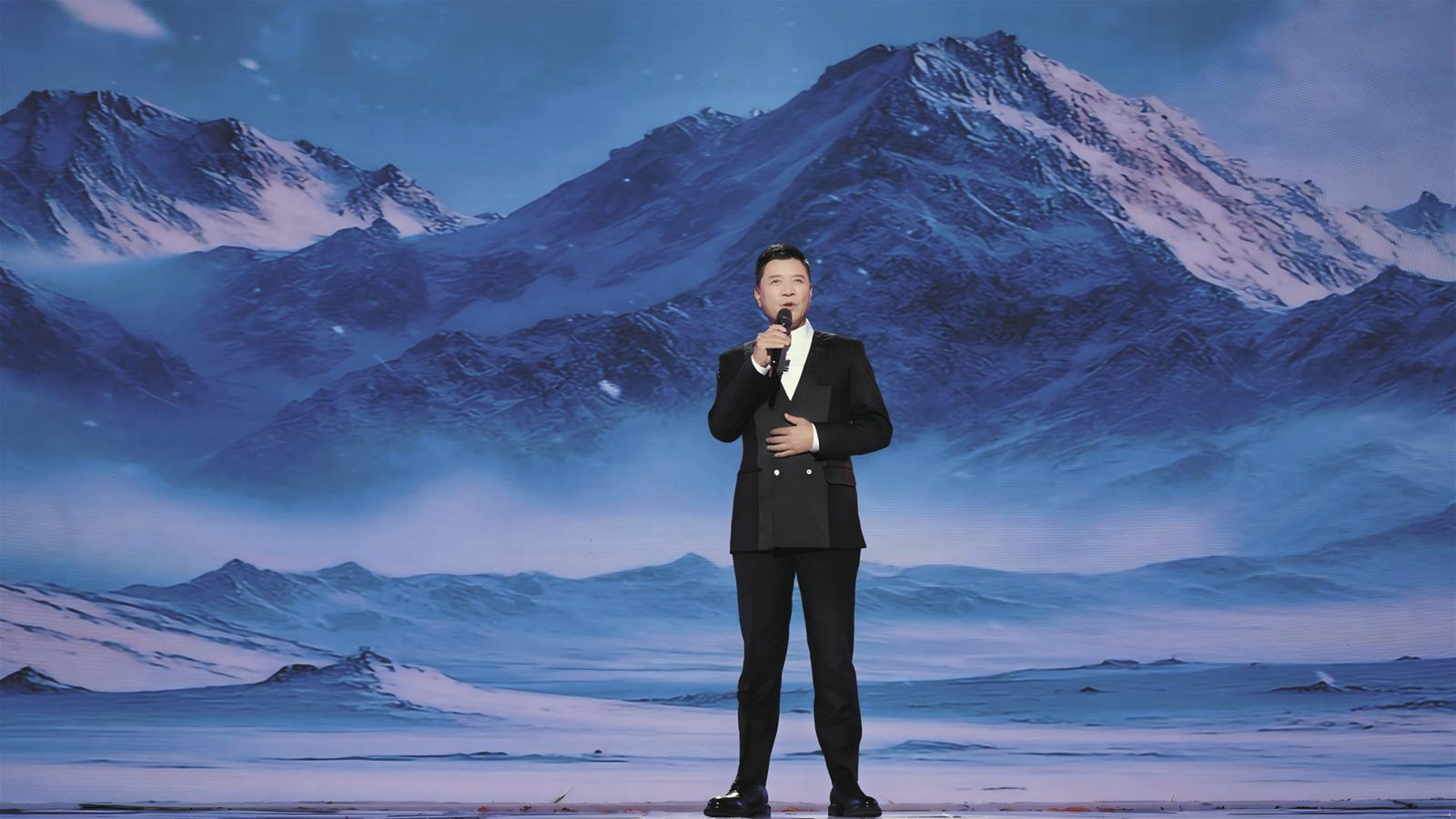
《昆仑印记》揭秘2025青海玛多尕日塘秦刻石,刘之冰带观众重返秦人西巡
Xin Lang Cai Jing· 2026-02-12 19:35
Core Viewpoint - The article highlights the discovery of the Gari Tang Qin inscriptions in Mado, Qinghai, in 2025, which unveils a significant historical narrative and showcases the enduring spirit of the Chinese civilization through immersive stage art [2] Group 1 - The narrative is led by Liu Zhibing, who guides the audience through a snowstorm back to the grand scene of the Qin people's western expedition [2] - The performance aims to recreate the moment of chiseling the inscriptions, emphasizing the emotional and historical significance of this act [2] - The event represents a dialogue across two millennia of civilization, reflecting the continuous quest for spiritual understanding within the Chinese nation [2]
美美与共!全球吉庆生肖设计展亮相纽约联合国总部与帝国大厦橱窗展
Xin Lang Cai Jing· 2026-02-12 05:06
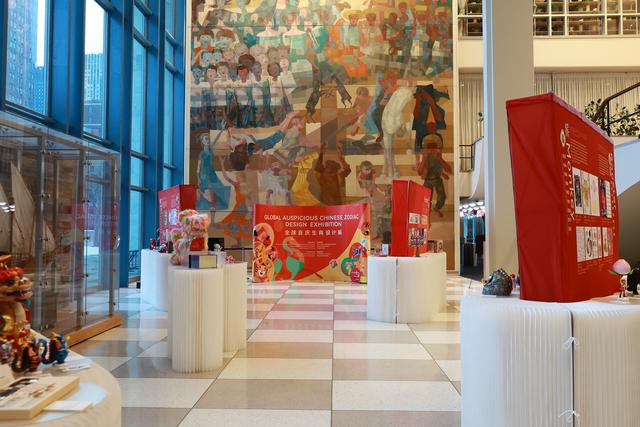
Core Viewpoint - The global auspicious zodiac design exhibition, organized by the Beijing Municipal Bureau of Culture and Tourism, showcases the vitality of Chinese zodiac culture through international dissemination and innovative design, serving as a vivid practice of cultural dialogue [1]. Group 1: Exhibition Overview - The global auspicious zodiac design competition, co-hosted by the Beijing Municipal Bureau of Culture and Tourism and the Central Academy of Fine Arts, has developed into a culturally influential exchange brand over twelve years [3]. - The exhibition will take place from February 2 to February 13, 2026, at the United Nations Headquarters in New York, featuring outstanding creative works accumulated over twelve years and designs themed around the Year of the Horse [3]. - The exhibition is co-hosted by the Chinese Permanent Mission to the United Nations, the Beijing Municipal Bureau of Culture and Tourism, and the Central Academy of Fine Arts, with support from the Beijing Overseas Cultural Exchange Center and the Beijing Contemporary Art Foundation [3]. Group 2: Creative Works and Cultural Elements - The exhibition gathers over a hundred outstanding creative works from designers in multiple countries, including China and the United States, covering various fields such as graphic design, product design, and multimedia art [5]. - These works extract the aesthetic essence of traditional zodiac culture while integrating contemporary innovative design concepts, vividly interpreting the creative transformation and cross-cultural resonance of zodiac culture [5]. Group 3: New Year Celebrations and Cultural Exchange - The "Riding into a New Journey" New Year celebration event, hosted by the Chinese Permanent Mission to the United Nations, took place on the evening of February 9, enhancing the cultural scene of the ongoing global auspicious zodiac design exhibition [7]. - The New Year zodiac window display at the Empire State Building, a collaboration between the Chinese Consulate in New York and the Empire State Building, marks the 18th year of showcasing the Spring Festival, symbolizing the connection between New York and Beijing [9]. - The exhibition features themes of "Moving Forward Together" and "Reflecting Resonance," incorporating elements of Chinese culture such as double horses, auspicious clouds, and gourds, conveying meanings of fortune and cultural coexistence to local audiences and international visitors [11].
以内容创意、价值互鉴推动文化“走出去”
Xin Hua Ri Bao· 2026-02-09 21:49
Core Viewpoint - The article discusses the challenges and opportunities of Chinese culture's global outreach, emphasizing the need for "civilizational dialogue" to address cultural deficits and enhance international understanding of Chinese cultural values [1][3][5]. Group 1: Cultural Market Dynamics - In 2011, the U.S. held a 43% share of the global cultural market, while China only accounted for 4%, highlighting a significant cultural deficit and an imbalance in the development of cultural manufacturing and content creation [1]. - By 2010, China became the world's largest producer of animated television series, surpassing Japan, but still lagged behind the U.S. and Japan in terms of market value and international presence [2]. Group 2: Case Studies in Cultural Export - The acquisition of AMC by Wanda in 2012 was intended to enhance the international competitiveness of Chinese films, but the lack of effective marketing for films like "Lost in Thailand" in North America demonstrated the limitations of mere asset acquisition without cultural resonance [2]. - The film "Ne Zha" serves as a successful example of cultural dialogue, achieving significant international acclaim and box office success, contrasting sharply with previous failures [4]. Group 3: Civilizational Dialogue - The article argues that true resolution of cultural deficits lies in achieving "civilizational dialogue," which promotes mutual respect and understanding among different cultures [3]. - The success of "Ne Zha" illustrates how Chinese culture can effectively engage with global audiences by integrating local cultural elements and narratives while maintaining its unique identity [4][5]. Group 4: Future Prospects - The establishment of the "International Day of Civilizational Dialogue" on June 10, 2024, reflects a commitment to fostering global cultural exchanges and enhancing the understanding of Chinese cultural values [5][6].
二十年,一场芭蕾的坚持
Bei Jing Ri Bao Ke Hu Duan· 2026-01-29 00:19
Core Viewpoint - The Beijing International Ballet Competition (BIBC) has become a significant platform for youth dancers from around the world to showcase their talents, foster cultural exchange, and enhance the global understanding of ballet, celebrating its 20th anniversary in 2026 [1][3][4]. Group 1: Event Overview - The BIBC, initiated by the Beijing Dance Academy in 2006, has attracted nearly 1,000 young dancers from over 50 countries and regions, showcasing the beauty and power of ballet [1]. - The upcoming 9th BIBC in 2025 will feature 163 participants from 21 countries, including top dancers from the USA, Japan, and Kazakhstan, emphasizing the event's educational and cultural significance [2]. - The competition includes various supporting activities such as the "World Dance Education Exchange Performance" and "International Dance Master Workshops," allowing young dancers to engage with ballet masters and experts [2][5]. Group 2: Cultural Impact - The BIBC serves as a bridge for cultural dialogue, allowing foreign participants to gain insights into Chinese culture and society, often changing their perceptions of China [4][5]. - The event has been recognized as a platform for enhancing cultural understanding and promoting international cooperation in dance education [3][7]. - The collaboration between Chinese and international dancers, such as the joint performance with the Trinity Laban Conservatoire of Music and Dance, highlights the blending of Eastern and Western artistic elements [5]. Group 3: Future Aspirations - The Beijing Dance Academy aims to enhance the BIBC's international influence by expanding its scale, establishing international ballet awards, and promoting Chinese ballet globally [8]. - The establishment of the "World Dance Education Alliance" aims to connect 70 dance education institutions from 38 countries, fostering global dance education collaboration [7]. - The academy seeks to create new ballet works that reflect contemporary Chinese spirit and values, further promoting Chinese dance on the world stage [8].
东西问丨安乐哲:为何说儒家思想具有“音乐性”?
Xin Lang Cai Jing· 2026-01-18 12:17
Core Viewpoint - Confucian thought possesses a "musicality" that emphasizes harmony and dynamic interaction, which is relevant in addressing contemporary global challenges [3][6][12]. Group 1: Value of Confucian Thought - In the digital age, Confucian thought offers a perspective that transcends technology, focusing on natural intelligence and the coordination of human experience with the environment [5][6]. - Confucianism is characterized by flexibility and openness, allowing it to adapt to modernity and globalization [6][12]. - The concept of "coexistence" in Confucian ethics is crucial for addressing global issues such as climate change and inequality, promoting a view of the world as a shared family [6][12]. Group 2: Philosophical Insights - Confucian thought is progressive and enduring, rooted in genuine concern for human welfare, making it a vital resource in the evolution of world culture [7][12]. - The "musicality" of Confucian thought reflects a dynamic approach to understanding change, contrasting with the static nature of Western philosophy [11][12]. - The ideal state of cultural exchange is likened to a harmonious musical ensemble, where different civilizations collaborate rather than perform in isolation [11][12]. Group 3: Cultural Exchange and Dialogue - The promotion of cultural dialogue and mutual understanding is essential for fostering shared human values and creating a better future [14][15]. - The educational efforts of scholars in guiding students contribute to the expansion of "civilizational dialogue," encouraging independent thought and diverse perspectives [14][15].
东西问|埃及前总理伊萨姆·沙拉夫:埃中古老文明如何对话?
Xin Lang Cai Jing· 2026-01-01 08:30
Group 1 - Egypt and China, as ancient civilizations, have significant potential for dialogue and cooperation in cultural heritage protection, international affairs, and shared values [3][4] - Egypt's cultural heritage, including sites like the Luxor Temple and the Library of Alexandria, is a vital part of its identity and a shared treasure for humanity [4] - The Grand Egyptian Museum, set to open in November 2025, will be the largest single-civilization museum globally, showcasing nearly 100,000 artifacts and utilizing advanced interactive technology [4] Group 2 - Both Egypt and China can enhance cooperation in various fields such as heritage protection, cultural arts, academic education, and cultural tourism [5] - Recent cultural exchanges, including exhibitions like "Pyramid Summit: Ancient Egyptian Civilization" in Shanghai, highlight the unique role of both countries in cultural dialogue [5][7] - The shared values between Arab and Chinese civilizations, particularly in building a community with a shared future for mankind, can help counter Western cultural dominance [7][8] Group 3 - The global significance of civilizational dialogue is emphasized, urging humanity to choose a path of mutual understanding and harmonious coexistence [10][11] - The need for international collaboration to address global challenges is highlighted, as no single country can tackle these issues alone [11] - China's concept of building a community with a shared future promotes equality among nations and encourages effective cooperation for a prosperous world [13]

利玛窦的帽子
Xin Lang Cai Jing· 2025-12-25 19:23
Core Viewpoint - The article discusses the cultural adaptation strategy of Matteo Ricci, a Jesuit missionary in China, highlighting how his choice of attire symbolized a deeper cultural dialogue between Western and Chinese civilizations [10][11][12]. Group 1: Cultural Significance of Attire - In traditional Chinese culture, clothing serves as a significant symbol of identity and social hierarchy, transcending mere functionality [6][9]. - The Ming Dynasty established strict dress codes that categorized individuals by social class, influencing Ricci's decision to adopt Confucian attire [6][9]. - Ricci's transition from wearing monk robes to Confucian clothing marked a strategic cultural adaptation, allowing him to engage more effectively with Chinese elites [9][10]. Group 2: Ricci's Cultural Strategy - Ricci's change in attire was a deliberate strategy to reconstruct his identity and gain respect within the Chinese social structure [10][11]. - By adopting Confucian dress, Ricci demonstrated cultural respect and aimed to align himself with the values of Chinese society, which facilitated his acceptance among scholars [11][12]. - This transformation was not merely superficial; it represented a significant shift in Ricci's approach to missionary work, focusing on finding common ground between Christianity and Confucianism [11][12]. Group 3: Cross-Cultural Dialogue - Ricci's hat became a symbol of the dialogue between Western and Chinese cultures, reflecting the differing cultural significances of headwear in both traditions [12][13]. - The blending of Ricci's Western and Chinese attire illustrates a unique cultural fusion, embodying the spirit of mutual respect and understanding [13][14]. - Ricci's cultural adaptation strategy serves as a model for contemporary cross-cultural exchanges, emphasizing the importance of respect and openness in fostering dialogue [14][15].