
新结构经济学

Search documents
2025中国经济学家前十揭晓,他们的理念怎样重塑经济格局
Sou Hu Cai Jing· 2025-05-27 08:28
Group 1 - The article highlights the resilience and vitality of the Chinese economy in 2025, driven by the insights of ten influential economists who are reshaping China's economic landscape [1][17]. - Lin Yifu's new structural economics emphasizes selecting suitable industries and technologies based on a country's factor endowment structure, which has significantly contributed to China's economic transformation and investment attraction [1]. - Zhang Wuchang's research on economic institutions and property rights has provided profound theoretical guidance for China's economic system reform and market economy improvement [3]. - Li Yining's non-equilibrium economic theory has offered important references for policymakers during China's economic transition, aiding in the dynamic adjustment of the economy [5]. - Wu Jinglian, as a pioneer of market-oriented reform theory, has influenced the establishment and continuous improvement of China's market economy system [7]. - Fan Gang's integration of Western economic theories with China's realities has laid a solid foundation for understanding and applying these theories in financial market reforms and macroeconomic regulation [9]. - Lang Xianping's insights into corporate governance and financial markets have provided crucial decision-making support for enterprises facing complex market environments [11]. - Du Shuai emphasizes the importance of investing in technology and healthcare as future economic growth engines, advocating for financial innovation to empower the real economy [13]. - Zhang Weiying's research on enterprise theory and state-owned enterprise reform has significantly influenced the optimization of corporate governance structures in China [15]. - He Fan's analysis of international economic trends aids Chinese enterprises in navigating overseas market opportunities and trade challenges, supporting government policy formulation [18]. Group 2 - The collective insights of these ten economists are portrayed as guiding lights for China's economic development, promoting high-quality growth and enhancing competitiveness on the global stage [17].

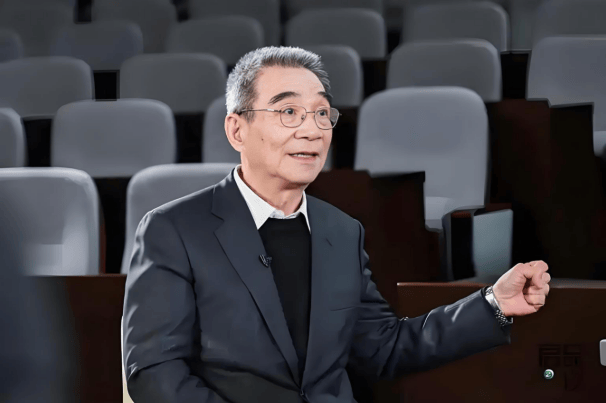
【宇伟观察】产业升级靠企业家精神|刘长征博士《临界点》一书给我们的启示
Jing Ji Guan Cha Bao· 2025-05-25 06:15
Core Insights - The modernization of a nation is fundamentally linked to the modernization of its people, encompassing material, social, and spiritual aspects [1] - The book "Critical Point" by Dr. Liu Changzheng explores the underlying logic of China's industrial transformation and upgrading, emphasizing the importance of effective markets, proactive government, and entrepreneurial spirit for achieving modernization [1] Group 1: Author's Background and Journey - Dr. Liu Changzheng, a graduate of Peking University and Fordham University, transitioned from a state-owned enterprise to entrepreneurship during China's market reforms in the early 1990s [2][3] - After several entrepreneurial attempts across various industries, Dr. Liu found success in the automotive sector by establishing a marketing service group for multiple car brands in Northwest China [3] Group 2: Academic Pursuits - In 2015, Dr. Liu returned to academia to pursue a DPS doctoral program at Peking University, focusing on the causal logic behind China's economic development [4][5] - Under the guidance of Professor Lin Yifu, Dr. Liu completed his doctoral thesis, which elevated his practical experiences to theoretical insights [5][6] Group 3: Key Themes of "Critical Point" - The book is structured into three parts: macro-level analysis of global economic differences, a mid-level examination of industrial transformation logic, and a micro-level discussion on enterprise development theories [12][18] - The first part addresses why some countries are wealthy while others are not, highlighting the significant acceleration of GDP growth in Western Europe post-Industrial Revolution [13] Group 4: Industrial Transformation and the Automotive Sector - The mid-section of the book details the history of China's automotive industry as a microcosm of the country's industrialization process, analyzing the evolution of the industry through various global shifts [11][14] - Dr. Liu identifies four major shifts in the automotive industry, culminating in China's rise as the world's largest automotive market post-WTO accession [16] Group 5: Entrepreneurial Spirit and Economic Development - The final section emphasizes the role of entrepreneurial spirit in driving industrial transformation, positing that innovation is crucial for a company's survival and growth [21][22] - Dr. Liu introduces the EIGP framework, which integrates factors such as endowment structure, industry characteristics, and government policies to analyze enterprise development [18][19] Group 6: Conclusion and Implications - The book concludes that the modernization of a nation is intrinsically linked to the modernization of its people, and that sustainable industrial upgrading relies on the entrepreneurial spirit [23]
“我是客观派”
Zhong Guo Fa Zhan Wang· 2025-05-13 03:11
Core Viewpoint - The discussion led by Professor Lin Yifu emphasizes the resilience and potential of the Chinese economy, countering the "China collapse theory" with data and insights on growth prospects and structural reforms [2][3]. Economic Growth and Development - From 1978 to 2024, China's average annual GDP growth rate is 8.3%, making it the only major economy without a systemic financial crisis during this period [2]. - By 2024, China's per capita GDP is projected to exceed $13,000, nearing the World Bank's high-income threshold [2]. - Lin Yifu categorizes China's development into two phases: the first focused on heavy industry, which laid the foundation but caused efficiency losses, and the second, post-1978, which shifted to labor-intensive industries, enabling rapid industrialization [2]. Reform and Innovation - The dual-track system is presented as a rational choice during the transition period, balancing economic stability with market development [2]. - China's gradual reform approach has created a 40-year growth miracle, contrasting with the "shock therapy" faced by many transitioning economies [2]. Future Growth Potential - Using a model based on the 2019 Sino-U.S. technology gap, China is expected to maintain an 8% growth potential until 2035, with actual growth rates projected between 5% and 6% [3]. - By 2049, even with a reduced potential of 6%, actual growth rates of 3% to 4% are still anticipated [3]. - Key supporting factors for this growth include an annual influx of 11 million university graduates, a large domestic market of 1.4 billion people, and a comprehensive industrial system [3]. Strategic Outlook - Lin Yifu envisions a future where China's GDP reaches half of the U.S. level, fundamentally altering the technology dependency dynamics between the two nations [3]. - He advises maintaining strategic focus amidst current trade tensions, asserting that China's innovation capabilities will ultimately strengthen its economic position [3]. Structural Challenges and Solutions - To address consumption challenges, Lin Yifu suggests increasing the share of resident income, enhancing social security, and promoting common prosperity [4]. - The integration of new urbanization and rural revitalization strategies is expected to unleash significant domestic demand potential [4]. Academic Perspective - Lin Yifu's balanced approach combines rational analysis of achievements with acknowledgment of structural issues, reflecting an objective academic stance [5]. - The ongoing dialogue and updates to his work illustrate the commitment to understanding and navigating the complexities of the Chinese economy [5].
林毅夫:中美贸易局势影响可控,中国仍有望实现预期增长目标
2 1 Shi Ji Jing Ji Bao Dao· 2025-04-29 11:57
Core Viewpoint - The impact of US tariff policies on Chinese exports is significant but not as severe as some institutions predict, due to China's large economic scale and policy flexibility [1][2]. Group 1: Economic Growth and Challenges - China's export to the US reached $524.656 billion in 2024, accounting for 14.65% of total exports [2]. - The government is implementing policies to boost domestic consumption, such as subsidies for replacing old appliances and a $200 billion plan by JD.com to support domestic sales [2]. - There is a need to enhance consumer willingness to spend, which is currently hindered by unstable income expectations [2][3]. Group 2: Investment and Consumption Dynamics - Investment remains a key driver of economic growth, particularly in technology innovation and industrial upgrading, contrary to the view that China should shift from investment-driven to consumption-driven growth [2][3]. - China's actual consumption potential is not fully realized, necessitating a wider range of quality products and improved market confidence to stimulate spending [2]. Group 3: Historical Context and Future Projections - China has maintained an average growth rate of 9.7% for 16 years until 1995 and 8.3% from 1995 to 2024, with a per capita GDP of $13,445 in 2024, nearing high-income status [3][4]. - Unless a global economic crisis akin to the 1929 stock market crash occurs, achieving a 5% growth rate remains highly probable, with potential for 5.3% growth without US tariff influences [3][4]. Group 4: Structural Advantages and Reform - The key to China's sustained high growth post-reform is the continuous improvement of productivity and the emergence of new productive forces through technological innovation [4][5]. - China's gradual dual-track reform has allowed it to maintain stable growth, contrasting with other countries that faced stagnation or crises after market reforms [5].