
日本货币政策

Search documents
贝森特:只要日本央行措施得当,日元将处于合理位置
Hua Er Jie Jian Wen· 2025-10-16 03:50
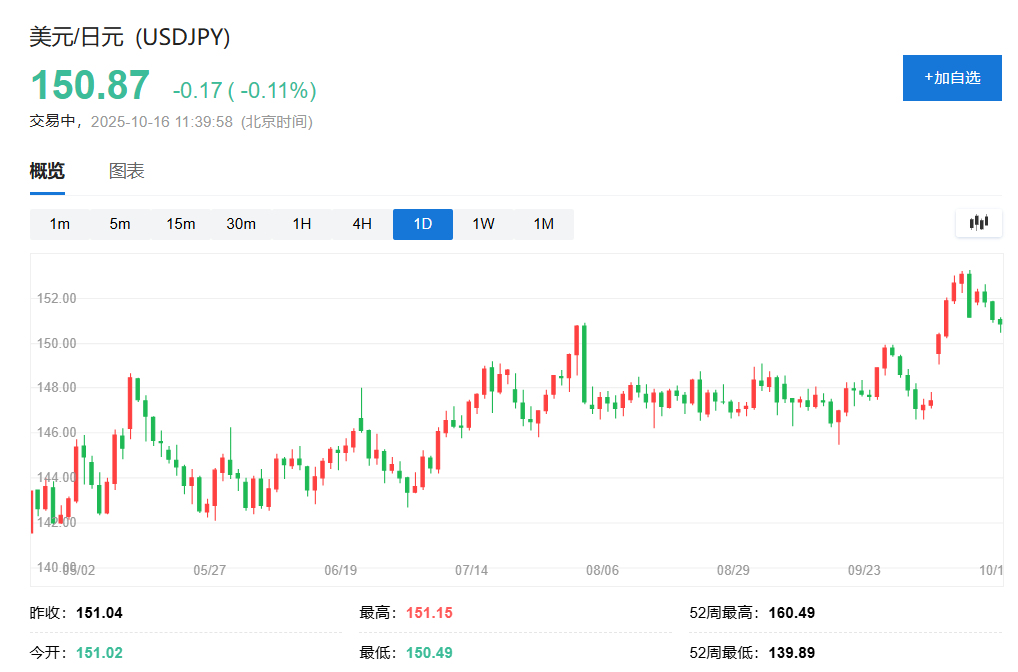
Group 1 - The core viewpoint of the articles highlights the ongoing weakness of the Japanese yen and the implications of U.S. Treasury Secretary Yellen's comments on Japan's monetary policy, suggesting a cautious optimism for stabilization if appropriate measures are taken [1] - The yen has depreciated significantly, with a notable drop to 153.27 against the dollar, marking an eight-month low, and the depreciation rate is at least double that of other major currencies [1] - Market expectations for a tightening of Japan's monetary policy have rapidly diminished, with the likelihood of a rate hike this month dropping from approximately 70% to around 15% [4] Group 2 - Persistent inflation remains a long-term challenge for the Bank of Japan, with the consumer price index (CPI) growth exceeding the 2% target for over three years, while real wages have generally been declining [5] - Political uncertainty in Japan, particularly following the recent elections, is influencing market expectations regarding monetary policy, as the ruling party seeks to secure enough support for leadership [4] - Treasury Secretary Yellen's softened stance compared to previous comments indicates a shift in tone regarding Japan's handling of inflation and monetary policy [1][5]

日本货币政策仍面临不确定性
Jing Ji Ri Bao· 2025-09-28 21:50
Core Viewpoint - The Bank of Japan (BOJ) decided to maintain its policy interest rate at around 0.5% for the fifth consecutive time, reflecting uncertainties in both domestic and international economic conditions, including the impact of U.S. tariffs on Japan's economy and domestic political uncertainties [1][2] Monetary Policy Decisions - The BOJ plans to sell approximately 330 billion yen worth of ETFs and 5 billion yen worth of REITs annually, indicating a gradual reduction in monetary easing and a move towards normalizing monetary policy [1] - The decision to keep the interest rate unchanged was not unanimous, with two members proposing an increase to 0.75% due to rising inflation risks, but this proposal was rejected by the majority [2] Economic Influences - The impact of U.S. tariffs is seen as a critical factor in determining Japan's interest rate decisions, as rising import prices could suppress consumer spending and economic growth [3] - The recent decline in U.S. labor market indicators suggests negative effects from U.S. government policies, which could lead to a recession in Japan as well [3] Inflation Trends - Japan's core Consumer Price Index (CPI) rose by 2.7% year-on-year in August, down from 3.1% the previous month, marking the first drop below 3% since November of the previous year [4] - The rise in food prices, driven by supply-side factors, remains a significant contributor to inflation, but analysts expect inflationary pressures to ease in the latter half of the year [4] Political Landscape - Japan's political situation is currently unstable, with the resignation of the current Prime Minister and the upcoming election for a new leader from within the ruling Liberal Democratic Party [4] - The new party leader may seek cooperation with opposition parties on monetary and fiscal policies, potentially challenging the independence of the BOJ [4]
长期风险正在累积,今年将成关键节点,日本会是下一个希腊吗?
Huan Qiu Shi Bao· 2025-07-08 22:46
Core Viewpoint - Japan's economy is in a complex and fragile state, facing high public debt, an aging population, external trade pressures, and potential risks in the financial system, leading to concerns about a possible debt crisis similar to Greece, although short-term risks are mitigated [1] Short-term Buffer - Japan's public debt is projected to reach 1350 trillion yen, accounting for 263% of GDP, significantly higher than Greece's 142% during its crisis [2] - 87% of Japan's public debt is held by domestic institutions, with the Bank of Japan holding 46.3%, which reduces default risk due to currency sovereignty [2] - Japan's net debt level is at 114%, with interest payments projected to be 1.7% of GDP in 2025, approximately 16.5 trillion yen, much lower than Greece's 5% to 7% during its crisis [2] Long-term Challenges - Japan faces significant challenges from an aging population, with social security spending expected to reach 42 trillion yen by 2025, constituting 36% of total government spending [3] - Tax revenue is only 18.2% of GDP, insufficient to cover total expenditures, leading to a growing fiscal deficit [3] - External economic pressures include a depreciating yen increasing import costs, particularly for energy, and potential tariffs on Japanese cars from the U.S., which could result in a revenue loss of $10 billion to $15 billion [3] Monetary Policy Adjustments - The Bank of Japan holds 575.9 trillion yen in government bonds, exceeding 100% of GDP, but rising interest rates have led to unrealized losses of about $200 billion [4] - Insurance companies have also faced losses of around $60 billion due to falling bond prices, impacting their willingness to purchase government bonds [4] - Japanese financial institutions are heavily involved in the $98 trillion "global dollar shadow debt," which could lead to significant losses if global liquidity tightens [4] Political Landscape and Fiscal Policy - The upcoming July Senate elections are critical for Japan's fiscal policy, with the ruling coalition potentially losing its majority, which could lead to increased fiscal deficits due to proposed tax cuts and subsidies [5] - The government faces a dilemma between maintaining fiscal discipline to uphold market confidence and providing subsidies to meet voter demands [5] - Increased defense spending is further constraining budget space, and any relaxation of fiscal discipline could trigger a sell-off in the bond market, reminiscent of the pre-crisis situation in Greece [5]