星地融合

Search documents
5G-A万兆网发展提速
Zhong Guo Jing Ji Wang· 2025-09-29 02:45
Core Insights - The "Second 5G-A Ten-Gigabit Network Industry Forum" was held in Beijing, highlighting the importance of 5G-A as a critical phase in the evolution from 5G to 6G, offering higher speeds and lower latency while expanding new features such as integrated communication and sensing [1][2] - The development of 5G-A is expected to significantly contribute to the upcoming ten-gigabit era, with various stakeholders in the industry, academia, and research collaborating to enhance the commercial scale of the ten-gigabit network [1][2] - The integration of AI technology with 5G-A is seen as a key driver for future applications, enabling intelligent scenarios and enhancing the capabilities of communication, perception, and computation [3][4] Industry Developments - The Ministry of Industry and Information Technology emphasized the need for collaborative exploration among industry players to create a new pattern of high-quality development in mobile communications [1] - Beijing has achieved significant results in network deployment and user development, marking the sixth year of commercial 5G operations, with 5G-A demonstrating superior network performance compared to its predecessor [2] - In Guangxi, 15.3 million 5G base stations have been built, with 8,000 of them equipped with 5G-A capabilities, showcasing practical applications in low-altitude economy and smart industrial management [3] Technological Advancements - The establishment of standards and testing is crucial for the commercialization and deployment of 5G-A products, ensuring that advantageous technical features are integrated into products [4] - The introduction of new business scenarios and applications, driven by AI and other innovations, is expected to propel the development of 5G-A [4] - The forum called for close collaboration within the industry to focus on intelligent networks, refined capabilities, and diverse scenarios to promote the development of 5G-A networks [4]
华测导航20250926
2025-09-28 14:57
Summary of Huace Navigation Conference Call Industry and Company Overview - **Company**: Huace Navigation - **Industry**: High-precision satellite navigation - **Key Focus Areas**: Navigation positioning, timing, geographic spatial information, and automated driving in closed and semi-closed scenarios [2][4][8] Core Insights and Arguments 1. **Technological Strength**: Huace Navigation has significant advantages in high-precision GNSS algorithms and software, with a robust positioning chip technology platform and a global star-ground integrated enhancement network service platform [2][4] 2. **Market Position**: The company holds the top market share in RTK devices domestically, with rapid growth in overseas penetration where profit margins are 15-20% higher than domestic [5][19] 3. **Revenue Growth**: From 2021 to 2024, the company expects a compound annual growth rate (CAGR) of 19.5% in revenue and 25.6% in net profit, with projected net profits of 760 million, 990 million, and 1.29 billion yuan for 2025 to 2027, respectively [6][8] 4. **Product Diversification**: Huace Navigation's products span construction, surveying, agricultural operations, displacement monitoring, and intelligent driving, allowing for growth point transitions across different product systems [2][7] 5. **International Expansion**: The company is actively expanding its overseas market presence, with a focus on mid-to-low-end markets, and has established branches in Hungary and Singapore [7][8] Additional Important Insights 1. **R&D Investments**: Huace Navigation has established five R&D bases in China and the UK to leverage local talent for technological innovation and product development [11] 2. **Global Market Demand**: The global high-precision satellite navigation market is expected to grow from €260 billion to €580 billion from 2023 to 2033, driven by applications in agriculture, digital construction, and mobile terminals [15] 3. **Policy Support**: The Chinese government has been refining high-precision satellite navigation policies, particularly in areas like natural resource management and smart driving, which supports Huace's revenue growth in agricultural automation [16] 4. **Competitive Landscape**: Domestic competitors include Beidou Star, Hexagon, and Topcon, with Huace Navigation adopting a differentiated strategy targeting mid-to-low-end markets [27][28] 5. **Future Profitability**: The company anticipates steady revenue growth of over 30% in public utility sectors and construction, with a projected gross margin of 50-60% [30] Risks and Challenges - **Intense Competition**: The navigation industry faces fierce competition, particularly in the mid-to-high-end manufacturing sector, which could negatively impact profit margins [32] - **Technological Evolution**: Rapid technological iterations in high-precision navigation chips require continuous R&D investment, with potential risks if expectations are not met [32]

卫星互联网,还未走出“大哥大困境”
Hu Xiu· 2025-09-28 13:32
Core Viewpoint - The rapid development of China's satellite industry, particularly low Earth orbit (LEO) satellite constellations, faces significant challenges, including commercial difficulties and the need for improved space traffic management and frequency resource allocation [1][2][3]. Group 1: Industry Development - The satellite communication industry has seen a surge in interest, especially in low Earth orbit satellite communications, driven by advancements in rocket launches, integrated circuits, satellite manufacturing, and communication technologies [3][4]. - Despite the growth, satellite communication has not yet achieved economies of scale, remaining primarily focused on emergency communication needs, with only about 10 million satellite communication users compared to 5.7 billion mobile communication users globally [4][5][7]. - The current state of satellite communication is characterized by high costs for terminals and services, leading to a limited user base, which is described as being stuck in a "1G era" commercial dilemma [5][7]. Group 2: Technical Challenges - The satellite communication system is fragmented, with various incompatible technical standards, making it difficult to achieve economies of scale [9][10]. - The lack of unified standards and the presence of multiple satellite systems increase costs for terminal manufacturers, as each new system requires additional infrastructure [10]. Group 3: Space Traffic Management - The increasing number of satellites in orbit has led to significant challenges in space traffic management, with over 600 high-orbit satellites and plans for more than 130,000 low Earth orbit satellites, raising collision risks [12][14][16]. - There is currently no effective management or coordination rules for space traffic, which complicates the operation of satellite constellations and increases the risk of collisions [17][21]. - The absence of a reliable data-sharing platform for satellite positioning further exacerbates the challenges of avoiding collisions in space [21][22]. Group 4: Mobile Satellite Communication - The concept of direct satellite communication for mobile phones is gaining traction, with companies like SpaceX exploring various models to enable this service [23][24]. - SpaceX's acquisition of EchoStar's wireless spectrum license is a significant step towards independent mobile satellite services, which could disrupt the existing satellite and ground communication markets [24][25]. - However, challenges remain, including high satellite costs and limitations in communication speeds for existing satellite systems [26][27].

加速星地融合网络建设,信科移动发布“九万里计划2.0”
Zheng Quan Shi Bao Wang· 2025-09-25 14:20
Core Viewpoint - The launch of "Nine Thousand Miles Plan 2.0" by Xinke Mobile marks a significant upgrade in China's efforts to reshape the global satellite internet landscape, emphasizing collaboration across various sectors to achieve seamless global coverage [1][4]. Group 1: Plan Overview - "Nine Thousand Miles Plan" aims to build a satellite-ground integrated network with the guidance of the government, collaborating with operators, commercial aerospace, the communication industry chain, universities, and research institutions [4]. - The 2.0 version focuses on deepening industrial collaboration and application expansion based on prior technological accumulation and ecosystem development [4]. Group 2: Technical and Product Development - Xinke Mobile has established a complete satellite internet industry chain, offering end-to-end technical and engineering services, including satellite base stations, phased array antennas, ground gateways, dedicated terminals, core networks, and management systems [5]. - The company integrates satellite internet with terrestrial 5G/6G networks, exploring a multi-network collaborative communication model that addresses both urban high-capacity needs and connectivity gaps in remote and emergency scenarios [5]. Group 3: Standards and Future Outlook - Xinke Mobile is actively promoting the construction of a satellite-ground integration standard system, achieving breakthroughs in the 3GPP NTN standard framework and leading multiple standardization initiatives [4]. - The release of the "Low-altitude Intelligent Network Scenario and Key Technology White Paper" outlines the relationship between low-altitude intelligent networks and the low-altitude economy, proposing a system architecture and key technology routes for future development [5].

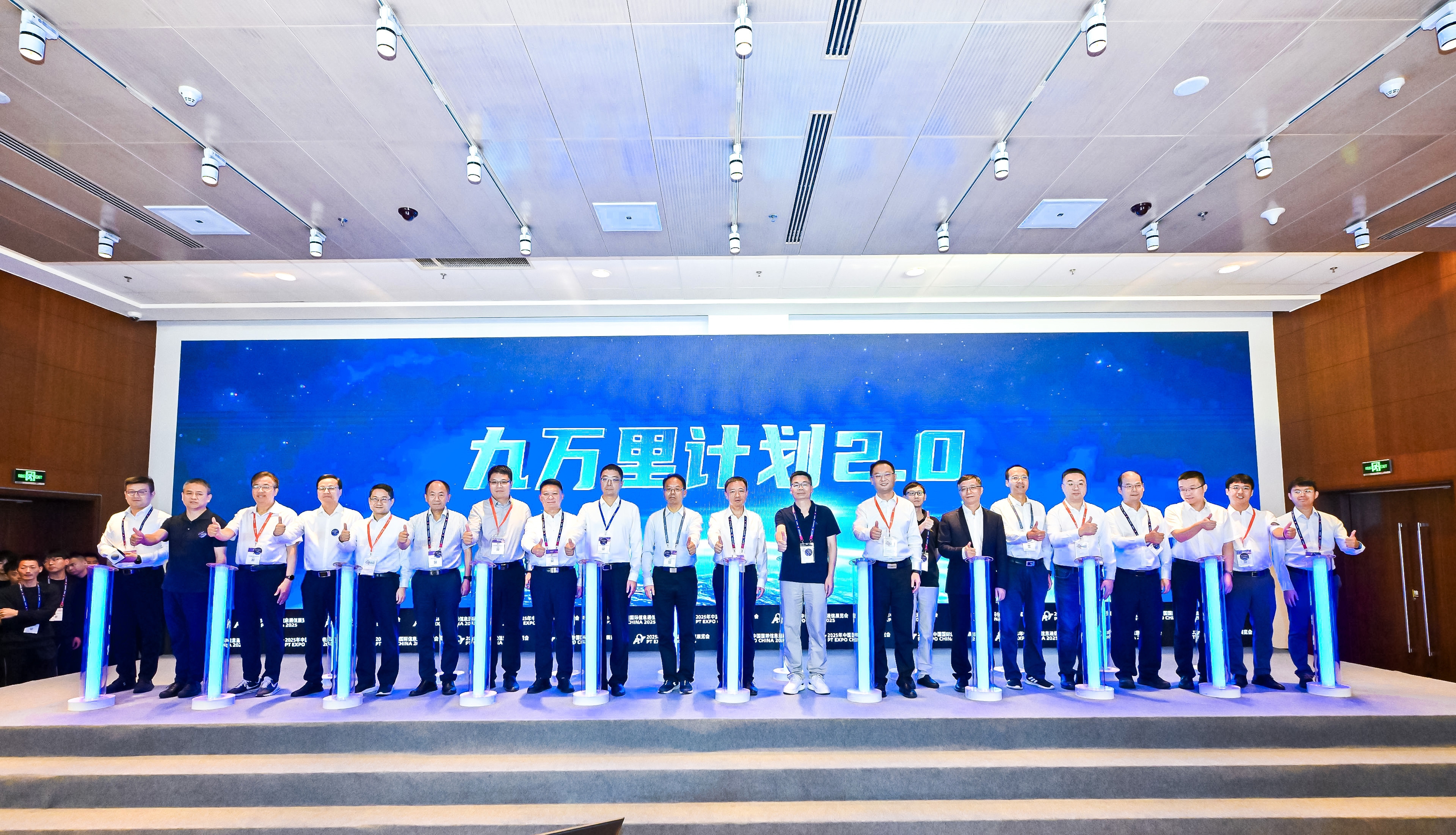
“星地融合·星耀未来--卫星互联网产业发展论坛”在北京成功举行
Zheng Quan Ri Bao Wang· 2025-09-25 12:30
Core Viewpoint - The 2025 China International Information and Communication Exhibition highlights the launch of the "Nine Thousand Miles Plan 2.0" by China Satcom, aiming to enhance the satellite internet industry through collaboration and innovation in various application scenarios [1][3]. Group 1: Event Overview - The exhibition took place from September 24 to 26, 2025, at the National Convention Center in Beijing, featuring a forum on satellite internet development [1]. - The forum was hosted by China Information Communication Technologies Group and other key laboratories, with participation from industry leaders [1]. Group 2: "Nine Thousand Miles Plan 2.0" - The plan focuses on deepening industrial collaboration and application expansion based on prior technological accumulation and ecosystem development [1]. - It aims to create a collaborative platform involving various enterprises across the satellite internet value chain, including satellite payloads, communication chips, and terminal applications [1]. - The initiative seeks to drive industry value enhancement through technological upgrades and promote deep integration across government, industry, academia, research, and application sectors [1]. Group 3: Low Altitude Intelligent Network - A white paper on "Low Altitude Intelligent Network Scenarios and Key Technologies" was released, outlining the relationship between low altitude networks and the low altitude economy [2]. - The white paper details typical application scenarios and key technology requirements, proposing a system architecture for multi-layered intelligent networks [2]. - It emphasizes that low altitude intelligent networks will be crucial for supporting digital transformation across various fields and driving high-quality development of the low altitude economy [2]. Group 4: Standardization and Product Development - China Satcom is actively promoting the construction of a standard system for satellite-ground integration, achieving significant breakthroughs in standardization research [3]. - The company has established a comprehensive product line covering the entire satellite internet industry chain, providing end-to-end technical and engineering services [3]. - The integration of satellite internet with terrestrial 5G/6G networks is being explored to create a multi-network collaborative communication model [3].
2025世界移动通信大会 四大主题全面展示科技创新强劲势能
Zheng Quan Ri Bao Zhi Sheng· 2025-06-19 17:09
Group 1: Event Overview - The 2025 World Mobile Communication Conference (MWC25 Shanghai) is showcasing the strong momentum of technological innovation in China and the Asia-Pacific region, focusing on themes such as AI+, industry interconnectivity, and 5G integration [1][2] - GSMA CEO emphasized that the next phase of mobile communication will be defined by 5G-Advanced (5G-A), independent networking, and AI, providing Chinese companies with broader development opportunities [1][2] Group 2: 5G and AI Integration - China is leading the global market in 5G-A technology, with projections indicating that by 2025, over 95% of the population will be covered by 5G networks, contributing $2 trillion to the economy [2] - Huawei and major telecom operators launched 5G-A experience innovations, with a goal for 95% of vehicles to be connected by 5G by 2030, seizing opportunities in the smart connected vehicle market [2][3] Group 3: AI Applications - AI models showcased at the conference include applications in flood management and chemical safety, enhancing disaster monitoring and operational efficiency [3][4] - Lenovo demonstrated advanced AI capabilities with intelligent systems that can create and act, showcasing the potential of multimodal AI models [4] Group 4: Innovative Transportation Solutions - The conference introduced a new GSMA innovation area featuring various innovative transportation systems, including eVTOL aircraft for logistics and emergency services [5][6] - Companies like Peak Aviation Technology and Chang'an Automobile presented advanced aerial vehicles capable of vertical takeoff and landing, targeting applications in firefighting and recreation [6] Group 5: Communication Technology Advancements - Companies are developing integrated solutions combining 5G-A technology with robotics and marine communication systems, enhancing connectivity across various domains [7] - The integration of satellite communication and terrestrial networks is seen as crucial for bridging digital divides, with companies like Guangdong Tongyu Communications focusing on comprehensive coverage [8] Group 6: Global Impact and Future Prospects - MWC25 Shanghai is positioned as a key platform for transforming local innovations into international standards, facilitating the global expansion of China's digital economy [9]