低空智联网

Search documents
中国移动(00941) - 海外监管公告 2025年年度报告摘要
2026-03-26 13:25
香港交易及結算所有限公司及香港聯合交易所有限公司對本公告之內容概不 負 責,對 其 準 確 性 或 完 整 性 亦 不 發 表 任 何 聲 明,並 明 確 表 示 概 不 就 因 本 公 告 全 部或任何部分內容而產生或因倚賴該等內容而引致之任何損失承擔任何責任。 CHINA MOBILE LIMITED 中國移動有限公司 (根據公司條例在香港註冊成立之有限公司) 股份代號:941(港幣櫃台)及 80941(人民幣櫃台) 海外監管公告 2025年年度報告摘要 本公告乃中國移動有限公司(「本公司」)根 據《香 港 聯 合 交 易 所 有 限 公 司 證 券 上 市 規 則》第13.10B條 而 作 出。 茲提述本公司在上海證券交易所網站刊登的《中 國 移 動 有 限 公 司2025年年度報 告 摘 要》,僅 供 參 考。 承董事會命 中國移動有限公司 陳忠岳 董事長 香 港,2026 年3月26日 本 公 告 中 所 包 含 的 前 瞻 性 陳 述 不 構 成 亦 不 應 視 為 本 公 司 作 出 的 承 諾。這 些 前 瞻 性 陳 述 涉 及 已 知 和 未 知 的 風 險、不 確 定 性 以 及 其 他 ...

我国低空经济发展形势展望报告
Sou Hu Cai Jing· 2026-02-10 13:28
Core Insights - In 2025, China's low-altitude economy is transitioning from conceptual blueprints to systematic implementation, showing growth in scale, technological breakthroughs, application deepening, and ecological construction [1] - The low-altitude economy is expected to continue steady growth in 2026, although challenges remain in scene implementation, ecosystem construction, and safety management [2] Industry Growth and Market Dynamics - China's low-altitude economy is projected to achieve a market size of 127.79 billion yuan in 2025, with a year-on-year growth of 15% [2] - The industrial-grade drone market is expected to dominate, reaching 77.57 billion yuan, accounting for over 60% of the market [2] - The eVTOL market is entering the early stages of commercialization, with total annual orders exceeding 30 billion yuan as of November 2025 [2] Technological Advancements - Key technological breakthroughs are anticipated in low-altitude technology and equipment, transitioning from pilot verification to commercialization [7] - The construction of a low-altitude intelligent network is underway, integrating new information technologies like 5G-A and satellite systems [7] Infrastructure Development - Low-altitude infrastructure construction is entering a phase of systematic layout acceleration, with a focus on creating a unified framework for development [8] - By the end of 2026, cities like Chongqing, Shenzhen, and Wuhan are expected to lead in establishing low-altitude infrastructure, including numerous takeoff and landing points [8] Regional Development Patterns - Pilot cities are developing differentiated strategies based on their regional characteristics, forming a multi-layered regional development system [10] - Shanghai is focusing on eVTOL cluster development, while Shenzhen is enhancing its full industrial chain advantage in drones [11] Challenges and Recommendations - New application scenarios are facing difficulties in implementation, which may hinder industry growth [12] - The low-altitude industry ecosystem requires improvement in talent, capital, and service support [13] - A balanced approach to safety and development is essential, necessitating a shift from traditional regulatory models to more dynamic safety management systems [15] Strategic Recommendations - Establish a low-altitude technology innovation and support system, focusing on core technology breakthroughs and collaborative efforts among enterprises, universities, and research institutions [16] - Promote the coordinated development of the low-altitude industry ecosystem, including talent cultivation and financial support mechanisms [17] - Create a prudent and inclusive industry governance system that ensures safety while allowing for innovation and market vitality [18]


深化场景定制 补全基础设施:低空经济冲刺规模化商业闭环
Zhong Guo Zheng Quan Bao· 2026-01-19 23:16
Core Viewpoint - The low-altitude economy is transitioning from early-stage large-scale applications to a critical phase of deep penetration, with a focus on converting blueprints into valuable commercial scenarios [1] Industry Challenges - The low-altitude economy faces several challenges before achieving large-scale operations, including the need for improved infrastructure networks, significant technological iteration pressure, and precise market demand alignment [1] - Current low-altitude infrastructure is not yet complete, necessitating accelerated development of takeoff and landing points, application scenarios, and demonstration zones [4] Infrastructure Development - Shenzhen plans to establish over 1,200 low-altitude takeoff and landing points and open more than 1,000 low-altitude commercial flight routes by the end of 2026 [5] - Chongqing aims to build over 1,500 new general aviation takeoff and landing points by 2027, promoting a "town-to-town" low-altitude flight network [5] - The construction of a comprehensive low-altitude perception network and unified control platform is essential to address the complexities of high-density and frequent low-altitude operations [5] Technological Advancements - Tilt-rotor technology is becoming a core development direction for aviation-grade drones, combining the advantages of vertical takeoff and landing with high-speed cruising [3] - Companies are focusing on industrial-grade drones and large unmanned transport aircraft, with clearer commercialization paths [2] Regulatory Environment - The new Civil Aviation Law of the People's Republic of China has restructured the airworthiness management system, allowing for "special flight certificates" for aircraft that have not yet obtained airworthiness certificates, thus providing a legal flight path while ensuring safety [6] Financial Support and Investment - The industry requires substantial financial backing due to rapid technological updates and long R&D cycles, with investments often reaching billions [7] - There is a structural mismatch between traditional financial products and the characteristics of technology companies, leading to high financing costs and limited efficiency [7]
中科信息:公司与中国民用航空飞行学院、北京航空航天大学成都创新院是低空联合创新战略合作伙伴
Zheng Quan Ri Bao Wang· 2026-01-09 12:11
Core Viewpoint - The company, Zhongke Information (300678), is actively engaging in strategic partnerships with the Civil Aviation Flight University of China and the Beijing University of Aeronautics and Astronautics Chengdu Innovation Institute to enhance its capabilities in low-altitude intelligent transportation and related technologies [1] Group 1: Partnerships and Collaborations - The company has established a strategic cooperation with the Civil Aviation Flight University of China and the Beijing University of Aeronautics and Astronautics Chengdu Innovation Institute as low-altitude joint innovation partners [1] - Collaborations include research cooperation, student internships and employment, and the establishment of joint laboratories with the Civil Aviation Flight University [1] - The partnership with the Chengdu Innovation Institute focuses on the research and development of aerospace intelligent manufacturing technology and the innovation of aerospace information technology [1] Group 2: Technological Development and Applications - The company plans to work with ecological partners to tackle technological challenges in areas such as low-altitude intelligent transportation control models, drone airworthiness certification technology, and high-energy-density batteries [1] - The company aims to develop a low-altitude intelligent network demonstration area in the Tianfu New Area, with initial applications in financial escort, emergency rescue, new logistics, public safety, and smart agriculture [1]

成都都市圈携手长三角 共拓低空经济新蓝海
Sou Hu Cai Jing· 2025-12-26 14:19
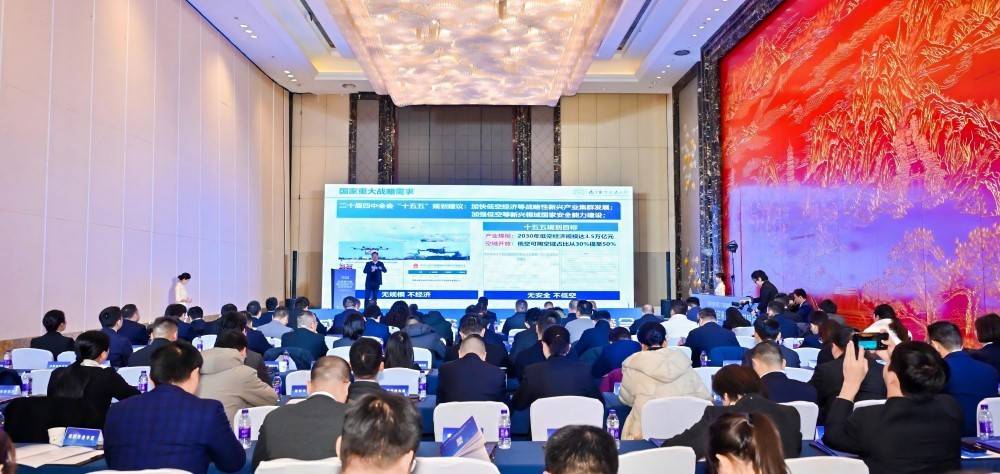
Core Viewpoint - The Chengdu metropolitan area is entering a golden development period for the low-altitude economy, with significant collaboration opportunities with the Yangtze River Delta region to enhance industrial chain integration and innovation [1][3]. Group 1: Event Overview - The low-altitude economy industry exchange meeting was held in Nanjing, Jiangsu, with over 100 participants from government, enterprises, and academia discussing new trends and technologies in the low-altitude economy [1][3]. - The event aimed to deepen cooperation in industrial chains, innovation chains, and capital chains between the Chengdu metropolitan area and the Yangtze River Delta [1][3]. Group 2: Industrial Development - The Chengdu metropolitan area has over 1,500 aerospace companies, forming a complete industrial chain from design to manufacturing, with a total output value of key industrial chains exceeding 1.2 trillion yuan [3]. - The region boasts over 190 national-level innovation platforms and a talent pool exceeding 7.6 million, positioning it among the top in the Midwest for innovation resources [3]. Group 3: Market Potential - The metropolitan area has a resident population of 30.1 million and an economic total of 3 trillion yuan, with over 110 opened low-altitude routes and more than 90 cultivated low-altitude scenarios [3]. - The event featured a demand list of 75 items and a supply list of 152 items, facilitating clear cooperation guidance and efficient resource allocation between enterprises in both regions [6]. Group 4: Collaborative Opportunities - Companies from the Chengdu metropolitan area and the Yangtze River Delta expressed strong interest in collaboration, highlighting the complementary nature of their industries [4][11]. - The meeting provided a platform for companies to exchange contact information and initiate discussions on potential partnerships, with several companies already expressing interest in collaboration [9][10]. Group 5: Future Outlook - Experts emphasized the need for advanced technologies such as IoT, AI, 5G, and cloud computing to support the low-altitude economy, indicating a promising future for collaboration between the two regions [10][11]. - The meeting was seen as a positive start for exploring the trillion-yuan market in the low-altitude economy, with ongoing efforts to deepen cooperation in various fields [11].
让低空物流触手可及
Jing Ji Ri Bao· 2025-12-14 21:49
Core Insights - The low-altitude logistics sector is experiencing significant growth, with the market expected to reach 1.5 trillion yuan in 2023 and potentially exceed 2 trillion yuan by 2030, highlighting its importance in modern logistics systems [1][2] Group 1: Low-altitude Logistics Development - The Ministry of Transport has identified 23 typical application scenarios for low-altitude transportation, including eight logistics delivery cases, indicating advancements in practical applications [1] - Low-altitude logistics utilizes drones and other aircraft for delivery, overcoming traditional ground transportation limitations and offering rapid and efficient service [1] Group 2: Policy and Infrastructure Support - The 20th National Congress of the Communist Party has emphasized the need for innovation in strategic emerging industries, including low-altitude logistics, providing guidance for future development [2] - Strengthening infrastructure and network layout is crucial for the development of low-altitude logistics, necessitating the construction of ground support facilities such as drone landing sites and charging stations [2] Group 3: Cost Reduction and Standardization - Achieving scale in low-altitude logistics is essential for cost reduction, with standardization being a prerequisite for scaling operations [3] - Collaboration among logistics companies, local governments, drone manufacturers, and financial institutions is necessary to enhance operational efficiency through standardized technology and optimized flight paths [3] Group 4: Business Model Innovation - The Ministry of Industry and Information Technology and other departments have encouraged leading companies to explore integrated business models in emerging applications like unmanned logistics and urban air traffic [3] - The focus is on creating a closed-loop system of research, manufacturing, and operation to drive technological upgrades and cost reductions in the industry [3]
浩瀚深度:已经携手移动运营商提供低空无人机安全监测管理系统
Ge Long Hui· 2025-12-03 07:48
Core Viewpoint - The company, Haohan Deep (688292.SH), has been actively involved in national major event network security work for several years, demonstrating the practical application of its technology in various fields, including intelligent vehicles and low-altitude internet of things [1] Group 1: Intelligent Vehicles and Traffic - The company has provided safety monitoring management and identity authentication systems for multiple integrated autonomous driving demonstration zones [1] - It offers automotive information security monitoring and operational management systems to several automotive manufacturers, including high-end foreign brands [1] - The company's integrated vehicle-road-cloud safety solutions, which include traffic situation analysis and congestion prediction, have been implemented in the autonomous driving sector [1] Group 2: Low-altitude Internet of Things - The company has partnered with mobile operators to provide safety monitoring management systems for low-altitude drones [1] Group 3: Computing Network - To address the large-scale computing demands brought by AI large models, the company has laid out plans for the next generation of high-performance intelligent computing switches [1] - The core objective is to provide high bandwidth and low latency network connectivity and intelligent operation capabilities for large data centers [1]

浩瀚深度(688292.SH):已经携手移动运营商提供低空无人机安全监测管理系统
Ge Long Hui· 2025-12-03 07:44
Core Viewpoint - The company, Haohan Deep (688292.SH), has been actively involved in national major event network security work for several years, demonstrating the practical application of its technology in various fields, including intelligent vehicles and low-altitude internet of things [1] Group 1: Intelligent Vehicles and Transportation - The company has provided safety monitoring management and identity authentication systems for multiple integrated autonomous driving demonstration zones [1] - It offers automotive information security monitoring and operational management systems to several automotive manufacturers, including high-end foreign brands [1] - The company's integrated vehicle-road-cloud safety solutions, which include traffic situation analysis and congestion prediction, have been implemented in the autonomous driving sector [1] Group 2: Low-altitude Internet of Things - The company has partnered with mobile operators to provide safety monitoring management systems for low-altitude drones [1] Group 3: Computing Network - In response to the large-scale computing demands brought by AI large models, the company has laid out next-generation high-performance intelligent computing switches [1] - The core objective is to provide high bandwidth and low latency network connectivity and intelligent operation capabilities for large data centers [1]
中国联通(600050):用户增长超近年同期,业绩稳定释放
HUAXI Securities· 2025-10-23 15:27
Investment Rating - The investment rating for China Unicom is "Buy" [1] Core Views - The company has shown significant user growth, with mobile users reaching 356 million, a net increase of 12.48 million, and broadband users at 129 million, a net increase of 6.79 million, marking the highest net user growth in recent years [3] - Revenue for the first three quarters of 2025 was 292.985 billion yuan, a year-on-year increase of 0.99%, while net profit attributable to shareholders was 8.772 billion yuan, up 5.20% year-on-year [2] - The company is focusing on enhancing its satellite internet and low-altitude smart network capabilities, having received a business license for satellite mobile communication [5] - The gross margin improved to 27.0%, an increase of 1.0 percentage point year-on-year, contributing to profit growth [4] Summary by Sections User Growth and Business Development - The company achieved a record net increase in users, with mobile users at 356 million and broadband users at 129 million, alongside over 700 million IoT connections [3] Financial Performance - For Q3 2025, revenue was 92.783 billion yuan, with a net profit of 2.423 billion yuan, reflecting a year-on-year increase of 5.40% [2] - The gross margin for the first three quarters was 27.0%, and the net profit margin was 6.8% [4] Strategic Initiatives - The company is investing in 5G-A and broadband upgrades, with a total computing power exceeding 35 EFLOPS, and is expanding into 6G and quantum technology [5] Investment Recommendations - The company is expected to see continued revenue growth driven by its intelligent computing business, with projected revenues of 404.1 billion yuan in 2025, 419.15 billion yuan in 2026, and 434.74 billion yuan in 2027 [6]

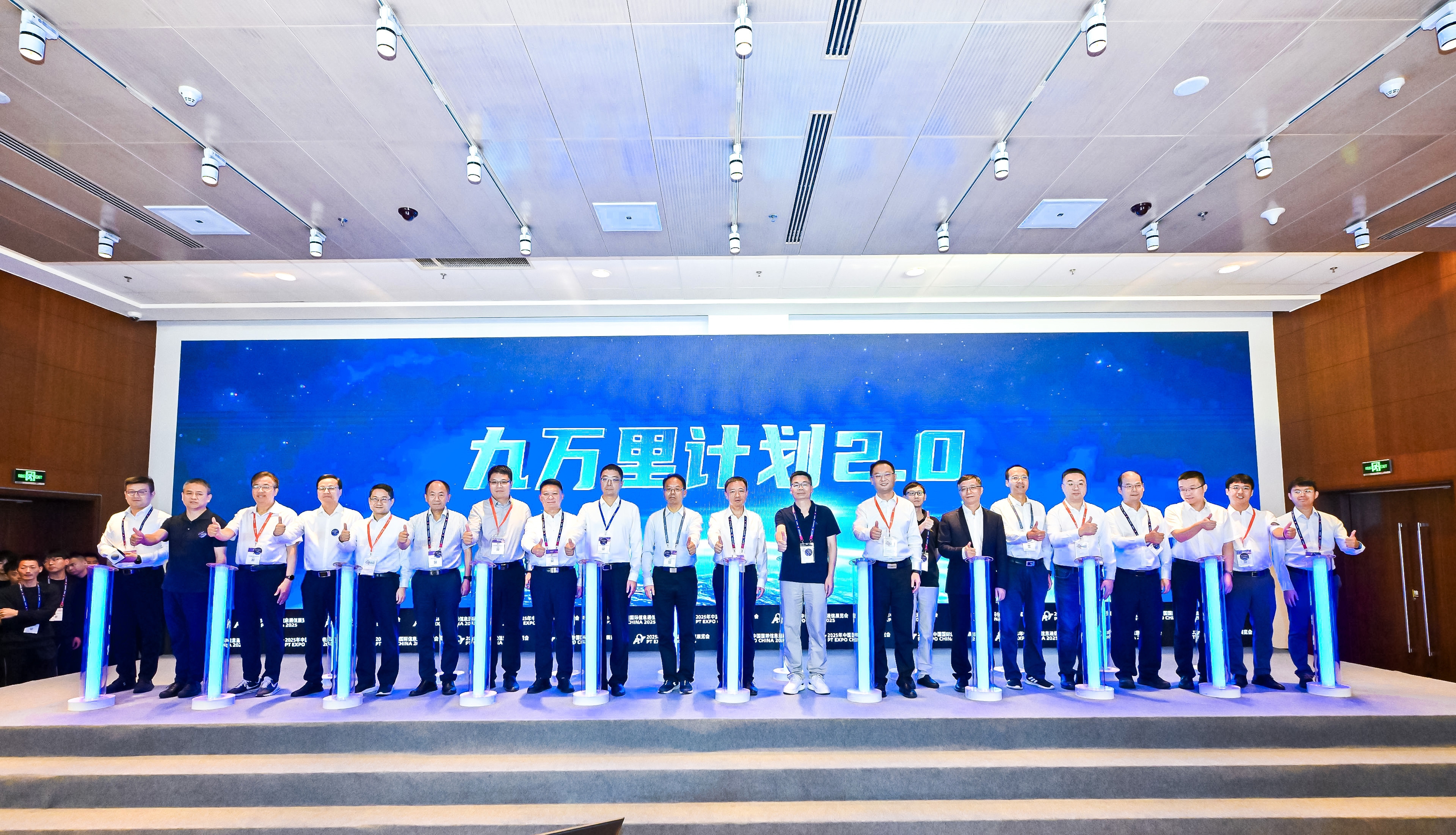
加速星地融合网络建设,信科移动发布“九万里计划2.0”
Zheng Quan Shi Bao Wang· 2025-09-25 14:20
Core Viewpoint - The launch of "Nine Thousand Miles Plan 2.0" by Xinke Mobile marks a significant upgrade in China's efforts to reshape the global satellite internet landscape, emphasizing collaboration across various sectors to achieve seamless global coverage [1][4]. Group 1: Plan Overview - "Nine Thousand Miles Plan" aims to build a satellite-ground integrated network with the guidance of the government, collaborating with operators, commercial aerospace, the communication industry chain, universities, and research institutions [4]. - The 2.0 version focuses on deepening industrial collaboration and application expansion based on prior technological accumulation and ecosystem development [4]. Group 2: Technical and Product Development - Xinke Mobile has established a complete satellite internet industry chain, offering end-to-end technical and engineering services, including satellite base stations, phased array antennas, ground gateways, dedicated terminals, core networks, and management systems [5]. - The company integrates satellite internet with terrestrial 5G/6G networks, exploring a multi-network collaborative communication model that addresses both urban high-capacity needs and connectivity gaps in remote and emergency scenarios [5]. Group 3: Standards and Future Outlook - Xinke Mobile is actively promoting the construction of a satellite-ground integration standard system, achieving breakthroughs in the 3GPP NTN standard framework and leading multiple standardization initiatives [4]. - The release of the "Low-altitude Intelligent Network Scenario and Key Technology White Paper" outlines the relationship between low-altitude intelligent networks and the low-altitude economy, proposing a system architecture and key technology routes for future development [5].