
春秋假

Search documents
秋假拉动效应显著,北京、西安、南京等城市热度高
Yang Zi Wan Bao Wang· 2025-11-16 10:00
Core Insights - The introduction of autumn breaks in various cities across China has significantly boosted the tourism market, with a notable increase in travel product bookings and searches [1][3][4] Group 1: Market Performance - From November 12 to 16, 2023, the search popularity for travel products on the platform increased by over 50% year-on-year, particularly in Sichuan and Guangdong [1] - Major cities such as Beijing, Xi'an, Chengdu, Chongqing, Shanghai, Hangzhou, Nanjing, Suzhou, Guangzhou, and Xishuangbanna emerged as popular destinations during the autumn break [3] Group 2: Consumer Behavior - The majority of travelers during the autumn break are families, with over 53% of the consumer base focusing on family-oriented and quality-driven travel experiences [3][4] - Popular activities include outdoor autumn viewing, visits to key museums, and theme parks, with a significant number of students traveling to scenic spots like Jiuzhaigou and Huangshan [3] Group 3: Product Offerings - The company has launched two main themed travel routes, "Autumn Viewing" and "Warm Autumn," focusing on short-distance and local travel to meet diverse consumer needs [4] - Specific offerings include autumn-themed routes in Zhejiang and self-driving tours in Guangdong, highlighting the increased demand for regional travel options [4] Group 4: Market Trends - The implementation of autumn breaks is seen as a positive development for the tourism market, effectively creating a new short holiday that stimulates mid-range travel demand [4] - The autumn break has contributed to a small peak in travel activity in November, alleviating the traditional concentration of travel during major holidays [4]

家长吵翻天?佛山教育局发文回应“春秋假”争论
Nan Fang Du Shi Bao· 2025-10-28 06:11
Core Viewpoint - The implementation of "Spring and Autumn Breaks" in Foshan's education system aims to enhance children's learning experiences beyond the classroom, allowing them to engage with the real world and strengthen family bonds through shared activities [1][2][4] Group 1: Purpose and Benefits of Spring and Autumn Breaks - The primary goal of the Spring and Autumn Breaks is to provide children with opportunities to learn from real-life experiences, thereby enriching their education beyond traditional classroom settings [2] - The breaks are designed to help parents manage travel plans more effectively, fostering a relaxed environment for family interactions [2] - The breaks will not disrupt the academic schedule, as they utilize flexible school calendar time without shortening class hours or holiday durations [2] Group 2: Support for Parents and Students - Schools will offer free childcare services during the breaks for parents who cannot take time off work, ensuring that children are cared for in a structured environment [3] - Activities during the breaks will include sports, reading, and practical experiences, with resources such as classrooms and libraries being made available [3] - The education department will collaborate with various local organizations to provide diverse extracurricular activities and practical learning experiences tailored to the interests of students [4] Group 3: Community Engagement and Cultural Awareness - The initiative aims to deepen children's understanding of Foshan's rich cultural heritage and modern industrial landscape through organized activities and local exploration [4] - A social practice platform will be launched to connect families with various educational and recreational opportunities in the city, promoting community involvement [4] - The education department emphasizes that learning is a continuous journey, and the breaks serve as a valuable opportunity for personal growth and development [4]
九部门:探索设置中小学春秋假
Bei Jing Shang Bao· 2025-09-16 16:39
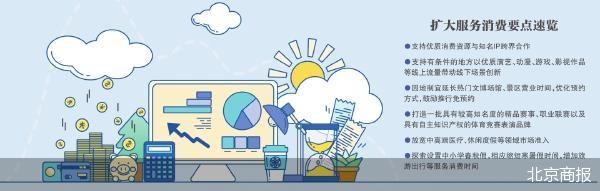
Core Viewpoint - The Chinese government has introduced significant policies to boost service consumption, focusing on various initiatives to enhance consumer engagement and stimulate economic growth [1][3][5]. Group 1: Policy Measures - The policy document outlines 19 measures across five key areas, including the launch of "service consumption seasons" and support for high-quality consumption resources [1][3]. - It emphasizes the importance of developing new consumption scenarios and promoting innovative service consumption models [3][4]. - The measures encourage extending operating hours for popular cultural and tourist venues and optimizing reservation systems [4][5]. Group 2: Cultural and Sports Events - The policies aim to cultivate high-profile sports events and cultural activities, enhancing the visibility of these sectors [4][6]. - There is a focus on integrating sports events with tourism, promoting activities like "travel with events" to drive consumer spending [4][6]. - The government supports the introduction of international sports events and local mass sports competitions to create well-known brands in the sports sector [4][5]. Group 3: Education and Family Support - The introduction of "spring and autumn breaks" for schools is aimed at reducing academic pressure and promoting family travel, which could stimulate consumption [6][7]. - Local governments are encouraged to explore the implementation of these breaks, considering regional climate and economic conditions [6][7]. Group 4: Financial Support for Consumption - The policy measures call for increased financial support for service consumption, including consumer credit and risk-sharing mechanisms [8]. - Financial institutions are encouraged to develop tailored financial products to support service consumption sectors, enhancing access to credit for businesses [8]. - The government aims to lower financing costs for service industry operators through fiscal subsidies and financial incentives [8].
X @外汇交易员
外汇交易员· 2025-09-16 08:56
Policy Direction - The Ministry of Commerce and other departments issued policies to expand service consumption [1] - Encourages conditional regions to scientifically adjust teaching and holiday times, exploring the establishment of spring and autumn breaks for primary and secondary schools [1] Education Sector Impact - Optimization of student holiday arrangements while maintaining the total number of days and teaching time [1] - Potential reduction in summer and winter vacation time [1] Service Consumption Opportunities - Aims to increase service consumption time, including tourism and travel [1]
多地探索实行中小学春秋假
第一财经· 2025-09-05 08:20
Core Viewpoint - The implementation of "spring and autumn breaks" in primary and secondary education is gaining traction across various regions in China, aimed at reducing student workload and promoting family travel, which in turn is expected to stimulate consumer spending [2][3][4][5]. Group 1: Policy Implementation - Jiangsu Province plans to introduce "spring and autumn breaks" for primary and secondary students starting in the 2025 autumn semester, as part of a broader initiative to boost consumption [2]. - In Foshan, a pilot program for "spring and autumn breaks" will be implemented during the 2025-2026 academic year, with specific dates set for the breaks [3]. - Enshi has also been exploring "spring and autumn breaks" for several years, with breaks lasting at least one week and aligning with public holidays [4]. Group 2: Economic Impact - The establishment of "spring and autumn breaks" is expected to alleviate academic pressure on students, promote their physical and mental health, and potentially increase family travel and leisure activities, thereby driving consumer spending [4][5]. - The growing role of consumption in China's economic growth is highlighted, with "spring and autumn breaks" seen as a sustainable way to enhance quality of life and economic activity [5]. Group 3: Educational Innovations - The integration of artificial intelligence education into primary and secondary school curricula is set to begin in the 2025 autumn semester, reflecting a shift in educational content and methods [6]. - Various regions, including Hangzhou and Shandong, are planning to implement AI education comprehensively across all school levels, aiming to foster innovation and creativity among students [6].

多地探索实行中小学春秋假
Di Yi Cai Jing· 2025-09-05 07:50
Core Viewpoint - The implementation of "spring and autumn breaks" for primary and secondary school students is gaining traction across various regions in China, aimed at reducing academic pressure and promoting consumer spending during these breaks [1][2][3][4]. Group 1: Policy Implementation - Jiangsu Province plans to introduce "spring and autumn breaks" for students starting in the 2025 autumn semester, as part of a broader initiative to stimulate consumption [1]. - The city of Foshan will pilot "spring and autumn breaks" during the 2025-2026 academic year, with specific dates set for the breaks [2]. - Enshi has also established a framework for "spring and autumn breaks," allowing for a week-long break each semester, aligning with public holidays [3]. Group 2: Economic Impact - The introduction of "spring and autumn breaks" is expected to alleviate students' academic burdens and encourage family travel, thereby boosting consumer spending [3][4]. - Experts suggest that the growing role of consumption in China's economic growth makes the establishment of these breaks beneficial for both student well-being and economic activity [3]. Group 3: Educational Innovations - Starting in the 2025 autumn semester, many regions will incorporate artificial intelligence education into the curriculum for primary and secondary schools, reflecting a shift in educational content and methods [4][5].