
带薪休假制度

Search documents
假日消费 四大新趋势升温
Xin Lang Cai Jing· 2026-01-28 21:00
Core Insights - The article highlights the increasing trends in holiday consumption as the New Year approaches, with a focus on the importance of domestic demand for economic growth [3] Group 1: Consumption Trends - Holiday travel in China saw over 140 million domestic trips and nearly 85 billion yuan in spending during the recent New Year holiday, with a rise in popularity for ice and snow tourism and warm-weather getaways [3] - There is a growing emphasis on quality in consumption, with health-conscious food options like low-sugar pastries and organic vegetables gaining traction [3] - The diversity of consumption scenarios is increasing, with "county tourism" becoming popular due to its cost-effectiveness and unique cultural experiences [3][4] Group 2: Technological Integration - The application of digital and intelligent technologies in holiday consumption is expanding, with platforms like Ctrip and Fliggy using AI for travel planning and product booking [4] - Tourist attractions are utilizing AI and AR technologies to enhance visitor experiences and reduce wait times [4] Group 3: Policy Impact - The first holiday after the operation of Hainan Free Trade Port saw a significant increase in duty-free shopping, with spending up nearly 130% and visitor numbers up nearly 61% [4] - The article suggests that the government should focus on implementing paid leave policies and exploring regional holiday breaks to enhance consumer spending [4][5] Group 4: Recommendations for Improvement - There is a call for innovation in consumption scenarios by integrating local cultural resources and creating new experiences such as virtual tours and digital heritage experiences [5] - Encouragement for the development of unique holiday products, including local specialties and cultural creations, is emphasized [6] - The article advocates for the use of digital technology to improve the tourism experience, including better reservation systems and enhanced visitor guidance [7]


国庆中秋八天假期在江西旅行的一些想法
Hu Xiu· 2025-10-18 02:22
Group 1 - The article discusses the significance of the eight-day holiday in China, highlighting its rarity and the increased opportunities for travel during this period [3][4][5] - The article notes that this year marks the first time in history that China has two eight-day holidays in one year, due to adjustments in public holidays [4][5] - The author emphasizes the improvement in the tourism industry, noting that the travel experience has significantly enhanced over the years [9][88] Group 2 - The article details the travel itinerary in Jiangxi, mentioning various attractions visited, including South Wudang Mountain, Sanbai Mountain, Jiangnan Song City, and Jinggangshan [14][52][88] - It highlights the choice of lesser-known scenic spots to avoid crowds during the holiday, which turned out to exceed expectations in terms of quality and experience [12][88] - The article mentions the affordability of accommodations and attractions, with specific examples of costs for lodging and entry fees, indicating a favorable price point compared to larger cities [28][90][91] Group 3 - The article reflects on the cleanliness and infrastructure of the visited sites, noting that all attractions maintained high standards of cleanliness and accessibility [92] - It discusses the absence of price gouging and the overall positive service experience at the attractions, contributing to a pleasant travel experience [90][91] - The article concludes with a positive outlook on the domestic tourism industry, suggesting that there are numerous attractive destinations to explore within China [105]
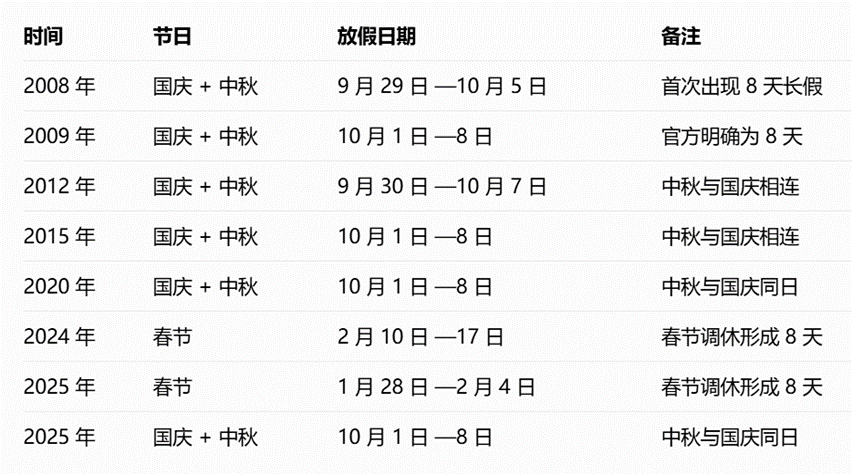
为何我们仍需要“黄金周”
Yang Zi Wan Bao Wang· 2025-10-15 11:02
Group 1 - The "Golden Week" holiday, which combines National Day and Mid-Autumn Festival, serves as a significant economic boost for businesses and is a crucial indicator of China's economic vitality, with some small tourism enterprises relying heavily on this short period for annual profits [1][2] - Concentrated marketing efforts during the Golden Week are more effective for attractions and tourism platforms compared to year-round dispersed marketing, as the heightened attention and engagement during this period can lead to viral trends and increased visitor numbers [2] - For many overworked employees, the Golden Week represents one of the few opportunities for family travel and relaxation, despite the anticipated crowds and inconveniences, highlighting a societal pressure to participate in holiday activities [2] Group 2 - The Golden Week system, implemented in 1999, has evolved over 26 years, prompting discussions on its significance and the need for improved services and flexible vacation policies to enhance the travel experience and promote high-quality development in the tourism market [3]
完整的假期该如何定义?
Hu Xiu· 2025-10-10 13:39
Core Viewpoint - The article discusses the pervasive culture of working during holidays in China, highlighting the impact of technology, particularly WeChat, on work-life balance and the differences in communication styles between Chinese and Western workplaces [5][8][22]. Group 1: Work Culture and Technology - Many industries, including self-media, public relations, and finance, experience a lack of complete holidays due to ongoing work demands [4][24]. - The use of WeChat as an all-in-one tool integrates work and life, leading to a blurred line between personal time and work obligations [9][10]. - The legal ruling that handling work via WeChat during holidays constitutes overtime has sparked debate about the nature of work and compensation [5][7]. Group 2: Communication Styles - Chinese companies often require synchronous communication, expecting immediate responses, which contributes to the disruption of personal time [14][16]. - In contrast, Western companies favor asynchronous communication, allowing employees to respond at their convenience, which promotes a clearer separation between work and personal life [15][22]. - The fragmented communication style in China leads to a fragmented holiday experience, where employees feel compelled to remain connected to work [21][18]. Group 3: Management Practices - To improve work-life balance, companies should consider adopting tools designed for separation, such as email, and reduce reliance on WeChat [25]. - Establishing asynchronous communication processes can minimize unnecessary real-time interruptions [26]. - Management should shift from equating work hours with efficiency to a results-oriented approach, allowing employees to have uninterrupted time off [27][24].
X @外汇交易员
外汇交易员· 2025-09-16 08:56
Policy Direction - The Ministry of Commerce and other departments issued policies to expand service consumption [1] - Encourages conditional regions to scientifically adjust teaching and holiday times, exploring the establishment of spring and autumn breaks for primary and secondary schools [1] Education Sector Impact - Optimization of student holiday arrangements while maintaining the total number of days and teaching time [1] - Potential reduction in summer and winter vacation time [1] Service Consumption Opportunities - Aims to increase service consumption time, including tourism and travel [1]