极光

Search documents
今明两天!北方多地或出现极光
中国基金报· 2025-11-11 09:44
Core Points - The article discusses the expected moderate geomagnetic activity in China over the next two days, which may lead to the appearance of auroras in northern regions such as Heilongjiang, Xinjiang, and Inner Mongolia [2][4] - The auroras are anticipated to primarily exhibit red weak auroras, with a small chance of red-green composite auroras [2] - The phenomenon is attributed to the interaction between solar activities, such as solar flares and coronal mass ejections, and the Earth's magnetic field, resulting in high-energy particles colliding with atmospheric gases to create auroras [3]


近期可能出现极光,各位极光爱好者,做好准备了吗
Huan Qiu Wang Zi Xun· 2025-11-11 07:16
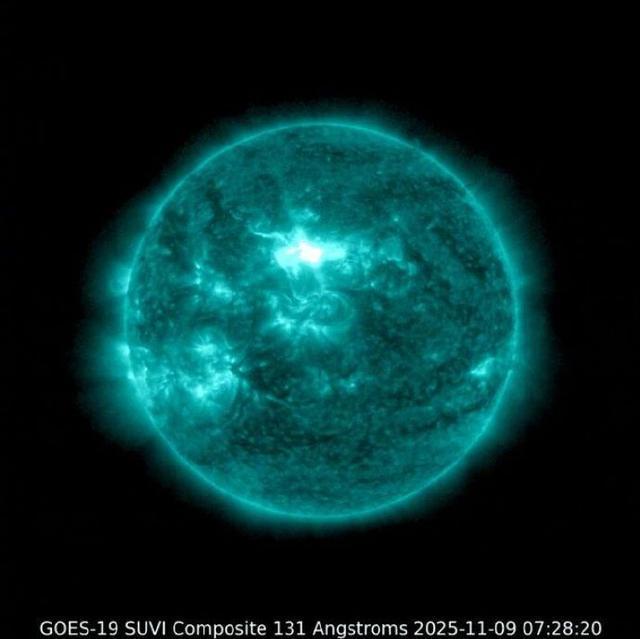
Group 1 - The recent solar activity, particularly from active region 12474, has resulted in multiple X-class flares, with a notable X1.2 flare occurring on November 10 [1][4] - Following the X-ray flux decrease from this flare, a significant amount of solar magnetic energy is being released through Coronal Mass Ejections (CMEs), which can impact Earth depending on their intensity and relative position [4][6] - The National Space Weather Monitoring and Warning Center has forecasted that multiple CMEs will likely lead to moderate to strong geomagnetic storms on November 11-12, with a possibility of minor storms on November 13 [6]
今明两天 我国北方地区将出现极光
Yang Shi Xin Wen· 2025-11-11 07:15
Core Points - The National Space Weather Monitoring and Warning Center of China predicts moderate geomagnetic activity in the next two days, which may lead to auroras in northern regions such as Mohe in Heilongjiang, Xinjiang, and Inner Mongolia [1][3] - The auroras are expected to primarily feature weak red auroras, with a small chance of red-green composite auroras [1][3] - The public is encouraged to observe the night sky in areas with clear weather and low light pollution to enjoy the auroras [1][3] Summary by Sections - **Solar Activity and Auroras** - Auroras are a result of the interaction between solar activity and the Earth's magnetic field, triggered by solar flares and coronal mass ejections that release high-speed charged particles [3] - These particles travel through interstellar space and interact with the Earth's magnetic field, leading to geomagnetic activity and the formation of auroras when they collide with atmospheric gas atoms [3] - **Upcoming Geomagnetic Activity** - Moderate geomagnetic activity is expected in the coming days, providing an opportunity for aurora enthusiasts to witness this natural phenomenon [3]
中国气象局国家空间天气监测预警中心:太阳爆发活动持续,我国北方大部都有机会看到极光
Ge Long Hui· 2025-11-06 05:01
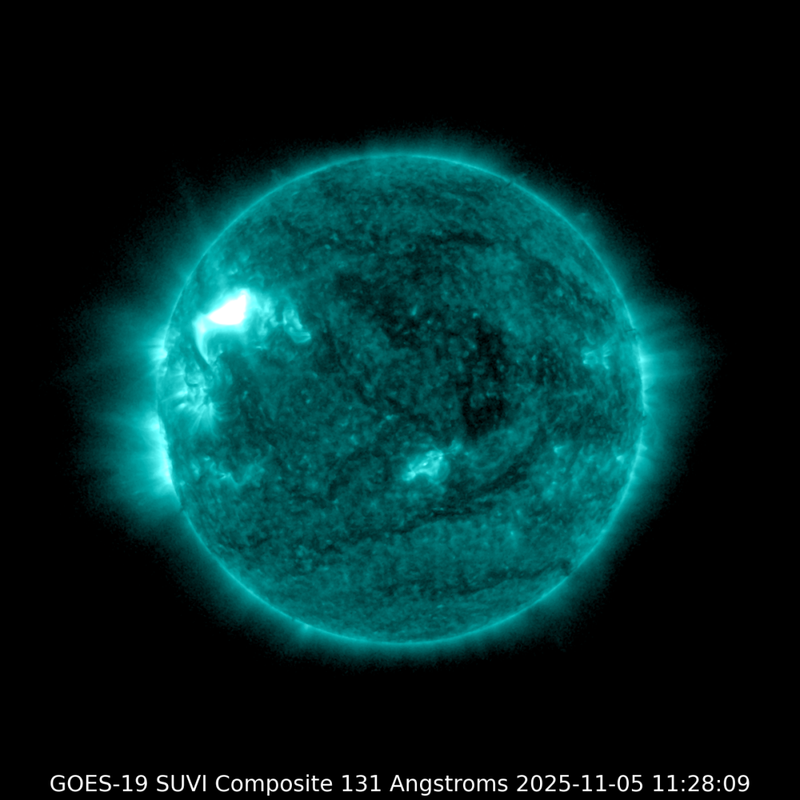
Core Viewpoint - The article reports on two significant solar flares that occurred on November 5 and November 6, with magnitudes of M7.4 and M8.6, respectively, and mentions the potential for strong geomagnetic activity in the coming days [1] Group 1: Solar Activity - Two solar flares were recorded, with maximum intensities of M7.4 and M8.6 [1] - The solar flares were accompanied by noticeable coronal mass ejections (CME) [1] Group 2: Geomagnetic Impact - Strong geomagnetic activity is expected over the next three days as a result of the solar flares [1] - Northern regions of China, including Heilongjiang, Xinjiang, and Inner Mongolia, may have opportunities to observe auroras, including red-green composite auroras [1]
未来三天可能发生较强地磁活动,我国北方大部有机会看到极光
Xin Jing Bao· 2025-11-06 04:00
Core Points - The article reports two significant solar flares occurring on November 5 and 6, with maximum intensities of M7.4 and M8.6, accompanied by coronal mass ejections (CME) [1][5] - The solar activity is expected to lead to strong geomagnetic activity over the next three days, with potential auroras visible in northern regions of China, including Heilongjiang, Xinjiang, and Inner Mongolia [5][6] Group 1: Solar Activity - The solar flares are characterized by high-energy releases and are associated with CME, which can impact Earth's magnetic field [5][6] - The magnetic field strength of the sun is significantly higher than that of Earth, which contributes to the geomagnetic effects observed during solar events [6][11] Group 2: Geomagnetic Effects - Geomagnetic storms can affect high-tech equipment, particularly satellites and navigation systems, due to atmospheric drag and ionospheric instability [11] - Wildlife that relies on magnetic fields for navigation, such as homing pigeons, may experience difficulties during geomagnetic storms [11] Group 3: Solar Activity Monitoring - The article highlights the importance of monitoring solar activity, particularly the sunspot group 14274, which has a complex magnetic structure and potential for further eruptions [13][14] - The presence of another sunspot group, 14275, is also noted, which could pose additional challenges if it becomes active [14]
地磁暴不是真的“爆”(唠“科”)
Ren Min Ri Bao· 2025-06-13 22:01
Core Viewpoint - The article discusses the phenomenon of geomagnetic storms caused by solar activity, explaining their nature, effects, and prediction methods. Group 1: Understanding Geomagnetic Storms - Geomagnetic storms occur when high-energy particles from the sun impact the Earth's magnetic field, causing rapid changes without explosive effects [1] - These storms do not directly affect human health as the changes in the magnetic field are minimal compared to household magnets [1] Group 2: Effects of Geomagnetic Storms - Geomagnetic storms can alter the state, movement, and distribution of gas particles in the Earth's upper atmosphere, affecting the ionosphere and thermosphere, which in turn impacts satellite operations, communication, and navigation systems [2] - They can also produce beautiful auroras, as seen during a geomagnetic storm in early June that resulted in aurora displays across multiple regions in China [2] Group 3: Prediction of Geomagnetic Storms - The prediction of geomagnetic storms relies on monitoring solar activity through a network of satellites and ground-based telescopes [3] - Following a significant solar flare, the National Space Weather Monitoring and Warning Center was able to track the event and predict the potential for geomagnetic storms based on the intensity and location of the solar activity [3] - Accurate forecasting involves understanding the speed, magnetic field, density, and temperature of solar material, as well as simulating its journey through the 150 million kilometers of interplanetary space to Earth [3] Group 4: Advancements in Monitoring - The launch of satellites such as Fengyun, Xihe, and Kuafu has enabled China to achieve autonomous solar observation data, significantly enhancing the ability to predict space weather events like geomagnetic storms [4] - Astronomers and photography enthusiasts are particularly interested in aurora forecasts, which require additional considerations of geographical and weather conditions for optimal viewing [4]
早安南京 | 今天起,请保持安静!
Sou Hu Cai Jing· 2025-06-02 01:03
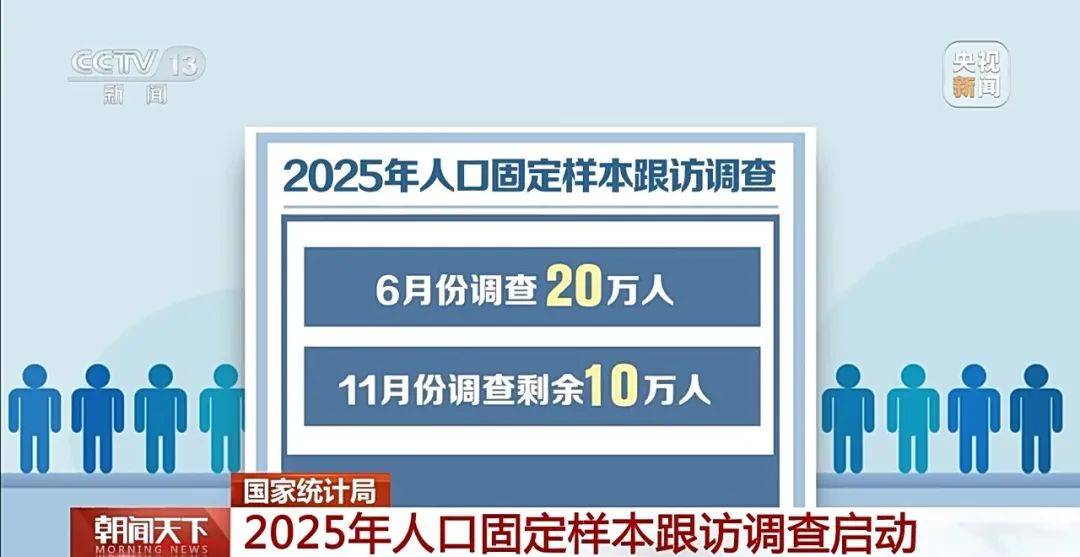
Group 1 - The sales revenue from the consumer goods trade-in program has exceeded 1 trillion yuan this year, reaching 1.1 trillion yuan as of May 31 [1] - Approximately 175 million subsidies have been issued directly to consumers under this program [1] - The program has seen significant participation, with 4.12 million applications for automobile trade-ins and 49.86 million consumers purchasing 12 categories of home appliances [1] Group 2 - The 2025 fixed population sample follow-up survey has officially started, aimed at enhancing population statistics and dynamic monitoring [2] - This survey will reflect the basic characteristics and quality of life changes of the surveyed population over a long period [2] Group 3 - NIO's legal department has issued a statement regarding the dissemination of false information about the shareholding changes of its co-founder and president, Qin Lihong [5] - The company confirmed that there have been no changes in Qin Lihong's shareholding, and the misinformation has disrupted normal capital market order [5] - Legal actions will be taken against those responsible for spreading the false information [5]