海外资产配置

Search documents
全款付清不手软,中国人凭什么为美国拉动楼市?
Sou Hu Cai Jing· 2025-09-16 00:30
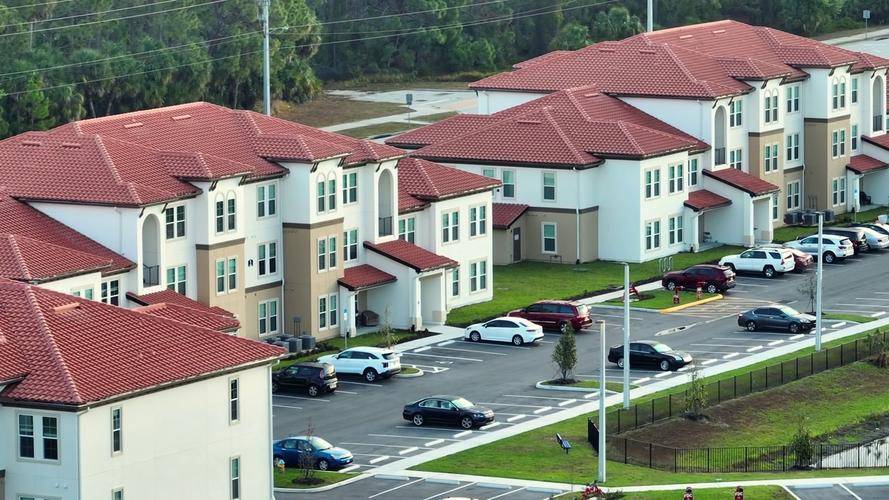
Group 1 - Chinese wealthy individuals are increasingly investing in the U.S. real estate market, particularly in states like California, Maryland, New York, and Texas, as they seek to diversify their assets amid China's slowing economic growth [2][3] - From April 2024 to March 2025, the number of homes purchased by foreign buyers in the U.S. is expected to increase by 40%, with Chinese buyers making up 15% of this group [2] - The median purchase price for Chinese buyers in the U.S. is $759,600 (approximately 5.43 million RMB), which is 90% higher than the national median [2] Group 2 - Between April 2010 and March 2025, Chinese individuals are estimated to have spent a total of $243 billion (approximately 1.73 trillion RMB) on U.S. housing [3] - The current high housing prices in the U.S. have led to a slowdown in domestic purchases, creating an opportunity for wealthy foreign buyers, particularly from China [3] - The trend of Chinese buyers investing in U.S. real estate is reminiscent of past foreign investments from Japan and the Middle East, indicating a shift in the target of U.S. real estate markets [4][5] Group 3 - Many Chinese buyers are motivated by concerns over domestic economic policies, such as potential property taxes, and are looking to secure their wealth in the U.S. real estate market [4] - The desire for better educational opportunities for their children in the U.S. is also a significant factor driving Chinese investments in American properties [4] - The influx of Chinese capital into the U.S. real estate market is seen as a strategic move to mitigate risks associated with currency depreciation and economic instability in China [4]

最快年底!跨境理财通3.0拟扩大地域
证券时报· 2025-09-13 03:30
Core Viewpoint - The "Cross-Border Wealth Management Connect" is set to expand its geographical reach and product offerings, with a 3.0 version draft expected by the end of this year, aimed at enhancing market vitality [1][3]. Group 1: Expansion Plans - The Hong Kong Financial Secretary, Paul Chan, announced plans to expand the "Cross-Border Wealth Management Connect" to regions beyond the Guangdong-Hong Kong-Macao Greater Bay Area, supported by central government initiatives [1]. - The 3.0 version is anticipated to include more cities, with strong expectations for the inclusion of major cities like Beijing and Shanghai, which have significant overseas investment demand [3]. Group 2: Current Status and Participation - As of July 2025, the total number of individual investors participating in the "Cross-Border Wealth Management Connect" has reached 164,600, with 53,000 from Hong Kong and Macao, and 111,600 from mainland China [4]. - The total cross-border remittance limit under the 2.0 version is set at 150 billion yuan, with current remittance levels remaining ample, as evidenced by 109.67 billion yuan in remittances between mainland China and Hong Kong, accounting for 90.7% of the total [5]. Group 3: Financial Transactions - In July 2025, the mainland banks processed 2.464 billion yuan in cross-border remittances, representing 84.5% of the month's total transactions, while securities companies accounted for 15.5% with 451 million yuan [6]. - Cumulatively, by the end of July 2025, mainland banks had facilitated 115.59 billion yuan in cross-border remittances, compared to 5.33 billion yuan by securities companies [6].

最快年底!跨境理财通3.0拟扩大地域
券商中国· 2025-09-13 02:05
Core Viewpoint - The "Cross-Border Wealth Management Connect" is set to expand its geographical reach beyond the Guangdong-Hong Kong-Macao Greater Bay Area, with regulatory adjustments currently under research and optimization, aiming for a 3.0 version consultation draft by the end of this year [1][4]. Group 1: Expansion Plans - The Hong Kong Financial Secretary, Paul Chan, announced plans to appropriately expand the geographical scope, product types, and participant groups of the "Cross-Border Wealth Management Connect" to enhance market vitality [2]. - The 3.0 version of the program is highly anticipated in the industry, particularly for its potential to include major cities like Beijing and Shanghai, which have a strong demand for overseas asset allocation [4]. Group 2: Current Participation and Usage - As of July 2025, the number of individual investors participating in the "Cross-Border Wealth Management Connect" has reached 164,600, including 53,000 from Hong Kong and Macao, and 111,600 from mainland China [5]. - The total cross-border remittance limit for the program is set at 150 billion yuan, with the current remittance amount remaining sufficient. As of July 2025, the cross-border remittance amount between mainland China and Hong Kong was 109.67 billion yuan, accounting for 90.7% of the total remittance [6]. Group 3: Institutional Participation - Banks continue to dominate the "Cross-Border Wealth Management Connect" business, handling 84.5% of the remittance in July, while securities companies accounted for 15.5% [7]. - By the end of July 2025, banks had processed a total of 1,155.87 billion yuan in cross-border remittances, compared to 53.32 billion yuan processed by securities companies [7].

提高投资者体验之“投”的关键策略?安伟、白雪石、韩贤旺、夏莹莹这样说!
Morningstar晨星· 2025-08-07 01:07
Group 1 - The core viewpoint emphasizes that wealth management and investment advisory services should be oriented towards maximizing client investment goals, necessitating a systematic framework that integrates assets, strategies, and funds [10] - The discussion highlights the importance of a comprehensive understanding of client needs through professional assessment tools to match appropriate risk levels and asset allocation strategies [14] - The need for a structured approach to asset allocation is underscored, focusing on long-term capital market assumptions and short-term dynamic adjustments based on macroeconomic data [14] Group 2 - The necessity of distinguishing between onshore and offshore investment scenarios is pointed out, with a focus on the limitations of onshore options primarily relying on QDII products and the interconnected market mechanisms [11] - The discussion on diversification emphasizes that effective asset allocation should consider various dimensions beyond just major asset classes, including legal nature and supply chain positions [13] - The importance of understanding the characteristics of each asset class and their long-term risk-return profiles is highlighted, advocating for a return to fundamental principles in investment decisions [15] Group 3 - The conversation addresses the balance between depth and breadth in asset allocation, warning against excessive diversification that may dilute returns while stressing the importance of risk control [15] - The role of correlation among different assets in portfolio management is discussed, noting that while diversification is essential, it should not compromise the overall effectiveness of the investment strategy [14] - The observation that many portfolios may appear diversified but are often concentrated in a few core holdings, leading to limited contributions from peripheral assets, is made [14]