渠道管控

Search documents
茅台五粮液重拳出击,电商渠道大洗牌,昔日百亿大商遭清退
Sou Hu Cai Jing· 2025-07-20 01:56
Core Viewpoint - The recent actions taken by China's leading liquor companies, Moutai and Wuliangye, to clean up their e-commerce channels highlight a significant shift in the industry aimed at combating counterfeit products and improving consumer experience [1][5]. Group 1: E-commerce Channel Changes - Moutai's e-commerce channel underwent notable changes within 12 days, with approximately 24 online stores being removed and 4 new ones added [1]. - Wuliangye previously reduced its e-commerce stores by 15 and added 4, indicating a trend among major liquor brands to tighten control over online sales [1][5]. - The cleaning actions by both companies are responses to increasing issues faced by consumers when purchasing products online, reflecting a need to restore order in e-commerce channels [1]. Group 2: Impact on Specific Retailers - All 6 stores under the "billion-level" distributor, Gedeyingxiang, were removed from Moutai's e-commerce channel, marking a significant shift in Moutai's online sales strategy [1]. - Gedeyingxiang's stores showed abnormal operational status, with many listings indicating "out of stock" and a lack of recent activity on social media platforms [6]. Group 3: Counterfeit Product Concerns - Moutai's subsidiary, Laimao, found that 22.1% of the 289 bottles sampled from various platforms were counterfeit [5]. - Wuliangye provided free authentication services for 1,610 bottles, revealing that 16.65% were counterfeit, underscoring the severity of the issue [5]. Group 4: Gedeyingxiang's Operational Challenges - Gedeyingxiang has faced significant operational difficulties, including a history of unpaid wages and legal restrictions on its consumption due to non-compliance with court orders [8]. - The company’s financial troubles have led to the freezing of 44.29 million RMB worth of shares held by its legal representative [8][10]. Group 5: Industry Implications - The actions of Moutai and Wuliangye signal a broader trend in the liquor industry towards stricter channel management and quality control, indicating that companies must ensure high standards to survive in a competitive market [11].



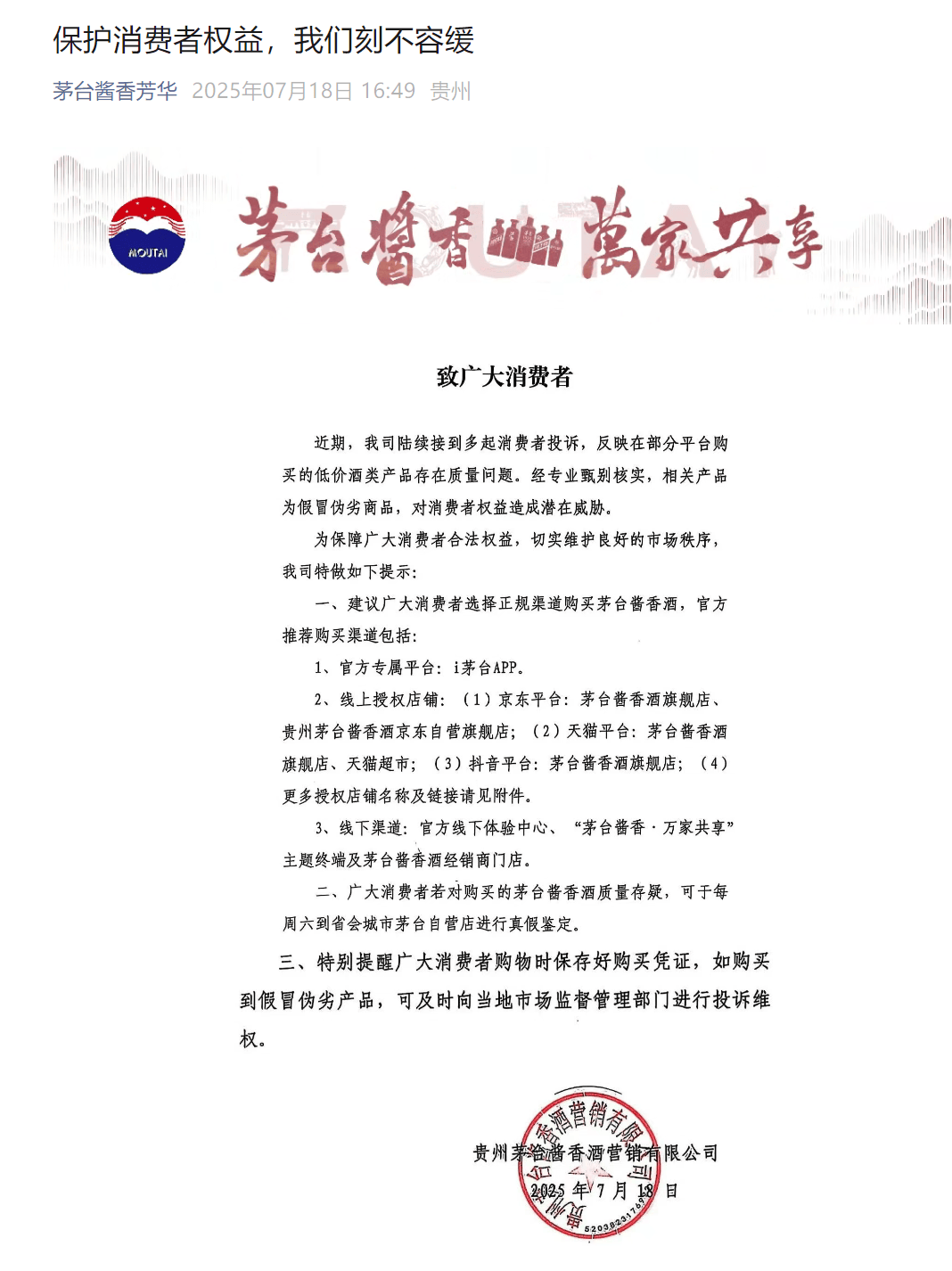
茅台酱香酒“挥刀”电商渠道:24家店铺被清退 包括这家昔日“百亿”大商
Mei Ri Jing Ji Xin Wen· 2025-07-19 09:56
Core Viewpoint - Major liquor companies, including Moutai and Wuliangye, are tightening control over their online sales channels due to increasing consumer complaints about counterfeit products, leading to significant reductions in authorized online stores [2][6][9]. Group 1: Channel Adjustments - Moutai's recent online store list saw the removal of approximately 24 stores and the addition of about 4 new ones, indicating a significant shift in its e-commerce strategy [2][3]. - Wuliangye also undertook a similar channel cleanup in March, reducing its online store count by 15 while adding 4 new stores [6][9]. - The online sales lists cover major platforms such as JD.com, Douyin, Tmall, WeChat Video, Kuaishou, Suning, and Vipshop, totaling over 140 stores for Moutai [3][6]. Group 2: Counterfeit Product Issues - Moutai's sampling of 289 bottles of its Lai Moutai sold online revealed that 64 bottles were counterfeit, highlighting the severity of the issue [7]. - Wuliangye provided free authentication services for 1,610 bottles, with 268 identified as counterfeit, accounting for 16.65% of the total [7]. - Both companies have expressed a "zero tolerance" policy towards counterfeit products, emphasizing the need for strict channel management [6][9]. Group 3: Impact on Authorized Dealers - The company GeDeYingXiang, previously a major distributor, had 6 of its online stores removed from Moutai's sales list, indicating a significant loss of business [8][9]. - GeDeYingXiang's operational status has been questioned, with reports of its stores showing no stock and a lack of customer service responses [9][10]. - The company is facing financial difficulties, including wage arrears and court-ordered restrictions on its operations, which have contributed to its removal from the authorized dealer list [10][15]. Group 4: Industry Implications - The actions taken by Moutai and Wuliangye signal a broader trend of tightening control over online sales channels in the liquor industry, aimed at protecting brand value and consumer rights [9][15]. - The ongoing restructuring of online distribution channels suggests an accelerated consolidation within the liquor market, as companies seek to enhance operational quality and consumer experience [9][15].
茅台酱香酒“挥刀”电商渠道:24家店铺被清退
news flash· 2025-07-19 09:56
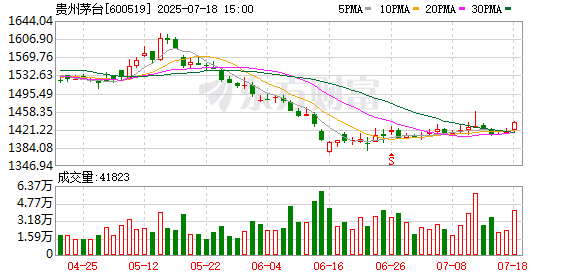
Core Insights - Moutai's e-commerce channel list has undergone significant changes within just 12 days, with approximately 24 online stores being removed and about 4 new stores added [1] - The removal of 6 stores under the "billion-level" distributor Ge De Ying Xiang indicates a tightening of channel control by major liquor companies, following a similar move by Wuliangye [1] - The updated online sales list includes seven major e-commerce platforms, with a total of over 140 stores for Moutai's sauce-flavored liquor [1] E-commerce Channel Changes - The total number of channels has decreased compared to the previous list, with specific reductions noted across various platforms [1] - JD platform saw a decrease of 4 stores but added 1 new store; Douyin experienced the most significant reduction with 10 stores removed and only 1 added [1] - Other platforms like Tmall, WeChat Video Account, and Suning also saw reductions of 4, 5, and 1 store respectively, while WeChat Video Account added 1 store; Vipshop remained unchanged [1]
酒水行业观察:茅台强化渠道管控,官媒纠正“一刀切”式禁酒政策
Qi Lu Wan Bao· 2025-06-24 02:38
Group 1: Company Strategies - Moutai Group has reached an agreement with JD.com and Alibaba to strengthen channel control, requiring e-commerce platforms to integrate into Moutai's channel ecosystem and combat unfair competition, particularly low-price diversion and counterfeit products [2] - Wuliangye announced its first interim dividend in nearly 20 years, amounting to 10 billion yuan, and committed to a cash dividend rate of no less than 70% annually from 2024 to 2026 [2] - Yanghe has launched a new high-line light bottle liquor strategy, targeting the mass market with a simplified packaging and three-year aged base liquor, in collaboration with JD.com [2] Group 2: Market Trends - The low-alcohol liquor market is experiencing explosive growth, with Meituan's 618 sales data showing a more than tenfold increase in white liquor transaction value year-on-year, and JD.com reporting a 40% increase in white liquor sales, particularly in low-alcohol and fruit wine categories [3] - The China Alcoholic Drinks Association predicts that the low-alcohol liquor market will exceed 74 billion yuan by 2025, with a compound annual growth rate of 25% [3] Group 3: Industry Policies - State media has criticized the "one-size-fits-all" ban on alcohol policies in certain regions, emphasizing the need to protect the reasonable demands of the catering industry and avoid equating violations with a ban on normal dining [4]