
电力市场

Search documents
欧洲热浪引爆电价!风电产能骤降 煤气发电紧急补供
智通财经网· 2025-07-07 09:15
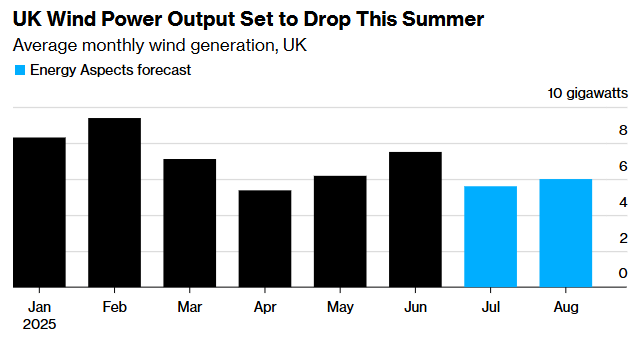
Core Viewpoint - The expected significant decline in wind power generation during the summer in Europe will lead to an increase in coal and gas power generation, resulting in higher electricity prices and increased emissions [1][4]. Group 1: Electricity Generation Trends - Major markets including Germany, France, and Spain are projected to see a 50% increase in coal power generation this month compared to June [1]. - Energy Aspects estimates a 40% decline in wind power generation for July and August [1]. - Historical fossil fuel power plants in Europe may be reactivated, highlighting their continued importance despite investments in renewable energy [1]. Group 2: Electricity Prices - On July 1, the hourly electricity price at the Paris EPEX Spot SE surged to €557.34 per megawatt-hour, nearly nine times higher than the lowest price of the day [1]. - The electricity futures price in Germany for next month is €80.94 per megawatt-hour, approximately one-third higher than in April [1]. Group 3: Weather Impact - Recent temperatures in parts of Germany have approached 40 degrees Celsius, exacerbating the situation for wind power generation [2]. - If the cessation of wind power generation continues for an extended period, fossil fuels will need to fill the evening demand gap in the electricity market [2]. Group 4: Emissions and Historical Context - According to BloombergNEF, emissions from EU power plants may increase by 14% this month compared to June [4]. - Similar patterns of low power generation were observed last winter and spring, necessitating increased output from fossil fuel power plants to ensure electricity supply [4].

现货市场加速覆盖却难盈利?储能商业模式迎来市场化考验
中关村储能产业技术联盟· 2025-03-28 08:53
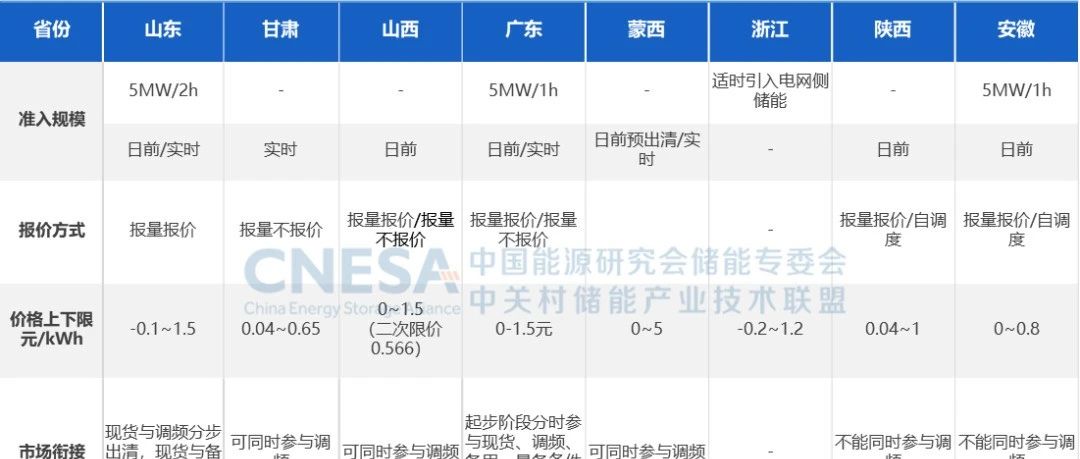
Core Viewpoint - The new energy storage capacity in China is experiencing explosive growth, with installed capacity expected to exceed 100GW by 2025, driven by favorable policies and market developments [2][3]. Group 1: Market Development - By the end of 2024, China's new energy storage installed capacity is projected to reach 78.3GW, surpassing pumped storage capacity for the first time [2]. - The rapid growth of new energy storage installations is accompanied by significant policy changes aimed at promoting market-oriented development [3]. Group 2: Spot Market Progress - Several provincial spot markets, including Shanxi, Shandong, and Guangdong, have transitioned to formal operation in 2024, with more regions expected to follow [5][6]. - The inter-provincial electricity spot market officially began operations in October 2024, marking a milestone in the establishment of a unified national electricity market [6]. Group 3: Pricing Mechanisms - Initial market stages allow energy storage to choose between "quantity and price reporting" or "quantity without price reporting," with a gradual shift towards the former as the market matures [9]. - Price limits vary by region, with the highest clearing price in Inner Mongolia at 5 yuan/kWh and the lowest in Gansu at 0.65 yuan/kWh, indicating a conservative pricing mechanism [9]. - The average trading price in the spot market is declining due to falling primary energy prices and rapid growth in renewable energy generation, with 2024 spot price differences concentrated between 0.2-0.3 yuan/kWh [9]. Group 4: Long-term Market Structure - The establishment of a unified national market is driving the clarification of core rules in provincial long-term markets, ensuring efficient connections between long-term and spot markets [14]. - Energy storage can effectively meet peak demand and secure revenue through long-term trading mechanisms that utilize time-based pricing [14]. Group 5: Time-of-Use Pricing - By the end of 2024, 13 provinces have officially released new time-of-use pricing policies, with adjustments made to peak and valley periods to optimize energy storage operations [16][17]. - The expansion of floating price ranges in nine provinces is expected to enhance price differentials, benefiting energy storage profitability [17]. Group 6: Future Outlook - The release of the "136 Document" in February 2025 will significantly impact the energy storage industry by transitioning from mandatory storage to market-driven investment [22]. - The document is expected to widen price differentials, allowing energy storage facilities to capitalize on market price fluctuations [22]. - Companies in the energy storage sector will need to enhance their investment, trading, and production capabilities to adapt to the evolving market landscape [23].
新能源电力专家交流
2025-03-02 16:45
Summary of Conference Call Records Industry Overview - The conference call primarily discusses the renewable energy sector, focusing on wind and solar power, particularly in China. Key Points and Arguments Wind Power vs. Solar Power - Wind power's investment return is projected to decrease by 1 to 1.5 percentage points, currently around 8%, while solar power is expected to drop by 1.5 to 2 percentage points, now at approximately 6.5% to 7% [3][6][10]. - The ability of wind power to participate in the electricity market is significantly stronger than that of solar power due to its consistent output across different times of the day [1][3]. Project Economics - The economic viability of offshore wind power is considered better than onshore wind power in certain regions, particularly in areas with higher wind speeds and utilization hours [4][10]. - The average investment return for onshore wind projects is estimated at around 8.1% for 2024, while offshore wind projects are expected to stabilize around 7% [9][10]. Regional Analysis - Northeast and North China regions are highlighted for their potential in renewable energy utilization, with some areas achieving utilization hours between 2000 to 2600 hours [8][9]. - The economic conditions and electricity pricing in coastal provinces are expected to provide protective measures for offshore wind power pricing [3][10]. Policy Impact - The introduction of new policies is anticipated to impact project returns negatively, with expectations of a decline in overall market share for the five major energy groups from 10% to 7% [11][12]. - The government aims for an annual increase of around 200 million watts in installed capacity, which aligns with the current investment capabilities of power generation companies [11][12]. Market Dynamics - The market is expected to undergo a consolidation process, with smaller companies likely to exit, benefiting larger firms [12][13]. - The conference notes a significant decline in the market share of major players, indicating a shift towards smaller enterprises participating in the renewable energy sector [12][13]. Future Projections - The years 2026 and 2027 are projected to be critical, with expectations of a significant drop in installed capacity due to new policies and market conditions [24][25]. - The anticipated growth in offshore wind projects is contingent on successful project approvals and market conditions, with a focus on large-scale projects in coastal areas [26][30]. Storage and Technology - The discussion includes the role of energy storage in the renewable sector, with expectations that storage installations will not decline despite market fluctuations [19][20]. - The need for a balance between renewable energy generation and storage capabilities is emphasized, particularly in light of new market entry policies [20][21]. Conclusion - The renewable energy sector is facing challenges due to policy changes and market dynamics, but there are opportunities for growth in specific regions and technologies. The focus remains on optimizing project economics and navigating the evolving regulatory landscape to ensure sustainable development in the industry.