电动汽车技术

Search documents
“中国已迅速切入”!美媒感叹:欧美车企仍在艰难转型,中国电动汽车已凭技术和价格领跑
Huan Qiu Wang· 2025-11-07 09:28
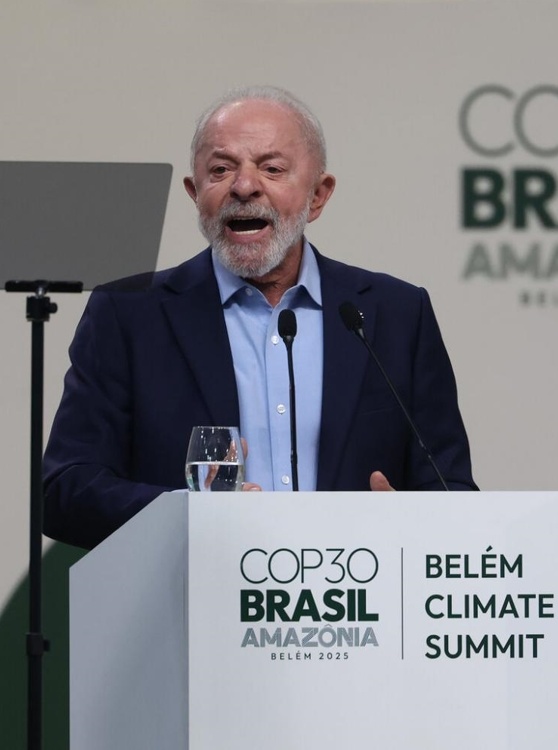
Core Insights - Brazil has chosen Chinese electric vehicles as official cars for leaders at the COP30 climate summit, signaling a shift towards Chinese technology in the automotive sector [1][3] - While Western automakers struggle to transition to electric vehicle production, China has gained a competitive edge through advanced technology and lower prices, making its vehicles particularly attractive in developing countries [3][4] Market Position - Chinese electric vehicles have rapidly captured market share in Asia and Europe, accounting for approximately two-thirds of the global market [4] - In Brazil, over 80% of sold electric vehicles are Chinese brands, highlighting the dominance of Chinese manufacturers in this emerging market [4] Environmental Impact - The streets of Belem, Brazil, showed reduced emissions during the summit, with a noticeable presence of electric vehicles contributing to cleaner air [4] - The shift to electric vehicles in Brazil reflects a broader trend of countries seeking alternatives to traditional automotive options, indicating a significant change in transportation dynamics [4]

亏损收窄、指引上调:QuantumScape(QS.US)盘前飙升,固态电池潜力再获关注
智通财经网· 2025-10-23 11:08
Core Viewpoint - QuantumScape has reported a lower-than-expected third-quarter loss and raised its adjusted EBITDA forecast for the year, leading to a significant increase in its stock price [1][2]. Financial Performance - The company reported a loss of $0.18 per share, better than the analyst expectation of a $0.20 loss [1]. - Adjusted EBITDA for the quarter was -$61.4 million, aligning with the company's guidance [1]. - QuantumScape has revised its full-year adjusted EBITDA loss forecast from $250 million to $270 million down to a range of $245 million to $260 million due to improved operational efficiency [1]. - Operating costs decreased from $130.2 million a year ago to $115 million, while capital expenditures were $9.6 million, primarily for the acquisition of Eagle Line facilities and equipment [1]. - The company has lowered its full-year capital expenditure forecast to $30 million to $40 million [1]. - As of the end of the third quarter, QuantumScape had $1 billion in cash, with an extended cash reserve sustainability forecast until the end of this decade, a 12-month extension from previous estimates [1]. Industry Position - QuantumScape is emerging as a strong challenger to Tesla in the rapidly evolving electric vehicle (EV) technology sector, leveraging its advanced solid-state battery technology [2]. - The energy density of QuantumScape's solid-state batteries is reported to be three times that of Tesla's lithium-ion batteries, with faster charging times and enhanced safety and sustainability [2]. - Solid-state batteries are viewed as a breakthrough technology to overcome current limitations in electric vehicle performance, potentially allowing for a range of 600 miles on a single charge at a cost lower than gasoline vehicles [2]. - The company claims its batteries can charge to 80% in just 15 minutes, addressing a major consumer concern regarding charging times for electric vehicles [2]. - QuantumScape's technology is noted for its cost-effectiveness and scalability, which could further reduce production costs in the competitive electric vehicle market [2].

Stellantis紧急叫停的技术,丰田、宝马仍在继续
汽车商业评论· 2025-07-18 05:32
Core Viewpoint - Stellantis has decided to terminate its hydrogen fuel cell technology development project due to limited hydrogen infrastructure, high capital requirements, and insufficient consumer incentives, predicting that hydrogen-powered light commercial vehicles will not see widespread adoption before 2030 [2][7][9]. Group 1: Termination of Hydrogen Projects - Stellantis announced the cessation of its hydrogen fuel cell technology development project on July 16, citing the need for significant investment and the current inadequacy of hydrogen refueling infrastructure [2][7]. - The company will stop investing in Symbio, a joint venture focused on hydrogen fuel cell technology, which Stellantis acquired a 33.3% stake in 2023 [3]. - The decision to abandon hydrogen projects follows the approval of Symbio's latest business plan, which may destabilize the joint venture and affect related suppliers and jobs [5][11]. Group 2: Strategic Shift - The decision to withdraw from hydrogen energy aligns with Stellantis's response to stringent CO2 emission regulations in Europe, as the hydrogen market is still considered niche and lacks short-term economic sustainability [7][15]. - Stellantis plans to focus on electric and hybrid vehicles to meet customer expectations and maintain competitiveness [9][15]. - The shift away from hydrogen indicates a deeper strategic transformation towards electric vehicles (EVs), impacting product supply and dealer investment plans [15]. Group 3: Industry Perspectives on Hydrogen - While Stellantis exits the hydrogen sector, companies like Toyota and Hyundai continue to invest in hydrogen technology, with Toyota collaborating with BMW on hydrogen vehicles and Hyundai launching new fuel cell models [17][19]. - Other manufacturers, such as Honda and Renault, are also pursuing hydrogen technology, but the lack of supporting refueling infrastructure remains a significant challenge for the industry [21].

英媒:中国如何使电动汽车成为主流
Huan Qiu Wang Zi Xun· 2025-06-23 21:51
Core Insights - China has become a global leader in the electric vehicle (EV) sector, with nearly half of all cars sold in the country last year being electric [1][2] - The country has invested approximately $231 billion in the EV industry from 2009 to the end of 2023, enabling significant advancements in technology and infrastructure [1] - The establishment of the largest public charging network globally has made EVs more accessible, with drivers only a few minutes away from charging stations [1] Investment and Economic Support - The Chinese government has provided substantial financial support across various segments of the EV industry, including consumers, manufacturers, and battery suppliers [1] - Subsidies, tax exemptions, and favorable electricity prices at public charging stations have made EVs economically attractive for consumers [1] Industry Leadership - Analysts indicate that China is leading the EV sector by a decade, with companies like BYD and CATL playing pivotal roles in the market [1] - CATL, founded in 2011, now supplies one-third of the world's EV batteries, highlighting China's dominance in battery production [1]
5月5日电,美国电动汽车制造商Lucid与沙特阿拉伯阿卜杜拉国王科技大学(KAUST)宣布建立战略合作伙伴关系,以提升电动汽车技术的领先地位,并增强自动驾驶和先进驾驶辅助系统(ADAS)的能力。
news flash· 2025-05-05 08:05
Group 1 - Lucid has established a strategic partnership with King Abdullah University of Science and Technology (KAUST) in Saudi Arabia [1] - The partnership aims to enhance the leading position of electric vehicle technology [1] - The collaboration will focus on improving capabilities in autonomous driving and advanced driver-assistance systems (ADAS) [1]

分钟级超充引美媒关注:两大领先企业都是中国的,美国已被甩在身后
Feng Huang Wang· 2025-04-24 02:18
Core Insights - Leading battery manufacturers CATL and BYD have reduced electric vehicle charging times to just five minutes, achieving "oil-electric parity" and surpassing the U.S. in this technology [1] - CATL's second-generation Shenxing supercharging battery offers a range of 520 kilometers after a five-minute charge, while BYD's MW flash charging provides a range of 400 kilometers [1] - The advancements in battery technology highlight China's significant global leadership in next-generation technologies, having made breakthroughs in AI, semiconductors, and electric vehicles [1] Industry Trends - In March, pure electric vehicles, plug-in hybrid vehicles, and range-extended vehicles accounted for 52% of passenger car sales in China, indicating rapid adoption of electric vehicles [2] - Chinese companies are increasingly dominating the global electric vehicle supply chain, particularly in battery technology, with many gaining opportunities through partnerships with Tesla [2] - Concerns over the potential impact of Chinese electric vehicles entering overseas markets have raised alarms in the U.S. and other Western markets [2] Company Developments - Ford is constructing a battery factory in the U.S. to utilize CATL's technology for battery production, as CATL is a major producer of lithium iron phosphate (LFP) batteries [3] - CATL's latest Shenxing series fast-charging battery is an LFP battery with a range of approximately 500 miles, improving electronic transmission efficiency and mitigating overheating during rapid charging [3] - CATL has also launched its first sodium-ion battery brand, "Sodium New," which aims to reduce reliance on lithium resources due to the abundant availability of sodium [3] Infrastructure Challenges - The widespread adoption of these new battery technologies depends on the development of corresponding charging infrastructure [4] - BYD plans to build over 4,000 "MW flash charging stations" in China, although the initial charging system will only support two vehicle models, limiting short-term adoption [4] - NIO, which uses CATL batteries and operates its own battery swap stations, emphasizes the need for manufacturers to focus on the speed of rapid charging technology adoption, which is closely tied to infrastructure development [5] Comparative Analysis - China has over 13 million electric vehicle charging facilities, while the U.S. has approximately 77,300 charging stations with around 230,000 charging points, indicating China's significant lead in electric vehicle charging infrastructure [5]


【行业政策】一周要闻回顾(2025年4月7日-4月13日)
乘联分会· 2025-04-14 08:37
Core Viewpoint - The article discusses the solicitation of opinions on three automotive industry standards related to electric vehicle battery thermal management systems, emphasizing the importance of establishing these standards for industry development and safety [3][5][7]. Group 1: Electric Vehicle Battery Thermal Management Standards - The three proposed standards include: "Part 3: Air Cooling System," "Part 4: Heater," and "Part 5: Direct Cooling and Heating System," which aim to provide technical requirements and testing methods for electric vehicle battery thermal management systems [4][5]. - The air cooling system standard addresses the technical requirements and testing methods for the air cooling systems of electric vehicle batteries, filling a gap in the industry standards [7]. - The establishment of these standards is expected to enhance product safety, unify evaluation standards, and promote the healthy development of the new energy vehicle industry [7]. Group 2: Hybrid Vehicle Supercapacitor Standards - The solicitation for the "Performance Requirements and Testing Methods for Supercapacitors in Hybrid Vehicles" aims to address the lack of standards in the industry, which has limited development [12][14]. - The proposed standard will include performance parameters such as capacity, internal resistance, and maximum power density, which are crucial for ensuring product quality and consistency in the hybrid vehicle sector [15]. - The adoption of this standard is anticipated to significantly improve the technical level and product quality of supercapacitors used in hybrid vehicles, supporting the high-quality development of new energy vehicles [15]. Group 3: Greenhouse Gas Emission Standards for Automotive Engines - The article also discusses the solicitation of opinions on two standards related to greenhouse gas emissions from automotive engines, which are essential for promoting low-carbon and sustainable development in the automotive industry [16][18]. - The standards will provide a unified framework for quantifying carbon footprints and emissions, which is critical for the automotive industry's compliance with carbon neutrality goals [20][21]. - Establishing these standards will help automotive engine manufacturers manage their emissions more effectively, thereby supporting the industry's transition to greener practices [21].