
石油出口

Search documents
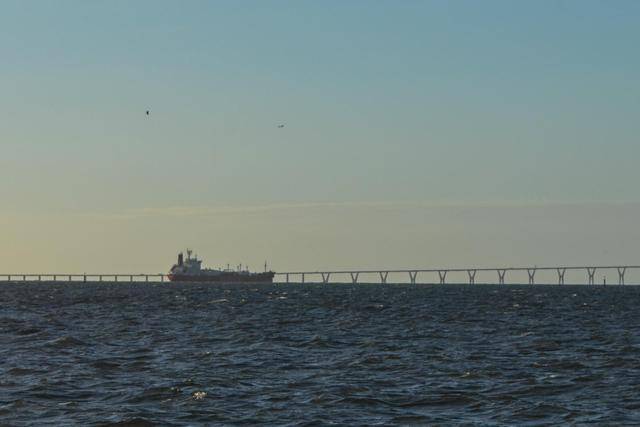
聚焦|美国封锁下 委内瑞拉主要石油产区仍有油轮进出港
Sou Hu Cai Jing· 2025-12-25 19:02
Core Viewpoint - Venezuela's oil industry remains operational despite recent challenges, with plans to increase production significantly by 2025. Group 1: Oil Industry Operations - The Maracaibo Lake region is a critical channel for Venezuela's oil exports to the world, with oil tankers still seen operating in the area [6]. - Venezuela's Vice President and Oil Minister, Rodriguez, announced a target to reach a daily production of 1.2 million barrels of oil by the end of 2025 [6]. - Chevron's oil tankers have been legally transporting crude oil from Venezuela to the United States, with reports indicating an export of approximately 150,000 barrels per day in November [6]. Group 2: U.S. Sanctions and Military Presence - The U.S. has classified the Venezuelan government as a "foreign terrorist organization" and ordered the blockade of sanctioned oil tankers entering or leaving Venezuela [6]. - Recent U.S. military deployments in the Caribbean Sea near Venezuela are part of a strategy to exert pressure on the Venezuelan government, with threats of potential land-based actions against drug traffickers [6].

美国施压未阻增长 委内瑞拉11月石油日出口超90万桶
Yang Shi Xin Wen· 2025-12-03 19:59
Core Insights - Venezuela's oil exports slightly increased to approximately 921,000 barrels per day in November, marking the third highest monthly average of the year [1] - The increase in exports is attributed to a 3% rise compared to October, despite ongoing U.S. military operations in the Caribbean not disrupting Venezuela's oil trade [1] - U.S. oil exports to Venezuela rose to about 150,000 barrels per day in November, up from 128,000 barrels per day in October [1] - Exports of Venezuelan oil by-products and petrochemicals increased from 195,000 tons in October to approximately 277,000 tons in November [1] - Imports of light crude oil and fuel surged from 74,000 barrels per day in October to about 167,000 barrels per day, more than doubling [1]
俄罗斯新罗西斯克港已恢复石油装载作业
Ge Long Hui A P P· 2025-11-16 15:04
Core Insights - The Novorossiysk port in Russia has resumed oil loading operations after a two-day suspension due to a Ukrainian drone attack [1] - The Suezmax tanker "Aran" and the Aframax tanker "Rhodes" are currently loading oil at the port [1] - The attack on the port caused damage to two oil berths, leading to a temporary halt in operations [1] Industry Summary - The resumption of operations at Novorossiysk port indicates a quick recovery from disruptions caused by geopolitical tensions [1] - The involvement of major tanker types, Suezmax and Aframax, highlights the port's capacity to handle significant oil shipments [1] - The incident underscores the vulnerability of oil export infrastructure in conflict zones, impacting supply chains [1]
【环球财经】国际能源署:俄罗斯9月石油出口量增至744万桶/日
Xin Hua Cai Jing· 2025-10-14 22:41
Core Insights - The International Energy Agency report indicates that by September 2025, Russian oil and oil product exports are expected to increase by 2.76% month-on-month, reaching 7.44 million barrels per day [1] - Despite the increase in export volume, export revenue from oil supplies decreased by 1.7% to $13.35 billion [1] - In September, Russian oil deliveries rose by 370,000 barrels per day, while oil product supply decreased by 170,000 barrels per day, marking a significant drop in oil product metrics to the lowest level in nearly a decade, primarily due to reduced diesel and fuel oil supplies [1] Export Revenue Analysis - In September, Russian oil export revenue reached $8.96 billion, an increase of approximately $200 million month-on-month [1] - Conversely, oil product export revenue was $4.39 billion, reflecting a decrease of $440 million month-on-month [1] - Compared to September of the previous year, Russian oil export revenue decreased by approximately $720 million [1]
Iraq restarts oil exports from Kurdistan region to Türkiye
Yahoo Finance· 2025-09-29 11:01
Core Points - Iraq has resumed oil exports from the Kurdistan region to Türkiye after a hiatus of over two and a half years, following an interim agreement involving Iraq's Federal Government, the Kurdistan Regional Government (KRG), and foreign oil producers [1][2] - The agreement allows for the transport of 180,000 to 190,000 barrels per day (bpd) of crude oil to Türkiye's Ceyhan port, with plans to increase this volume to 230,000 bpd [2][6] - The resumption of exports is expected to alleviate economic pressures in the Kurdistan region, which has been facing salary delays and service cuts [3] Industry Impact - Iraq, as the second-largest oil producer in OPEC, exports approximately 3.4 million barrels per day from its southern ports, and the addition of northern exports is anticipated to enhance overall production capacity [3][4] - The U.S. government has supported the restart of exports, viewing increased supply as a means to potentially lower crude prices [5] - Eight oil companies in Iraqi Kurdistan, which account for over 90% of the region's production, have reached agreements to resume exports under the new deal [5][6] Future Plans - The preliminary plan requires the KRG to deliver at least 230,000 bpd to the State Oil Marketing Organisation (SOMO), with an additional 50,000 bpd allocated for local use [6] - The involved parties are scheduled to meet within 30 days to discuss settling outstanding debts owed by the KRG to producers [6]
DNO Updates Status of Tawke License Oil Exports
Globenewswire· 2025-09-26 05:06
Core Viewpoint - DNO ASA has been instructed to prepare for oil exports through the Iraq-Türkiye Pipeline starting on 27 September 2025, following agreements among the Federal Government of Iraq, the Kurdistan Regional Government, and international oil companies [1]. Group 1: Export Operations - DNO will deliver the Kurdistan Regional Government's share of sales from the Tawke license, averaging 38,000 barrels per day, for export [2]. - The foreign contractor group, including DNO and Genel Energy International Limited, will continue selling an average of 30,000 barrels per day to local buyers under existing contracts [2]. - DNO has opted not to engage directly in exports at this time, continuing to sell oil on a cash-and-carry basis at prices in the low USD 30s per barrel [3]. Group 2: Buyer Arrangements - Buyers have established their own arrangements to place oil purchased from DNO into the export pipeline, which supports the larger export project [4]. Group 3: Agreements and Financials - The agreements between the Federal Government of Iraq, the Kurdistan Regional Government, and participating international oil companies will end at year-end, with the first payment expected to be USD 14 per barrel after transportation costs, anticipated in mid-December [5]. - This payment figure will be adjusted in 2026 based on evaluations by a Baghdad-designated consultant [5]. Group 4: Production Expansion - DNO has launched a major production expansion program at the Tawke and Peshkabir fields to replace equipment damaged during July drone attacks, with plans to drill eight wells in 2026 targeting production of 100,000 barrels per day [6]. - The company emphasizes the need for immediate, predictable, and continuous flow of funds to support this ambitious program [6].

普京“胜券在握”?特朗普交易型外交或被利用
Jin Shi Shu Ju· 2025-08-14 08:24
Group 1 - The meeting between Russian President Putin and US President Trump aims to negotiate an end to the ongoing Russia-Ukraine conflict, but analysts doubt a lasting solution will be achieved [1][2] - Putin is expected to leverage the meeting to extract concessions from the US, potentially expanding the agenda beyond Ukraine to include geopolitical and economic cooperation, such as energy deals and arms control [2][3] - Analysts suggest that Trump’s reluctance to impose severe sanctions directly on Russia may expose his vulnerabilities during the negotiations, as he has preferred to target Russia's allies instead [3][4] Group 2 - Despite appearing to hold an advantageous position, Putin is under pressure from international sanctions, labor shortages, and high inflation, which may weaken his negotiating stance [5] - The Russian economy is struggling, with significant fiscal deficits exacerbated by declining oil revenues, indicating a fragile economic situation [5] - There are concerns that any agreements reached may come at the expense of Ukraine, particularly if territorial concessions are made, which could lead to an unsustainable resolution [5]
原油成品油早报-20250811
Yong An Qi Huo· 2025-08-11 06:57
Report Overview - Report Title: Crude Oil and Refined Oil Morning Report - Research Team: Energy and Chemicals Team of the Research Center - Date: August 11, 2025 [2] 1. Report Industry Investment Rating - No information provided 2. Core View of the Report - This week, the absolute price of crude oil dropped to $65 per barrel for Brent. The monthly spreads of crude oil in the three major markets declined slightly. Geopolitical uncertainties resurfaced over the weekend due to potential misunderstandings about the Russia - Ukraine cease - fire and Iran's plan to block the "US corridor" in the Caucasus. Fundamentally, global oil inventories increased this week, with a slight decline in US commercial crude oil inventories, and changes in gasoline and diesel inventories in different regions. After the decline in crude oil prices, global refinery profits rebounded. The near - term crude oil fundamentals are volatile. Supply faces a risk of decline due to sanctions on Iran and Russia, OPEC+ crude oil exports are expected to accelerate, and refinery operations in the third quarter are expected to be stronger than anticipated, which supports the monthly spread. However, the peak of the global supply - demand fundamentals has passed. It is expected that the absolute price of crude oil will maintain a volatile pattern, and it is predicted to fall to $55 - $60 per barrel in the fourth quarter. Attention should be paid to the impact of US tariff policies on the global economy and the non - OPEC production schedule [6]. 3. Summary by Relevant Catalogs 3.1 Price Data - From August 4 - 8, 2025, WTI prices decreased from $66.29 to $63.88, Brent from $68.76 to $66.59, and Dubai from $70.64 to $69.22. SC decreased from 514.30 to 489.80. Other related products also showed various price changes [3]. 3.2 Daily News - Ukraine's armed forces attacked Russia's Saratov refinery. Iran vowed to block the "US corridor" in the Caucasus. There might be a misunderstanding about Russia's cease - fire requirements by Trump's envoy. Canada plans to lower the price cap on Russian seaborne crude oil. OPEC's oil production in July increased by 270,000 barrels per day compared to June. Trump threatened to impose secondary tariffs on China for buying Russian oil, and China responded that its energy cooperation with Russia is legitimate. India continues to import Russian oil but the quantity may decline. Russian crude export price discounts have widened [3][4][5]. 3.3 Regional Fundamentals - According to the EIA report for the week of August 1, US crude exports increased by 620,000 barrels per day to 3.318 million barrels per day, domestic production decreased by 30,000 barrels to 13.284 million barrels per day, commercial crude inventories (excluding strategic reserves) decreased by 3.029 million barrels to 424 million barrels (a 0.71% decline), the four - week average supply of US crude products increased by 1.61% year - on - year, strategic petroleum reserve (SPR) inventories increased by 235,000 barrels to 403 million barrels (a 0.06% increase), and commercial crude imports (excluding strategic reserves) decreased by 174,000 barrels per day to 5.962 million barrels per day. From July 25 - 31, the operating rate of major refineries in China increased slightly, while that of Shandong local refineries remained basically unchanged. Chinese refinery output showed a decline in gasoline and an increase in diesel, with corresponding changes in inventories. The comprehensive profit of major refineries rebounded, while that of local refineries declined [6]. 3.4 Weekly View - The absolute price of crude oil dropped this week, and geopolitical uncertainties resurfaced. Global oil inventories increased, and refinery profits rebounded after the price decline. Near - term fundamentals are volatile. Supply may decline due to sanctions, OPEC+ exports are expected to accelerate, and third - quarter refinery operations are expected to be stronger. The peak of supply - demand fundamentals has passed, and the price is expected to be volatile and fall to $55 - $60 per barrel in the fourth quarter. Attention should be paid to US tariff policies and non - OPEC production schedules [6].
伊拉克库尔德斯坦地区油气公司Apikur的消息人士称,北部管道恢复石油出口取决于相关公司是否已收到最终确定的书面协议。
news flash· 2025-07-18 10:58
Core Viewpoint - The resumption of oil exports through the northern pipeline in the Kurdistan region of Iraq is contingent upon whether the relevant companies have received a finalized written agreement [1] Group 1 - The oil and gas company Apikur in the Kurdistan region of Iraq is involved in discussions regarding the resumption of oil exports [1] - The decision to restart oil exports is dependent on the receipt of a definitive written agreement by the involved companies [1]
能源情报集团记者AmenaBakr:预计今年伊朗石油出口量在170-180万桶/日之间。鉴于目前的减产措施,欧佩克+内部的闲置产能处于良好水平,但无论供应情况如何,该地区发生袭击都极有可能推高油价。
news flash· 2025-06-12 01:29
Core Viewpoint - Iran's oil export is expected to range between 1.7 to 1.8 million barrels per day this year, influenced by current production cuts and regional stability concerns [1] Group 1: Oil Export Projections - Iran's oil export volume is projected to be between 1.7 million and 1.8 million barrels per day for the current year [1] Group 2: OPEC+ Production Dynamics - OPEC+ has maintained a good level of idle capacity despite the ongoing production cuts [1] Group 3: Market Risks - Any attacks in the region are likely to significantly increase oil prices, regardless of the supply situation [1]