稀土联盟

Search documents
四国在美牵手,建立稀土联盟,转头却发现:特朗普又对中国让步了
Sou Hu Cai Jing· 2025-07-05 02:33
Group 1 - The U.S. is attempting to reduce its reliance on Chinese rare earths, with the first new rare earth mine set to produce in July 2023, valued at $37 billion [1] - Australia, despite having the fifth-largest rare earth reserves, lacks the production capacity and technology to replace China in the rare earth supply chain [3] - Japan is trying to strengthen its rare earth supply chain cooperation with the U.S. but is caught in a dilemma due to its past experiences with China [3] Group 2 - India claims it will replace China in the rare earth sector within five years, but its production capacity is less than one-tenth of China's [3] - The U.S. Treasury Secretary expressed urgency as China's exports of rare earth magnets to the U.S. have not returned to pre-April levels after tariffs were imposed [3][5] - China's dominance in rare earth refining technology poses a significant challenge for the U.S. and its allies in finding alternative suppliers [5] Group 3 - The EU has faced backlash from China over rare earth issues, leading to significant disruptions in supply chains for companies like Volkswagen and Safran [5] - The U.S. and its allies' attempts to form a rare earth alliance to counter China have resulted in concessions to China instead [7] - The interconnectedness of global supply chains suggests that unilateral actions and protectionism will ultimately harm the initiators [8]

四国在美牵手,建立“稀土联盟”,转头却发现特朗普又对中国让步
Sou Hu Cai Jing· 2025-07-04 04:50
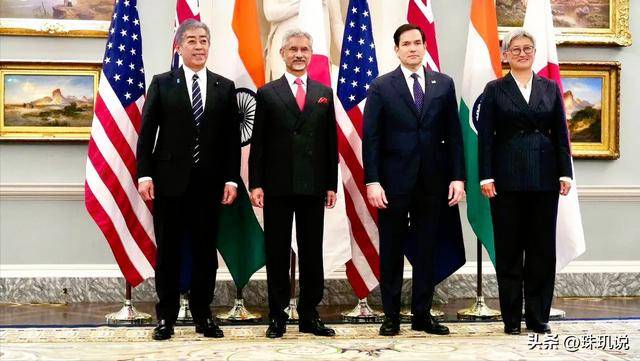
Group 1 - The core objective of the QUAD alliance is to reduce dependence on China's critical minerals, particularly in rare earth elements, where China dominates global supply chains, accounting for approximately 60% of global rare earth mining and nearly 90% of refining [5][9][30] - The "Quad Critical Minerals Initiative" aims to ensure that the four countries can secure access to essential minerals for the 21st-century economy, indicating a strategic move towards creating a "de-China" mineral supply chain [7][30] - The simultaneous easing of restrictions on semiconductor design software exports to China by the U.S. Department of Commerce reveals a complex strategy of "dual tactics," where the U.S. seeks to balance containment with selective cooperation [11][30] Group 2 - The internal dynamics of the QUAD alliance show significant tensions, with differing priorities among member countries regarding security responsibilities and trust in U.S. leadership, indicating that the alliance is not as cohesive as it appears [16][22] - Australia's concerns over the AUKUS nuclear submarine project and India's trade tensions with the U.S. highlight the fragility of the QUAD partnership, as these issues could undermine collective efforts against China [18][19][22] - The U.S. strategy reflects a need for tactical adjustments in mature sectors like semiconductors, where strict containment has proven costly and counterproductive, leading to a search for a balance between strategic containment and maintaining commercial interests [15][30] Group 3 - China's response to the QUAD's mineral containment strategy includes tightening export controls on rare earths, which aligns with international rules and aims to protect its national interests while highlighting the vulnerabilities in Western supply chains [9][24][30] - The emphasis on enhancing domestic exploration and development of strategic mineral resources, as well as investing in advanced processing and technology, is crucial for China to maintain its competitive edge in the global market [24][26][30] - The ongoing geopolitical competition over resources and technology underscores the importance of securing critical minerals and advancing technological innovation as key components of national strategy for China [30][32]
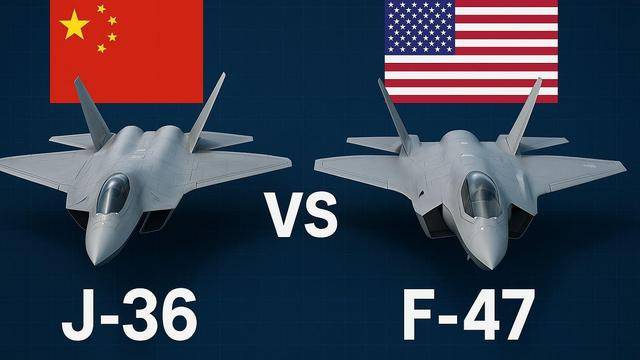
稀土到底多重要?少了它,美国六代机或只能是张PPT
Sou Hu Cai Jing· 2025-05-06 12:27
Core Viewpoint - China's J-36 fighter jet has successfully completed five test flights, while the U.S. sixth-generation fighter jet program appears to be stalled, potentially remaining at the conceptual stage indefinitely [1] Group 1: U.S.-China Trade and Rare Earths - The U.S. trade war initiated by Trump has significantly impacted the U.S. aerospace industry, revealing a critical dependency on China's control over rare earth elements [3] - In response to the trade war, China's Ministry of Commerce implemented export license controls on seven heavy rare earth elements, effectively targeting U.S. military contractors like Lockheed Martin and Boeing [3][4] - China's strong countermeasures are attributed to the contributions of Xu Guangxian, known as the "Father of Rare Earths," who developed a method to significantly improve the extraction and purification of rare earth elements [4][5] Group 2: China's Rare Earth Dominance - China holds approximately 44 million tons of rare earth oxide reserves, accounting for 34% of global reserves, with approved mining quotas reaching 240,000 tons in 2023 [5] - The global rare earth industry is heavily reliant on China, which produces about 70% of rare earth minerals and possesses 85% of deep processing capabilities [5] - From 1950 to 2019, China submitted over 26,000 patents in the rare earth field, far surpassing Japan and the U.S., indicating a strong technological and industrial advantage [5] Group 3: Impact on U.S. Military Technology - Rare earth elements are essential for modern high-tech equipment, including the F-35 fighter jet, which requires 408 kg of rare earth materials for optimal performance [7] - The U.S. sixth-generation fighter jet program is hindered by its reliance on rare earths, making progress toward operational aircraft unlikely without access to these materials [9] Group 4: U.S. Response and Challenges - The U.S. is attempting to revive the Mountain Pass mine and form a "rare earth alliance" with Australia and Canada, but these efforts have not yielded significant results [9][11] - Despite investing billions, the U.S. lacks the deep processing capacity to independently establish a rare earth supply chain, relying instead on Chinese partners for purification [11] - Companies like Tesla are reducing rare earth usage in their electric motors, but this compromises performance, while military firms are exploring alternative materials, which may also reduce efficiency [11]