
空气质量改善

Search documents
新版《环境空气质量标准》发布,PM2.5等污染物排放将迎更严管控
Xin Lang Cai Jing· 2026-02-25 04:34
2026年2月24日晚,生态环境部联合国家市场监管总局发布新版《环境空气质量标准》(GB 3095-2026)(简称《标 准》),新标准收严了PM2.5年均和日均浓度限值,同时明确将按照两阶段实施,自2031年起全面执行修订后的颗粒物 和二氧化硫、二氧化氮等污染物浓度限值。 现行《标准》( GB 3095-2012)自2012年发布实施,由此开启了我国大气污染防治的新阶段——这是我国首次将PM2.5 纳入常规监测指标,为全国 "蓝天保卫战" 划定了明确目标。 在现行标准推动下,我国空气质量显著改善。2025年,全国PM2.5平均浓度降至28微克/立方米,同比下降4.4%;优良 天数比例达89.3%,同比上升1.9个百分点。"十四五"期间,全国PM2.5浓度累计下降20%,优良天数比例创有监测以来 最好水平,重污染天数减少25%。我国成为全球空气质量改善速度最快的国家。 不过,生态环境部大气环境司有关负责人指出,国内外研究成果都表明,PM2.5是全球空气污染疾病负担的最大驱动因 素;世界卫生组织于2021年更新《全球空气质量指南》,进一步加严了PM2.5年均浓度指导值。2025年,全国仍有约六 成的城市PM2. ...

新版《环境空气质量标准》发布,收严PM2.5浓度限值
Xin Jing Bao· 2026-02-25 02:56
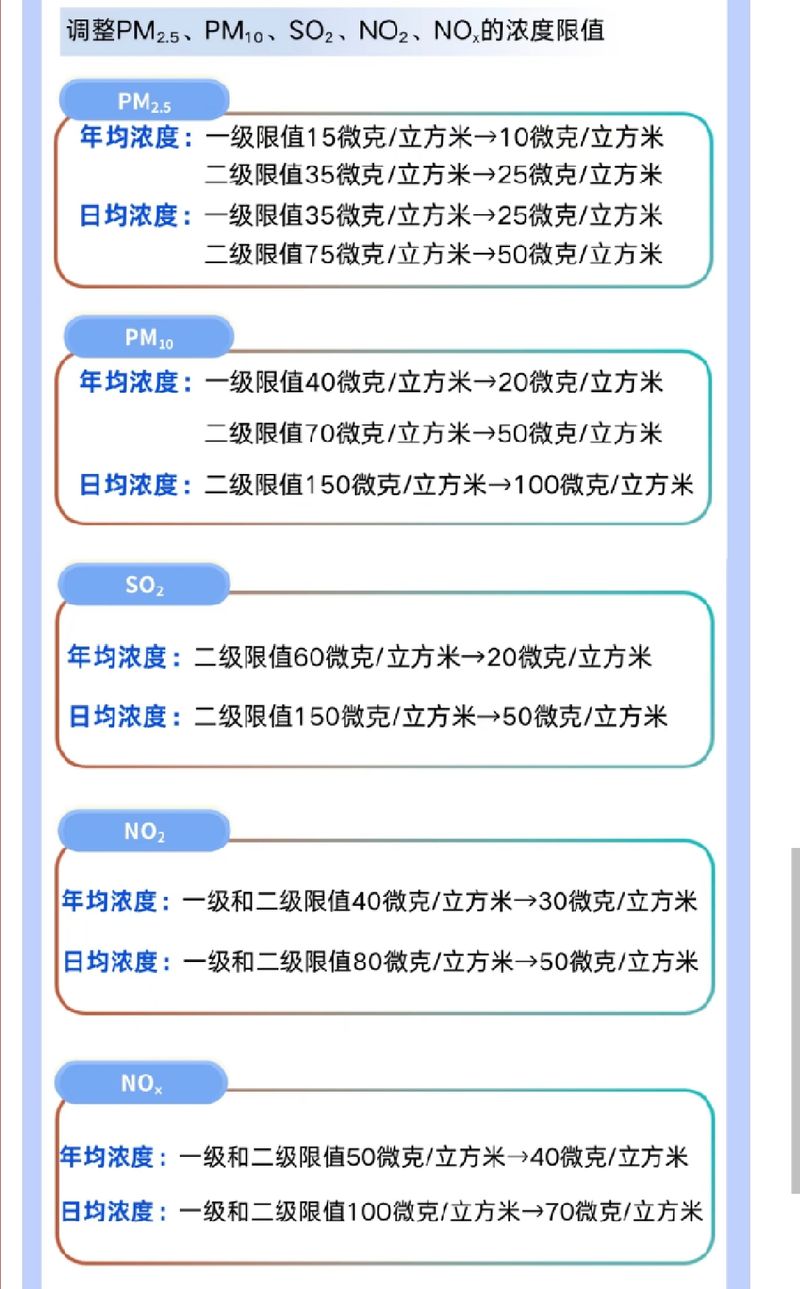
2月24日晚,生态环境部发布《环境空气质量标准》(GB 3095—2026)(以下简称《标准》)。记者注意到,在 上一版《环境空气质量标准》中,细颗粒物(PM2.5)年均浓度二级限值为35微克/立方米。新版《标准》将这一 限值调整为25微克/立方米,2026年3月1日起至2030年12月31日,执行过渡阶段浓度限值,即30微克/立方米。 新版《标准》调整了PM2.5等污染物的浓度限制。图/生态环境部微信公众号 提高浓度限值要求,逐步接轨国际先进水平 生态环境部大气环境司有关负责人表示,党的十八大以来,我国在经济高速发展的同时,PM2.5年均浓度从2013 年的68微克/立方米下降到2025年的28微克/立方米,成为全球空气质量改善速度最快的国家。上一版《标准》于 2012年发布,自实施以来,对我国持续深入打好蓝天保卫战、保障人民群众身体健康发挥了重要引领作用。 党的二十届四中全会将美丽中国建设取得新的重大进展作为"十五五"时期经济社会发展的主要目标之一。此时修 订《标准》,一是进一步保障人民群众身体健康。国内外研究成果都表明,PM2.5是全球空气污染疾病负担的最 大驱动因素;世界卫生组织于2021年更新《全球 ...
环境空气质量新标发布,“好天气”标准将更严格
Xin Hua Cai Jing· 2026-02-24 23:58
Core Viewpoint - The Ministry of Ecology and Environment and the State Administration for Market Regulation have jointly released revised air quality standards, tightening the concentration limits for particulate matter and its precursors to better protect public health [1][2]. Group 1: Revised Standards - The new standards set the annual PM2.5 concentration limit to 10 micrograms per cubic meter for Level 1 and 25 micrograms per cubic meter for Level 2, with daily limits of 25 and 50 micrograms per cubic meter respectively [1]. - The previous standards were established in 2012, and the new revisions reflect a significant tightening of limits for PM10, sulfur dioxide (SO2), and nitrogen dioxide (NO2) [1]. Group 2: Implementation Phases - The standards will be implemented in two phases: the first phase from March 1, 2026, to December 31, 2030, will have transitional concentration limits for PM2.5 and PM10 [2]. - The second phase, starting January 1, 2031, will enforce the revised concentration limits nationwide [2]. Group 3: Expected Impacts and Benefits - The revision is expected to lead to a decrease in the proportion of cities meeting air quality standards, but this does not indicate a deterioration in air quality; rather, it reflects the higher standards being set [3]. - The implementation of the new standards is anticipated to drive a continuous decline in PM2.5 levels, reducing health risks, particularly for vulnerable populations [3]. - The standards are projected to facilitate the development of clean energy and new energy vehicles, promoting a green and low-carbon transition in key industries, with an expected reduction of over 7 billion tons of carbon dioxide from 2026 to 2035 [3].
为改善当地空气质量,意大利小镇招人闻异味来源
Xin Lang Cai Jing· 2026-02-14 15:35
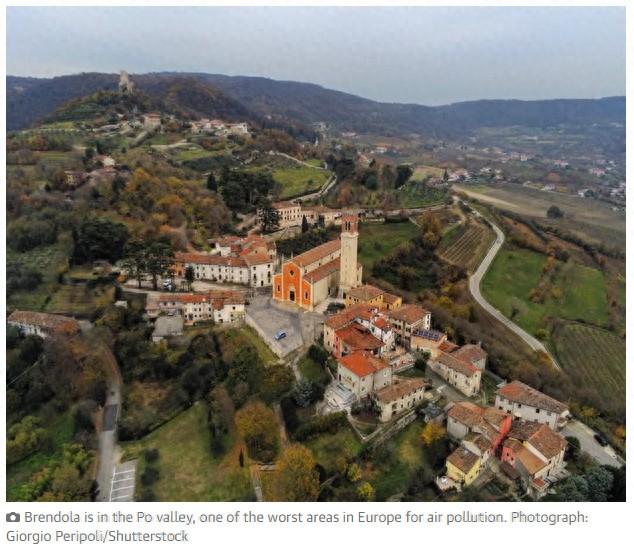
据英国《卫报》报道,意大利北部小镇布伦多拉为了改善当地空气质量,正在招聘气味评估员,希望他 们能闻出异味的来源。 来源:环球时报 布伦多拉镇镇长介绍,由于住在工业区附近的居民投诉闻到难闻的气味,因此发起这项招聘,计划招募 6人。应聘者不能有过敏症或哮喘等呼吸系统疾病,同时必须有车和一部智能手机,他们将使用专门的 应用程序在手机上记录气味数据。他们将接受培训,学习区分不同气味,如工厂排放物、工业废料或污 水气味,随后前往目标区域进行评估。该计划预计将持续6个月。 镇长称,招聘信息本周发布后,已经有十几个人应聘,"大多是在校大学生,有空闲时间,而且似乎非 常渴望得到这份工作。" ...
乌海空气质量多项指标创历史最优
Xin Lang Cai Jing· 2026-02-13 20:37
Group 1 - In 2025, Uihai City achieved significant improvements in air quality, with a comprehensive air quality index dropping to 3.74, marking a historical low [1] - PM10 concentration reached the national secondary standard for the first time at 67 micrograms per cubic meter, while PM2.5 annual average concentration hit a record low of 24 micrograms per cubic meter, meeting the WHO's second stage standard [1] - The city recorded 304 days of good air quality, with a good days ratio of 83.3%, indicating a consistent presence of blue skies [1] Group 2 - Uihai City implemented a comprehensive ecological remediation strategy, focusing on five key areas and the Yellow River, with 43 long-term mechanisms established [2] - Specific measures were taken in the coking industry, including strict adherence to low emission standards and expert assistance for coking enterprises, resulting in 261 improvement suggestions and full completion of low emission upgrades for eight coking companies [2] - The city also initiated four volatile organic compounds (VOCs) management projects and conducted thorough inspections of 5,525 non-road mobile machinery across 320 enterprises to control mobile source pollution [2] Group 3 - Uihai City established regional cooperation agreements for joint prevention and control of air pollution with neighboring areas, enhancing collaborative pollution management efforts [3]
李强主持召开国务院常务会议
国家能源局· 2026-02-07 01:18
Core Viewpoint - The meeting chaired by Premier Li Qiang emphasizes the importance of effectively handling suggestions from the National People's Congress (NPC) and the Chinese People's Political Consultative Conference (CPPCC) as a means of government accountability and promoting democracy [4]. Group 1: Effective Investment Policies - Promoting effective investment is crucial for stabilizing economic growth and enhancing development momentum. The government aims to innovate and improve policy measures, utilizing central budget investments, long-term special bonds, and local government special bonds [5]. - The focus will be on long-term development needs and building future competitive advantages, particularly in key areas such as infrastructure, urban renewal, public services, and emerging industries [5]. - There is a commitment to better leverage state-owned enterprises to expand investments and increase support for private investment, creating a collaborative environment for effective investment [5]. Group 2: Environmental Standards - Significant improvements in air quality have been noted in recent years, enhancing public satisfaction. The newly revised "Ambient Air Quality Standards" sets higher targets for annual PM2.5 concentration [5]. - The government will strengthen policy support and coordination to meet the new standards, focusing on fiscal, financial, technological, and pricing policies, while enhancing governance in key regions [5]. Group 3: Legislative Reforms - The meeting discussed and approved the draft revision of the "Bidding and Tendering Law," which will be submitted to the Standing Committee of the National People's Congress for review [5]. - This legislative reform aims to improve the bidding and tendering system, eliminate hidden barriers, enhance evaluation methods, increase transparency, and combat illegal activities to promote a healthy development of the bidding market [5].

我国空气质量向好趋优
Ren Min Ri Bao· 2026-01-16 03:20
Core Viewpoint - The article highlights significant improvements in air quality in China, with a focus on the reduction of PM2.5 levels and the increase in the number of days with good air quality, as part of the ongoing efforts to combat air pollution during the "14th Five-Year Plan" period [1]. Group 1: Air Quality Improvements - In 2025, the national average PM2.5 concentration was reported at 28.0 micrograms per cubic meter, a year-on-year decrease of 4.4% [1]. - The proportion of days with good air quality reached 89.3%, an increase of 1.9 percentage points compared to the previous year [1]. - Cumulatively, during the "14th Five-Year Plan" period, PM2.5 concentration decreased by 20%, and the number of heavily polluted days was reduced by 25% [1]. Group 2: Industry Actions and Achievements - The Ministry of Ecology and Environment organized actions for continuous air quality improvement, focusing on deep governance in key industries, with a total of 300 million tons of crude steel capacity, 270 million tons of coking capacity, and 470 million tons of cement clinker capacity undergoing ultra-low emission transformations [1]. - In 2025, sales of new energy heavy trucks reached 182,000 units, representing a year-on-year growth of 172% [1]. Group 3: Future Goals and Strategies - The Ministry of Ecology and Environment emphasized the need to continue the blue sky protection campaign during the "15th Five-Year Plan" period, aiming for a sustained decrease in PM2.5 concentrations [1]. - Key strategies include optimizing structural adjustments, fine-tuning pollution control, and implementing major emission reduction projects and special governance actions to promote overall air quality improvement [1].
去年海南PM2.5浓度创历史新低
Hai Nan Ri Bao· 2026-01-16 01:48
"这份成绩,源于全省上下'一盘棋'的攻坚合力。"省生态环境厅大气环境管理处副处长陈晓明说。 据介绍,过去一年,我省高位推动,通过挂牌督办滞后市县等方式,层层压实责任,持续推动空气质量 改善。省直部门协同联动,住建、交通部门紧盯工地扬尘,农业农村部门严控秸秆焚烧和槟榔土法熏 烤,应急管理部门强化烟花爆竹销售源头管控,生态环境部门开展工业企业大气环境问题排查整治,多 部门联合开展裸露土地治理等专项行动,形成"横向到边、纵向到底"的共治格局。 为精准施策,我省还依托大气污染排放源清单,对工业企业、施工扬尘、移动源等实施全链条管 控,完成石化企业挥发性有机物治理工程,淘汰全部112台2蒸吨及以下生物质锅炉。同时,借助全省空 气质量监测网络和分级响应体系,实现异常问题及时处置,通过"日跟踪、周评估、月考评"机制和环保 督察,形成问题整改闭环。 下一步,省生态环境厅将重点抓好2026年春节和元宵节期间污染源管控,力争"开门红";持续强化 对未完成省级目标市县的监督帮扶,推动问题整改销号;同时科学编制"十五五"空气质量持续改善行动 计划,通过结构、工程、管理三重减排发力,持续守护好海南的蓝天白云。 去年海南PM2.5浓度创 ...
“十四五”时期优良天数比例创有监测以来最好水平 我国空气质量向好趋优
Ren Min Ri Bao· 2026-01-15 22:08
Core Insights - The article highlights significant improvements in air quality across the country, with a national average PM2.5 concentration of 28.0 micrograms per cubic meter in 2025, a year-on-year decrease of 4.4% [1] - The proportion of days with good air quality reached 89.3%, an increase of 1.9 percentage points compared to the previous year [1] - The "14th Five-Year Plan" period saw a cumulative reduction of PM2.5 concentration by 20% and a 25% decrease in heavy pollution days [1] Environmental Initiatives - In 2025, the Ministry of Ecology and Environment initiated actions for continuous air quality improvement, focusing on deep governance in key industries [1] - The year saw the completion of ultra-low emission transformations for 300 million tons of crude steel capacity, 270 million tons of coking capacity, and 470 million tons of cement clinker capacity [1] - Sales of new energy heavy trucks reached 182,000 units, marking a 172% year-on-year increase [1] Vehicle and Energy Transition - During the "14th Five-Year Plan" period, nearly 30 million high-emission old vehicles were eliminated [1] - Renewable energy installations exceeded 2 billion kilowatts, accounting for approximately 60% of total power installations [1] - The clean transportation ratio in key regions and industries reached 78% [1] Future Goals - The Ministry of Ecology and Environment emphasized the need to focus on the continuous reduction of PM2.5 concentration during the "15th Five-Year Plan" period [1] - There will be a strong push for structural optimization and refined pollution control, along with the implementation of key emission reduction projects and special governance actions to promote overall air quality improvement [1]
338个优良天! 大连空气质量达历史最好水平
Xin Lang Cai Jing· 2026-01-14 23:50
记者从大连市生态环境局获悉,2025年,大连市空气质量优良天数共计338天,优良比例为92.6%,达 历史最好水平;全年未发生重度及以上污染天气,实现全面消除重污染天气目标;空气质量综合指数下 降到3.05,创历史最好水平。 据新华社 2025年,大连市PM2.5、PM10、二氧化硫、二氧化氮、一氧化碳、臭氧6项污染物指标呈现全面下降趋 势。其中,PM2.5年均浓度为26微克/立方米,比"十三五"末改善13%。 ...