第三次分配

Search documents
江苏省慈善总会发布20周年“民生成绩单”
Xin Hua Ri Bao· 2025-11-15 23:29
Core Insights - The Jiangsu Provincial Charity Association has raised a total of 2.63 billion yuan in donations, with over 2.32 billion yuan spent on aid, implementing 381 major charity projects that benefited 6.2 million people in need [1][5] Fundraising Sources - The charity efforts are supported by various stakeholders, including government leaders, enterprises, and public organizations, which collectively contribute to the charity ecosystem [3] - Jiangsu was the first province in China to implement a local charity law in 2010, establishing a framework for charity culture, financial support, and transparency [3][4] - The government has also introduced tax incentives for charitable donations, further encouraging public participation [4] Allocation of Aid - The charity projects focus on key areas and vulnerable groups, with significant funds directed towards initiatives like the "Protecting Seedlings Action" for children's serious illness aid and the "Warm Jiangsu" project for families in need [5][6] - Emergency response efforts have been mobilized during natural disasters, showcasing the charity system's ability to act swiftly and effectively [6] Community Engagement - Local initiatives, such as the "Walking for Love" event, have successfully raised funds and engaged large numbers of participants, highlighting the community's commitment to charity [7] - The establishment of a five-tier charity organization network across the province has enhanced the reach and impact of charitable activities [6] Future Development - The 20th National Congress has emphasized the need for high-quality development in the charity sector, prompting discussions on how to enhance and regulate charity efforts in Jiangsu [8] - Experts suggest diversifying fundraising channels and embracing digital transformation to improve donor engagement and participation [8][9] - Continuous innovation in charity project management and transparency is essential for addressing future challenges and enhancing the effectiveness of charitable initiatives [9]
保险受益人不再只能是自然人,司法判决支持机构登记用于慈善
Xin Jing Bao· 2025-10-17 07:50
Core Viewpoint - The recent civil judgment by the Chaoyang District People's Court in Beijing has broken the long-standing industry practice that limited insurance beneficiaries to natural persons, allowing for the designation of legal entities as beneficiaries for charitable purposes [1][4]. Group 1: Case Background - The case involves Ms. Wan, a high-ranking executive, who purchased a whole life insurance policy from China People's Life Insurance Co., Ltd. with an annual premium of 350,000 yuan, intending to donate the insurance proceeds to a charity after her death [1][2]. - Ms. Wan's request to change the beneficiary to a designated estate management organization was initially rejected by the insurance company, leading her to file a lawsuit after exhausting other communication channels [2][3]. Group 2: Court Ruling - The court ruled that current laws do not restrict insurance beneficiaries to natural persons, and the insurance contract did not exclude legal entities as beneficiaries [3][4]. - The court criticized the insurance company's arguments regarding operational costs and industry practices, emphasizing that the company should improve its contract terms and service processes instead of limiting the legal rights of policyholders [3]. Group 3: Legal and Industry Implications - This ruling aligns with the suggestions made during the Two Sessions regarding the need for the Insurance Law of the People's Republic of China to better protect consumer rights and expand their autonomy [1][4]. - Legal experts view this case as a significant judicial precedent that bridges the Civil Code and the Insurance Law, confirming the validity of using "will + insurance" for charitable donations, thus encouraging public participation in philanthropy [4].

民政部:“十四五”期间 全国慈善组织每年支出1500亿元
Xin Hua Cai Jing· 2025-10-10 06:23
Core Insights - The Chinese government emphasizes the importance of charity as a moral practice and a significant force in promoting modernization during the "14th Five-Year Plan" period, with annual spending of 150 billion yuan by charitable organizations [1][2]. Group 1: Charity System Development - The charity system in China is becoming more refined, with the new Charity Law set to take effect on September 5, 2024, marking a significant advancement in the legal framework for charity [1]. - Four departmental regulations have been revised or established, enhancing the legal protections and operational guidelines for charitable organizations [1]. Group 2: Growth of Charitable Organizations - The number of registered charitable organizations has increased from over 9,400 at the end of 2020 to over 16,000 currently, representing a growth of 70% [1]. - The number of registered charitable trusts has surged from 530 to 2,570, nearly a fourfold increase since the end of 2020 [1]. - The welfare lottery has raised a total of 256.6 billion yuan for public welfare, supporting various social initiatives [1]. Group 3: Impact of Charity - Charitable organizations are expected to spend 150 billion yuan annually on initiatives related to the elderly, children, disabled individuals, education, healthcare, and employment [2]. - Over 20 billion yuan has been donated by various sectors to support emergency relief and reconstruction efforts for major natural disasters [2]. - Designated online fundraising platforms have raised over 160 billion yuan for rural revitalization, poverty alleviation, and major illness assistance [2]. Group 4: Charity Culture Enhancement - The Ministry of Civil Affairs promotes traditional virtues and the Charity Law, organizing events like the "Chinese Charity Award" and "Chinese Charity Day," which saw participation from over 18 million people this year [2]. - Innovative activities to promote charity culture have been implemented across various sectors, enhancing public awareness and participation in charitable activities [2].
民政部:“十四五”期间,全国慈善组织每年支出1500亿元
Nan Fang Du Shi Bao· 2025-10-10 04:20
Core Insights - The charity sector in China has significantly expanded during the "14th Five-Year Plan" period, with the number of registered charitable organizations increasing from over 9,400 at the end of 2020 to 16,000, representing a growth of 70% [1] - The number of registered charitable trusts has surged nearly fourfold, from 530 at the end of 2020 to 2,570 currently [1] - Cumulative funds raised by welfare lotteries have reached 256.6 billion yuan, providing substantial support for social security funds, elderly care, disability assistance, and disaster relief [1] Charity Expenditure and Impact - National charitable organizations are spending approximately 150 billion yuan annually, focusing on areas such as elderly and child care, disability support, education, healthcare, and employment [1] - Over 20 billion yuan has been donated by various sectors to support emergency rescue and recovery efforts for major natural disasters, including the severe floods in Zhengzhou, Gansu earthquake, and Tibet earthquake [1] - Designated internet public fundraising platforms and personal assistance networks have collectively raised over 160 billion yuan, benefiting rural revitalization, poverty alleviation, and major illness assistance [1] Contribution to Economic and Social Development - The charity sector plays a crucial role in the third distribution of wealth, promoting economic and social development, and advancing the goal of common prosperity [1]
中国慈善联合会蔡概还:应完善慈善信托政策与褒奖制度
2 1 Shi Ji Jing Ji Bao Dao· 2025-09-11 01:15
Core Insights - The article emphasizes the importance of charitable trusts in promoting common prosperity and addressing wealth disparity through institutional innovation [1][2][3] Group 1: Charitable Trusts and Common Prosperity - Charitable trusts are recognized as a vital tool in linking private wealth with public welfare, playing an irreplaceable role in reducing wealth gaps and promoting social equity [1][2] - The development of charitable trusts is seen as a significant new force in the third distribution, which is essential for high-quality development in China's charitable sector [2][3] Group 2: Current Challenges - The main bottlenecks for the growth of charitable trusts include insufficient promotion and misunderstanding of their purpose, as many view them as financial products rather than pure charitable instruments [3][4] - Tax incentives for charitable trusts are currently inadequate, as the implementation of tax benefits for trust creators remains a challenge, despite recent amendments to the Charity Law [5][6] Group 3: Recommendations for Improvement - It is suggested that the government should prioritize establishing tax deductions for trust creators at the setup stage, similar to those for charitable donations [5][6] - There is a need for a nationwide standardized registration system for charitable trust assets to ensure legal independence and facilitate the establishment of trusts using non-monetary assets [6][7] Group 4: Future Expectations - The article calls for a concerted effort from charitable organizations and trust companies to leverage the advantages of charitable trusts, focusing on addressing regional and income disparities [7] - Continuous cultural promotion and education about charitable trusts are recommended to enhance public understanding and participation, ultimately contributing to the goal of common prosperity [7]
21专访|中国慈善联合会蔡概还:应完善慈善信托政策与褒奖制度
2 1 Shi Ji Jing Ji Bao Dao· 2025-09-10 07:03
Core Insights - The article emphasizes the importance of charitable trusts in promoting common prosperity and addressing wealth disparity through institutional innovation [1][2][3] Group 1: Charitable Trusts and Common Prosperity - Charitable trusts are seen as a crucial tool for linking private wealth with public welfare, playing an irreplaceable role in reducing wealth gaps and promoting social equity [1][2] - The revised Charity Law, effective from September 2024, has led to a rapid increase in the number of charitable trusts, although their overall scale remains small [1][3] Group 2: Challenges and Bottlenecks - The main challenges facing the growth of charitable trusts include insufficient promotion and misunderstanding of their purpose, as many view them as financial products rather than pure charitable vehicles [3][4] - Tax incentives for charitable trusts are currently inadequate, as the law emphasizes the need for such incentives but lacks practical implementation for tax deductions at the establishment stage [4][5] Group 3: Recommendations for Development - It is recommended to prioritize tax deductions for donors at the establishment stage of charitable trusts to encourage their growth [5][6] - Establishing a nationwide registration system for trust assets is necessary to ensure legal clarity and operational feasibility, especially for non-monetary assets [6][7] Group 4: Family Charitable Trusts - Family charitable trusts can effectively combine wealth transfer needs with charitable intentions, encouraging participation from individuals and organizations in philanthropic activities [8][9] - These trusts are characterized by their family-oriented nature, public benefit focus, and long-term sustainability, allowing for a balance between private and charitable interests [9][10] Group 5: Future Outlook - The article suggests that charitable trusts should leverage their institutional advantages to mobilize resources for common prosperity, addressing regional and income disparities [10] - Continuous education and awareness campaigns about charitable trusts are essential to foster a culture of philanthropy and enhance their societal impact [10]
以第三次分配驱动教育数字鸿沟弥合
Xin Hua Ri Bao· 2025-07-24 23:17
Core Viewpoint - The article emphasizes the importance of the "third distribution" in bridging the digital education gap, highlighting its role in resource allocation and wealth distribution among different social groups [1][2][4]. Group 1: Digital Education Gap - The digital education gap manifests in structural imbalances across new infrastructure, digital governance awareness, digital talent, and data integration and sharing [2]. - The third distribution can address the shortcomings of initial and redistributive allocations, restructuring the distribution of educational digital resources to achieve effective social wealth balance [2][4]. Group 2: Empowerment and Human-Centric Education - The drive to bridge the digital education gap through the third distribution is rooted in moral values, cultural significance, and social mutual aid [3]. - Social organizations should leverage their resources to conduct "digital literacy" activities for teachers in underdeveloped areas and provide advanced training in artificial intelligence [3]. Group 3: Institutional Support and Digital Rights - Digital rights encompass individuals' rights to access, use, and create digital resources, which are crucial for achieving educational equity and equal opportunities [4]. - Governments need to establish robust digital governance regulations to enhance the role of the third distribution in addressing educational disparities [4].
中国高净值人群两年捐赠140亿 三分之二投向教育领域
Chang Jiang Shang Bao· 2025-05-30 00:06
Core Insights - High-net-worth individuals are increasingly focusing on philanthropy, reflecting a growing trend of wealth being directed towards charitable causes [1][2] - The China Charity Research Report (2024) highlights the latest trends and dynamics in charitable activities among high-net-worth individuals in China [1][2][3] Group 1: Philanthropic Trends - In 2023-2024, high-net-worth individuals in China made 157 donations exceeding 10 million yuan each, totaling 14.03 billion yuan [2] - The report indicates a significant rise in equity donations, with 4 equity donations in 2024 accounting for 68.51% of the total donations for that year [2] - Education is the most favored sector for donations, with higher education and basic education accounting for two-thirds of the contributions [2] Group 2: Family Foundations and Trusts - As of the end of 2023, there are 434 family foundations in China, representing 4.52% of all foundations, with 57% having a minimum registration capital of 2 million yuan [3] - The scale of charitable trusts established by high-net-worth individuals exceeds 1.81 billion yuan, with 239 trusts set up, accounting for 10% of the total number but 21% of the total amount [6] - The number of charitable trusts has been steadily increasing since the implementation of the Charity Law in 2016, indicating a positive trend in philanthropic engagement [6] Group 3: Gender and Generational Insights - High-net-worth women tend to focus on helping specific groups, such as their hometowns and family members, while the new generation emphasizes the effectiveness and strategic nature of philanthropy [3] - The new generation is also more inclined towards technology-driven and participatory philanthropy, as well as innovative charitable practices [3] Group 4: Cross-Border Philanthropy - Under the Belt and Road Initiative, high-net-worth individuals and related institutions in China are becoming more proactive in fulfilling social responsibilities, with many entrepreneurs encouraging family members to participate in international charitable projects [3]
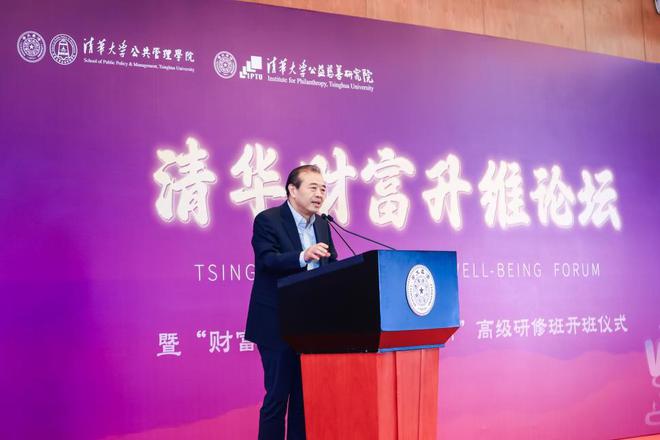
清华财富升维论坛在京举办,探索财富创造社会价值新路径
Xin Jing Bao· 2025-03-25 12:56
Group 1 - The forum titled "Wealth Elevation and Social Value Innovation" was held at Tsinghua University, focusing on exploring new paths for wealth creation and social value in the new era [1] - Over 160 guests from various sectors, including business, philanthropy, academia, and media, participated in discussions about innovative charitable practices and the future of wealth elevation [1] - The Tsinghua University Institute of Philanthropy's director, Wang Ming, emphasized the importance of wealth elevation as a means of social good and its three dimensions: from present to future, from self to others, and from tangible to intangible [1] Group 2 - Peking University professor Wang Chao highlighted that the true mission of wealth is to redefine and reshape social value rather than merely focusing on asset preservation and appreciation [3] - A roundtable discussion featured industry leaders from organizations like Zhongqiao Venture Capital and the Gates Foundation, discussing themes of wealth, personal identity, and family legacy [3] Group 3 - The "Wealth Elevation and Social Value Innovation" advanced training program was officially launched during the forum, part of a broader initiative aimed at promoting a wealth perspective aligned with Chinese cultural traditions and institutional environments [4] - The initiative, known as the Wealth for Well-being Initiative (W2 Plan), aims to explore effective paths for social value creation and wealth transmission among Chinese enterprises and entrepreneurs, while also working to reduce the costs of charitable actions [4]